Contraceptive spacing methods in India: which is best for you?
Walk into any sub-centre or district hospital clinic in India on a busy Tuesday morning, and the women in the waiting area will tell you, without saying a word, why this conversation matters.
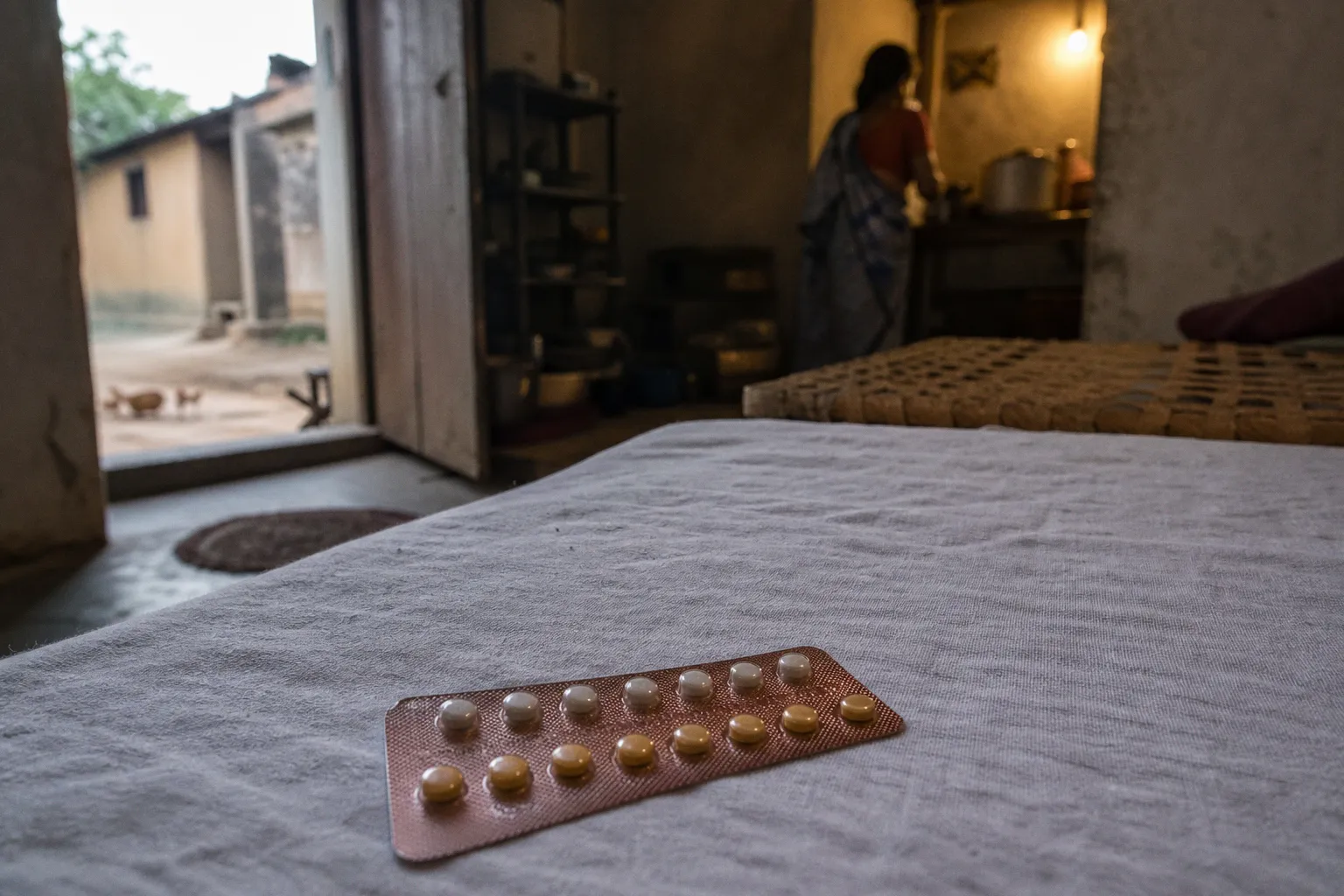
The 36-Month Question: Why Every Year of Spacing Changes a Mother's Health Story
I see the same pattern nearly every week — a mother who conceived again within eighteen months of delivery, anaemic and exhausted, holding a toddler on her hip while gently rocking a pregnancy that her body had barely finished recovering from. Short birth intervals, defined as conceptions occurring less than 24 months after a previous birth, remain one of the most consequential yet under-addressed drivers of maternal and infant morbidity in the country. According to the National Family Health Survey (NFHS-5), half of all births in India — 50.8% — still occur within a gap of less than 36 months. In rural districts, that share climbs to 53.3%. These are not abstract numbers; they translate, on the ground, into higher rates of anaemia, low birth weight, preterm delivery, and maternal depletion.
Compare car rental deals in United Kingdom
See available offersPartner link — DiscoverCars comparisonThe good news is that India has, for the first time in decades, a genuinely diverse contraceptive basket for women who want to delay the next pregnancy rather than close their reproductive chapter entirely. The National Health Mission recommends at least 24 months after childbirth before attempting another conception, with an ideal gap of 36 months between consecutive births. Meeting that recommendation is now possible through spacing methods that are free, reversible, and increasingly available at the primary health centre level. The harder question — and the one I want to walk through with you — is which method suits which woman, in which season of her life, given her breastfeeding status, her side-effect tolerance, and her plans for the next pregnancy.
Spacing isn't a lesser choice compared to limiting births — it's a different conversation, and it deserves its own toolkit.
Why Spacing Methods Still Trail Sterilisation in Indian Family Planning
Before we get into the methods themselves, it helps to name the elephant in the consultation room. India's contraceptive landscape is unusual: the modern Contraceptive Prevalence Rate (mCPR) has climbed impressively to 56.5% under NFHS-5, with overall CPR at 67%, yet female sterilisation still accounts for 37.9% of all contraceptive use — roughly two-thirds of modern method uptake nationally. In practical terms, most women who use a modern method in India are not spacing; they have chosen to limit. This skew shapes everything: counselling scripts, supply chains, training priorities, and frankly, the cultural imagination of what "using family planning" looks like.
There is nothing wrong with sterilisation as a choice — I have counselled countless women who have made that decision with full clarity and relief. But the clinical truth is that spacing methods deserve just as much airtime in the antenatal and postpartum conversation. The total unmet need for family planning in India sits at 9.4% under NFHS-5, and within that figure, the unmet need specifically for spacing stands at 4.0%. That 4% represents millions of women who want to delay their next pregnancy but cannot access, afford, or are not being offered a reversible method. Closing that gap is the single most actionable lever in maternal health programming right now.
Interestingly, the use of traditional methods (rhythm, withdrawal, folk methods) doubled nationally between NFHS-4 and NFHS-5, from 5.7% to 10.2%. When I see this in the field, I read it as a signal: women want pregnancy prevention, but the modern spacing basket is either not reaching them, not being explained, or not matching their life circumstances. The methods themselves are rarely the problem. The counselling is.
The Non-Hormonal Weekly Pill: Understanding Chhaya
Let me start with the option I find most under-prescribed in routine counselling — Chhaya. Chhaya is the brand name under which Centchroman, a non-hormonal, non-steroidal oral contraceptive originally developed in India, was reintroduced into the National Family Planning Programme in 2016. Centchroman itself has a longer history — it was approved for marketing in 1991 and entered the National Family Welfare Programme in 1995 — but Chhaya is the formulation women actually meet at the sub-centre today.
What makes Chhaya clinically interesting, and what I explain to nearly every woman who asks whether "the pill" will affect her milk supply or her periods, is its mechanism. It is a selective estrogen receptor modulator, which means it does not contain estrogen or progesterone. For a postpartum mother who is breastfeeding and worried about hormonal transfer, this is often the reassurance that tips the decision. It is taken orally twice a week for the first three months, then once a week thereafter, and it is distributed free of cost through the public health system.
In my own clinic, Chhaya works particularly well for three profiles: the woman who is six to twelve months postpartum and still actively breastfeeding; the woman who experienced side effects with combined oral contraceptives in the past; and the woman whose husband works in cycles away from home, where a daily pill is impractical but a weekly one is manageable. The counselling caveat I always add is the dosing rhythm — twice-weekly for the first three months is non-negotiable, and missing those loading doses reduces efficacy. I have had women return after an "unscheduled pregnancy" on Chhaya who, on closer history, had been taking it only weekly from day one.
The Three-Month Injection: How Antara Fits into Postpartum Life
If Chhaya is the under-prescribed option, Antara (DMPA, or depot medroxyprogesterone acetate) is the spacing method that has expanded the fastest. Launched under the Antara programme in 2017, this progestin-only injectable is administered intramuscularly every three months at a public health facility. For women who struggle with adherence — daily pills, weekly pills, even condoms used inconsistently — the appeal of "one injection, three months of coverage" is immediate and obvious.
Clinically, the points I make sure to cover in every Antara counselling session are these. First, it is reversible. Fertility returns on average about 10 months after the last injection, which is longer than with most other spacing methods, and I am honest about that timeline because women deserve to plan around it. Second, after the first six weeks postpartum, it is considered compatible with breastfeeding — this is an important reassurance for new mothers. Third, the most common side effects are menstrual changes: irregular bleeding, spotting, or amenorrhoea. Some women welcome the lighter or absent periods; others find the unpredictability distressing. I have learned to ask directly: "How would you feel if your periods became irregular or stopped for a while?" The answer tells me whether to lean into the counselling or hold space for a different method.
What I appreciate about Antara is that it has given health workers, particularly the auxiliary nurse midwives who run most of the counselling in primary health centres, a tangible option to offer women who want highly effective spacing without daily or even weekly action. It is also the method I most often find being chosen by women who have already had two children, want to pause before a third, and are not ready for a long-acting method or sterilisation.
The Long-Acting Workhorses: IUCDs in the Public Health System
When a woman in my care says she wants to "set it and forget it" for a few years — and many do, especially after a second or third pregnancy — I usually steer her toward the copper-bearing Intrauterine Contraceptive Devices (IUCDs) available through the public health system. There are two main options: IUCD Cu 375, which provides protection for 5 years, and IUCD Cu 380A, which provides protection for 10 years. Both are non-hormonal, immediately reversible upon removal, and inserted in a single outpatient visit.
The clinical conversation around IUCDs in India still carries the residue of older concerns. Some women worry about pain at insertion; some have heard the device "can travel" or cause infertility. I address these directly. Insertion can cause cramping, particularly in nulliparous women, but for parous women — the majority of IUCD users in the public system — the procedure is usually well tolerated. The device does not migrate to other organs; malposition is rare and managed by trained providers. And crucially, the IUCD does not cause infertility: fertility returns as soon as it is removed, often within the same cycle.
What I value most about the IUCD option, particularly Cu 380A, is the duration of coverage relative to the effort required. A single 10-minute insertion procedure, with a follow-up check after the first menses or at six weeks postpartum, and the woman is protected for a decade. For a mother who wants to honour the 36-month spacing recommendation and is not yet ready to think about permanent methods, this is, in my experience, the most "fit and forget" reversible option available in the public system.
A comparison of spacing methods isn't about crowning a winner — it's about matching the method to the season of a woman's life.
Side-by-Side: How the Four Main Spacing Methods Compare
Below is the comparison table I walk through with patients during counselling. It is not a ranking — it is a reference grid for matching method to circumstance.
| Parameter | Chhaya (weekly pill) | Antara (3-month injection) | IUCD Cu 375 | IUCD Cu 380A |
|---|---|---|---|---|
| Hormone content | Non-hormonal | Progestin-only | Non-hormonal | Non-hormonal |
| Dosing / administration | Twice weekly × 3 months, then once weekly | Intramuscular injection every 3 months | One-time insertion | One-time insertion |
| Duration of protection | Continuous while taking | 3 months per dose | 5 years | 10 years |
| Reversibility | Immediate on stopping | Fertility returns ~10 months after last dose | Immediate on removal | Immediate on removal |
| Breastfeeding compatibility | Yes | Yes (after 6 weeks postpartum) | Yes | Yes |
| Suitability for women who want to delay, not limit, next pregnancy | Very good | Good | Excellent | Excellent |
| Common side effects to counsel on | Menstrual irregularity in early months | Irregular bleeding, amenorrhoea | Cramping, heavier menses initially | Cramping, heavier menses initially |
| Where it is available in the public system | Sub-centre, PHC, district hospital | PHC, district hospital | PHC, district hospital | PHC, district hospital |
What the Method Choice Actually Looks Like at the Bedside
Let me share three composite patient stories — not specific individuals, but archetypes I see often enough that the patterns are clinically real.
Asha, 24, six months postpartum, exclusively breastfeeding her first child. Her husband is supportive of spacing. She has heard that "the pill" reduces milk. Chhaya is the first option I discuss, because it is non-hormonal, weekly rather than daily, and free at her sub-centre. We review the twice-weekly loading dose together, and I ask her to repeat the schedule back to me before she leaves. I also mention Antara as a backup plan if weekly adherence feels difficult.
Rekha, 29, mother of two, eight months postpartum, husband migrates for work. She wants strong protection for the next two to three years but is undecided about a third child. Her irregular periods make daily contraception unreliable in her view. Antara is a strong fit — one injection every three months, administered during her visits home, and we plan the first dose for her next PHC visit. I counsel her on the 10-month return-to-fertility window so she has realistic expectations.
Suman, 32, mother of three, just delivered her youngest, certain she does not want a fourth pregnancy for at least eight years. She is open to sterilisation but her husband is hesitant about a permanent step right now. IUCD Cu 380A is the natural bridge — non-hormonal, 10 years of coverage, immediately reversible if her circumstances change. I schedule the insertion for her six-week postpartum visit and review warning signs to watch for in the first month.
None of these are universal recommendations. They are illustrations of how the same basket of methods serves very different lives.
The Counselling Gap: Why Women Still Choose Traditional Methods
Here is the uncomfortable truth I want to name, because it shapes how we, as practitioners, should approach the next decade. Traditional contraceptive use in India doubled to 10.2% under NFHS-5. When women with access to public health facilities and a reasonable awareness of modern methods still choose rhythm or withdrawal, it usually means one of three things: the modern spacing method on offer didn't match her breastfeeding stage, the side effects she feared (or experienced) made the method feel worse than the problem it solved, or nobody actually sat with her long enough to explain the options in her own language.
I think about this often. The methods exist. The supply chains are, by and large, functioning. The bottleneck is the conversation. When I sit with a woman for fifteen minutes instead of three, the method choice often shifts — not because I persuaded her, but because she finally had the chance to weigh her options against her own life.
A Practical Path Forward for Practitioners and Patients
If you are a practitioner reading this, here is what I would gently ask of you in the next clinic day. For every postpartum or antenatal visit, regardless of how brief, name at least two spacing methods explicitly. Ask the woman what she has heard about each one, correct what is incorrect, and respect what is true to her. For women who decline modern methods, document the conversation and revisit at the next contact. Choice is rarely a single-visit event.
If you are a patient or a family member reading this, the basket of spacing methods available to you through the public health system is wider and more evidence-based than at any point in India's family planning history. Chhaya, Antara, and both IUCDs are real options, not theoretical ones. They are free, reversible, and increasingly available at the sub-centre nearest to you. The 36-month gap between births is not an arbitrary number — it is one of the simplest interventions we have for protecting a mother's iron stores, her recovery, and her next baby's birth weight.
The shift from sterilisation-dominant to spacing-dominant family planning won't come from a new method — it will come from a better conversation, held earlier, in more clinics, with more patience.
India's contraceptive journey began in 1952 with the world's first national Family Planning Programme. Seventy-plus years later, the unfinished work is not invention — it is implementation, counselling, and trust. The methods exist. The women exist. The gap is the conversation.