Sterilization compensation: eligibility and claim rules
The ₹4,00,000 death benefit under India’s Family Planning Indemnity Scheme is one of the largest per-case public health payouts in the country’s reproductive welfare system. It is also one of the most difficult to collect.
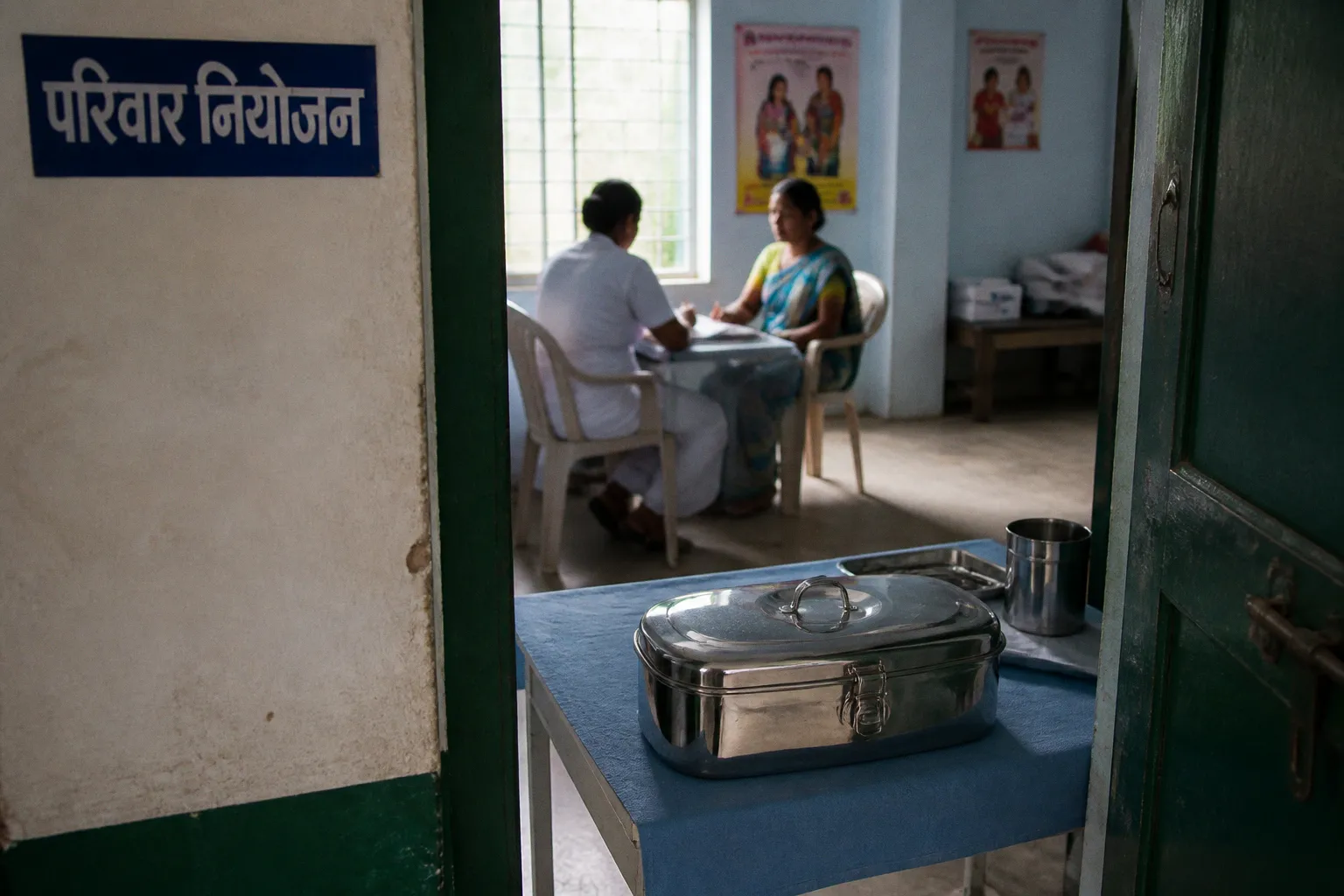
The compensation tiers are specified, the money is allocated through the National Health Mission, and the eligibility rules are set out in programme guidance. Yet the distance between what the scheme promises and what reaches an acceptor or a surviving family is rarely explained by the rate itself.
More often, the failure happens later: an adverse event is not recorded properly, the family does not know which committee receives the claim, a required document cannot be located, or the file sits between the facility and the district office until the practical deadline has passed. Understanding those handoffs matters more than memorising the headline amount. FPIS eligibility is only the beginning of the claim.
Financial protections under the Family Planning Indemnity Scheme
The Family Planning Indemnity Scheme, or FPIS, was restructured on April 1, 2013, replacing the earlier Family Planning Insurance Scheme introduced in 2005. Its purpose is deliberately narrow. It provides financial protection to people who accept sterilization and to their legal representatives when the procedure is followed by death, failure, or a covered medical complication. It also provides indemnity protection for operating doctors and facilities against certain litigation-related risks.
That second function is easy to overlook, but it affects the first. A public sterilization programme depends on doctors and facilities being willing to perform procedures in district hospitals, public facilities, accredited private institutions, and NGO settings. The indemnity component is intended to prevent every adverse outcome from becoming an uninsured personal liability for the provider. The acceptor-facing compensation is the part families usually ask about; the provider indemnity is part of the infrastructure that allows the programme to operate.
The main payment tiers are separate benefits. Receiving a wage-loss payment after surgery does not mean that the acceptor has received the FPIS payment for a later complication or failure. Conversely, a failure or complication claim should not be treated as a request to recover the ordinary wage-loss amount. Each payment has its own purpose, trigger, documentation, and administrative route.
The amount printed in a scheme guideline is not the same thing as money in a claimant’s bank account. The claim has to survive the record-keeping and committee process in between.
Under the FPIS structure described in the programme rules:
- Death in the hospital or within seven days of discharge attracts compensation of ₹4,00,000.
- Death between the eighth and thirtieth day after discharge attracts ₹1,00,000.
- A sterilization failure attracts ₹60,000 after the required clinical evidence has been produced.
- Covered complications arising within sixty days of discharge are eligible for the actual cost of treatment, up to ₹50,000.
- Indemnity insurance of ₹2,00,000 is available per doctor or facility per case, subject to a maximum of four claims per year.
The death benefit is therefore tied to the timing of the death, not simply to the fact that a sterilization procedure took place. A death on the thirty-fifth day falls outside the two stated death tiers. A complication that first presents on the sixty-first day is outside the stated FPIS complication window, even if the family believes the procedure contributed to it. These boundaries are administrative cut-offs applied during district-level review. Medical seriousness by itself does not move an event into a different compensation category.
The compensation tiers in practice
| Event | Compensation | Trigger window or condition |
|---|---|---|
| Death in hospital or within seven days of discharge | ₹4,00,000 | Hospitalisation through day 7 after discharge |
| Death between days 8 and 30 after discharge | ₹1,00,000 | Day 8 to day 30 after discharge |
| Failure of sterilization | ₹60,000 | After the required clinical certification and evidence |
| Treatment of covered complications | Actual treatment cost up to ₹50,000 | Complication arising within 60 days of discharge |
| Indemnity for doctor or facility | ₹2,00,000 | Per case, with a maximum of four claims per year |
The table is useful for identifying the relevant category, but it is not a substitute for the record of the event. The date of discharge, the date of death, the date on which a complication arose, and the evidence connecting the event to the procedure all need to be established. A claimant should not calculate eligibility from memory when the hospital discharge summary, death certificate, operative notes, or treatment bills record different dates.
What the scheme does not mean
FPIS is not a general insurance policy for every health problem after sterilization. It is not an automatic payment merely because the acceptor later becomes pregnant, is admitted to a hospital, or experiences pain. The administrative committees must examine whether the event falls within the scheme, whether the timing is within the relevant window, and whether the clinical evidence supports the claimed connection.
That does not mean a family must prove an impossible level of medical certainty. It does mean that the file should contain enough evidence for the District Indemnity Scheme Committee (DISC) or the District Quality Assurance Committee (DQAC) to examine the event. In a failure claim, the sterilization record and the clinical confirmation of failure are central. In a complication claim, the treatment record and bills matter. In a death claim, the timing and certified cause of death become decisive.
The compensation amount should also be distinguished from other family-planning payments. A wage-loss amount may be paid as part of the routine procedure-related package. It does not replace the death, failure, or complication benefit. Families are often told that “the sterilization payment” has already been made when what they have received is only the ordinary incentive or wage-loss component.
Compensation tiers for failure and medical complications
The two claims most likely to be confused are sterilization failure and a medical complication. They are not assessed in the same way.
A failure claim concerns the contraceptive result: the sterilization did not provide the intended protection and the clinical conditions for recognizing that failure have been met. The FPIS amount is a flat ₹60,000. A complication claim concerns treatment required because of an adverse medical outcome associated with the procedure. The scheme covers actual treatment costs up to ₹50,000 when the complication arises within sixty days of discharge and the claim is supported by the required records.
The difference matters because the evidence is different. A claimant cannot use hospital bills alone to establish a failure. Similarly, a positive pregnancy test does not by itself establish every element of a complication claim. Each event needs to be placed in the correct category.
Failure claims
For a vasectomy, the observation period is generally three months. A certificate is issued only after a negative semen examination confirms azoospermia or a consistent non-motile sperm count, according to the applicable clinical standard. The reason is straightforward: sperm may remain in the reproductive tract for a period after the operation. A procedure cannot be treated as clinically confirmed until the required follow-up evidence has been obtained.
For a tubectomy, the observation period is generally one month. The record must include the applicable confirmation, such as a negative pregnancy test or documented resumption of menses, before the sterilization certificate is issued under the programme’s certification process.
These certification requirements are evidentiary safeguards. They do not change the basic filing rule for an FPIS claim. The ninety-day period runs from the occurrence of the compensable event, not automatically from the date on which a certificate is issued. The certificate may be a necessary document for proving a failure, but it is a separate requirement from the rule governing when the claim must be filed.
That distinction is important in practical terms. A claimant should not assume that the certification process gives an unlimited period to wait before informing the district authorities. If the compensable event has occurred, the safer course is to report it and begin assembling the file within ninety days, while obtaining the certification or other clinical evidence required for adjudication. The date of the operation, the date of a later pregnancy or diagnosis, and the date of the certificate should be recorded separately. Treating them as one date can create an avoidable dispute.
Complication claims
A complication claim is assessed through treatment records and the medical link to the sterilization procedure. The treatment must fall within the applicable sixty-day period from discharge, and the amount is based on actual treatment cost up to ₹50,000 rather than a guaranteed lump sum.
The claimant should preserve:
- the discharge summary from the sterilization procedure;
- the operative notes, if available;
- the record of the symptoms or adverse event;
- prescriptions and diagnostic reports;
- the admission and discharge records from the facility that treated the complication;
- itemised bills and payment receipts; and
- any referral note connecting the treatment to the earlier procedure.
The requirement for bills can be especially difficult for families who receive treatment in several facilities or in an emergency. A hospital may provide a discharge summary but not a fully itemised bill. A private pharmacy may issue a cash memo without linking the medicine to the admission. A district committee may then be forced to assess a claim from an incomplete record. The family’s clinical account may be credible, but credibility does not always supply the missing document.
The treating facility is also part of the process. The relevant facility may need to be empanelled or otherwise recognised under the programme arrangements, and the DQAC may have to examine whether the treatment was connected to the sterilization procedure. That is why the claim should not be presented only as a stack of receipts. The file needs a clear timeline: procedure, discharge, onset of symptoms, consultation, admission or treatment, and recovery or continuing care.
Death claims
Death claims carry the highest compensation amount but are often the most difficult to document. The legal representative usually has to establish the identity of the acceptor, the fact and date of death, the relationship or legal authority of the claimant, and the medical basis for linking the death to the sterilization procedure.
A death certificate that records only the fact of death may not resolve the causation question. The committee may also require medical records, the hospital death summary, post-mortem material where relevant, or a cause-of-death record that explains the connection. If a person dies outside the operating facility, the family should preserve every available document from the facility where death occurred, not only the original sterilization papers.
The timing rules are strict in the administrative sense. Death in hospital or within seven days of discharge falls into the ₹4,00,000 tier. Death between days eight and thirty falls into the ₹1,00,000 tier. A claim filed after the event window cannot be rescued merely by arguing that the death was serious. The family must first show that the event belongs to an eligible window and then satisfy the documentation requirements.
Wage loss and enhanced compensation in high-focus states
The ordinary wage-loss payment is the part of family-planning compensation most acceptors encounter immediately after surgery. It is separate from the FPIS indemnity benefits. The rate depends on the location and the type of procedure, and in the high-focus states the enhanced schedule applies.
Under the Enhanced Compensation Scheme approved on October 20, 2014, the stated rates in the eleven high-focus states include:
- Vasectomy at a public facility: ₹2,000 for the acceptor.
- Tubectomy at a public facility: ₹1,400 for the acceptor.
- Post-partum sterilization at a public facility: ₹2,200 for the acceptor, from a ₹3,000 total package. The remaining ₹800 is retained by the facility for drugs, supplies, and overheads.
- Sterilization at an accredited private or NGO facility: ₹1,000 for either tubectomy or vasectomy.
The eleven states identified in the enhanced schedule are Bihar, Uttar Pradesh, Madhya Pradesh, Rajasthan, Jharkhand, Odisha, Chhattisgarh, Uttarakhand, Assam, Haryana, and Gujarat. The schedule is linked to the programme’s high-focus approach, which treats low uptake and limited access as a geographic policy problem rather than applying one uniform rate across the country.
That creates an immediate eligibility question for anyone trying to estimate a payment: which schedule applies in the state and facility where the procedure was performed? The same procedure can attract a different wage-loss amount depending on the state, the type of sterilization, and whether the facility is public, accredited private, or an NGO facility. A claimant outside the eleven high-focus states should not assume that the enhanced rates apply.
The enhanced payment is also not a substitute for a failure or complication claim. An acceptor who receives ₹1,400 after a public-facility tubectomy has not thereby received the ₹60,000 failure compensation. A person treated for a covered complication may have a separate claim for actual treatment expenses up to ₹50,000. The different payments may appear in different records and may be handled through different officials.
| Payment type | What it is meant to cover | How it differs from FPIS |
|---|---|---|
| Wage-loss compensation | Loss of earnings associated with accepting the procedure | Routine procedure-related payment; rate varies by state and facility |
| Failure compensation | Failure of the sterilization procedure | Separate ₹60,000 claim requiring clinical evidence |
| Complication compensation | Actual treatment cost for a covered adverse event | Separate claim, limited to actual cost up to ₹50,000 |
| Death compensation | Death within the applicable FPIS timing window | Claim by legal representative, with death and causation records |
In functioning districts, the wage-loss amount may reach the acceptor relatively quickly because it is connected to the routine procedure workflow. The higher-value FPIS claims require adverse-event reporting, document collection, committee review, and a separate disbursement. This is why a family may see a small payment in its account while a much larger eligible claim remains pending.
The distinction should be explained at the sterilization facility itself. A short verbal explanation at a camp is rarely enough, particularly where the acceptor has limited time, is recovering from surgery, or is not the person who later handles the paperwork. The discharge packet should make clear which payment has been made and what a claimant must do if a failure, complication, or death occurs later.
Navigating the claim process: documents and deadlines
The claim process usually moves through the facility, the district-level committee, and the payment authority. The precise administrative route can vary, but the underlying problem is consistent: the event must be reported, the evidence must be assembled, and the file must reach the relevant district body in time.
The applicant is generally the acceptor in failure or complication cases. In a death case, the claim is made by the legal representative or another person recognised under the applicable process. The claim should be filed within ninety days of the occurrence of the compensable event.
That timing rule needs to be stated accurately. The ninety-day period runs from the occurrence of the event that is being claimed: the death, the covered complication, or the clinically established failure event as recognised for the claim. It does not automatically begin on the day of the sterilization operation, and it does not automatically begin only when a sterilization certificate is issued. Certification is a separate evidentiary requirement. It may be necessary to prove the claim, but it is not the stated starting point for the ninety-day filing period.
A claimant should therefore avoid waiting passively for the final certificate before notifying the facility or district office. If a compensable event occurs, report it promptly, request the relevant forms, and preserve proof of when the report was made. Continue obtaining the medical certification and supporting records while the claim is being processed.
File within ninety days of the compensable event. Obtain the certificate as evidence; do not mistake the evidence requirement for a new start date.
The ninety-day period is an important administrative rule, but it is not necessarily an absolute bar in every case. Courts have condoned justified delays where the claimant can show a genuine reason, including illness, inaction by the facility, or lack of awareness of the entitlement. A Division Bench of the Madhya Pradesh High Court ruled on April 2, 2025, that a delay could be condoned where the claimant demonstrated sufficient cause. That kind of decision does not abolish the ninety-day requirement. It means that a delayed claimant may have an opportunity to explain the delay rather than being rejected automatically.
The practical lesson is not to treat condonation as an extension built into the scheme. A claimant who files late may have to explain why the deadline was missed and provide evidence supporting that explanation. The burden then shifts onto the family to show the circumstances that prevented timely filing. Administrative inaction by a facility should be documented wherever possible through written requests, acknowledgement receipts, messages, referral slips, or the names and designations of officials approached.
The documents that commonly stop a claim
Three groups of documents are especially important.
1. Adverse-event forms and facility reporting
Form A, B, or C for adverse-event reporting is generally completed by the operating facility and counter-signed by the medical officer, depending on the type of event and the applicable reporting process. These forms create the first official record that something has happened.
If the facility never records the event, the claimant may have to reconstruct the file later from hospital records and personal documents. This is particularly difficult after a sterilization camp, when the operating team has moved on and the family is dealing with treatment, travel, or bereavement. The acceptor should ask for a copy of any adverse-event report and keep the name of the facility and the medical officer who received the complaint.
2. Operative and treatment records
The discharge summary and operative notes establish what procedure was performed, when it was performed, and by whom. For a complication claim, later treatment records help show what happened after discharge and why the treatment was related to the procedure.
Camp-based procedures may leave a thin paper trail. An electronic medical record may not exist, and an operative note may remain in a register that is difficult to retrieve after the surgeon’s departure. That is not a reason to abandon the claim. It is a reason to request the records early, before the file is transferred, the register is misplaced, or the facility assumes that the matter has closed.
3. Death and legal-representative documents
A death claim requires the death certificate and the cause-of-death material available in the case. The legal representative may also need to provide proof of identity, proof of relationship, and bank details for payment.
Families should be cautious about accepting a vague cause-of-death description when the timing and clinical history suggest a possible procedure-related event. The committee will assess causation from the available medical record. If the body has been cremated before a post-mortem, that does not automatically settle the claim, but it may remove evidence that would otherwise have assisted the family. Hospital records, referral papers, emergency treatment notes, and the death summary become even more important.
A workable filing sequence
The process is easier to control when the claimant treats it as a dated record rather than a single visit to a government office.
1. Record the event date. Note the date of death, the date symptoms first required treatment, or the date the failure was clinically identified. Keep the discharge date separate because it determines the relevant medical window for some benefits.
2. Notify the operating facility. Ask the facility to register the adverse event and provide the applicable Form A, B, or C documentation. Request an acknowledgement of the complaint or claim.
3. Collect the clinical file. Obtain the operative note, discharge summary, follow-up records, diagnostic reports, pregnancy or semen examination evidence where relevant, and treatment records.
4. Preserve financial evidence. Keep original or certified copies of itemised bills, receipts, prescriptions, and referral documents for a complication claim. A bank statement showing payment alone may not explain what treatment the amount covered.
5. Submit within ninety days. File the claim with the relevant district authority within ninety days of the compensable event. If the facility delays, submit a written request and retain proof. Do not allow the absence of a certificate or an internal facility form to create the impression that the filing period has not started.
6. Follow up with the district committee. Ask whether the file has reached the DISC or DQAC, whether anything is missing, and whether the committee requires clarification on causation, timing, or legal representation.
7. Keep a complete copy. The family should retain the claim form, attachments, acknowledgement, correspondence, and bank details. A claim that exists only in the facility’s file is difficult to track.
No published national benchmark guarantees how long a complete claim should take to move from committee review to bank credit. State-level practice varies, and district capacity varies within states. A complete file can therefore remain pending even when the claimant has done everything required. That uncertainty is not a reason to submit an incomplete claim, but it is a reason to demand an acknowledgement and a clear status.
The most common breakdown is not a dramatic rejection. It is a quiet delay: a missing signature, an operative note requested but not attached, a bill that does not identify the patient, or a file that has not moved from the facility to the district committee. Each small gap pushes the family closer to the edge of the scheme’s time windows.
Clinical observation periods and certification standards
A sterilization certificate is not normally issued on the operating table. The programme requires an observation and confirmation period because the biological result of sterilization cannot always be established on the day of surgery.
For male sterilization, the usual observation period is three months. The certificate follows a negative semen examination confirming azoospermia or a consistent non-motile sperm count under the applicable clinical standard. Residual sperm can remain after the procedure, so the acceptor must follow the testing instructions and use the advised precautions until clearance has been confirmed.
For female sterilization, the usual observation period is one month. Certification depends on the applicable confirmation, including a negative pregnancy test or documented resumption of menses. The purpose is to distinguish a genuine sterilization failure from a pregnancy that began before the procedure or from an event that has not yet met the programme’s evidence standard.
These periods serve two functions. They protect the financial integrity of the scheme by preventing premature failure claims, and they protect the acceptor by ensuring that the operation is not treated as effective before the expected clinical confirmation. A certificate issued without the required confirmation may not satisfy the DQAC when it assesses a ₹60,000 failure claim.
But the observation period should not be described as a delay that moves the claim deadline. The clinical certificate and the filing deadline answer different questions:
- The observation period asks: when can the sterilization result be clinically confirmed?
- The certificate asks: what document demonstrates that confirmation?
- The ninety-day rule asks: when must the claim concerning the compensable event be filed?
Keeping those questions separate prevents a damaging misunderstanding. If a failure event has occurred, the claimant should report it within ninety days and explain that the certification evidence is being obtained or is pending. If a facility tells the claimant to wait until the certificate is available, the claimant should request that advice in writing and still preserve proof that the event was reported within the applicable period.
The same care is needed with complication claims. The complication window is measured from discharge, while the filing period is measured from the occurrence of the compensable event. These may be close together, but they are not interchangeable. A family should record both dates and keep the medical evidence that shows when the complication first arose.
What would make the scheme work better
The core problem is not a lack of another policy slogan. The programme already has payment tiers, committees, forms, clinical standards, and district-level responsibilities. The weakness is the operational handoff between them.
Three changes would close much of the gap without rewriting the scheme.
Put a claims officer where the records are created
Every district hospital or major sterilization facility should have a designated claims clerk or officer responsible for the administrative path. The officer would not decide medical causation. The role would be to explain the entitlement, register the adverse event, obtain Form A, B, or C, retrieve operative records, and submit the file to the correct district committee within the ninety-day period.
The intervention is modest compared with the cost of an unpaid death or complication claim. Families should not have to discover the DISC, DQAC, and the relevant form through repeated visits to different counters while the filing period runs. A named officer creates accountability where a general instruction currently creates confusion.
Pre-fill the event record at the facility
Every sterilization procedure should generate a baseline record that includes the acceptor’s identity, procedure type, date, facility, operating surgeon, anaesthetist where applicable, and the relevant procedure details. If an adverse event occurs later, the facility should not have to reconstruct the operation from memory or from a camp register that may be difficult to locate.
This is particularly important for procedures performed in temporary camps. A patient should leave with a copy of the discharge summary and a clear route for reporting a complication or failure. The programme should treat the medical record as part of the service, not as an internal document that the patient sees only after a dispute begins.
Measure the time from complete file to payment
The system tracks surgical activity more readily than it tracks whether compensation reaches the intended recipient. A service-level standard from receipt of a complete claim to bank credit would expose where files are stopping. State-level reporting could distinguish between:
- claims rejected because the event was outside the scheme;
- claims returned for missing documents;
- claims pending committee review;
- claims approved but awaiting disbursement; and
- claims actually paid.
That distinction matters. A district may report that it processed claims while families continue waiting for the approved amount to reach their accounts. Linking administrative performance to disbursement, rather than only to the number of procedures performed, would align the programme’s incentives with its stated protective purpose.
The bottleneck is not only surgical capacity. It is the last administrative mile between an approved claim and the family that needs the money.
Closing position
The Family Planning Indemnity Scheme is not empty on paper. It specifies compensation for death, failure, and covered complications; it creates a separate indemnity layer for providers; and it adds enhanced wage-loss payments in high-focus states. The problem is that the scheme’s practical operation depends on records and deadlines that are often handled by the least visible part of the health system.
For an acceptor, the immediate task is to identify which payment is being discussed. The routine wage-loss amount is not the same as FPIS compensation. For a failure claim, the required clinical certification must be obtained, but it should not be mistaken for the starting date of the filing period. The ninety-day period runs from the occurrence of the compensable event. For a complication claim, the treatment must fall within the applicable medical window and be supported by bills and treatment records. For a death claim, the family must establish both the timing and the medical connection.
The safest approach is therefore procedural but not mechanical: record the event date, report it promptly, ask the facility to complete the adverse-event paperwork, collect the clinical and financial documents, file within ninety days, and keep proof of every handoff. If the claim is delayed for a justified reason, document that reason rather than assuming the delay will be forgiven. Courts have condoned justified delays, but condonation is a remedy for an explained failure to meet the rule, not a replacement for the rule itself.
Eligibility is the easy half of sterilization compensation. The harder half is preserving enough evidence, filing on time, and pushing the claim through the district system until the promised amount becomes an actual payment.