Family planning method choices in India: comparing options and matching paths to your needs
The latest nationally cited figures on contraception in India, drawn from NFHS-5 fieldwork between 2019 and 2021, show that 37.9% of currently married women aged 15 to 49 rely on female sterilisation…
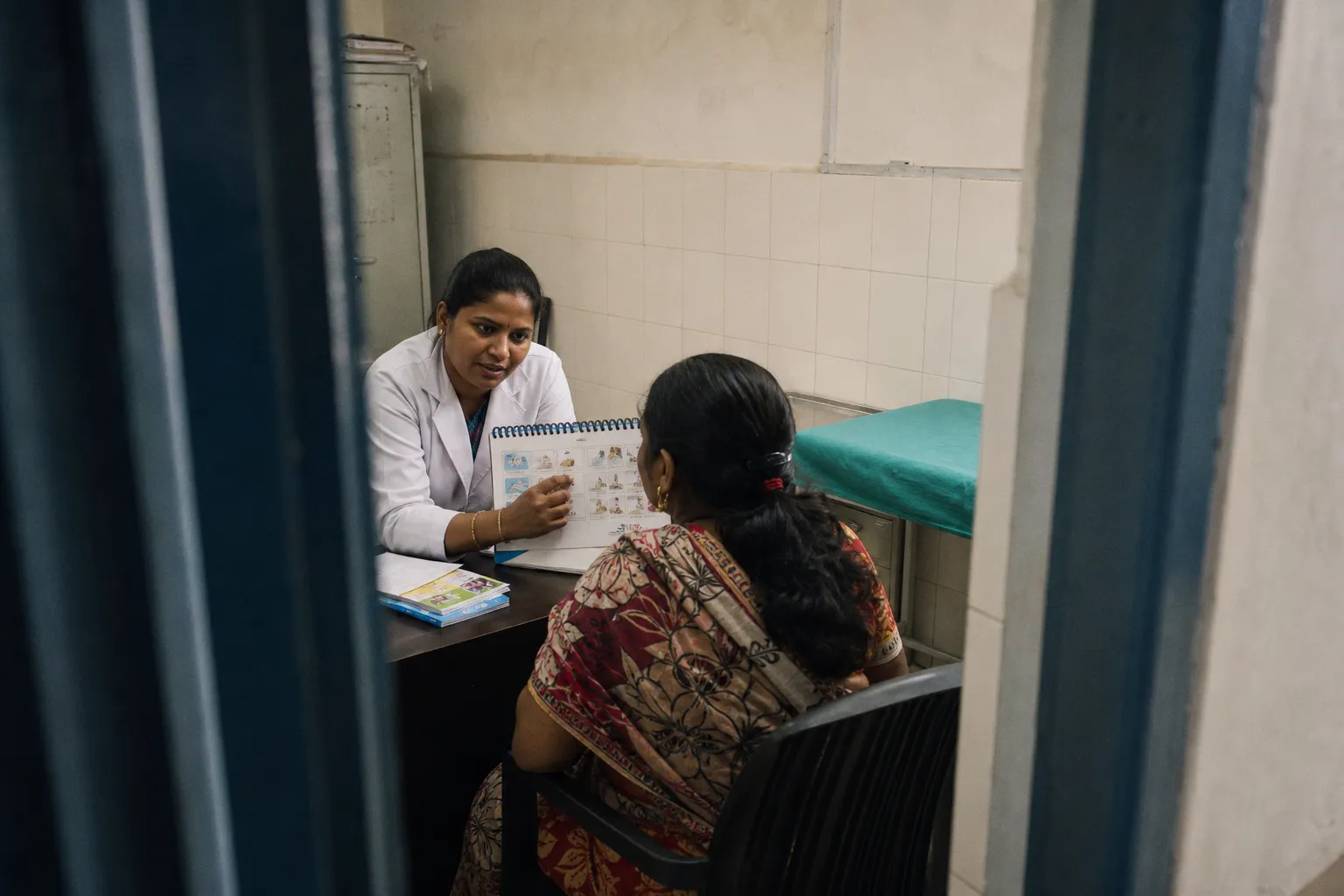
The latest nationally cited figures on contraception in India, drawn from NFHS-5 fieldwork between 2019 and 2021, show that 37.9% of currently married women aged 15 to 49 rely on female sterilisation as their method, while male sterilisation sits at 0.3% and reversible spacing options, taken together, account for a much smaller share. On the ground in postpartum wards and subcentre clinics, this skew looks less like a settled preference than a counselling gap. A woman who comes in wanting time between pregnancies can still be steered toward a permanent option without being properly walked through what reversible methods could offer her, how they work with breastfeeding, and how they fit the three-year birth interval the National Health Mission recommends.
Compare car rental deals in United Kingdom
See available offersPartner link — DiscoverCars comparisonFamily planning method choices in India are not simply a matter of selecting from a chart. They are shaped by when a woman is seen, whether she is breastfeeding, what a particular district can actually provide, whether removal or follow-up is available, and whether anyone has made room for her own plans. The public programme has expanded its basket. The more difficult work is making that basket real at the point of care.
Contraceptive method mix insights from NFHS-5 data
The first thing to make clear is that the NFHS-5 method mix is not a ranking of “best” methods. It is a snapshot of what people were using in a country where public family planning has historically given permanent methods a different cultural, logistical, and institutional weight from reversible contraception. In a crowded postnatal ward, counselling can still mean one hurried conversation at exactly the moment when a woman has the least space to think.
Female sterilisation at 37.9% reflects decades of programme design that made tubectomy highly visible, widely organised, and often easiest to access around childbirth, particularly alongside a caesarean section or soon after delivery. It does not establish that every woman using sterilisation compared it against every reversible option and preferred it. In clinic, many women say they would have considered spacing methods had they known that those methods existed, could be used while breastfeeding, and could be discontinued when their circumstances changed.
The smaller numbers carry their own institutional story. Male sterilisation at 0.3% cannot be explained by a lack of male concern alone. No-scalpel vasectomy has not received the same visibility, counselling time, or community-level endorsement as female sterilisation. Pills at 5.1% and IUDs at 2.1% may reflect concerns about stock, follow-up, side effects, provider confidence with insertion and removal, and the simple difficulty of returning to a facility on schedule. They should not be read as proof that women reject these methods.
Condoms, at 9.5%, remain essential because they are the only method in this group that also helps protect against sexually transmitted infections, including HIV. The 9.4% unmet need figure is perhaps the most clinically urgent number in the set. Behind it are women who have expressed a preference about pregnancy but have not been able to turn that preference into a workable method.
The method mix is a picture of the system as much as it is a picture of women’s choices.
That distinction matters. A method that is easy for a programme to deliver is not automatically the method that best matches a person’s life. Conversely, a method with low recorded uptake may be underused because the pathway to it is uncertain, not because it has no place in the community.
Reversible spacing choices within public health baskets
Reversible methods are the workhorses of respectful family planning. They are also the part of the contraceptive method mix in India that is most easily compressed into a rushed recommendation: take pills, return for an injection, have an IUCD inserted, use condoms. That is not enough. Each option asks something different of the woman, the provider, and the health system.
The public-sector family planning basket includes a wider range than many consultations acknowledge, although actual availability can vary sharply by state, district, facility level, stock position, and the presence of trained staff. A listed method is not the same thing as a method that can be started, followed up, and discontinued locally without delay.
| Method | Common public-sector names | Type | Stated duration | Key clinical notes |
|---|---|---|---|---|
| Condoms | Nirodh | Barrier | Single use | Help protect against pregnancy and STIs, including HIV |
| Combined oral pills | Mala-N | Hormonal: estrogen plus progestin | Daily | Not advised for breastfeeding women until 6 months postpartum under the ASHA handbook guidance |
| Centchroman (ormeloxifene) | Chhaya | Non-steroidal weekly pill | Weekly | A distinct option for women who prefer a weekly schedule and want to avoid combined pills |
| IUCD 380A | Public-sector programme | Copper IUD | 10 years | Can be inserted within 48 hours of vaginal delivery or after 6 weeks postpartum |
| IUCD 375 | Public-sector programme | Copper IUD | 5 years | Follows the same broad postpartum timing approach as IUCD 380A |
| Injectable MPA, intramuscular | Antara | Progestin-only injectable | Every 3 months | Can be used after 6 weeks postpartum |
| Subcutaneous MPA | Newly added to the basket | Progestin-only injectable | Every 3 months | Introduced through a limited rollout rather than universal availability |
| Single-rod subdermal implant | Newly added to the basket | Progestin-only implant | Up to 3 years | Long-acting and reversible, but access remains uneven |
| Emergency contraceptive pills | Ezy pills | Levonorgestrel-based emergency method | Single dose within 72 hours | For unprotected intercourse, condom breakage, or forced sex; not an ongoing method |
A table can make the methods look neat. Real life is not neat. A daily pill is only a good fit if daily use is realistic. A three-monthly injectable depends on being able to return, or on a service pathway that does not turn a missed appointment into a dead end. An IUCD is useful only when a trained provider can insert it safely and when removal is available if the woman wants it. The promise of a long-acting method becomes hollow if the removal pathway is vague.
The postpartum timing rules are particularly important. Combined oral contraceptives should not be used until six months after delivery if the woman is breastfeeding. That removes them from the immediate choices of many women attending postnatal care. Injectable MPA can begin after six weeks. An IUCD can be inserted immediately after a vaginal delivery, within 48 hours, or after the six-week point. This gives it a practical place in postpartum care, but only if the discussion occurred before the delivery ward became the setting for a pressured decision.
Centchroman deserves more than a passing mention. Because it is a non-steroidal weekly pill, it occupies a different counselling space from daily combined pills. For some women, a weekly rhythm is easier to manage; for others, it is another schedule to remember. The right question is not whether it is generally convenient. It is whether it is convenient for this woman, in the life she is actually living.
Condoms are often treated as the method people “graduate” from once they marry or have children. That is a mistake. They remain valuable for people who need protection from both pregnancy and infection, for couples seeking a temporary option without clinical intervention, and as a bridge while another method is being considered or arranged.
Permanent sterilization pathways and voluntary consent
This is the part of family planning service pathways that demands the most care. Permanent contraception can be a welcome and freely made choice for someone who is certain that they do not want more children. It should never become the fastest answer to a crowded ward, a family’s pressure, or a programme target.
Female and male sterilisation are classified by the Ministry of Health and Family Welfare as irreversible permanent methods. Female sterilisation usually refers to tubectomy, often performed by minilaparotomy and sometimes offered around caesarean delivery. Male sterilisation generally refers to no-scalpel vasectomy, an outpatient procedure with a shorter recovery and a lower complication profile. Yet the service visibility of these two pathways remains profoundly unequal.
The 31.35 lakh sterilisations reported for FY 2023-24 are a programme-performance figure, not a measure of satisfaction or informed preference. The number records procedures, not the quality of the conversation that preceded them. It does not show how many people heard about reversible options first, how many felt able to refuse, or how many later regretted a decision made in an exhausted or pressured state.
A choice made under family pressure, in the recovery room, with no other options explained, is not a choice. It is a procedure performed on a person.
Voluntary consent is not a ceremonial signature. In practice, it means a woman has been told that sterilisation is permanent and not easily reversed. She has heard about reversible alternatives if those alternatives are medically suitable and locally available. She understands that declining sterilisation will not cost her other postnatal care. She has time to consider the decision before a procedure is imminent, and she can communicate in language she understands.
This is where temporary versus permanent contraception in India must be discussed without euphemism. A woman who says she wants no more children today may be describing a firm decision. She may also be describing the financial strain, physical exhaustion, or family conflict of the present moment. A clinician’s job is not to second-guess her. It is to distinguish a voluntary, informed decision from a decision narrowed by a lack of information or a lack of alternatives.
No-scalpel vasectomy belongs in that conversation as well. It should not be presented as an afterthought or as something that only unusually cooperative men might consider. If family planning is discussed as a shared responsibility, the health system has to make male methods visible, credible, and practically accessible.
Navigating birth spacing targets and postpartum care
The National Health Mission identifies a three-year interval between births as healthy for both mother and child. The rationale is practical and physiological: time for maternal iron stores to recover, reduced risk of low birth weight in a subsequent pregnancy, and room for breastfeeding to establish and continue. SRS 2020 data cited by the NHM show that 47.6% of births in India had an interval shorter than three years. That is not a minor deviation from an ideal. It is a large share of families navigating pregnancy again before recovery has had enough time.
Birth spacing is therefore not an abstract demographic target. It is the daily substance of reproductive welfare: recovery, feeding, sleep, work, household support, and the ability to decide when another pregnancy would be manageable.
For postpartum care, the timing is straightforward on paper:
- Within 48 hours of vaginal delivery or immediately postpartum: an IUCD may be an option.
- After 6 weeks postpartum: IUCD insertion is again an option, and injectable MPA can begin.
- During the first 6 months after delivery while breastfeeding: combined oral contraceptive pills should be avoided under the relevant programme guidance.
- Within 72 hours of unprotected intercourse: emergency contraception can be used, but it is not a substitute for a continuing method.
The difficulty is not memorising the timing. The difficulty is when and how the information reaches the woman. In the immediate postpartum period, many women are bleeding, exhausted, in pain, learning to breastfeed, and surrounded by relatives whose views may carry weight. This is not an ideal moment for a first and final conversation about a permanent procedure.
Antenatal care is the better opening. A woman can hear about postpartum IUCDs, injectables, condoms, pills, and permanent methods before labour begins. She can ask questions without a procedure waiting nearby. She can discuss whether her partner should be involved, whether she has privacy to take a pill, whether travel makes repeat injections difficult, and whether she might want another child after a longer interval.
That is the difference between merely offering contraception and supporting a plan. The first asks, “Which method?” The second asks, “What do you need the next few years to look like?”
Accessing newer contraceptive technologies across districts
The inclusion of subcutaneous injectable MPA and a single-rod subdermal contraceptive implant in 2023 was a meaningful expansion of the public method basket. The initial rollout covered 21 districts across 9 states. That matters precisely because it should not be mistaken for nationwide, facility-by-facility availability.
The phrase “reusable contraceptive options india” often gets used loosely, but the more useful clinical distinction is between methods that require repeated user action and long-acting reversible methods that can be removed when fertility is desired again. The implant sits firmly in the latter group. It can provide up to three years of contraception after a single insertion, without daily pills or a three-monthly return visit. Removal restores the method’s reversibility, which is central to its appeal.
For women who can access it, the implant may be especially useful when they want a long gap between pregnancies, do not want to manage a daily or weekly routine, and prefer not to rely on frequent facility visits. But it is only a real option if the district can provide both insertion and removal. Counselling should never treat a long-acting method as conveniently “set and forget” while remaining vague about how the woman can stop using it.
Subcutaneous MPA has a similar broad contraceptive profile to the intramuscular injectable used in the Antara programme, though it uses a different delivery device and may suit self-administration in some settings. Its potential is real; its distribution is not uniform. One district may be running an active programme with trained providers and follow-up. Another may not yet have the method, the equipment, or a clear service route.
This is why women and providers should ask practical local questions rather than rely on national announcements:
1. Is this method available at this facility now, or only at a higher-level centre?
2. If it is not available today, where is the nearest functioning service point?
3. Is there a trained provider for insertion, counselling, and removal?
4. What happens if side effects become difficult or if the woman changes her mind?
5. Is the next dose, follow-up visit, or removal service likely to be available when needed?
Programme figures for FY 2023-24, including 44.25 lakh injectable-MPA doses and 127.34 lakh centchroman strips, show movement through the system. They do not tell a woman whether the method she prefers is available in her block this week. They do not measure continuation, adverse effects, satisfaction, or whether someone could obtain a removal without being delayed or dismissed.
That is the essential district-level reality: policy can say a method is in the basket, while the actual basket at a facility may be shaped by supply, staffing, training, distance, and the reliability of referral.
Building a real conversation in the clinic
A genuinely informed conversation does not need to be theatrical or endlessly long. It needs to be organised around the woman’s priorities rather than the programme’s easiest option.
1. Start with her reproductive intention. Ask what she wants over the next two to three years: another child soon, a longer gap, uncertainty, or no more children. This makes the method a response to her plan rather than the starting point of the encounter.
2. Establish breastfeeding status and postpartum timing. These details affect which methods are appropriate now, which can begin later, and whether an immediate postpartum option is still possible.
3. Discuss reversible choices before treating permanent methods as inevitable. Explain at least a few options in plain language: what the woman must do, how long the method lasts, what follow-up it requires, and how it can be stopped or removed.
4. Be explicit about permanence. If sterilisation is being considered, say clearly that it is intended to be irreversible. Do not let “operation” stand in for a proper explanation.
5. Ask about practical conditions, not only medical eligibility. Can she return every three months? Does she have privacy for pills? Is transport difficult? Does she expect partner support, opposition, or interference? A method that is medically sound but impossible to sustain is not a good match.
6. Keep the door open. A woman should know that she can return to change, discontinue, or seek help with a method without losing access to postnatal or other health services.
Counselling is not a checklist. It is the moment a woman learns that her preference is the centre of the decision.
This approach does not require a perfect health system to begin. It requires clinicians and community workers to resist the shortcut of “operation or nothing,” and to be honest about local constraints without using those constraints to end the conversation. If an implant is not available in the district, say so plainly. If an IUCD service is available only on certain days, explain that route. If an injectable requires return visits, discuss whether those visits are feasible.
The state of family planning in India is one of real but uneven progress. The method basket has expanded. Implants and subcutaneous injectables are now part of the policy landscape, even though their availability remains limited and variable. Reversible spacing methods are offered through public family planning services, but what is actually stocked and deliverable can differ by state, district, facility, and provider capacity. The national language has moved toward voluntary choice and informed consent, while the gap between policy and ward-level practice remains stubbornly visible.
Female sterilisation at 37.9% is not a verdict on Indian women’s preferences. It is also a verdict on a system that has too often made one path easier to see than the others. The most consequential intervention is still the simplest one: ask what the woman wants, explain the options honestly, and honour the answer.