ASHA delivery vs sub-center visit for contraceptives
A few months ago, a woman in her late twenties came to see me at the sub-centre where I run weekly antenatal and family-planning clinics.
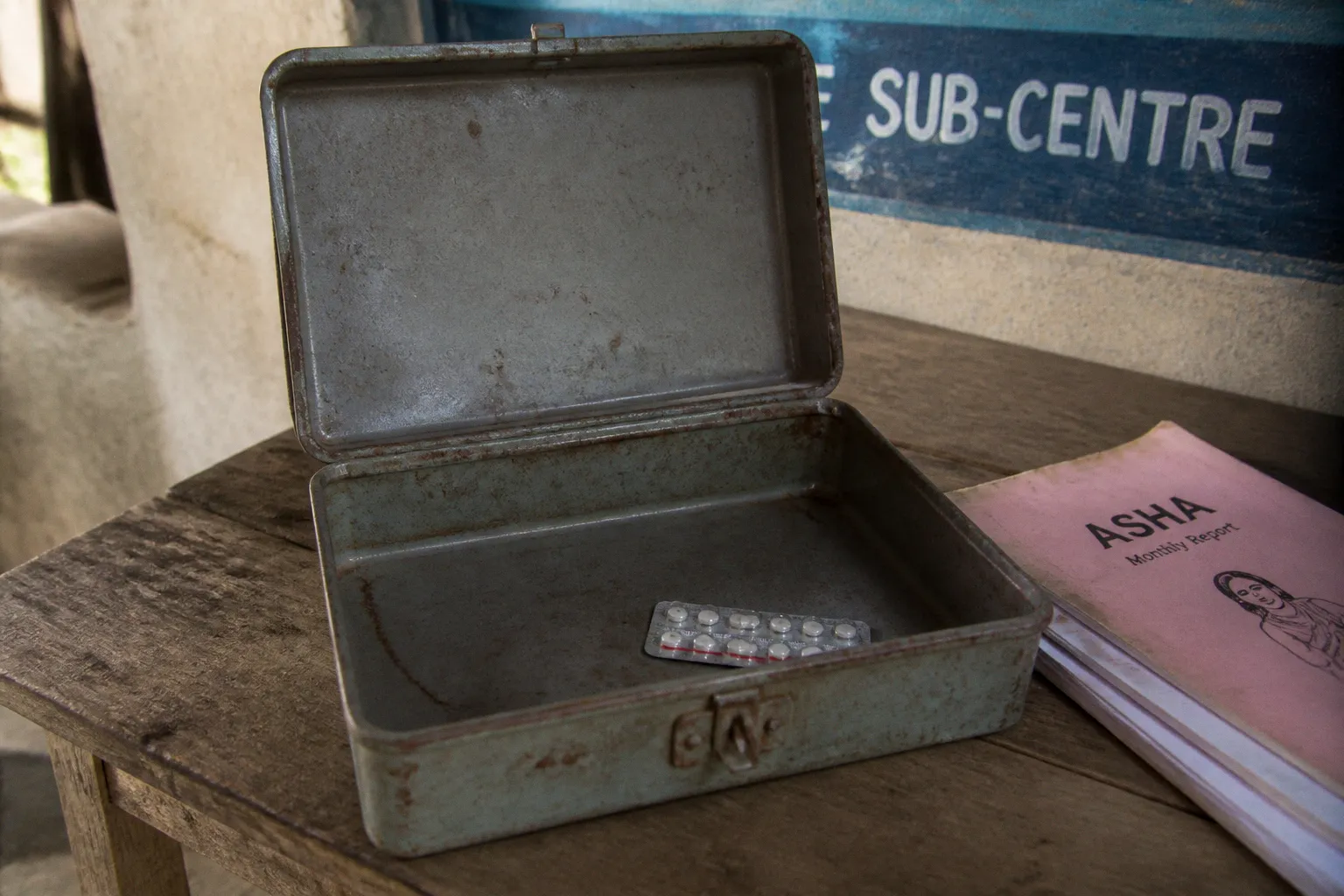
The Question at the Doorstep and the Clinic Door
She had walked nearly five kilometres with her younger sibling on her hip, had waited through a long queue, and was sitting in front of me for what turned out to be a fairly simple question: she wanted to switch methods. Her husband worked in a neighbouring district and was home only intermittently, and the condom supply an ASHA had brought her during a home visit a few weeks earlier had run out faster than expected. She had questions about oral pills and whether they could be the right next step, and she wanted a clinical opinion — not just a packet in her hand.
Compare car rental deals in United Kingdom
See available offersPartner link — DiscoverCars comparisonIt is a small vignette, but I think it captures something I see again and again in my work. The woman in front of me had been touched by two separate channels of India's family-planning system within the span of a single month: an ASHA at her doorstep and a sub-centre clinician in the room. She had not been asked to choose between them. And yet, in policy discussions and in conversations with colleagues, I keep hearing the question framed as if she had to — as if "ASHA home delivery versus sub-centre visit for contraceptives" were a head-to-head contest, with one channel destined to displace the other.
That framing, I think, misreads what is actually happening on the ground. The more accurate way to understand contraceptive access in rural India is as a complementary two-channel model: ASHAs providing doorstep access to short-acting methods, and sub-centres and Health and Wellness Centres providing facility-based counselling, follow-up, IUCD services and clinical referrals. Each channel does things the other cannot. And for the woman in my clinic, both mattered in the same month.
The question is not whether ASHA delivery or the sub-centre visit "wins." It is which combination gives a woman the right method, at the right moment, with the right clinical back-up.
The Dual-Channel Model: Complementary Roles in Family Planning
When I sit down with junior colleagues or community health volunteers and try to explain how contraceptive access actually reaches households in rural India, I find that the cleanest mental model is the one we were taught in our public-health training: complementary delivery, not competitive delivery. Two doors, not one.
The first door is the doorstep. Under the Home Delivery of Contraceptives scheme introduced on a pilot basis by the Ministry of Health and Family Welfare through a government memorandum dated August 4, 2011, ASHAs were designated as the household-level delivery point for condoms, oral contraceptive pills and emergency contraceptive pills. The pilot covered 233 districts across 17 states. ASHAs were to identify eligible couples in their catchment area, record their preferred contraceptive methods, share that information with the sub-centre and the PHC, and replenish their stock monthly from a block PHC, CHC or PHC.
The second door is the facility. Sub-centres — and now, in their upgraded form, the Health and Wellness Centres under the revised 2022 IPHS framework — provide a different layer of service: clinical counselling, IUCD insertion and follow-up, injectable contraceptive provision where trained, and referral for methods that require a higher level of care. They are also where screening for first-dose oral pill provision takes place under the supervision of an eligible doctor, staff nurse, lady health visitor or ANM, before ASHAs distribute the continuing supply.
The reason I keep returning to the two-door image is that it captures a clinical truth my patients teach me every week. Some decisions a woman makes about contraception — when to start, how to switch, what to do when side-effects show up, whether an IUCD or injectable is appropriate for her body — simply need a clinician in the room. Other decisions — keeping a steady supply of condoms at home, having oral pills on hand before a missed cycle, knowing that an ASHA will check in next month — work best when someone comes to her. The system, in its current design, is meant to honour both of those realities.
What the design is not meant to do, and what I want to flag gently for practitioners reading this, is present these channels as directly interchangeable. A nationally representative study comparing contraceptive uptake, continuation, satisfaction or unmet need between women served specifically by an ASHA versus women served specifically through a sub-centre visit — using identical definitions and a current survey year — is not something I have been able to point to. The two channels should not be quoted as directly equivalent in effectiveness.
How the Doorstep Channel Came to Be
The Home Delivery of Contraceptives scheme did not arrive in a vacuum. It was a response to a specific access problem that frontline workers had been describing for years: that even when a woman knew about contraception, knew where the sub-centre was, and had decided in principle to use a method, the last-mile gap between her door and the facility door often proved too wide.
The 2011 pilot was an attempt to close that last mile, at least for the short-acting methods. Its design was deliberately simple. ASHAs would carry a small, replenishable stock of three commodities — condoms, oral contraceptive pills and emergency contraceptive pills — into homes during their routine visits. The incentive schedule published in the original pilot guidelines reflected this minimalism: Re 1 for a pack of three condoms, Re 1 for one cycle of oral contraceptive pills, and Re 2 for a pack of one emergency contraceptive pill. These amounts are specific to the 2011 pilot and I would not present them as current national rates without newer confirmation.
One design choice that often surprises newer colleagues is that, in the pilot districts introducing ASHA distribution, free contraceptive supplies were withdrawn from the PHC and sub-centre level — doorstep delivery was being substituted for that channel — while free supply at CHCs, sub-divisional hospitals and district hospitals continued. Non-pilot districts retained the existing facility-based supply system unchanged. This is worth knowing, because in conversations with patients and ASHAs you sometimes hear the older framing ("we used to get this at the sub-centre") and it helps to understand why.
The 2011 pilot was built on a simple insight: the last mile to a method is sometimes shorter than the last mile to a clinic.
What the pilot did not attempt was to make ASHAs into independent prescribers of every method. The national oral-contraceptive reference manual is explicit on this point: the first dose of oral pills supplied through ASHA home delivery must be preceded by screening and a prescription from an eligible doctor, staff nurse, lady health visitor or ANM. The ASHA's role is continuation supply, counselling support, and linkage back to the facility when the clinical situation warrants it. In my own practice, this distinction is the one I find most often blurred, and it is the one that matters most for patient safety.
What Sub-Centres and Health and Wellness Centres Actually Provide
If the doorstep channel is the warm, conversational layer of contraceptive access, the sub-centre and its upgraded Health and Wellness Centre form are the clinical layer — and the two layers are designed to be in conversation, not in competition.
The revised 2022 IPHS guidelines for Health and Wellness Centre Sub Health Centres list provision of condoms, oral contraceptive pills and emergency contraceptive pills among the routine services expected at that level. So the facility channel is not a step removed from short-acting methods — it is an active supply point for them, alongside the doorstep channel. The difference is that at the sub-centre, a woman has the option of a private conversation with a clinician before she takes the first pill or chooses a method.
What the facility channel uniquely provides, and what the doorstep channel cannot, falls into a few distinct categories that I find useful to spell out:
- Clinical screening and first-dose prescription for oral pills, conducted by an eligible provider.
- IUCD-related services — insertion, follow-up visits, removal, and management of side-effects or complications.
- Injectable contraceptive provision, where the sub-centre has a trained provider.
- Referral linkages to higher-level facilities for tubectomy, vasectomy or any method requiring a clinical team.
- Method-switching support — the kind of conversation where a woman has been on a method, has had problems with it, and wants a clinician's eye on the alternatives before she commits.
When the woman in my clinic came in wanting to switch from condoms to oral pills, what she needed from me was not primarily a packet of pills — she could have received that from her ASHA the following week. What she needed was the conversation: the screening for any contraindication, the discussion of what to expect in the first cycle, the reassurance that she could come back if side-effects showed up, and the knowledge that the sub-centre was a place where switching was a normal, supported choice.
It is this clinical layer that the doorstep channel is explicitly designed to feed into, rather than replace. The reference manual requires ASHAs to refer beneficiaries to the sub-centre for first-dose screening, to maintain a beneficiary list for the scheme, and to report distribution monthly to the ANM for incorporation into the sub-centre's HMIS reporting. The two doors, in other words, are meant to open into the same room.
What the NFHS-5 Evidence Does and Does Not Tell Us
When I am asked, "which channel works better?", I usually find that the question is more usefully reframed as, "what does the evidence tell us about the contribution of each channel to contraceptive outcomes?" And on that question, there is some good national-level evidence worth being honest about.
The National Health Mission's family-planning page reports headline estimates from NFHS-5 that I often use as anchors in teaching: 66.7% contraceptive use among currently married women aged 15–49, 56.5% use of modern methods, and 98.8% contraceptive awareness among women and men. These figures describe the overall access landscape; they do not isolate the contribution of ASHA delivery or sub-centre visits specifically. I am careful about that distinction in clinic discussions, because conflating national prevalence with channel-specific effectiveness can lead to overstated claims.
A more targeted line of evidence comes from a nationally representative multilevel study using NFHS-5 data, which reported modern-contraceptive use of 12.3% among women in its analytical sample who had been exposed to an ASHA, compared with 4.8% among those not exposed. In the same sample, 28.1% of women had contact with an ASHA. These are meaningful associations, and they are consistent with what I see in my own catchment — ASHA contact correlates with modern-method use.
But the study measures contact with an ASHA, not receipt of a specific contraceptive commodity through the doorstep-delivery scheme, and it reports an association rather than a causal effect. Higher modern-method use among women touched by an ASHA does not, on its own, prove that the ASHA contact caused the increase — the women reached by ASHAs may differ from those who are not on several dimensions that the study may or may not fully adjust for. I find it more clinically useful, and more honest, to describe these figures as evidence that ASHAs are part of an effective access ecosystem, rather than as a verdict on which channel "works better."
What I genuinely do not have, and what no source I have reviewed supplies, is a national head-to-head comparison of contraceptive uptake, continuation, satisfaction or unmet need between women served specifically by an ASHA and women served specifically through a sub-centre visit. I would be cautious about any claim that one channel is universally more effective, cheaper or more accessible than the other, because the evidence base does not support that framing.
| Channel | Where it reaches | What it uniquely provides | Where it needs the other channel |
|---|---|---|---|
| ASHA doorstep visit | The household, on the beneficiary's schedule | Continuation supply of condoms, oral pills, emergency pills; familiar contact; method-related conversation | First-dose clinical screening for oral pills; IUCD and injectable services; method-switching support; referral for higher-level methods |
| Sub-centre / Health and Wellness Centre | The facility, on clinic days and by appointment | Clinical screening and first-dose prescription; IUCD insertion, follow-up, removal; injectable provision; referral to higher facilities | Up-to-date information on which households are being reached at the doorstep; continuity supply between facility visits; trust built through home contact |
District-level variation in ASHA availability, sub-centre functioning, stock-outs, travel distance, privacy and provider practices remains an open variable that I find worth naming rather than glossing. The two-channel model is robust on paper, but in any particular village the experience of it depends on which doors are open that month.
Operational Realities: Stock, Reporting, and What Practitioners Can Actually Influence
The clinical and policy discussion about ASHA delivery versus sub-centre visits sometimes floats free of what determines whether either channel actually reaches a woman: stock, replenishment, and reporting discipline. These are the unglamorous parts of the system, but they are where access is won or lost on any given week, in any given village.
Under the original Home Delivery of Contraceptives guidelines, ASHAs were required to replenish stock monthly from a block PHC, CHC or PHC, and to report contraceptive distribution monthly to the ANM for incorporation into sub-centre-level HMIS. The national oral-contraceptive reference manual reinforces this: ASHAs maintain a beneficiary list for the scheme, and the ANM incorporates the data into the facility's routine health-management information system.
This monthly rhythm matters for two reasons that I have seen play out in practice. First, when the rhythm holds, the supply pipeline is predictable — a woman who wants a refill knows roughly when the ASHA will be back, and the sub-centre HMIS gives clinicians a real-time picture of method mix in the catchment. Second, when the rhythm breaks — when an ASHA is absent, when a block PHC has a stock-out, when monthly reporting slips — the two doors begin to fail in different ways. The doorstep door may go quiet without the woman necessarily knowing why, and the facility door may lose the data signal it would otherwise have had about home-level distribution.
What practitioners can actually influence here is fairly concrete, and it is what I find myself returning to in supervision:
- Keep the ASHA–ANM reporting link active. When the ASHA's monthly contraceptive report reliably reaches the ANM and is incorporated into HMIS, the sub-centre retains visibility into which methods are being supplied at the doorstep, and the ANM can intervene early if patterns look off.
- Protect first-dose screening at the facility. The clinical decision to start oral pills should remain with an eligible provider, and ASHAs should know exactly when to refer a beneficiary in. This is the single most important safety line in the scheme.
- Make method-switching a normal sub-centre conversation. Women move between methods over their reproductive lives, and the sub-centre should feel like a routine place to do that. The woman in my clinic was not in crisis; she was making a thoughtful next choice.
- Treat the two channels as a single care pathway. In the woman-held records we use, in our clinic notes, and in our conversations with ASHAs, doorstep supply and facility visits should be visible as parts of the same trajectory, not as competing services.
What This Means for the Woman at the Door
When I think about the woman in my clinic — five kilometres walked, ASHA-supplied condoms already in her hand, questions about oral pills waiting in her voice — I do not think of her as a case study in "which channel works better." I think of her as a person who, in the course of a single month, used both channels and benefited from each of them doing what it was designed to do. The ASHA brought supply and familiarity. The sub-centre brought clinical judgment, screening, and the option of switching without stigma.
That, to me, is the working model. ASHA doorstep delivery and sub-centre visits are not alternatives. They are two parts of a single care pathway, designed to meet a woman at the moment and in the form her life actually requires. The clinical task — for me, for ASHAs, for ANMs, for the policymakers who shape the schemes — is to keep both doors open, well-stocked, well-reported, and honest about what each one can and cannot do.
If I were to leave a colleague with one practical orientation, it would be this: do not ask the woman to choose between the doorstep and the clinic. Build the connections so that, whichever door she walks through next, the other one already knows she is there.