Borghese Gallery Tickets: The Step-by-Step Path to Entry
Every visit to the Borghese Gallery is controlled by a fixed variable: the entry reservation. Walk-in access is not a reliable route because advance booking is mandatory for all visitors, including those entitled to free admission.
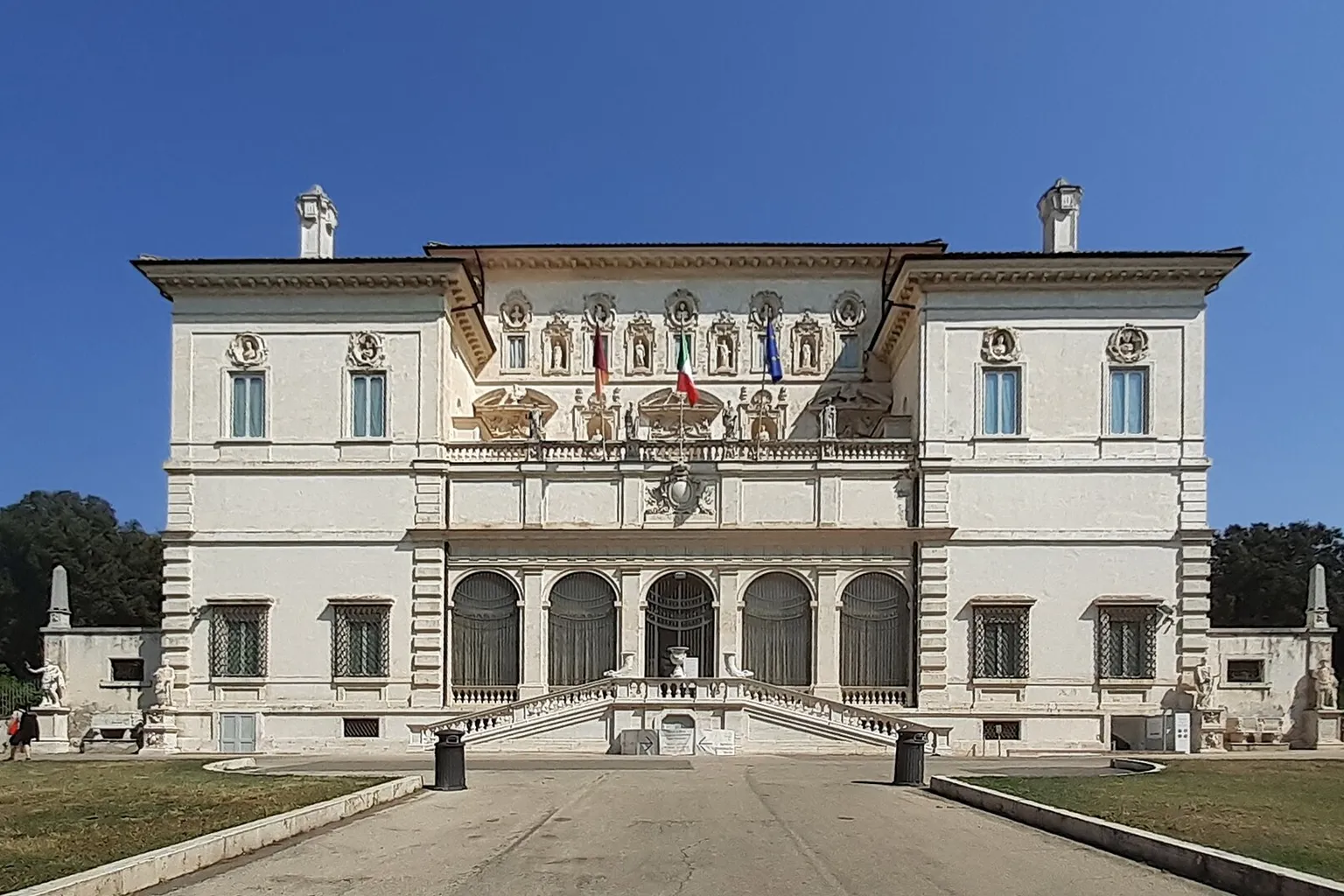
The ticket is not merely proof of payment. It is an allocation within a timed-capacity system.

Tickets and prices
Prices checked on August 16, 2026 · current price on the partner page.
Official website — galleriaborghese.cultura.gov.it
- Time to spend: 2–3 h
- Best time to visit: early morning
Prices are indicative and may change — confirm the price and availability on the partner page.
Partner link — GetYourGuide ticketsThe operational consequences are straightforward. You select a date and entry period in advance, arrive with enough time to clear the admission procedure, leave bags that exceed the permitted dimensions, and exit when the two-hour slot ends. Tickets are non-refundable and cannot be modified or rescheduled after purchase. A booking error is therefore not a minor inconvenience. It can invalidate the visit.
The mandatory reservation system: why walk-ins are impossible
The Borghese Gallery does not operate like a museum where visitors can normally arrive, queue, and purchase a ticket at the door. Entry is based on reservations assigned to specific time windows. The gallery regulates the number of people entering during each period, with capacity limits reported between 180 and 360 visitors depending on the slot.
This capacity model affects the entire booking process. Availability is not simply a question of whether the gallery is open. A date may be operational, but a particular entry period may already be full. The relevant unit is therefore not “a museum ticket for Tuesday.” It is a reservation for a defined date and time.
The requirement applies across visitor categories:
- Standard adult visitors must reserve in advance.
- Minors under 18 still require a reservation, even when admission eligibility differs from the standard adult category.
- Visitors with disabilities must also arrange entry in advance.
- Groups should coordinate reservations rather than assume that several people can be admitted together without separate confirmed places.
This is the first point at which many booking attempts fail. Visitors identify a free-admission category and conclude that no reservation is required. That conclusion is incorrect. The admission charge and the reservation requirement are separate variables.
The decisive document is not a generic museum ticket. It is a dated reservation attached to a specific entry slot.
The same logic applies to last-minute Borghese Gallery tickets. A late booking is possible only if the selected slot still has capacity through an authorized booking channel. It is not a separate access category, and it does not remove the reservation requirement.
How to buy Borghese Gallery tickets through the official route
The official booking route is available online through the gallery’s ticketing system and its authorized ticketing partner, TicketOne / Tosc.it. Reservations can also be made by telephone through the official booking number.
The process is procedural. Treat it as a data-entry task rather than as a casual purchase.
Step 1: Select the date
Start with the date on which you can actually attend. The gallery is open from Tuesday through Sunday, from 9:00 a.m. to 7:00 p.m. It is closed on Mondays, December 25, and January 1.
The calendar has two implications. First, a Monday cannot be used as a fallback date. Second, a booking near a public holiday requires a closer review of the operating calendar because the gallery’s normal weekly pattern does not override its closure dates.
Do not select a date before confirming the rest of your Rome itinerary. Once purchased, the ticket cannot be refunded, edited, or moved to another date under the standard terms.
Step 2: Select an available entry period
Visits are divided into two-hour periods. Typical periods run as follows:
| Entry period | Operational consequence |
|---|---|
| 9:00 a.m.–11:00 a.m. | Exit is required at 11:00 a.m. |
| 11:00 a.m.–1:00 p.m. | Exit is required at 1:00 p.m. |
| 1:00 p.m.–3:00 p.m. | Exit is required at 3:00 p.m. |
| 3:00 p.m.–5:00 p.m. | Exit is required at 5:00 p.m. |
| 5:00 p.m.–7:00 p.m. | The final period ends at closing time |
The final-entry rules may be expressed differently in booking information, with a last admission time listed around the late afternoon. The practical point is unchanged: the slot determines the visit window, and the gallery requires visitors to leave at its conclusion.
Choose the slot by working backward from your wider schedule. A reservation at 3:00 p.m. is not interchangeable with a 4:00 p.m. arrival. A train departure, restaurant booking, guided tour, or airport transfer should not be placed immediately after the museum visit without accounting for the mandatory exit time and the movement required to collect stored belongings.
Step 3: Enter the correct visitor category
The booking form may distinguish between standard admission and categories with different eligibility rules. Enter the number and type of visitors accurately. Free admission does not mean unregistered admission. Every person in the party needs an appropriate reservation.
The risk here is administrative rather than cultural. A visitor may hold valid proof of eligibility but still lack a confirmed place in the selected slot. Conversely, a reservation made under the wrong category can create a problem at admission even when the date and time are correct.
Review the final booking summary before submitting payment or confirmation. Check:
- The spelling of the booking name.
- The selected date.
- The entry period.
- The number of visitors.
- The visitor category assigned to each person.
- Any additional service selected during the booking process.
Step 4: Retain the confirmation
Keep the booking confirmation available in the format required by the ticketing system. Do not rely exclusively on memory, a screenshot with missing details, or an email that may be inaccessible without a data connection.
The confirmation should be treated as an operational record. Store it where it can be retrieved before entry, and verify the date and time again on the day of the visit. Because standard tickets are non-refundable and cannot be rescheduled, the confirmation is also the final audit trail for the transaction.
Phone reservations and third-party options
The official booking system permits reservations online or by phone. Telephone booking can be useful when the website does not display a straightforward option for a particular visitor category or when a party needs clarification before completing the transaction. The official booking number is +39 06 32810.
A third-party tour or entry product may offer a different service structure, such as a host or greeter who assists with access. That is not equivalent to removing the gallery’s capacity controls. A third-party product still needs to correspond to an actual entry date and time, and its terms may differ from those of a standard reservation.
The distinction should be recorded before purchase:
- A direct gallery reservation is the basic access mechanism.
- A hosted or guided product may add assistance, interpretation, or a meeting procedure.
- A third-party booking may have its own cancellation, meeting-point, and identity requirements.
- None of these categories should be interpreted as permission to arrive without a confirmed allocation.
The correct comparison is not simply “official versus third party.” It is whether the product provides a valid entry arrangement for the required date and time, and whether the visitor understands what is included.
Timed entry is a two-hour limit, not an arrival suggestion
The Borghese Gallery’s timed system is unusually material to the visitor experience because the maximum visit duration is two hours. This is not an approximate recommendation. Visitors must exit when the slot ends.
The time limit changes how the collection should be approached. A visitor who spends too long in the opening rooms reduces the time available for the remaining galleries. A group that arrives late loses part of the allocated period. A visitor who plans the gallery as an open-ended afternoon activity has misunderstood the operating model.
A practical route requires prioritization before entry. The collection includes major works associated with Gian Lorenzo Bernini, Caravaggio, Raphael, Titian, and other central figures in Italian art. The relevant planning question is not how to inspect every object with equal duration. It is how to allocate finite time across the works and rooms that matter most to the visitor.
A controlled visit usually benefits from three decisions:
1. Define the principal works before arrival.
Identify the sculptures and paintings that are non-negotiable for your visit. This prevents the first room from consuming the entire allocation.
2. Reserve time for movement between rooms.
The two-hour period includes the practical time required to navigate the building. A schedule based on uninterrupted viewing is structurally optimistic.
3. Treat the final minutes as an exit phase.
Do not begin a distant room or a detailed examination immediately before the slot ends. The gallery requires departure, and personal items may need to be collected from the cloakroom.
An audio guide is available as an additional option. Its use should be evaluated against the same time constraint. Audio commentary increases informational density, but it also consumes attention and minutes. It is not automatically the most efficient choice for a visitor whose objective is a focused visual survey.
Bag restrictions: the dimensions are operational
The cloakroom rules are not a minor footnote. Bags, backpacks, umbrellas, strollers, and purses exceeding 21 × 15 cm must be left before entry. Suitcases and trolley bags are not accepted.
This creates a clear boundary between a manageable personal item and luggage. A cabin-size suitcase cannot be treated as an oversized handbag. A larger backpack cannot be carried into the exhibition rooms simply because it contains only personal effects. The restriction concerns the object’s size and category, not the visitor’s reason for carrying it.
Plan around the rule before travelling to the gallery. The following items require particular attention:
- Large backpacks used for day-long sightseeing.
- Handbags that exceed the permitted dimensions.
- Umbrellas carried during wet weather.
- Strollers and pushchairs.
- Suitcases and wheeled trolley bags.
The cloakroom can solve the problem for accepted items, but it does not convert the gallery into a luggage-storage facility. Suitcases and trolley bags are not accepted. Visitors moving directly from a hotel, railway station, or airport should therefore arrange storage elsewhere before arriving.
The timing impact also matters. Dropping off an item takes place before entry, and collecting it takes place after the visit. A narrow connection between the museum and another fixed appointment is therefore poor scheduling even when the nominal travel time appears sufficient.
The booking policy makes planning part of the ticket
The non-refundable and non-changeable nature of the reservation is the central financial and logistical constraint. Once the ticket is purchased, the standard terms do not permit a date shift or ordinary modification.
That policy makes the order of decisions important. Do not purchase first and solve the itinerary later. Establish the date, the transport plan, the visitor category, and the baggage situation before confirming the reservation.
A useful sequence is:
1. Confirm that the gallery is operating on the intended date.
2. Select a slot that leaves sufficient margin around other fixed commitments.
3. Confirm the number and category of visitors.
4. Check whether anyone will arrive with a restricted bag or luggage.
5. Complete the booking through the official system or a clearly defined authorized product.
6. Record the confirmation details.
7. Recheck the entry time and baggage plan before departure.
This sequence does not guarantee availability. It reduces preventable errors once availability is found.
A practical route for visitors booking close to the date
Last-minute Borghese Gallery tickets should be approached as a capacity search, not as a request for an exception. Begin with the official ticketing channel and inspect the available periods for the date you can genuinely attend. If the preferred period is unavailable, compare alternative dates rather than assuming that the same-day desk will release a walk-in ticket.
The exact timing of booking releases can vary, and the available booking window should not be treated as a fixed universal rule without confirmation. The reliable fact is narrower: entry requires a reservation, and availability is attached to specific timed slots.
If you use a hosted or guided entry product, read the meeting instructions separately from the gallery’s own admission rules. A greeter may change where you meet and how the access process is coordinated. It does not change the two-hour duration, the closure calendar, or the baggage restrictions unless the product explicitly states otherwise.
The most common failure patterns are predictable:
- Arriving on Monday because the weekly closure was overlooked.
- Assuming a free-admission visitor does not need a reservation.
- Booking a time that conflicts with transport or another fixed appointment.
- Treating the two-hour slot as a flexible arrival period.
- Bringing a suitcase or trolley bag to the gallery.
- Expecting a purchased ticket to be refunded or moved.
- Selecting a third-party product without checking its meeting and cancellation terms.
None of these errors requires a complex explanation. They result from treating a controlled-entry museum as an unrestricted attraction.
At the Borghese Gallery, itinerary discipline is part of admission. The reservation, the clock, and the baggage rule operate as one system.
Final entry protocol
On the day of the visit, arrive with the reservation details accessible and enough margin to manage the admission process. The correct objective is not to reach the building at the exact start of the slot. It is to be ready for entry without using the first part of the two-hour allocation on preventable administration.
Leave restricted items before entering the exhibition areas. Do not bring luggage that the cloakroom does not accept. Confirm the slot before proceeding through the access point, particularly if the day includes several scheduled activities.
Inside, use the time allocation deliberately. The gallery’s capacity system protects the number of visitors in each period, but it does not create additional minutes for an individual reservation. The two-hour limit remains fixed.
The booking route is therefore simple in structure but unforgiving in execution: reserve in advance, select the correct date and slot, classify every visitor accurately, control baggage, and treat the confirmation as final. Visitors who follow those steps remove the main sources of operational failure before they reach the gallery.
Practical info
Currency: EUR
Driving: on the right
Emergency number: 112
Key facts
Built: 1903
Architect: Flaminio Ponzio
Heritage status: Italian national heritage
Official website: galleriaborghese.cultura.gov.it
FAQ
Do I need to reserve Borghese Gallery tickets in advance?
How long can I stay inside the Borghese Gallery?
What days and hours is the Borghese Gallery open?
Can Borghese Gallery tickets be refunded or rescheduled?
What bags can I bring into the Borghese Gallery?
Photo: Blackcat / CC BY-SA 4.0 — Wikimedia Commons