Ngong Ping Cable Car Tickets: How to Avoid Booking Traps
The Ngong Ping 360 aerial system spans 5.7 kilometres between Tung Chung and the Ngong Ping village plateau on Lantau Island, completing each directional journey in approximately 25 minutes.
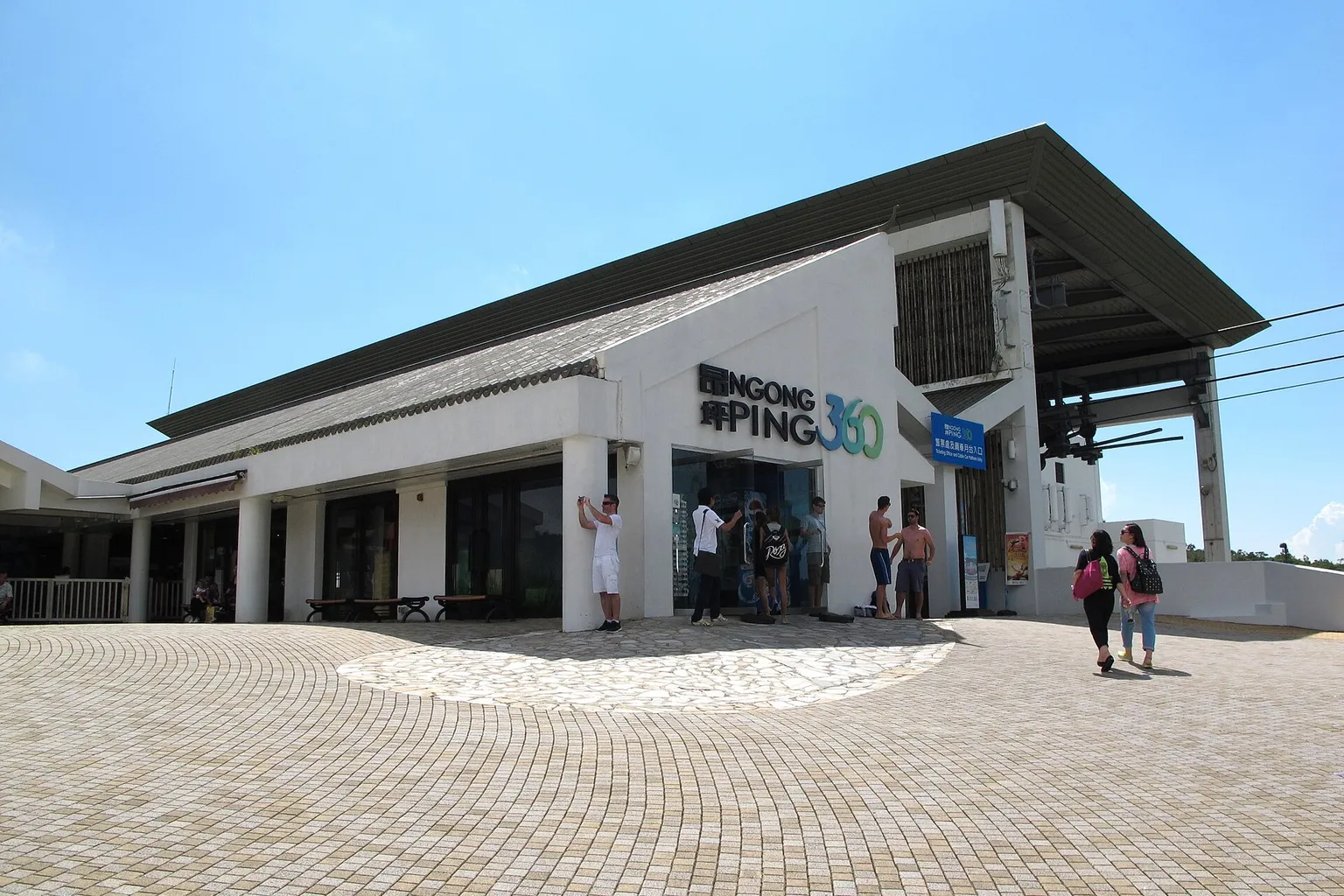
For most visitors, those two metrics — distance and duration — represent the entire transaction. They do not. The variable that most directly governs whether a visitor boards the cable car, how long they wait, and whether the purchase remains valid upon arrival is the procurement channel selected before reaching Tung Chung. In tourism operations, the term "ticket" denotes a bearer instrument with explicit validity constraints. At Ngong Ping 360, those constraints are enforced without exception.
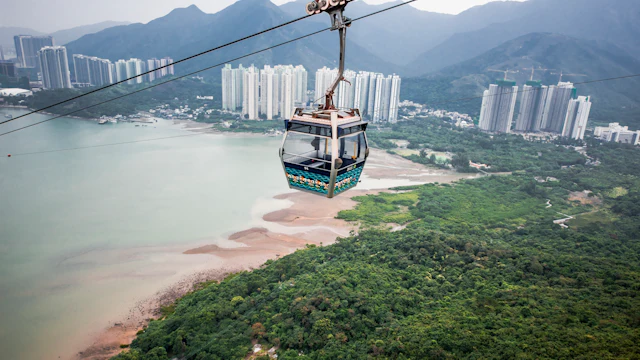
Tickets and prices
- Guided Tour · Groupfrom€61
- Guided Tourfrom€87
Prices checked on August 03, 2026 · current price on the partner page.
Official website — np360.com.hk
- Time to spend: 2–3 h
- Best time to visit: early morning
Prices are indicative and may change — confirm the price and availability on the partner page.
Partner link — GetYourGuide ticketsA ticket to Ngong Ping 360 is valid only if it originates from an authorized sales channel. Procurement decisions made weeks in advance can determine the difference between immediate boarding and a multi-hour administrative queue.
The Voided-Ticket Variable: Channel Integrity as the Primary Risk
Ngong Ping 360 has issued an unambiguous policy: cable car tickets must be purchased exclusively through its official website, official ticket offices, or explicitly authorized sales channels. Any ticket acquired through an unapproved third-party vendor is subject to immediate voiding without refund upon verification at the terminal. This is not a discretionary penalty; it is a stated operational rule with documented enforcement.
The practical implication is that the population of valid tickets in circulation on any given day is strictly bounded by the operator's authorization list. Visitors who procure tickets through informal resellers, grey-market platforms, or unverified travel agents operate outside that boundary. When such a ticket is scanned or presented at Tung Chung, the result is binary: either the system recognizes the booking code, or it does not. There is no intermediate category, and there is no on-site remediation pathway for rejected instruments.
This constraint introduces a categorical risk variable into the procurement decision. A ticket purchased at a discount from an unverified source carries a high probability of rejection if the channel is unauthorized. The expected operational value of such a ticket approaches zero. Visitors weighing price savings against channel legitimacy are, in effect, computing the expected cost of denied access — a cost that includes lost time, alternative transportation arrangements, and the forgone 25-minute aerial experience.
The operator's enforcement posture is consistent and public. Ngong Ping 360 does not advertise a grace period, a counter-redemption option for voided third-party tickets, or a discretionary override. The policy reads as a closed system: authorized channels produce valid instruments; unauthorized channels do not.
Voucher-to-Ticket Conversion: The Latent Queue Multiplier
A subtler risk vector exists for visitors using legitimate third-party booking platforms that issue "vouchers" or confirmation documents rather than direct-entry tickets. The distinction is operationally meaningful and routinely misunderstood.
A voucher functions as a redemption instrument. Upon arrival at the Tung Chung terminal, the visitor must present the voucher at a designated counter line, surrender it, and receive in exchange a physical Ngong Ping 360 ticket — the bearer instrument that permits boarding. This two-step process introduces a queue event that direct booking does not generate. The counter line at Tung Chung can, during peak periods, extend wait times by 30 to 90 minutes depending on hourly throughput. Visitors who assumed they were purchasing a ticket are, in fact, purchasing a queue obligation.
This dynamic is not visible in the price comparison. Two visitors may pay comparable amounts — one through the official site and one through a voucher-issuing aggregator — but their arrival-to-boarding time distributions diverge sharply. The official-site buyer proceeds to a redemption or boarding line; the voucher buyer enters a third-party counter line, completes the exchange, and then joins the same boarding line. The marginal time cost of the voucher pathway is the counter-line duration itself.
The confusion arises because voucher-based platforms market their products using language borrowed from the direct-ticket category. Terms like "confirmed entry" and "skip the line" appear in listings, but the operational reality is that the voucher holder skips no line — they join a different one. Visitors reading these descriptions as equivalent to an official e-ticket are operating on incomplete information.
Direct Entry: Decomposing the Online Booking Pathway
The official Ngong Ping 360 booking pathway — website or in-person official ticket office — produces a ticket that functions as a direct boarding instrument. Once the transaction is confirmed, the visitor receives either an e-ticket with a QR code or a printed voucher marked for direct entry. At the terminal, this instrument routes the holder past the main ticket-counter line and into the ticket-redemption or boarding queue.
The structural advantage of this pathway is the elimination of one full queue event. Visitors who purchase on-site at Tung Chung — walking up to the ticket office without a prior booking — must clear two sequential queues: one to acquire the ticket, and one to board. The online direct-booking pathway collapses the first queue into a pre-arrival action, leaving only the boarding queue at the terminal.
| Procurement Channel | Queues at Terminal | Instrument Type | Rejection Risk |
|---|---|---|---|
| Official website (advance booking) | 1 (boarding/redemption) | Direct e-ticket / QR code | None |
| Official ticket office (walk-up) | 2 (purchase + boarding) | Direct printed ticket | None |
| Authorized third-party (voucher) | 2 (counter exchange + boarding) | Voucher → ticket exchange | Low if authorized |
| Unauthorized third-party | Variable, potentially entry denied | Unverified | High |
The table above summarizes the queue and risk decomposition across the four principal procurement channels. The only pathway that introduces meaningful rejection risk is the unauthorized category; the only pathway that introduces a counter-exchange delay is the authorized third-party voucher category. Direct official channels occupy the efficient frontier of the decision space — minimum queues, zero rejection risk.
Cabin Selection: Standard vs. Crystal Cabin as a Discrete Choice
The Ngong Ping 360 system operates two cabin categories: the Standard Cabin and the Crystal Cabin. The Standard Cabin is a conventional enclosed gondola. The Crystal Cabin features a glass-bottom floor, providing a downward view of the terrain below during the 25-minute ascent and descent.
The selection between these two options is a discrete choice problem with a clear price differential and a measurable experiential return. Visitors must weigh the marginal cost of the Crystal Cabin upgrade against the utility they assign to the glass-bottom viewing feature. For visitors with no strong preference, the Standard Cabin is the cost-efficient default. For visitors who specifically prioritize the aerial-floor viewing experience, the Crystal Cabin is the only category that delivers it.
Both cabin categories follow the same route, the same schedule, and the same queue structure at the terminal. The upgrade variable does not affect wait time, boarding priority, or operational reliability. It affects only the in-cabin viewing experience. Visitors should treat the decision as pure utility maximization: the Crystal Cabin is worth the premium if and only if the glass-bottom feature carries positive utility for that visitor.
Group composition introduces a secondary variable. The Crystal Cabin accommodates fewer passengers per cabin than the Standard Cabin, which can affect boarding group dynamics during peak hours. Visitors traveling in large parties who all require the Crystal Cabin should account for potential split-boarding scenarios when the cabin fills before the full group has boarded.
Queue Decomposition at the Tung Chung Terminal
The Tung Chung terminal is the primary bottleneck of the Ngong Ping 360 operation. Even visitors holding valid direct-entry tickets must clear a boarding queue. The duration of that queue is a function of three variables: time of day, day of week, and weather.
Peak periods fall into predictable windows. Weekends and Hong Kong public holidays generate higher visitor volumes than weekdays. The first boarding window after the terminal opens produces a concentrated arrival cohort. Mid-afternoon, when tour groups from morning Lantau itineraries return toward the city, generates a secondary peak. Weekday mornings between the opening cohort and the mid-morning stabilization point tend to show lower queue durations than any weekend window.
Weather introduces an exogenous disruption variable. Cable car operations are weather-dependent; high winds, thunderstorms, and low visibility conditions can suspend service. Visitors holding tickets during a suspension are typically entitled to rescheduling or refund per the operator's stated policy, but the on-site experience during such events involves waiting, re-queuing, or revised route planning. Weather cancellations are not redeemable as queue advantages.
The boarding queue at Tung Chung is not a fixed-duration event. It is a distribution whose expected value shifts by hour, by day type, and by meteorological conditions. Visitors who model the queue as a constant rather than a variable will misallocate their arrival time.
For visitors seeking to minimize queue exposure, the procedural recommendation supported by observed visitor flow patterns is to arrive at the terminal during a mid-morning weekday window, having purchased tickets through the official channel in advance. This window sits between the opening surge and the afternoon return peak, and the weekday status suppresses the volume baseline.
Procedural Implications and the Booking Risk Model
The decision architecture for purchasing Ngong Ping 360 tickets resolves to a small set of controllable variables. The visitor's task is to minimize expected total time cost — defined as procurement time plus terminal queue time plus rejection-risk adjustment — subject to a budget constraint.
The dominant variable is channel authorization. Unauthorized channels produce a binary outcome with a high probability of rejection and no recovery option. Authorized voucher channels produce a valid outcome but insert a counter-exchange queue that adds measurable terminal time. The official channel — website or on-site ticket office — produces a valid outcome with the minimum queue exposure.
Secondary variables include cabin selection, arrival timing, and group composition. These do not affect ticket validity but do affect the experiential return and the queue duration distribution.
The data converge on a single procedural conclusion: book directly through the official Ngong Ping 360 website before arrival, select the cabin category that matches the visitor's utility function, and target a mid-morning weekday arrival window. Visitors following this pathway enter the boarding queue with the minimum queue exposure and zero rejection risk. Visitors who deviate from this pathway — whether through unauthorized resellers or voucher-issuing aggregators — accept additional time costs and, in the unauthorized case, a meaningful probability of being denied entry altogether.
For visitors unable to book online in advance, the official on-site ticket office remains a valid procurement channel, though it requires two terminal queues rather than one. The trade-off is real-time availability versus added wait time. Visitors making this trade-off should budget for the additional queue duration accordingly and treat the walk-up pathway as a fallback rather than a first choice.
Practical info
Currency: CNY
Driving: on the right
FAQ
Can I get a refund if my third-party ticket is rejected?
Why do I have to wait in line if I already bought a ticket online?
Is the Crystal Cabin faster than the Standard Cabin?
What happens if I buy my ticket at the Tung Chung terminal on the day of my visit?
Does the weather affect my cable car ticket?
Photo: Wing1990hk / CC BY 3.0 — Wikimedia Commons