Erawan Museum tickets: booking paths for RCH delegates
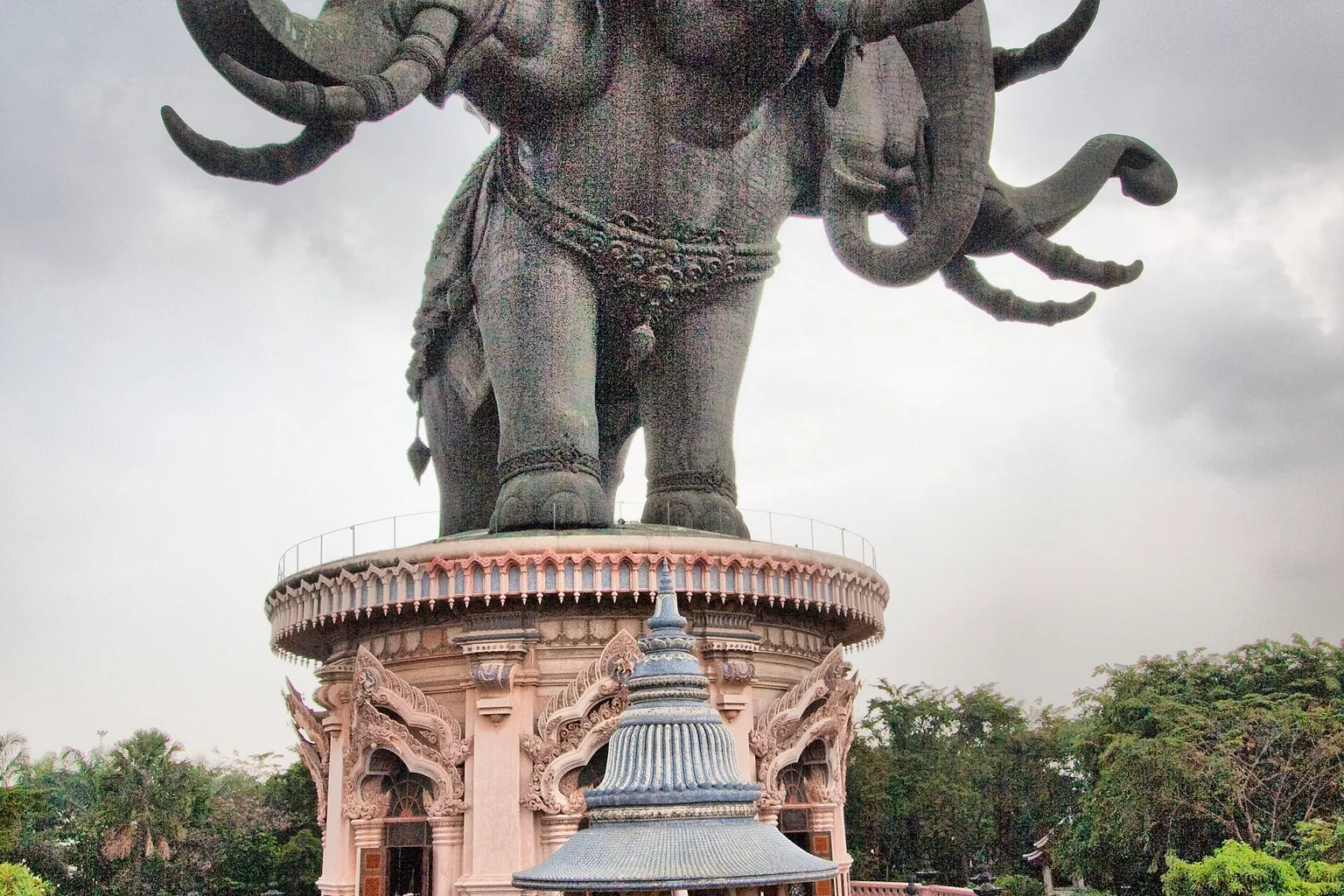
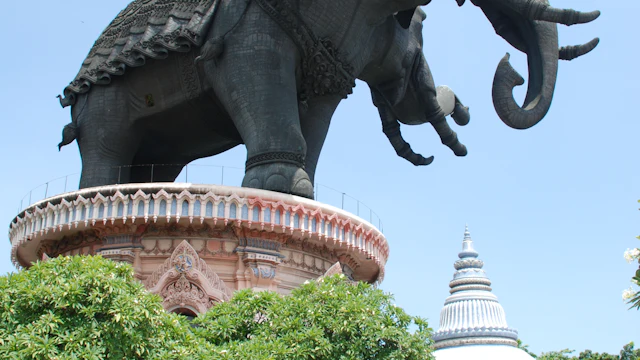
Bangkok’s satellite city of Samut Prakan holds one of the most visually arresting cultural sites in the greater metropolitan area: the Erawan Museum, anchored by a towering bronze three-headed elephant visible from the expressway.Erawan Museum · from €10 · Book tickets
Erawan Museum tickets: what every RCH delegate should know before booking
If your RCH conference itinerary gives you even half a free day, this is the kind of place that rewards a visit. But getting your tickets sorted — and understanding what you are actually paying for — takes a little more planning than showing up at the gate.
Tickets and prices
Erawan Museum
Samut Prakan
01 · GetYourGuide
Entry ticket — general admission
€10
02 · GetYourGuide
Entry ticket — two locations for non-Thai citizens
€10
03 · GetYourGuide
Private guided tour — two locations
€39
04 · GetYourGuide
Guided tour — 2 hours with entry ticket
€74
Box office and online booking
Erawan Museum — At the box office
prices in box-office currencyLet’s be direct about something first: there is no special booking path, delegate discount, or institutional tie-in between Reproductive and Child Health programme participants and the Erawan Museum. I have seen the question surface in conference WhatsApp groups more than once, and the answer remains the same: every visitor, regardless of professional affiliation, uses the same ticketing channels. That is not bad news. It means the process is relatively transparent once you know which price applies to you, where an online voucher must be redeemed, and how much time the visit really needs.
The museum’s three ascending levels mirror a cosmological journey — underground, earth, and heaven inside the elephant. Your ticket is not simply permission to enter a building; it gives you access to a carefully staged narrative that rewards unhurried attention.
Navigating ticket pricing: standard rates and local concessions
The first mistake to avoid is treating every price shown online as interchangeable. The Erawan Museum has different rates for international visitors and people who qualify for local pricing, while third-party booking platforms may display promotional prices that are valid only under particular conditions.
For foreign adults buying directly on site, the confirmed price is 500 THB. That is the figure to use when planning a walk-up visit, not an older online reference or a discounted rate copied from a travel platform.
Visitors who hold a Thai work permit or Thai driving licence typically qualify for local pricing of 250 THB, subject to the museum’s acceptance of the relevant document at the point of entry. This is a useful distinction for international RCH delegates based in Thailand, consultants working with local institutions, and long-term visitors who may not be travelling as ordinary tourists. A passport alone should not be assumed to qualify for the local rate.
| Visitor situation | Practical rate or treatment | What to have ready |
|---|---|---|
| Foreign adult purchasing at the museum | 500 THB | Passport or accepted identification |
| Eligible holder of a Thai work permit or Thai driving licence | Typically 250 THB local pricing | Valid work permit or Thai driving licence |
| International child or concession visitor | Confirm current terms before purchase | Age or eligibility documentation where requested |
| Online-ticket holder | Platform price shown at booking | Voucher, QR code, and booking reference |
| Group of RCH delegates | No separate institutional rate | One booking per group or individual vouchers |
The important word in the table is “typically.” Local pricing is a privilege tied to accepted documentation, not a general discount for anyone staying in Bangkok. If you are travelling with colleagues, do not assume that one person’s work permit can secure the same rate for the entire group. Each eligible visitor should be prepared to show the document that supports their own admission.
Online prices versus the on-site rate
Online travel agencies may offer Erawan Museum tickets below the 500 THB foreign-adult price. Platforms such as Klook, GetYourGuide, or KKday can sometimes list promotional admission in the region of 260–279 THB, depending on the date, package, currency conversion, and fees added at checkout. That is a potential saving, but it should not be treated as a permanent museum-wide rate.
The displayed price is only one part of the decision. Check whether the ticket is:
- valid on a particular date or open-dated;
- refundable or non-refundable;
- issued immediately or only after manual confirmation;
- for direct entry or for redemption at a separate counter;
- sold as a single attraction ticket or bundled with the Ancient City;
- priced before or after platform service fees.
A low headline price is less useful if the voucher cannot be located on your phone, the booking is for the wrong date, or the package requires a redemption step that your group has not allowed time for. Save the voucher offline before leaving the hotel. Conference venues and BTS stations are not places where you want to discover that your booking email has vanished into a weak mobile connection.
The museum’s own admission terms can change, and third-party listings do not always update at exactly the same time. Confirm the current conditions the day before visiting, especially if you are organising tickets for a delegation rather than buying for yourself. If the total difference is small, the direct on-site purchase may be worth it for the flexibility. If the online saving is substantial and your schedule is fixed, advance booking is usually the more rational choice.
Digital booking strategies: use the right counter, not a mythical queue shortcut
Advance booking is useful, but it does not mean every online ticket holder walks straight from the pavement into the museum. Many vouchers require presentation or exchange at a designated redemption counter. That is the operational detail people tend to miss.
The practical booking routes are straightforward:
1. Buy an advance ticket through a recognised online platform.
Choose the date carefully, complete the payment, and download the QR code or booking reference. At the museum, follow the signs or staff instructions for voucher redemption. The advantage is that you may secure a lower price and arrive with the transaction already completed.
2. Check the museum’s direct sales channels.
If official online booking is available for your date, it is the most direct route. The interface may be less convenient than a large travel platform, but the terms can be easier to interpret because you are dealing with the attraction rather than an intermediary.
3. Buy at the museum on arrival.
This remains a valid option for visitors who value flexibility or have not finalised their itinerary. Foreign adults should budget for the confirmed 500 THB on-site rate. Eligible holders of a Thai work permit or driving licence should carry the relevant document and ask for local pricing at the counter.
4. Book a combination product if the Ancient City is part of the plan.
A combined ticket can make sense when both attractions fit into the same day or wider Samut Prakan itinerary. Compare the final package cost with the two separate admissions rather than assuming that every bundle is automatically cheaper.
There is no need to invent a precise waiting-time calculation for the main entrance. The useful distinction is simpler: an online voucher may save you from purchasing a ticket in the ordinary way, but you may still need to stop at the designated redemption counter. That is why the voucher process should be understood before you arrive.
For a small group of RCH colleagues, one booking can be efficient if the platform issues a single group voucher and everyone is comfortable moving through the redemption process together. Separate bookings may be preferable if people are arriving from different hotels, joining at different times, or leaving for evening sessions. The smoothest arrangement is not necessarily the one with the fewest booking references; it is the one that matches the group’s actual movements.
Keep the following details together in one message to the group:
- the exact visit date;
- the name under which the booking was made;
- each traveller’s ticket category;
- the QR code or booking reference;
- the location of the redemption counter;
- the latest admission time;
- a backup screenshot of the voucher.
That may sound excessive for a museum visit. It is not. Conference groups routinely lose time because one person has the booking email, another has the payment receipt, and a third is standing at the entrance without knowing whether the ticket needs to be exchanged.
Essential logistics: operating hours and BTS access
The Erawan Museum is near Chang Erawan BTS Station, identified as E17 on the Sukhumvit Line. For delegates staying along the Sukhumvit corridor, this is one of the cleaner ways to reach Samut Prakan: air-conditioned, relatively predictable, and protected from the traffic conditions that can turn a short road journey into an open-ended one.
The basic transit sequence is uncomplicated:
- Board the BTS Sukhumvit Line heading towards Kheha.
- Remain on the same line until Chang Erawan Station, E17.
- Follow the exit directions towards the museum.
- Allow roughly 5–8 minutes for the walk from the station area to the entrance, depending on your pace and the conditions on the day.
From central Sukhumvit locations such as Asok or Phrom Phong, the complete journey commonly takes around 40–50 minutes. The exact duration depends on your starting point, transfers within the station, and how quickly the group moves once it leaves the train. A single BTS journey can cost between 16 and 62 THB depending on the origin station and fare conditions.
The museum’s stated operating hours are 09:00–18:00 daily, with the ticket counter closing and last entry at 17:00. That distinction matters. Arriving shortly before closing is not the same as having an extra hour to explore. The upper interior, the lower-level displays, and the grounds all compete for your attention, and rushing through the building undermines the reason for making the trip.
For a conference schedule, there are three workable patterns:
- Early visit: travel before the first major session and arrive close to opening time.
- Late afternoon visit: leave enough margin to reach the entrance before the 17:00 last-entry deadline, rather than aiming to arrive at the deadline itself.
- Half-day cultural block: pair the museum with the Ancient City and treat the outing as a planned excursion rather than a gap-filler between two meetings.
The early option is often the least stressful. BTS service begins early enough for a 09:00 museum arrival from many Sukhumvit-area hotels, and you are not relying on a delicate connection between the end of a conference session and the final admission window.
If you are comparing transport for a group after a morning session, BTS wins on predictability. A taxi or Grab may be quick in light traffic and painfully slow when Bangkok decides otherwise. The train has no opinion about the road outside.
A road transfer still has its place. It can be useful for a larger group carrying bags, for delegates with limited mobility, or when travelling directly from the museum to another destination. But if the group is staying near the Sukhumvit BTS line, rail is the default option I would choose. It keeps the itinerary legible and avoids building the day around an uncertain traffic estimate.
Compliance and comfort: dress code, photography, and audio guides
The Erawan Museum is not simply an outdoor photo stop. It includes interior spaces with religious imagery and a deliberately contemplative atmosphere. Visitors should dress accordingly.
Shoulders and knees should be covered. Delegates coming from a formal conference session will often already meet that standard, but business travel wardrobes can become less suitable as the day progresses. A sleeveless top, short skirt, or shorts may create an avoidable problem at the entrance. A light shawl or scarf takes almost no space in a work bag and can make the difference between walking in immediately and having to arrange additional covering.
Shoes may need to be removed before entering particular interior areas. Wear socks if you prefer not to walk barefoot on shared flooring, and choose footwear that can be removed without turning the entrance into a small logistical operation. This is not the moment for complicated shoes, especially if the group is trying to stay together.
Photography is generally possible in many outdoor and lower-level areas, although restrictions may apply in particular spaces. Follow posted instructions and ask staff when the policy is unclear. The upper interior is visually dramatic, which makes it tempting to photograph everything immediately; it is also the part of the visit where a little restraint improves the experience. Take the obvious exterior image, then give yourself time to look at the details that do not translate neatly to a phone screen.
Is the audio guide worth paying for?
The audio guide can add useful context to the museum’s cosmological structure, its collection of antiquities, and the architectural vision behind the three-level design. For visitors who want more than a sequence of photographs, it provides a framework for understanding why the building is arranged as it is.
It is particularly worthwhile if you are visiting alone or with one colleague and want to move through the galleries at your own pace. The guide gives the visit a coherent arc: the underworld below, the earthly realm at ground level, and the interior of the elephant associated with heaven. Without that context, some visitors experience the museum as a series of ornate rooms connected by an impressive sculpture. With it, the building’s internal logic becomes more apparent.
Availability, languages, and any additional charge should be confirmed when you arrive, because these arrangements can change. Do not assume that an audio guide is automatically included in every Erawan Museum ticket. If it is offered as an add-on, decide whether the group wants a structured interpretation or a more conversational visit.
For colleagues who have spent the day discussing district-level indicators, maternal health access, child nutrition, and programme implementation, the audio guide can be a welcome change of mental register. It asks you to follow symbolism and composition rather than outcomes, targets, or service-delivery gaps. That difference is precisely the point.
If your group prefers to talk while walking, skip the guide and read a short overview before entering. The BTS journey is a good time to establish the basic story, then allow the museum itself to do the rest. Avoid turning the visit into a lecture delivered by one colleague to everyone else. The building is dense enough without adding an impromptu conference presentation.
Maximising the visit: combining Erawan with the Ancient City
The Ancient City, or Muang Boran, is in the same Samut Prakan district and is often the natural second stop. It is a sprawling open-air museum of Thai architectural heritage, with scaled models, restored structures, and reconstructions distributed across landscaped grounds. The experience is entirely different from Erawan: broad rather than vertical, expansive rather than concentrated, and dependent on transport within the site as much as on walking.
The two attractions work well together for three reasons.
First, the contrast is meaningful. Erawan Museum is a single, highly controlled architectural statement. Its three levels direct the visitor through a symbolic progression. The Ancient City is more geographically dispersed and encyclopedic. One asks you to look closely at a designed interior; the other asks you to understand a cultural landscape through movement.
Second, the geography is practical. Once you have travelled south from Bangkok to Samut Prakan, visiting both attractions in one wider outing can be more efficient than making two separate journeys. The road connection between them is manageable by taxi or Grab, although traffic and the time spent locating the correct entrance should be allowed for.
Third, combination pricing may be useful. Online platforms often sell Erawan Museum and Ancient City packages. Compare the final price with separate tickets, including fees and any conditions on date or redemption. A package is most attractive when both visits are definitely part of your plan; it is poor value if the bundle persuades you to rush through one attraction simply because it has already been paid for.
A sensible sequence for a half-day or rest day
Visit Erawan first. The museum is compact enough that 1.5–2 hours gives most visitors time to see the principal spaces without sprinting. Starting there also means you are seeing the building while your attention is still relatively fresh.
Afterwards, travel to the Ancient City and use the remaining afternoon for the larger site. Its closing time is later — around 19:00 according to the usual visitor schedule — but you should still check the current operating details before committing to the sequence. The site is too large to approach as an accidental final stop after a long day of meetings.
A golf cart can be worth the additional cost at Muang Boran. The grounds are genuinely extensive, and Bangkok heat changes the calculation quickly. Walking is pleasant in short stretches, but attempting to cover the entire circuit on foot after a morning at Erawan is less a cultural strategy than a test of endurance. If the group includes older colleagues, anyone with mobility limitations, or people carrying conference bags, arrange transport within the site rather than treating it as an optional luxury.
Bring water, sun protection, and a phone battery that can survive navigation and group coordination. The practical needs are mundane, but they determine whether the second half of the day feels expansive or exhausting.
What the visit is actually worth
I will be straightforward: the Erawan Museum is not a conventional national museum, and it is not trying to be one. It does not offer the neutral, chronological presentation some visitors expect from a large public institution. It is a personal collection housed inside one of the most audacious pieces of architectural sculpture in Southeast Asia.
That distinction explains both its appeal and its limits. The three-headed elephant outside is not a decorative sign placed above an ordinary gallery. It is the building itself. The interior spaces are shaped by that conceit, and the route through them is intentionally theatrical. Visitors who want a quiet sequence of labelled objects may find the presentation idiosyncratic. Visitors willing to engage with the building as a total work — architecture, collection, symbolism, and landscape together — tend to find more in it.
For an RCH professional who spends working hours navigating district-level health data, community clinic logistics, reproductive health services, maternal care, and the granular realities of child welfare, that change of register can be restorative. There are no outcome frameworks to interpret and no indicator matrix waiting for a comment. The museum asks for a different kind of attention: slower, visual, and open to ambiguity.
That is also why the ticket decision should be made honestly. Pay the 500 THB on-site foreign-adult rate if flexibility matters more than saving money. Use a reputable online platform if the discounted price is attractive and you are comfortable with voucher redemption. Bring a Thai work permit or driving licence if you believe you qualify for the typical 250 THB local rate. Do not rely on an old price copied from a travel blog, and do not assume that a booking voucher means you can ignore the designated redemption counter.
For a practical conference itinerary, the winning formula is simple: book the appropriate ticket in advance, save the voucher offline, take the BTS Sukhumvit Line to Chang Erawan Station E17, dress for the interior spaces, and leave enough time to move through the museum without treating it as a photo stop between meetings. If the Ancient City is also on your list, compare combination tickets and plan the road transfer before the day begins.
The best visits to places like this are not optimised into submission. They are absorbed: two unhurried hours, a little context, and enough distance from the conference schedule to let the building speak for itself.
Practical info
Currency: THB
Driving: on the left
FAQ
How much does it cost for a foreign adult to visit the Erawan Museum?
Can I get a discount if I have a Thai work permit?
What is the best way to get to the Erawan Museum from central Bangkok?
What are the opening hours of the Erawan Museum?
Is there a dress code for the Erawan Museum?
Photo: Ddalbiez / CC BY-SA 3.0 — Wikimedia Commons