Art Gallery of Ontario Tickets: Guide for RCH Study Tours
A single adult ticket to the Art Gallery of Ontario costs $30. An annual pass — unlimited entry for twelve consecutive months — costs $40.
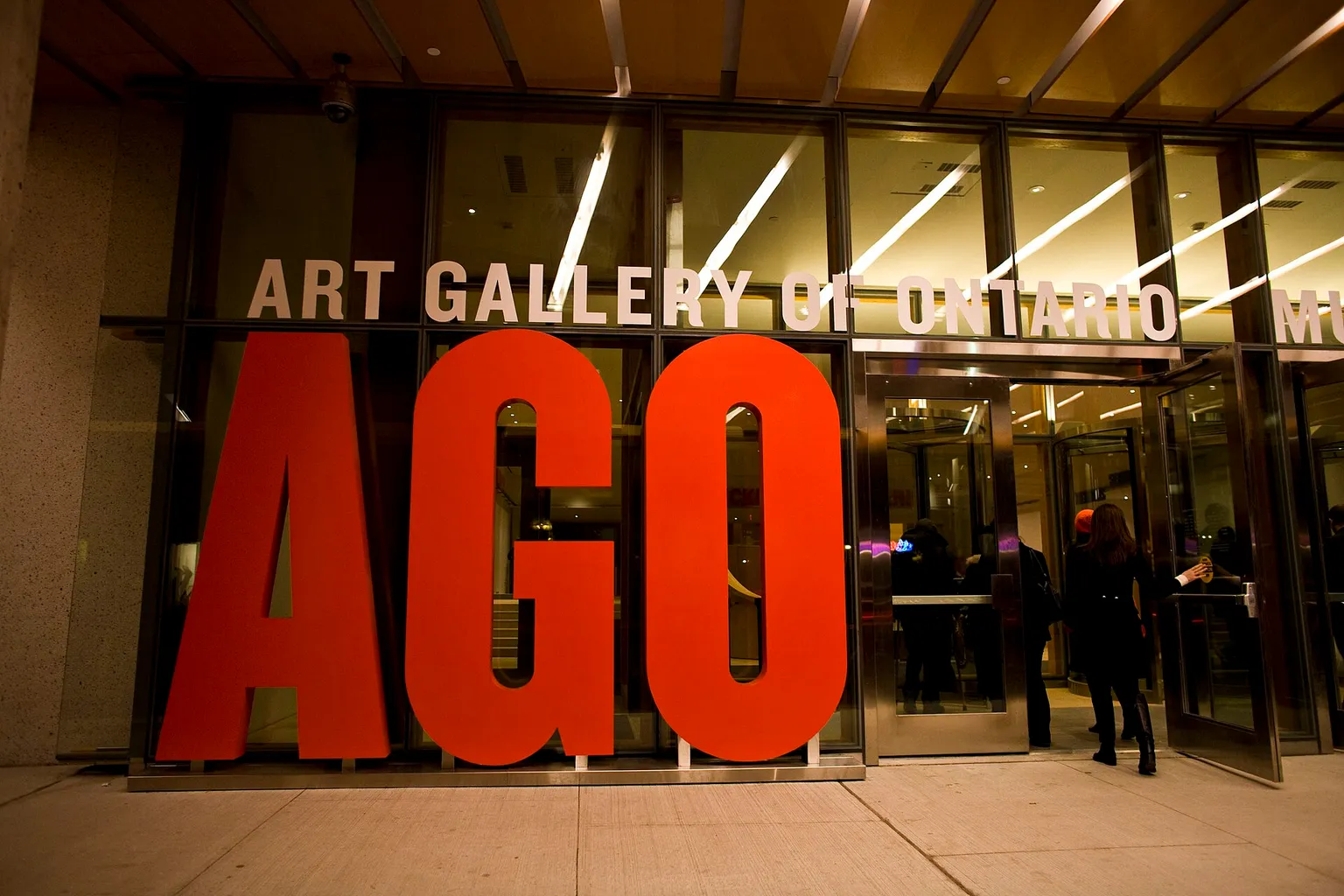
Art Gallery of Ontario Tickets: Guide for RCH Study Tours
That $10 differential is the first number any study-tour coordinator should internalize, because it changes the logic of repeat visits, advance reconnaissance, and return trips for research teams.
Tickets and prices
Art Gallery of Ontario
Toronto
01 · GetYourGuide
Entry ticket — access to more than 120,000 artworks
€19
Box office and online booking
Art Gallery of Ontario — At the box office
prices in box-office currencyFor organizations assembling study tours, the AGO’s pricing architecture has several asymmetric entry points. Some reward advance planning; others make individual admission look attractive until a group crosses the ten-person threshold. Group bookings, guided tours, annual passes, free-access programs, and school visits do not all operate through the same channel. Treating them as interchangeable is how a seemingly simple gallery visit turns into an unnecessarily expensive or poorly coordinated part of a district-level research itinerary.
The practical question is not simply how much an AGO ticket costs. It is which admission route matches the size, age profile, residency status, and purpose of the delegation.
Individual Admission and Annual Pass Options
The AGO uses a tiered structure for individual entry, with separate treatment for adults, younger visitors, children, Indigenous Peoples, and Ontario residents aged 14 to 24.
| Category | Single-Day Admission | Annual Pass |
|---|---|---|
| Adults (18+) | $30 | $40 |
| Youth (10–17), non-Ontario residents | $15 | $40 |
| Children (0–9) | Free | N/A |
| Indigenous Peoples | Free | N/A |
| Ontario residents aged 14–24 | Free | Free, registration required |
The annual pass merits more attention than its name might initially suggest. At $40, it costs only $10 more than one adult admission and provides unlimited entry for twelve consecutive months. For an adult who expects to return to the AGO, that difference is easy to justify. It can also make sense for an advance team visiting before the main delegation, provided the same people are likely to return during the validity period.
The pass is not a substitute for group booking. That distinction matters. An annual pass belongs to an individual, while a group reservation is handled through the group-admission system. A delegation cannot simply assemble a group booking and reduce the group invoice by presenting a collection of individual passes. The pricing route has to be selected before the visit, not improvised at the admissions desk.
Ontario residents aged 14 to 24 are eligible for a complimentary annual pass, but the eligibility range is specific. It applies to residents aged 14 through 24, not to every Ontario resident under 25 as a broad, unqualified category. Registration is required, so the benefit should be activated before the visit rather than treated as an automatic entitlement on arrival.
That can be useful for Ontario-based student researchers, younger assistants, and participants who may need repeated access over the course of a year. The zero-cost route is real, but it depends on both age and residency, and it still requires enrollment.
Children under 10 enter free regardless of residency, with no ticket required. Indigenous Peoples also receive complimentary general admission at all times. For mixed-age delegations, those categories should be separated from the paid headcount during planning, while the group’s overall booking and supervision requirements still need to be considered.
The $10 gap between a single adult ticket and an annual pass makes the pass the default rational acquisition for anyone likely to enter the building more than once in a year. For group coordinators, however, individual value and group-booking eligibility are separate calculations.
A simple individual-admission decision usually turns on four questions:
- Is the visitor making one trip or likely to return within twelve months?
- Does the visitor qualify for free admission through age, Indigenous identity, or Ontario residency?
- Is the person part of a qualifying organized group?
- Is the visit a general gallery visit or a structured educational program?
The fourth question is easy to overlook. A study tour may contain people who could individually obtain free admission or use an annual pass, while the delegation itself may still need to follow the AGO’s group procedures. The cheapest individual ticket is not always the same thing as the correct booking mechanism for the organization.
Free Access Programs and Monthly Specials
The AGO offers a recurring free-admission window on the first Wednesday evening of every month, from 6:00 PM to 9:00 PM. During that three-hour period, general admission is free for all visitors. There is no residency requirement and no age restriction attached to the basic free-access offer.
The operational condition is advance online booking. A free ticket still needs to be reserved, and availability can become the limiting factor during popular periods. “Free” therefore describes the admission price, not an invitation to arrive without a confirmed place.
For a small research team with a flexible schedule, the Wednesday evening window can remove the largest single line item from the visit budget. It also changes the rhythm of the visit. Three hours is enough for a focused review of selected galleries or a tightly scoped observational exercise, but it is not an unlimited research day. Teams attempting to cover a large collection, conduct interviews, or compare several sections of the building may find the time window restrictive even when the price is attractive.
The evening slot can also affect how much usable attention the group gets from the building. A free program naturally creates a different visitor pattern from a quiet weekday morning. That does not make the program unsuitable for organized research, but it does mean that the coordinator should match the purpose of the visit to the conditions:
- Use the free evening for a defined list of works, a short orientation, or a preliminary visit.
- Avoid assuming that the same window will support a full-day research agenda.
- Book online in advance for every participant who requires admission.
- If the visit involves ten or more adults or post-secondary visitors, clarify the appropriate booking route rather than treating a free public slot as identical to a standard group reservation.
- Keep the group’s arrival time realistic; a three-hour window leaves little room for late starts and extended transitions.
The free Wednesday program applies to all visitors, including visitors who are part of an organized delegation. The relevant planning issue is not an unsupported blanket exclusion of groups; it is the need to secure advance booking and make sure the reservation method matches the structure of the visit.
A free admission window is still a scheduled access window. The price disappears, but the booking discipline does not.
For larger delegations, the Wednesday evening program should be evaluated against the research objective rather than used as an automatic cost-saving answer. A group that needs a guided session, a long period of quiet observation, or a coordinated movement through several galleries may gain more from a paid booking at a less compressed time. A small team with a narrow brief may find the free evening ideal.
Group Booking Protocols and Guided Tour Requirements
Group admissions at the AGO follow a distinct pricing and logistics track. They should not be confused with individual tickets, memberships, annual passes, or the free Wednesday evening program.
An organized group of ten or more adults or post-secondary visitors qualifies for the group rate. Self-guided group admission is $24 per person, a $6 reduction from the regular $30 adult rate. The ten-person threshold is therefore not a minor administrative detail: it is the point at which the pricing model changes.
Groups of nine or fewer do not qualify for that group rate and should plan around individual admission categories. That may mean standard adult tickets, youth tickets, free child admission, or another applicable individual route. The headcount should be calculated carefully, especially for a delegation containing children, Ontario residents aged 14–24, or Indigenous visitors.
Standard memberships and annual passes cannot be applied to group admissions. A person may still hold an annual pass for their own separate visits, but the pass does not convert a group reservation into free or reduced group entry. This is one of the most common places where an apparently sensible cost-saving assumption fails.
Guided Tour Cost by Group Size
A guided experience led by an AGO Art Educator uses a flat fee of $410 for up to 20 people, plus discounted admission of $15 per person. Because the flat fee is spread across the group, the per-person cost changes at every group size. The $35.50 figure applies to a full 20-person group, not to every group between 15 and 20.
| Group size | Calculation | Combined cost per person |
|---|---|---|
| 10 | $410 ÷ 10 + $15 | $56.00 |
| 11 | $410 ÷ 11 + $15 | $52.27 |
| 12 | $410 ÷ 12 + $15 | $49.17 |
| 13 | $410 ÷ 13 + $15 | $46.54 |
| 14 | $410 ÷ 14 + $15 | $44.29 |
| 15 | $410 ÷ 15 + $15 | $42.33 |
| 16 | $410 ÷ 16 + $15 | $40.63 |
| 17 | $410 ÷ 17 + $15 | $39.12 |
| 18 | $410 ÷ 18 + $15 | $37.78 |
| 19 | $410 ÷ 19 + $15 | $36.58 |
| 20 | $410 ÷ 20 + $15 | $35.50 |
The pattern is more useful than any single headline price. At ten participants, the guided option costs $56 per person, more than twice the $24 self-guided group admission. At fifteen, it falls to $42.33 per person. At twenty, it reaches $35.50. The guided tour becomes progressively more economical as the group fills the available capacity, but it does not become a $35.50-per-person service merely because the group has reached fifteen.
That difference matters when budgets are being prepared for a research delegation. A coordinator working with seventeen participants should budget $39.12 per person for the combined guided package, not the full-capacity rate. If the delegation is close to twenty, filling the remaining places can reduce the per-person cost, but only if those additional participants genuinely belong in the tour and the booking remains within the stated capacity.
The comparison with self-guided admission is straightforward:
| Group size | Self-guided group admission | Guided package |
|---|---|---|
| 10 | $24.00 per person | $56.00 per person |
| 15 | $24.00 per person | $42.33 per person |
| 20 | $24.00 per person | $35.50 per person |
The guided option is therefore a pedagogical and interpretive purchase, not simply a cheaper form of entry. The group is paying for an AGO Art Educator and for the structure of a guided visit. For a team that needs expert framing, a focused discussion, or an introduction to the collection, the premium may be justified. For a group whose priority is independent observation, the $24 self-guided rate is materially more efficient.
Outside Guides and Group Sales
The AGO prohibits third-party guided tours inside the building. Outside guides, freelance lecturers, and organizational staff cannot conduct interpretive tours through the galleries as a replacement for the AGO’s own guided-tour service.
That restriction has a direct implication for RCH study tours and other research delegations: an organization cannot assume that its subject-matter specialist may lead the group through the collection simply because that person is part of the delegation. If expert-led interpretation is required inside the AGO, the sanctioned route is to book an AGO Art Educator.
All group admissions should be arranged in advance through the AGO Group Sales department. The relevant contact points are:
- Email: [email protected]
- Phone: (416) 979-6648
Walk-in group admissions are not available. A delegation of ten or more should not be treated as a collection of individual visitors who can decide at the entrance to request the group rate. The booking needs to be coordinated before the visit, with the group size, date, admission type, and any guided-tour requirement clearly stated.
The same advance-planning principle applies when a group is considering the first Wednesday evening free program. Free admission is available to all visitors during the stated window, but advance online booking remains required. If the delegation’s size or format creates a separate group-sales question, that question should be resolved with the AGO before the day of the visit rather than left to the entrance procedure.
The AGO’s group system rewards accurate headcounts. A guided tour priced for twenty people is not priced the same way for fifteen, and a free public window does not remove the need for a confirmed reservation.
Summer Group Protocols
Between late June and early September, the AGO applies additional booking guidelines for summer group visits. These include adult-to-child supervision ratios for mixed-age cohorts:
- Ages 4–6: one adult supervisor per five children
- Ages 7–9: one adult supervisor per eight children
- Ages 10–12: one adult supervisor per ten children
- Ages 13–17: one adult supervisor per fifteen children
These ratios should be built into the group plan at the outset. They affect the composition of the delegation, the number of responsible adults who need to attend, and the practical movement of the group through the building.
The safe editorial distinction here is between a stated planning requirement and a predicted enforcement outcome. The ratios are part of the summer group guidance; the available facts do not establish a specific consequence for arriving without the stated complement. Coordinators should therefore treat the ratios as requirements to satisfy and confirm any questions about implementation directly with Group Sales, rather than assuming a particular outcome at the door.
For a mixed-age cohort, calculate the supervision needs by age band rather than applying one average ratio to the entire group. A delegation with children aged 5, 8, and 14 does not have one uniform supervision category. The youngest participants may determine the most demanding part of the arrangement, while older teenagers fall under a different ratio.
Operational Hours and Planning Your Visit
The AGO operates on a closed-Monday schedule, with longer evening hours on Wednesday and Friday.
| Day | Hours |
|---|---|
| Monday | Closed |
| Tuesday | 10:30 AM–5:00 PM |
| Wednesday | 10:30 AM–9:00 PM |
| Thursday | 10:30 AM–5:00 PM |
| Friday | 10:30 AM–9:00 PM |
| Saturday | 10:30 AM–5:30 PM |
| Sunday | 10:30 AM–5:30 PM |
The Wednesday and Friday schedules provide the longest possible access windows, running until 9:00 PM. They are useful when a study tour needs to divide its work between daytime meetings and an evening gallery session, or when a delegation has limited flexibility around other RCH activities.
Tuesday and Thursday close at 5:00 PM. Saturday and Sunday remain open until 5:30 PM, but a longer weekend closing time should not be mistaken for a quieter visit. Weekend traffic is generally less predictable for a group that needs concentrated observation, orderly movement, or extended discussion in front of particular works.
For planning purposes, the day should be selected according to the task:
- Focused observation: a standard weekday may be easier to manage than a busy weekend.
- Long visit or split schedule: Wednesday and Friday offer the greatest time flexibility.
- Free admission: the first Wednesday evening provides a three-hour window, from 6:00 PM to 9:00 PM.
- Mixed-age group: allow time for arrival, orientation, transitions, and supervision rather than treating every open hour as usable research time.
- Guided tour: build the rest of the itinerary around the fixed tour arrangement instead of assuming the group can shift its start time freely.
Operational hours also shape the economics of a visit. A $24 self-guided group ticket may be efficient if the team can use a full daytime window. The same price can feel less efficient if the itinerary allocates only a short period to the gallery because of late arrival or a tightly packed external schedule. Conversely, a guided visit may earn its premium when the group has limited time and needs an expert to provide structure quickly.
The first Wednesday evening is a special case. Its three-hour duration is long enough for a purposeful visit but short enough that arrival delays matter. Advance online booking should be completed for every visitor, and the coordinator should keep the group’s meeting point and internal headcount process simple. Free admission removes the ticket price; it does not remove the need to know who is attending.
Important Policies for Researchers and Organized Groups
Several operational realities deserve explicit attention when an organization plans a structured AGO visit.
1. The group threshold is ten participants. Organized groups of ten or more adults or post-secondary visitors qualify for the group rate. Groups below that threshold should plan around the applicable individual admission categories.
2. Self-guided group admission is $24 per person. This is the relevant comparison point for a qualifying group that does not require an AGO-led guided experience.
3. Annual passes and memberships do not apply to group admissions. Individual passes remain individual instruments. They cannot be used to reduce the cost of a group booking.
4. Guided-tour costs depend on the exact headcount. The $410 flat fee is spread across up to 20 people, with $15 admission per person. A fifteen-person group costs $42.33 per person; a twenty-person group costs $35.50. The full-capacity figure should not be used for smaller groups.
5. Third-party interpretation is not permitted. An outside lecturer, organizational representative, or freelance guide cannot replace the AGO Art Educator for an interpretive tour inside the building.
6. Group visits require advance coordination. Group Sales should be contacted before the visit through the listed email or phone channel. Walk-in group admissions are not available.
7. The first Wednesday evening is free for all visitors. The program runs from 6:00 PM to 9:00 PM on the first Wednesday of the month, with advance online booking required. It should not be described as a group-excluded program; instead, the coordinator should confirm how the delegation’s size and booking format should be handled.
8. Summer supervision ratios must be planned for mixed-age cohorts. From late June to early September, the stated adult-to-child ratios should be incorporated into the group’s composition and booking discussions.
9. K–12 school pricing is separate. Educators are directed to a dedicated booking form, and published flat rates for school-guided or artmaking programs are not listed publicly. Schools and educational organizations should contact the AGO for current details rather than applying the adult group formula automatically.
These rules interact. A delegation may be large enough for the $24 group rate but still contain Ontario residents aged 14–24 who qualify for a free annual pass. It may be small enough to use individual tickets but still benefit from the free Wednesday evening. It may also need an AGO Art Educator, in which case the guided fee must be divided across the actual number of participants rather than estimated from the twenty-person maximum.
Cost Planning for an RCH Study Tour
For study-tour coordinators, the main admission routes can be compared without pretending that one option suits every delegation.
| Scenario | Recommended path | Cost |
|---|---|---|
| Solo adult researcher, one visit | Single adult ticket | $30 |
| Solo adult researcher, repeat visits | Annual pass | $40 total |
| Ontario resident aged 14–24 | Free annual pass registration | $0 |
| Child aged 0–9 | Individual free admission | $0 |
| Indigenous visitor | Complimentary general admission | $0 |
| Group of 10–20, self-guided | Advance group booking | $24/person |
| Group of 10, guided | AGO Art Educator package | $56.00/person |
| Group of 15, guided | AGO Art Educator package | $42.33/person |
| Group of 20, guided | AGO Art Educator package | $35.50/person |
| Flexible small team during first Wednesday evening | Advance online booking | Free |
The table is deliberately more precise than a generic “guided groups cost $35.50 per person” statement. The flat fee changes the arithmetic at every group size. If the team has fifteen participants, the correct estimate is $635 in total, or $42.33 per person. At twenty participants, the total is $710, or $35.50 per person. That distinction belongs in the working budget before the booking request is sent.
The group rate also needs to be compared with the purpose of the visit. A self-guided delegation pays $24 per person and retains control over its pace. A guided delegation pays more, but receives an AGO-led interpretive structure. Neither is universally superior. For researchers who need to examine specific works independently, the self-guided route may be the better use of funds. For a cohort that needs a shared foundation before beginning its own observation, the guided route may justify the additional cost.
The free Wednesday evening is strongest when the visit is short, focused, and logistically simple. It is less compelling when participants are travelling a long distance for a single high-stakes research session and cannot afford a compressed window. In that situation, the admission saving has to be weighed against the value of a longer, more predictable schedule.
Residency and age checks should also happen before the itinerary is finalized. The free annual pass is limited to Ontario residents aged 14–24 and requires registration. It should not be represented as a general under-25 benefit, and it should not be folded into the group-rate calculation without confirming how those individual registrations interact with the planned visit.
The AGO’s pricing system ultimately rewards accuracy more than cleverness. The most reliable savings come from choosing the right category early: an annual pass for repeat individual visits, free registration for eligible Ontario residents aged 14–24, a $24 group booking for a qualifying self-guided delegation, or a properly calculated guided package when an AGO educator is central to the visit.
The data does not support improvisation. It supports a clear headcount, a realistic schedule, the correct booking channel, and a cost calculation based on the group that will actually enter the gallery.
Practical info
Currency: CAD
Driving: on the right
Emergency number: 911
FAQ
How much does a group of 15 people pay for a guided tour?
Can I use my annual pass to get into the gallery as part of a group?
Are there any free admission options for Ontario residents?
Can I bring my own guide to lead a tour through the gallery?
What is the minimum number of people required for a group booking?
Photo: Owen Byrne from Ottawa, Canada / CC BY 2.0 — Wikimedia Commons