How Intimate Partner Violence Directly Impacts Infant and Child Mortality Rates
According to Curtin University, a global systematic review published in JAMA Network Open links intimate partner violence with a higher risk of infant and under-five mortality.
The review covered more than 684,000 women and children across 28 studies, putting violence against women inside the child-survival conversation—not in a separate policy silo. For maternal and child health services, the bottleneck is clear: a clinic cannot protect child health if it never identifies the risks affecting the mother.
The failure is not only clinical
Child-survival programmes usually concentrate on healthcare, nutrition and vaccination. The Curtin-led review indicates that this approach misses a major access and safety problem when a mother is experiencing violence from a partner.
The review found that physical, sexual and emotional violence were each linked to a higher chance of newborn death. Physical violence was also linked to a higher chance of babies dying before their first birthday. Intimate partner violence was associated with increased risk of infant and under-five mortality overall.
The mechanism described by the researchers is operational, not abstract. Violence can be connected with:
- Injury and mental health challenges for the mother.
- Difficulty reaching healthcare.
- Complications during pregnancy and birth.
- Reduced access to essential services and resources.
- Disruption of a safe and supportive home environment.
These are familiar system weak points: missed antenatal visits, delayed escalation, interrupted follow-up and limited support after discharge. The study does not establish a single pathway for every family, but it shows why violence exposure cannot be treated as background information in maternal and child health.
What services need to build into the pathway
The researchers call for routine screening for intimate partner violence before and during pregnancy and in early motherhood, alongside stronger support and legal protections. They also argue that violence prevention belongs in child-health policy as well as family-violence policy.
That requires more than adding one question to an intake form. A screening protocol without a safe response pathway is another dead end. District-level services need to know:
- Who conducts the screening and at which contact points.
- How information is recorded without increasing risk to the woman.
- Where a woman can be referred for support.
- How pregnancy, delivery and child follow-up teams share responsibility.
- What happens when access to care is being restricted by a partner.
The evidence supports a coordinated response across health, education and family-violence services. It does not provide a ready-made implementation model for every country or district. That gap matters. Screening must be connected to trained staff, confidential handling and practical referral capacity; otherwise the system detects danger but cannot act on it.
The district-level test
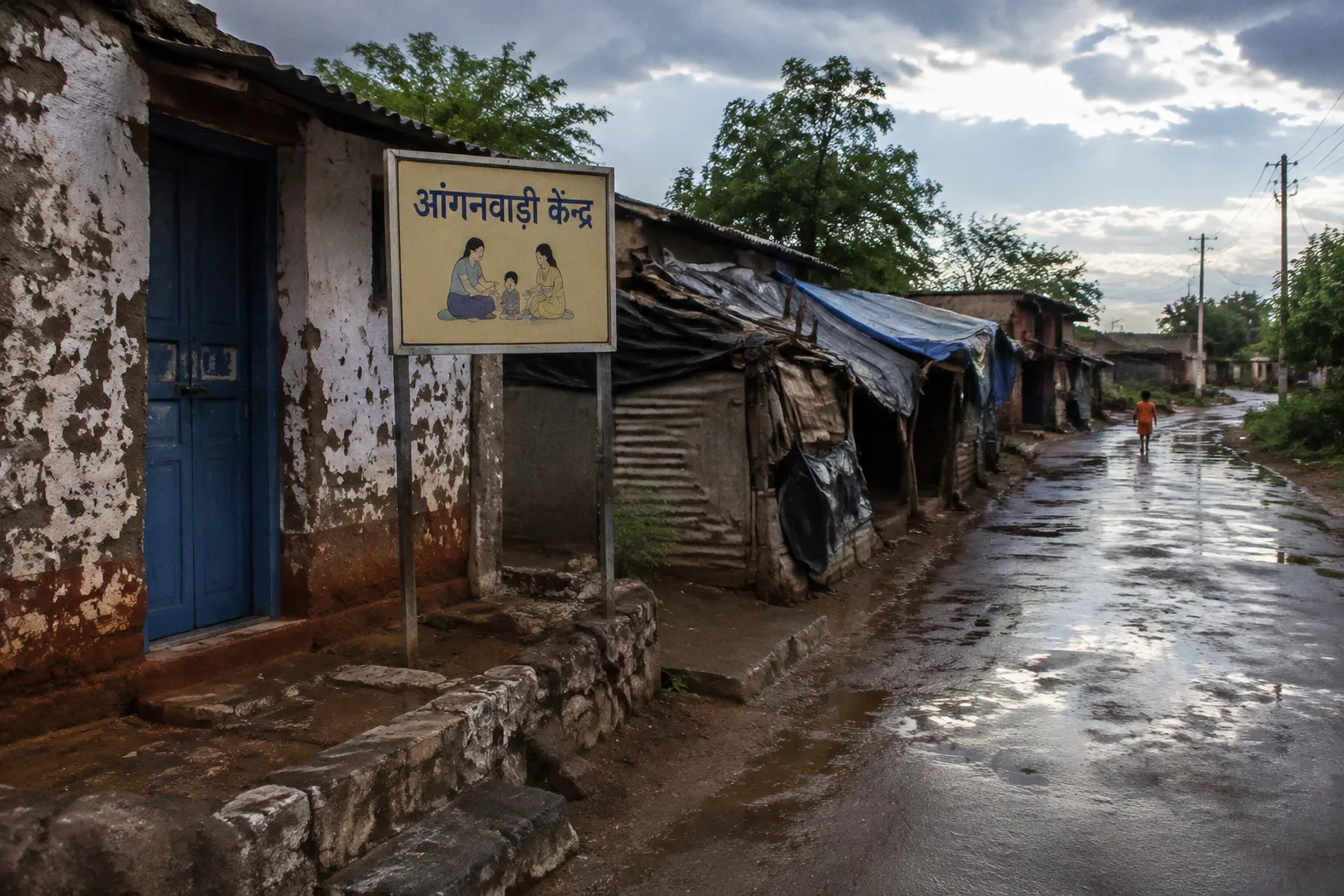
For India’s reproductive and child health systems, the useful question is not whether violence is relevant. The useful question is whether frontline services can identify it early and respond without creating additional danger.
A workable district pathway should be tested against basic failure points:
- Is screening available during antenatal care, delivery-related care and early motherhood?
- Can the woman speak privately with a trained provider?
- Is there a documented referral route for immediate and continuing support?
- Do maternal and child-health teams treat the case as connected rather than separate?
- Can follow-up continue when household access to care is unstable?
The Curtin review makes prevention of violence part of the child-survival infrastructure. That does not replace vaccination, nutrition or clinical care. It exposes a supply-chain bottleneck upstream: if violence blocks access to services or destabilises the home environment, downstream interventions may arrive too late.
The next step is implementation that can survive real clinic conditions—clear protocols, trained staff, confidential referrals and coordination across sectors. Without those components, routine screening is only data collection. With them, it can become an early-warning system for protecting both mother and child.