JSY versus JSSK: two paths to free institutional delivery
The first time I watched a woman arrive at our district hospital in active labour with nothing in her pocket — not a single rupee for the registration fee, the glucose drip, or the auto-rickshaw ride…
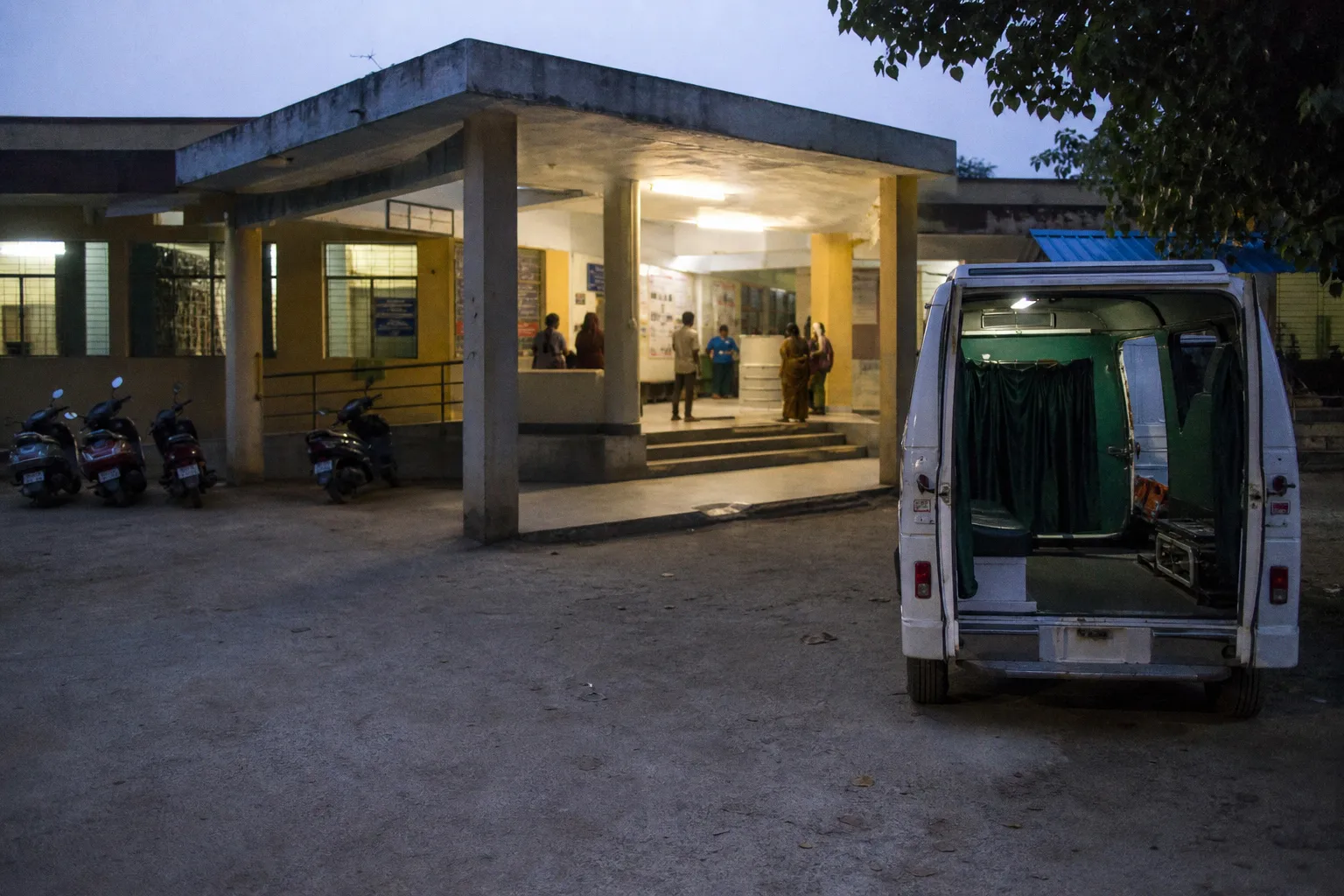
The first time I watched a woman arrive at our district hospital in active labour with nothing in her pocket — not a single rupee for the registration fee, the glucose drip, or the auto-rickshaw ride back home — I understood exactly why two separate government schemes sit at the heart of India's attempt to make institutional delivery genuinely accessible. One had been running for years. The other was still finding its feet. Together, Janani Suraksha Yojana and Janani Shishu Suraksha Karyakram were meant to answer a question that haunts every Primary Health Centre I have ever worked in: how do you bring a woman through the doors of a functioning facility and ensure that the cost of doing so does not push her back out of them?
Compare car rental deals in United Kingdom
See available offersPartner link — DiscoverCars comparisonThat is the real terrain of the JSY vs JSSK institutional delivery benefits conversation, and it matters far beyond a policy comparison table. As of NFHS-5, institutional delivery in India has climbed to roughly 88.6 percent — a number that would have sounded fanciful two decades ago. It did not happen by accident, and it did not happen through either scheme alone. What changed maternal behaviour and maternal outcomes was the layering of a conditional cash incentive on top of a universal entitlement to free care. Knowing how these two programmes differ, and where they overlap, is essential for any practitioner counselling a woman through pregnancy, and for any administrator trying to make a district facility work for the women it serves.
How India’s maternal health architecture evolved from cash to entitlement
To understand why we have both JSY and JSSK rather than one merged scheme, you have to step back into the lived reality of public maternity wards in the early 2000s. The maternal mortality ratio was still uncomfortably high, and one recurring pattern appeared again and again in case registers: a family would hesitate, calculate, and ultimately deliver at home — not necessarily because it distrusted the hospital, but because the hospital seemed likely to cost money.
Even a modest out-of-pocket expense could decide whether a woman reached a skilled birth attendant or a traditional dai caught the baby on a kitchen floor. The expense was rarely one dramatic bill. It was the accumulated anxiety of transport, medicines, tests, food for the accompanying relative, a possible referral, and wages lost while the household waited.
Janani Suraksha Yojana, launched on 12 April 2005 under the National Rural Health Mission, was designed as a direct response to that calculation. It is, at its core, a conditional cash transfer: money placed in the mother’s hand, contingent on her delivering in a public health facility or an accredited private institution. The premise was behavioural. Change the household’s calculation around institutional birth, and delivery patterns will follow.
It worked. Institutional delivery rose sharply. But evaluations kept returning to the same uncomfortable finding: the cash incentive reduced one barrier — transport and opportunity costs associated with reaching a facility — while leaving other expenses vulnerable to the reality of local implementation. Drugs, diagnostics, a Caesarean section, food during a multi-day stay, and the journey home with a newborn could still become financial pressure points when services or supplies failed.
The essential distinction is easily lost in everyday conversation. JSY is not a payment mechanism for hospital care. It is cash support linked to institutional delivery. It can help a family manage the practical costs around childbirth, but it does not by itself guarantee that delivery services will be free.
A cash incentive can bring a woman to the facility. It cannot, on its own, make every service inside that facility cashless.
JSSK, launched on 1 June 2011, was conceived as the structural response to that gap. Rather than giving families money and hoping the hospital would not charge them, JSSK made specified public-facility services free at the point of care. It is an entitlement scheme, not an incentive scheme — and that distinction shapes almost every practical difference between the two programmes.
The mechanics of JSY: conditional cash and the ASHA in the middle
When a pregnant woman in a rural low-performing state delivers at a public facility under JSY, the family receives ₹1,400; in urban areas of those same states, the mother receives ₹1,000. In high-performing states, where institutional delivery rates had already moved substantially, the amounts taper to ₹700 for rural mothers and ₹600 for urban mothers.
These are not symbolic numbers. For many households I have worked with, they can mean the difference between a husband being present at the birth and a husband being forced to remain behind earning the wages the family needs for the days around delivery. They may cover a journey, meals for an attendant, a missed day of agricultural work, or the small but consequential costs that gather around a hospital stay.
But the cash never moves alone. Every JSY payout is anchored to an Accredited Social Health Activist — the ASHA — who has done the work of registration, antenatal tracking, accompaniment to the facility, and follow-up. For her part in facilitating an institutional delivery, the ASHA receives ₹600 in rural areas and ₹400 in urban areas.
This is the unglamorous backbone of the scheme: the woman who knows the village, who walks the pregnant woman to the bus stop, who fills the form, who calls ahead when labour begins, who stays awake through a night referral, and who returns after discharge to ask whether the mother and baby are feeding well.
JSY’s strength is this human chain of persuasion and support. Its limitation is equally clear. The incentive is not a comprehensive maternity benefit. It does not itself pay the facility for the delivery, guarantee free medicines, secure blood, fund an ultrasound, or ensure a free return journey. That is why describing JSY as a “free delivery scheme” on its own is misleading. It is a maternal cash incentive linked to institutional delivery, not a standalone assurance of cashless hospital care.
JSSK entitlements: defining the scope of cashless institutional delivery
JSSK’s ambition is more radical and more straightforward. It tells every pregnant woman delivering in a public health facility, and the sick newborn up to 30 days of age — later expanded to all sick infants up to one year — that a defined set of services should cost the family nothing.
The entitlement package includes:
- Delivery, including Caesarean section
- Drugs and consumables
- Diagnostics, including ultrasound and blood tests
- Blood transfusion, where required
- Diet during the hospital stay — up to 3 days for a normal delivery and up to 7 days for a C-section
- Transport from home to the facility
- Inter-facility referral transport when a complication requires escalation
- Free drop-back home after a mandatory 48-hour stay
This is the central promise behind free institutional delivery schemes in India: a woman should not reach a public maternity ward only to discover that the care she needs is financially out of reach. In real clinical terms, JSSK is meant to remove the fraught moment at the hospital desk — the moment when a family is asked to arrange money for something it did not anticipate and the entire logic of institutional birth begins to unravel.
Cash incentives change behaviour at the front door. Cashless entitlements protect the woman once she is inside.
What makes JSSK particularly powerful, and what many practitioners outside the public system do not fully realise, is that it is universal. There is no Below Poverty Line card requirement, no caste certificate, no income proof. If a woman delivers in a government facility, the entitlements apply.
That universality is precisely why JSSK complements rather than replaces JSY. The two programmes do not operate at the same point in a woman’s care journey. One supports the decision and the journey toward institutional birth. The other defines what should happen once she reaches a public facility.
JSY versus JSSK at a glance
| Dimension | Janani Suraksha Yojana (JSY) | Janani Shishu Suraksha Karyakram (JSSK) |
|---|---|---|
| Launch date | 12 April 2005 | 1 June 2011 |
| Core mechanism | Conditional cash transfer to the mother and ASHA | Universal cashless entitlement at public facilities |
| What the family receives | Money in hand: ₹1,400 / ₹1,000 in LPS; ₹700 / ₹600 in HPS | Free delivery, drugs, diagnostics, blood, diet, and transport |
| Eligibility | All pregnant women in LPS; BPL/SC/ST women in HPS | Every pregnant woman delivering at a public health facility |
| ASHA incentive | ₹600 rural / ₹400 urban | Not a cash scheme; the focus is free service provision |
| Coverage of newborns | None directly | Sick newborns up to 30 days; expanded in 2014 to sick infants up to 1 year |
| What it does not cover by itself | JSY provides a cash incentive only and does not itself guarantee free delivery services | The opportunity cost of lost wages during the stay |
| Design intent | Encourage institutional delivery through conditional financial support | Remove financial barriers during public-facility care |
The two columns can look like competitors on paper. In practice, they are two halves of the same delivery pathway.
Bridging the gap: how the schemes function as one support system
The single most common misunderstanding I encounter — and I have lost count of the times colleagues in private practice have repeated it — is that JSY and JSSK are alternative options from which a district chooses one. They are not. They operate on different axes.
A pregnant woman in a low-performing state who delivers at a Primary Health Centre may receive JSY money because she meets the scheme’s conditions. At the same time, JSSK entitlements should cover the defined costs of care at the public facility. The ASHA who facilitated her arrival is paid under JSY; the drugs used in her delivery are covered under JSSK; the ambulance that brings her back to her village is a JSSK service.
From the woman’s perspective, the administrative division should be invisible. She should experience a supported, free institutional delivery rather than a maze of schemes, forms, counters, and exceptions. That invisibility is not bureaucracy working in the background for its own sake. It is the design working as intended.
Consider a difficult case. A woman presents at a sub-centre in early labour, is found to have severe anaemia and a borderline pelvis, and needs referral. The ASHA helps arrange transport under JSSK. The receiving district hospital provides blood and a C-section under JSSK. After the mandatory 48-hour stay, the woman receives a free drop home. If she is eligible under JSY, she also receives the cash incentive linked to her institutional delivery.
This is the difference between jsy cash incentive vs jssk entitlements in the clearest possible form. JSY is not the bill-payer for the delivery. JSSK is not a cash reward for choosing the facility. One gives financial support to the mother; the other establishes a package of services that should be free at a public facility.
What I have observed across multiple districts is that when either scheme is implemented in isolation, outcomes suffer. Facilities that run JSY without effective JSSK implementation can see women arrive and still face out-of-pocket expenses at the pharmacy window, especially when the free-drug supply chain has faltered. Facilities that deliver JSSK services without strong JSY and ASHA outreach can lose the personal, village-level support that brings first-time mothers and women from remote habitations through the doors in the first place.
The schemes need each other. More accurately, women need the system to stop treating transport, counselling, clinical care, referral, food, discharge, and follow-up as separate problems.
Navigating eligibility: why universal access matters
Here is the conversation I have, in some form, nearly every week in clinic. A woman in her second trimester asks, very politely, whether she is “eligible” for the government’s maternity help. She may be asking whether she counts as poor enough. She may be asking whether her paperwork is in order. More often than not, she is asking whether she will be sent away from the hospital when she cannot pay.
For JSSK, the answer is direct. It has nothing to do with her income. If she delivers in a public facility, the delivery, drugs, blood if needed, food, and transport benefits are meant to be covered. There is no means test standing between her and a free institutional birth. That clarity matters, because I have met women who delayed antenatal registration out of fear that they would be turned away for not having the right card.
For JSY, the eligibility conversation is more nuanced. In the low-performing states — where institutional delivery rates were lower and maternal mortality higher — JSY is available to all pregnant women delivering in a public facility. In high-performing states, the original targeted design restricts eligibility to women from Below Poverty Line households and those from SC/ST communities.
The intent was to concentrate resources where outcomes were poorest. The practical effect is a more complicated counselling conversation in states that fall on either side of that divide.
| Question a patient might ask | JSY answer | JSSK answer |
|---|---|---|
| Will I have to pay for the delivery? | JSY provides a cash incentive only. It does not itself guarantee free delivery services or pay hospital costs. | No — delivery is intended to be fully cashless at a public facility under the listed entitlements. |
| Will I get money after the birth? | Yes, if eligible — ₹700 to ₹1,400 depending on state and rural or urban status. | No cash payout; this is a free-services scheme. |
| Will my transport be paid for? | The incentive may help with household expenses, but JSY does not itself provide transport as a service. | Yes — free transport from home, between facilities, and back home. |
| Will my newborn be covered too? | No direct newborn benefit. | Yes — sick newborns up to 30 days and sick infants up to one year. |
| Do I need a BPL card? | Only in high-performing states. | No — it is a universal entitlement. |
The cleanest framing for a patient is this: JSY can give you money for choosing institutional delivery if you are eligible; JSSK is what makes specified public-facility maternity services free.
That distinction may sound technical to a policy reader. To a woman in labour, it is not technical at all. It is the difference between being told that support exists in principle and knowing, before she leaves home, what she should not have to pay for.
Where practitioners can intervene, and where the system still leaks
I want to close on something I seldom see adequately addressed in policy literature: the human layer. These maternal health schemes in India are only as good as the front-line workers who translate them into reality, and the patients who trust them enough to walk through the door.
In district after district, the deciding factor is not simply the rupee amount or the entitlement list. It is whether the ASHA in the village explains what will happen at the facility. It is whether the staff nurse at the PHC speaks to the woman in a language she understands. It is whether the doctor explains a C-section in a way that earns informed consent rather than mere compliance.
JSY gives the system a reason to reach outward and bring a woman in. JSSK gives the public facility an obligation, on paper and in policy, not to punish her financially for entering. What actually brings her back for her next pregnancy is the quality of care at every point in between.
The remaining gaps are real. JSSK implementation varies by district. Out-of-pocket costs have not disappeared everywhere they should have. Drug stock-outs, informal expectations, delayed transport, and confusion about eligibility can turn an entitlement into a promise that feels distant from the ward. Those failures should not be softened with policy language. They are failures because the woman has already done her part: she chose institutional care.
Still, the foundation is sound. The architecture — cash incentive to encourage institutional delivery, cashless entitlement to sustain it — is one of the more thoughtful pieces of maternal health policy India has built.
JSY opens the door. JSSK makes the door worth walking through. The work of maternal health is making sure the room inside is worth staying in.
For practitioners, the practical responsibility is simple, even if the system around it is not. Do not treat the schemes as interchangeable. Explain the cash a woman may receive through JSY. Explain the services for which she should not be billed under JSSK. Tell her about transport, drugs, food, referrals, and the drop home. And be precise: JSY is a cash incentive, not a guarantee of free delivery care; JSSK is the scheme that carries the cashless promise at the public facility.
That moment of clarity before labour begins is not a minor administrative detail. It can be the difference between hesitation and timely care.