Why Urban Families Are Choosing Midwife-Led Care Over Routine C-Sections
As reported by The Ken, a small but consequential shift is taking shape in urban maternity care: some families are seeking birth settings where a midwife—not an obstetrician—is the consistent lead professional.
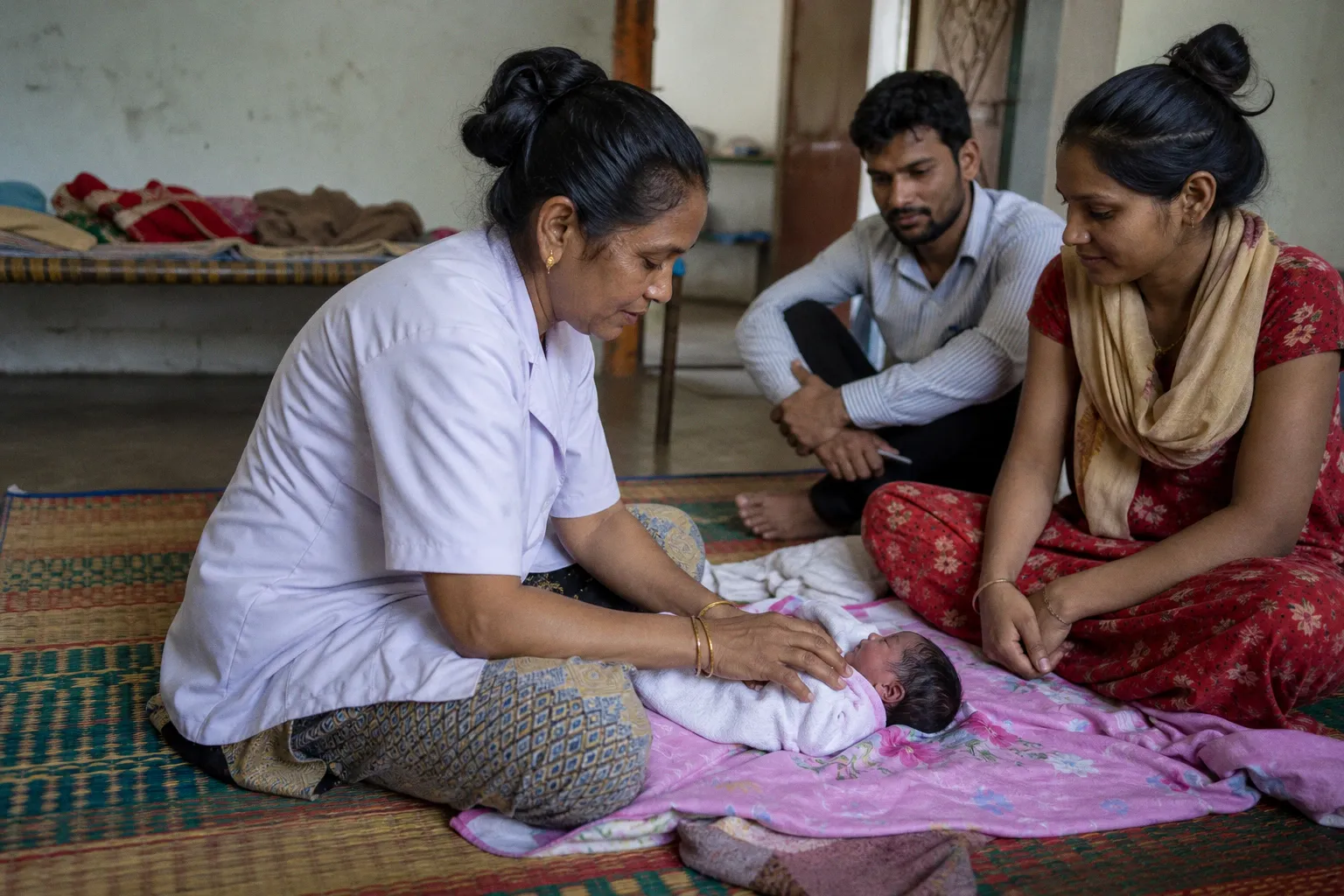
For patients who have felt unheard or rushed into decisions before, this is not a lifestyle preference. It is about whether consent, explanation and continuity are built into the care pathway from the start.
The report points to Aastrika Midwifery Centre as one such alternative to highly medicalised hospital care, with doctors working alongside midwives rather than replacing them at the centre of routine childbirth care. It also describes midwife-led work at Fernandez Hospital in Hyderabad and continuity-focused support offered through Superhealth Hospitals’ “Superbirth” initiative.
The question is not “hospital or midwife”
On the ground, this distinction can easily be misunderstood. Midwife-led care does not mean that doctors disappear, or that a pregnant person is asked to reject medical help when it is needed. The meaningful question is who is providing day-to-day support, discussing options, monitoring changes and helping the patient remain part of decisions during labour.
That matters especially in a system where, according to The Ken, around six in 10 births recorded in the Ministry of Health and Family Welfare’s National Family Health Survey in urban private hospitals end in a caesarean section. A surgical birth can be the right and necessary care in some circumstances; the concern raised by patients in the report is not the existence of C-sections, but feeling that intervention is presented as inevitable rather than discussed as a decision with reasons, benefits and alternatives.
A centre’s own C-section rate, by itself, is not a verdict on its quality. Patients should ask how the centre handles higher-risk pregnancies, when an obstetrician becomes involved and what happens if labour needs to move to a different level of care.
Continuity can change the experience of care
The strongest thread in this story is continuity. The Ken reports that Aastrika has supported 845 births to date, including high-risk pregnancies, and that its surgical birth rate is less than half the rate cited for urban private hospitals. Fernandez Hospital, meanwhile, began collaborating with midwives across its three maternity hospitals in 2011 and now has both a midwife-led care unit and a midwifery training programme within its nursing school.
For a pregnant person, continuity is practical: knowing who will answer questions, having time to talk through a changing birth plan, and not having to repeat one’s history at every appointment. Services such as birth coaching, physiotherapy and lactation counselling—elements mentioned in the report on Superhealth Hospitals—may help make care feel connected before, during and after birth. But families should still clarify which services are included, who provides them and how access works outside routine clinic hours.
What to ask before choosing a birth setting
The Hindu has also reported that Telangana plans to introduce midwifery courses for nurses in Karimnagar with the aim of reducing C-section deliveries. That development makes the conversation broader than a few specialised urban centres: midwifery training and midwife-led units are becoming an important part of the maternity-care discussion.
Before enrolling, ask the clinic to explain its model in plain language. Who will be your primary clinician? How are decisions about induction, pain relief and C-section discussed? Which pregnancies can remain in the midwife-led pathway, and what are the referral arrangements if complications arise? Can your chosen support person be present, and will you receive written information about costs and escalation of care?
Patients deserve neither pressure towards surgery nor pressure to avoid it. They deserve a care team that listens early, explains clearly and keeps safety and dignity in the same conversation.