MagicLand Tickets: When Is Online Booking Best?
The ticket queue at MagicLand's gate is a logistical bottleneck that eats into your day before the day even begins.
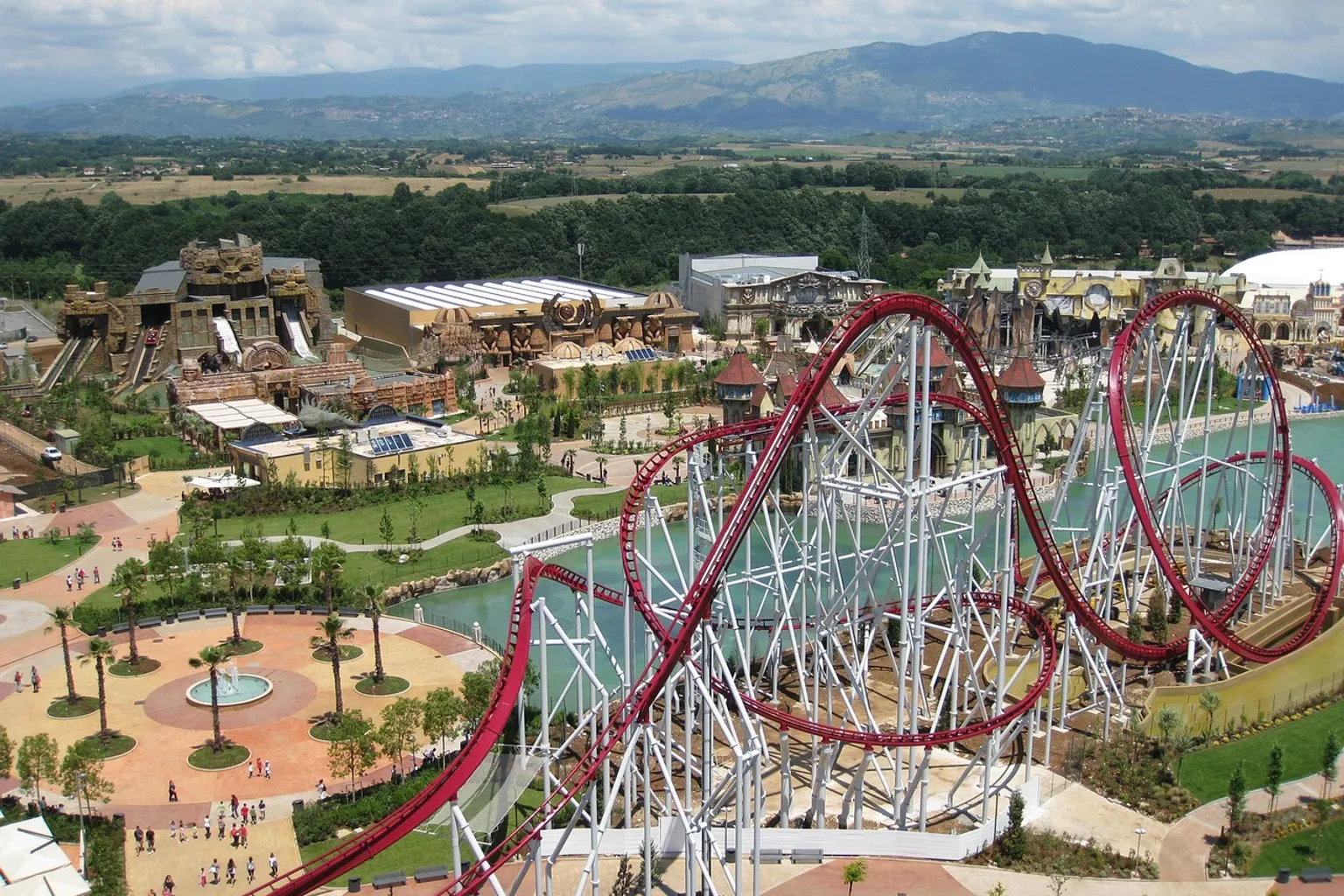
Families walk up to the turnstile area, see a winding line already mid-argument, and realize the on-site ticket office runs on a pricing architecture that punishes spontaneity. Online booking isn't a minor convenience—it's a supply-chain fix that reroutes you around the single worst failure point in the park's entry infrastructure. If you've ever stood in that queue with a tired kid and a stroller that won't fold, you already understand why this matters.
Tickets and prices
MagicLand
Valmontone
01 · GetYourGuide
Entry ticket — 39 rides, planetarium, and 2 theaters
€20
02 · GetYourGuide
Combo entry ticket — amusement and water park access
€25
03 · Official
Official ticket — for children under 90 cm tall
The Price Gap: Online Savings vs. Gate Rates
The pricing system at MagicLand runs on two separate rails, and they don't converge. Walk-up rates at the on-site ticket office sit at a premium tier—full-price adult admission is anchored at a level that effectively doubles the cost of an online ticket purchased in advance. Online advance tickets, by contrast, are positioned as a promotional tier, typically starting at roughly half the gate rate and sometimes lower depending on the calendar window.
This isn't a coupon gimmick or a flash sale layered on top of standard pricing. It's a structural discount built into how the park manages demand across the season. The online channel exists to smooth visitor flow into off-peak windows, and the discount is the lever that pulls people toward those dates. When you book online, you're tapping into the park's demand-balancing system and getting rewarded for it. When you buy at the gate, you're paying the full unscheduled-variable rate for showing up without a plan.
Online booking isn't a discount code stapled to a ticket—it's a different rail of the pricing system, engineered to move volume.
The practical takeaway is straightforward: if your dates are flexible enough to plan a week or two ahead, the savings are substantial enough to fund a sit-down meal inside the park or a second round of snacks for the kids. The exact figures shift with the calendar and the distributor, but the structural gap between online advance and walk-up pricing remains consistent. Showing up without a pre-booked ticket almost never makes financial sense, and almost always costs you both money and time.
One more operational note: distributors stack their own cancellation and modification policies on top of the park's pricing. Some platforms offer free cancellation up to a certain window before the visit date. Others sell open-date tickets valid across a date range for a modest premium. Read the fine print before checkout, because the cheapest headline price sometimes locks you into a specific date with no flexibility.
Reduced Entry and Free Admission: Who Qualifies
The reduced-rate tier at MagicLand isn't a promotional carve-out—it's a structural category with hard eligibility lines. Children within a defined height range qualify for the reduced child rate at the gate. That range is roughly 90 cm to 140 cm, measured at the entry point. Visitors over 65, pregnant guests, and military personnel also fall into this reduced bracket with documented eligibility.
Below the lower height cutoff, children enter free of charge. No ticket required, no purchase necessary. This is a hard policy line, not a discretionary courtesy discount. Measure your child before you leave home. Families with a kid just under the cutoff save the full ticket cost; families with a kid just over it pay the reduced child rate rather than the full adult price. A few centimeters of growth between visits can move a child from one pricing tier to another.
Reduced-rate tickets are generally available through online booking platforms, though the specific verification process varies by distributor. Some platforms require you to confirm eligibility during checkout; others ask for documentation at the gate regardless of where you purchased. Because the exact workflow and any price differences between online and gate-purchased reduced tickets depend on the platform and the booking window, it's worth confirming the terms directly with the distributor before you commit.
If your family includes anyone in a reduced category, build the booking around those tickets first. A family of two adults, one child in the reduced range, and one toddler under the cutoff will pay substantially less than a family that defaults to four full-price adult tickets "to keep it simple." The savings compound quickly when multiple family members qualify for reduced entry, and the booking process—whether online or at the gate—is designed to accommodate mixed-ticket purchases in a single transaction.
Peak Dates and Calendar Stress Points
The MagicLand calendar has clearly defined stress points, and the entry infrastructure stretches at each of them. August weekends, Italian holiday weeks, and the Halloween window concentrate demand into narrow time bands. During these peaks, the ticket queue stops being a minor inconvenience and becomes a capacity bottleneck that can absorb 30 to 60 minutes of your day before you reach the turnstile.
Online booking solves the queue problem on most dates, but it introduces a different constraint on peak days: the cheapest promotional online tiers are sometimes locked out of the highest-demand dates. The most notable exclusion is Halloween, where promotional single-day tickets typically don't apply. This is yield management working as designed—the park doesn't need to discount its highest-demand date, so the promotional pricing is held back.
The strategic move is to layer your booking logic:
- Shoulder dates (late April through June, September into early October): Promotional online pricing usually applies. Book early, lock in the lowest tier.
- Peak August weekends: Expect pricing closer to gate rates even when booking online. Prioritize guaranteed entry over savings.
- Halloween and similar high-demand events: Treat these as premium events. Book online for the queue bypass, accept that the discount window is closed, and plan around the date rather than the price.
- Midweek visits: Often the best combination of low price and short queues. If you can flex school or work schedules, a Tuesday in May will run cooler, cheaper, and faster than a Saturday in August.
Peak dates aren't a pricing failure—they're the park's revenue system operating correctly. Plan around them, don't try to bargain through them.
Open-date tickets are worth considering if your plans are genuinely fluid. Some online platforms sell tickets valid across a broad date range rather than a specific calendar day, which removes the lock-in problem at a small price premium. The premium is usually smaller than the peak-date markup, so open-date tickets often beat locked-date tickets for travelers without firm plans.
Multi-Day Passes and the MagicSplash Combo
Single-day tickets are the default purchase, but they're not always the optimal structure. If you're staying in the Valmontone area for more than a day, or if you're traveling with a family that needs slower pacing, a two-day pass changes the economics meaningfully. The per-day cost drops, and you gain the option to leave the park and return on the second day—a real advantage with younger children whose stamina and patience run out by mid-afternoon.
The MagicSplash combo extends this logic to a second attraction. MagicSplash is the park's water park component, located adjacent to MagicLand, and bundling it with MagicLand entry consolidates two admission transactions into one. For visitors planning a full-day or multi-day Valmontone experience that includes water activities, the combo typically prices below the sum of two separate admissions.
A practical decision matrix:
| Visit Profile | Recommended Structure | Operational Reason |
|---|---|---|
| One full day, shoulder calendar | Online single-day advance | Maximum discount window, no queue penalty |
| One full day, peak calendar | Online single-day advance | Queue bypass matters more than discount |
| Two days, flexible family schedule | Two-day pass | Lower per-day cost, re-entry flexibility |
| Family with young children | Two-day pass | Exit-and-return option prevents meltdown-by-3pm |
| Water park is part of the plan | MagicSplash combo | Bundled pricing, single transaction, less friction |
| Halloween or special event | Locked-date online ticket | Guaranteed entry over discount priority |
| Travel dates may shift | Open-date ticket | Removes calendar lock-in at modest premium |
Pick the structure that matches your actual days on the ground, not the one that looks cheapest on a price comparison screen. A two-day pass at a slightly higher nominal rate often beats a single-day ticket once you factor in the re-entry flexibility and the reduced per-day cost. The same logic applies to the MagicSplash combo: if anyone in your group actually wants water-park access, the bundle wins.
Magic Pass: Triage for Ride Capacity
Standard admission gets you through the gate. It does not get you past the ride queues, and at MagicLand, the ride queues are where the day gets consumed.
The Magic Pass is the park's paid fast-track product. It's a tiered add-on layered on top of your entry ticket, granting access to priority lanes at the highest-demand rides. Pricing varies with the season and the bundling, but as a combined product with park entry, it sits at a premium tier above standard admission. The pass doesn't replace your entry ticket; it complements it.
The ROI calculation is concrete:
- Peak dates and weekends: Queue times at top attractions can stretch past 60 minutes during midday peaks. The Magic Pass compresses that wait to a fraction. If you're paying peak-date admission anyway, the time savings often justify the add-on.
- Shoulder dates and midweek visits: Queue times are shorter, often under 20 minutes at most attractions, and the pass becomes harder to justify on time savings alone. Calculate your likely queue exposure before adding it.
- Families with younger children: Kids have limited queue tolerance, and a pass that keeps a seven-year-old moving instead of melting down in a 45-minute line has value beyond pure time accounting.
- Thrill-ride-focused groups: If your priority is hitting the coasters and high-capacity attractions repeatedly, the pass effectively multiplies your ride count per hour.
Buy the pass as part of the same online transaction as your entry ticket whenever the platform allows it. Bundled purchases usually price better than buying entry at one point and the pass as a separate add-on later, and a single transaction means a single confirmation email and a single entry process at the gate.
Final Word
The MagicLand entry system rewards planning and punishes improvisation at every layer. The pricing gap between online advance and walk-up is structural, not incidental—it exists because the park's demand-management system uses it to spread visitors across the calendar. The calendar exclusions on peak dates aren't an oversight; they're yield management operating correctly. The Magic Pass isn't a luxury upsell; it's a triage tool for managing ride-capacity bottlenecks during high-demand windows.
Build your ticket purchase the way you'd build any operational plan: identify the binding constraint—gate queue time, peak-date pricing, or ride wait times—select the product that resolves it, and book early enough that the promotional pricing is still available. The park runs a sophisticated demand-balancing system. Use it instead of walking into it unprepared, and your day starts ahead instead of 45 minutes behind.
Practical info
Currency: EUR
Driving: on the right
Emergency number: 112