New ICMR Funding Framework Aims to Reshape India’s Health Research Landscape
That is the figure the Government of India has allocated to the Indian Council of Medical Research for the 2026–27 financial year, according to the Press Information Bureau.
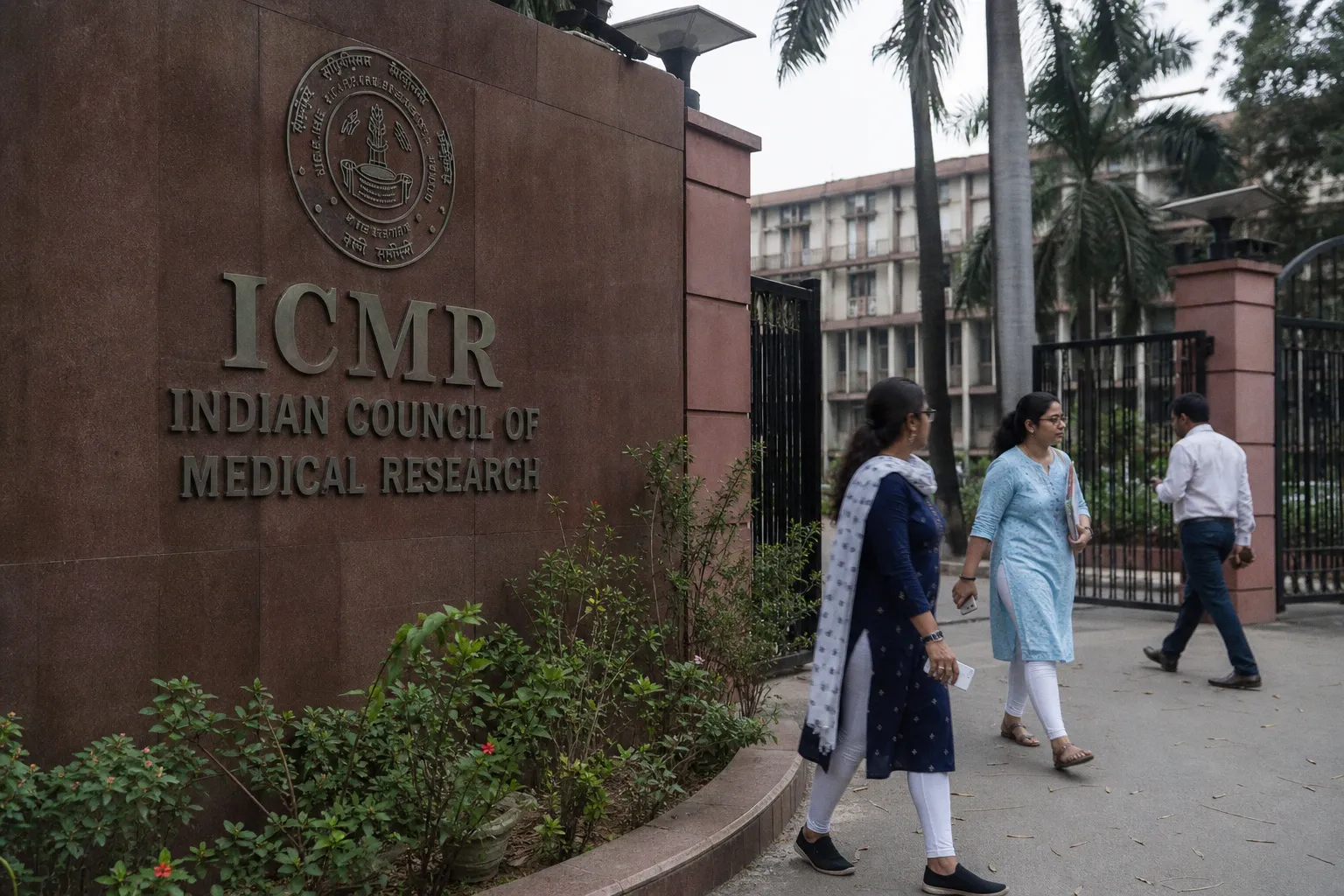
₹4,000 crore. That is the figure the Government of India has allocated to the Indian Council of Medical Research for the 2026–27 financial year, according to the Press Information Bureau. The stated objective: to make research grants more competitive and accessible within the national health research ecosystem. For an audience tracking reproductive and child health infrastructure across Indian states, this budgetary signal warrants close methodological attention — it directly shapes which maternal health questions get studied, at what scale, and with what kind of evidence base.
The Funding Mechanism
The ICMR allocation represents a dedicated budget line for health research, not a general healthcare expenditure transfer. The distinction matters. Research grants determine the pipeline of clinical trials, epidemiological cohort studies, and population-level health surveys that inform policy — the very data architecture on which district-level reproductive health programmes depend. When the funding envelope expands, the probability of multi-site studies covering under-represented geographies rises. When it contracts, high-burden districts with poor baseline data remain statistically invisible.
The announcement frames the increase as a tool for competitiveness and accessibility. Without granular detail on disbursement criteria, peer-review thresholds, or priority research domains, however, the downstream distribution remains an open variable. The 2026–27 cycle will need to be monitored for whether maternal morbidity indices, neonatal outcome stratification, and contraceptive prevalence studies receive proportionate weight within the funded portfolio.
Parallel State-Level Activity: Signal, Not Noise
Three concurrent developments provide contextual markers for the broader health system strengthening trajectory currently underway:
Maharashtra has launched dedicated menopause and PCOD clinics across government health facilities, as reported by The Hans India. While the snippet lacks operational detail — clinic density per district, target cohort size, integration with existing reproductive health services — the initiative signals an expansion of the reproductive health continuum beyond the conventional maternal-neonatal window. For population analytics purposes, PCOD prevalence data generated through such clinics could, if systematically captured, address a significant gap in India's stratified reproductive morbidity datasets.
In Odisha, a memorandum of understanding between the state government, the Piramal Foundation, and the Tata Steel Foundation aims to strengthen public health systems, per India CSR. Public-private health MoUs of this type typically channel technical assistance and capacity-building resources into primary care delivery. The operational significance for reproductive and child health depends entirely on the MoU's implementation benchmarks — none of which are available from the current data point.
Nagaland has launched its second round of National Deworming Day across multiple districts, according to Eastern Mirror. Deworming campaigns intersect with child health nutrition and growth monitoring programmes. Coverage rates from successive rounds offer a crude proxy for primary health outreach penetration in districts where facility-based service utilisation data remains sparse.
What the Data Dashboard Cannot Yet Show
One confirmed budget figure and three headline-level announcements constitute a snapshot, not a trendline. The critical unknowns are structural: How will the expanded ICMR grant framework prioritise reproductive health research relative to other domains? Will state-level initiatives like Maharashtra's clinics feed standardised data into national surveillance systems? Do partnerships such as the Odisha MoU carry measurable deliverables tied to maternal and child health outcomes?
The ₹4,000 crore figure establishes a funding ceiling. The variable that matters for reproductive and child health analytics is the denominator — how much of that ceiling translates into stratified cohort studies, district-level household survey extensions, and morbidity registries with confidence intervals narrow enough to inform sub-state policy. Until disbursement allocations and funded project lists are published, the margin of uncertainty on that question remains wide.
What can be observed at this stage is a pattern: central research budget expansion running in parallel with state-level service delivery initiatives and multi-stakeholder health system partnerships. Whether these vectors converge into measurable improvements in maternal and child health indicators — or remain discrete, unconnected line items — is the projection this dataset cannot yet support.