MAYKA Hubs: Reducing Maternal Mortality in Remote Tribal Regions of Chhattisgarh
According to The New Indian Express, Narayanpur district in Chhattisgarh has launched MAYKA hubs to help pregnant women from remote tribal villages reach safe institutional care before the monsoon makes travel dangerous.
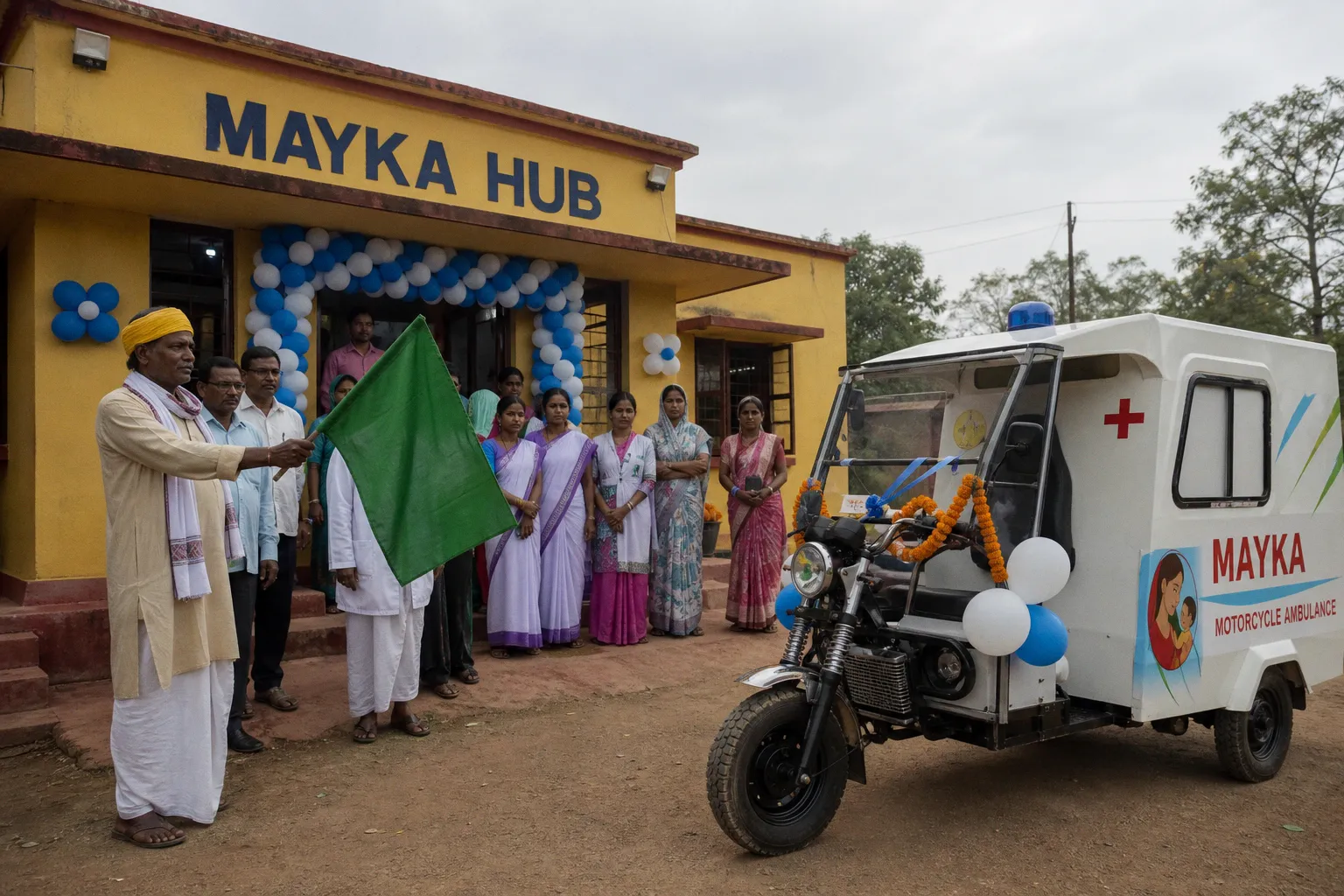
The programme addresses a familiar clinical problem: complications may be treatable, but a woman cannot benefit from emergency care if swollen rivers, mud and forest terrain prevent her from reaching a facility. For families in Abujhmaad, the key change is not simply a new centre—it is moving the care pathway earlier, before labour begins.
Moving before the emergency
MAYKA—Maternal Assistance, Yielding Knowledge-Care & Access—offers safe waiting centres for pregnant women living in hard-to-reach areas of Orchha block. Women are shifted from their villages around 15 to 20 days before their Expected Date of Delivery, rather than waiting until labour pains or complications force an urgent journey.
That timing is the central clinical idea. In remote settings, the risk is shaped not only by a woman’s health status but also by whether transport remains possible when she needs it. The district administration introduced the initiative with the onset of the monsoon in June 2026, when forest tracks become difficult and rivers can cut off villages.
Eight MAYKA hubs—at Ader, Mohandi, Irakbhatti, Dunga, Kudmel, Boranirpi, Maspur and Konge—are reported to serve more than 116 remote villages and 17,759 tribal residents across Orchha block. The centres operate next to Sub-Health Centres or Primary Health Centres and are jointly managed by the Health Department and the Women & Child Development Department.
The New Indian Express reports that the hubs recorded more than 50 safe institutional deliveries within their first couple of months. A further 29 deliveries were scheduled for the month of the report and 27 for the following month, as officials worked to bring every pregnant woman in Abujhmaad under institutional care.
Care that fits the community
For institutional delivery programmes to work on the ground, access is only one part of the problem. Families also need to trust the people asking them to leave home, understand what will happen at the centre and feel that their cultural and practical needs have not been dismissed.
MAYKA’s model includes trained local young people who speak the native language and support families as counsellors. Mitanins and Health Assistants conduct door-to-door outreach, encouraging women to move to the hubs in time. Two Rural Health Officers at each centre manage registration, vital monitoring and antenatal check-ups, while Anganwadi staff and dedicated cooks provide warm meals based on structured weekly diet charts.
Transport has also been designed around the terrain. Seven specialised motorbike ambulances are used to carry pregnant women through forest tracks and deep mud where four-wheeled vehicles cannot operate. That detail matters: a referral plan is only meaningful when the last mile is part of the plan.
The reported figures also show why this approach has been prioritised. The SRS Special Bulletin cited by the newspaper put Chhattisgarh’s Maternal Mortality Ratio at 124 per 100,000 live births, compared with a national average of 87. HMIS records placed Narayanpur’s MMR at 111.86. Ground evaluations reported by officials found that many maternal deaths occurred because women could not reach a healthcare facility in time, rather than because the underlying medical conditions were incurable.
What to watch next
MAYKA is not a replacement for good antenatal care, skilled birth attendance or functioning referral services. Its significance is that it connects those elements before the most time-sensitive stage of childbirth. The programme’s continued value will depend on whether women can be identified early, transported safely, monitored consistently and supported in a way that families accept.
For practitioners and district health planners, the lesson is practical: in areas where geography can delay care, the safest route may begin with temporary relocation before the Expected Date of Delivery. For patients and families, the important questions are equally concrete—when should the woman move, which centre will receive her, who will monitor her, and how will transport work if labour or complications begin earlier than expected?
Those questions turn a general promise of “institutional delivery” into a usable care pathway.