Rebuilding Public Health Systems to Overcome Fragmented Service Delivery
More than 120 countries have now told WHO that building institutional capacity to deliver essential public health functions (EPHFs) is a medium-to-high priority for support, according to WHO.
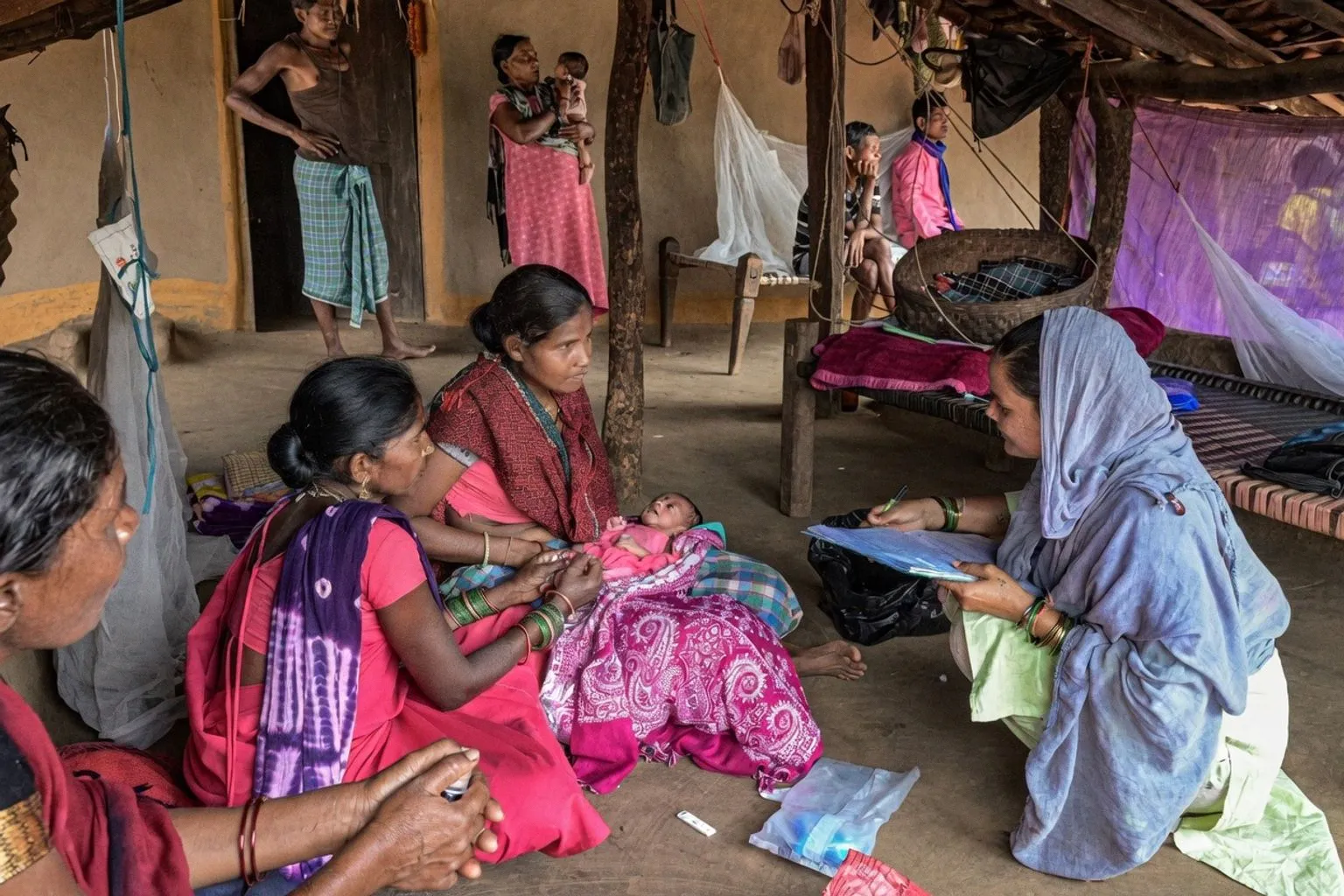
Countries move to strengthen public health institutions and services amid mounting pressures
The framing matters because it is a quiet admission that the old model — vertical programmes run on donor timelines, stitched together at the district level — is creaking under its own weight.
The diagnosis: fragmentation is the bottleneck
The core problem is structural. Prevention, promotion, preparedness, and emergency response are still planned, financed, and delivered in separate silos. In low- and middle-income countries that means a frontline Auxiliary Nurse Midwife (ANM) at a sub-centre often runs three parallel reporting lines — RMNCH, immunization, and NVBDCP — each with its own format, training calendar, and supply indent. When commodities are short, the system triages by programme, not by patient. Workforce investment is uneven, and a heavy reliance on external financing leaves hiring decisions vulnerable to funding cycles.
"Countries need public health systems that can do more with limited resources," said Dr Kalipso Chalkidou, Director of the Performance, Financing and Delivery Department at WHO, according to the WHO statement. EPHFs, she added, offer a practical, tested way to bring core capabilities together at the country level — placing promotion, prevention, and preparedness at the heart of the system rather than bolted on the side.
The framework: EPHFs as the wiring
WHO's EPHFs framework is not a new programme. It is a connective tissue: a way to integrate leadership, workforce, governance, and cross-sector coordination across four broad public-health areas. The goal is to ensure that population-based services — including those reaching hard-to-reach communities — are sustained before, during, and after crises, without cannibalising secondary and tertiary care.
The practical translation at India's Primary Health Centre (PHC) level is straightforward: an EPHF lens can shape how a state designs and finances its universal health benefit package, so that population-level services (vector control, antenatal outreach, nutrition supplementation, surveillance) are funded on the same line as individual clinical care rather than competing for it every budget cycle.
India's stake: the BRICS signal
India has skin in this conversation. The 16th BRICS Health Ministers' Declaration, adopted in July 2026 under India's chairship, formally recognised National Public Health Institutes (NPHIs) as National Centres of Excellence for essential public health functions and endorsed an operational framework for the BRICS Network of NPHIs. That is more than diplomatic language — it commits the Indian Council of Medical Research (ICMR) and the National Centre for Disease Control (NCDC) to a coordinated institutional architecture that other BRICS partners can plug into, and that domestic state-level institutes can mirror.
What to watch at the district level
The signal matters less than the supply chain behind it. Three operational questions will determine whether EPHFs actually change frontline delivery in the districts surveyed under DLHS:
- Convergence at the PHC. Are the three vertical programme lines being merged into one integrated micro-plan, or is the integration happening only on paper in state capitals?
- Financed workforce. Does the EPHF agenda come with a commitment to absorb contractual public-health staff into state payrolls, or does it ride out the next external funding cycle?
- Last-mile commodities. When ASHA and ANM supplies are rationalised under a unified essential commodities list, is there a real reduction in stockouts at sub-centres, or just a new reporting dashboard?
Building national institutional capacity for EPHFs is a dedicated output of WHO's Fourteenth General Programme of Work (GPW14), the global strategy running from 2025 to 2028. For a portal tracking RCH indicators across Indian districts, the next two state budget cycles will show whether the framework becomes infrastructure — or another layer of reporting.