Targeted Nutritional Support Boosts Growth and Bone Density in Undernourished Indian Children
That is the supply-chain reality at the front line of pediatric care — and a new randomized controlled trial from Abbott, reported by Onlymyhealth, suggests an oral nutritional supplement paired with…
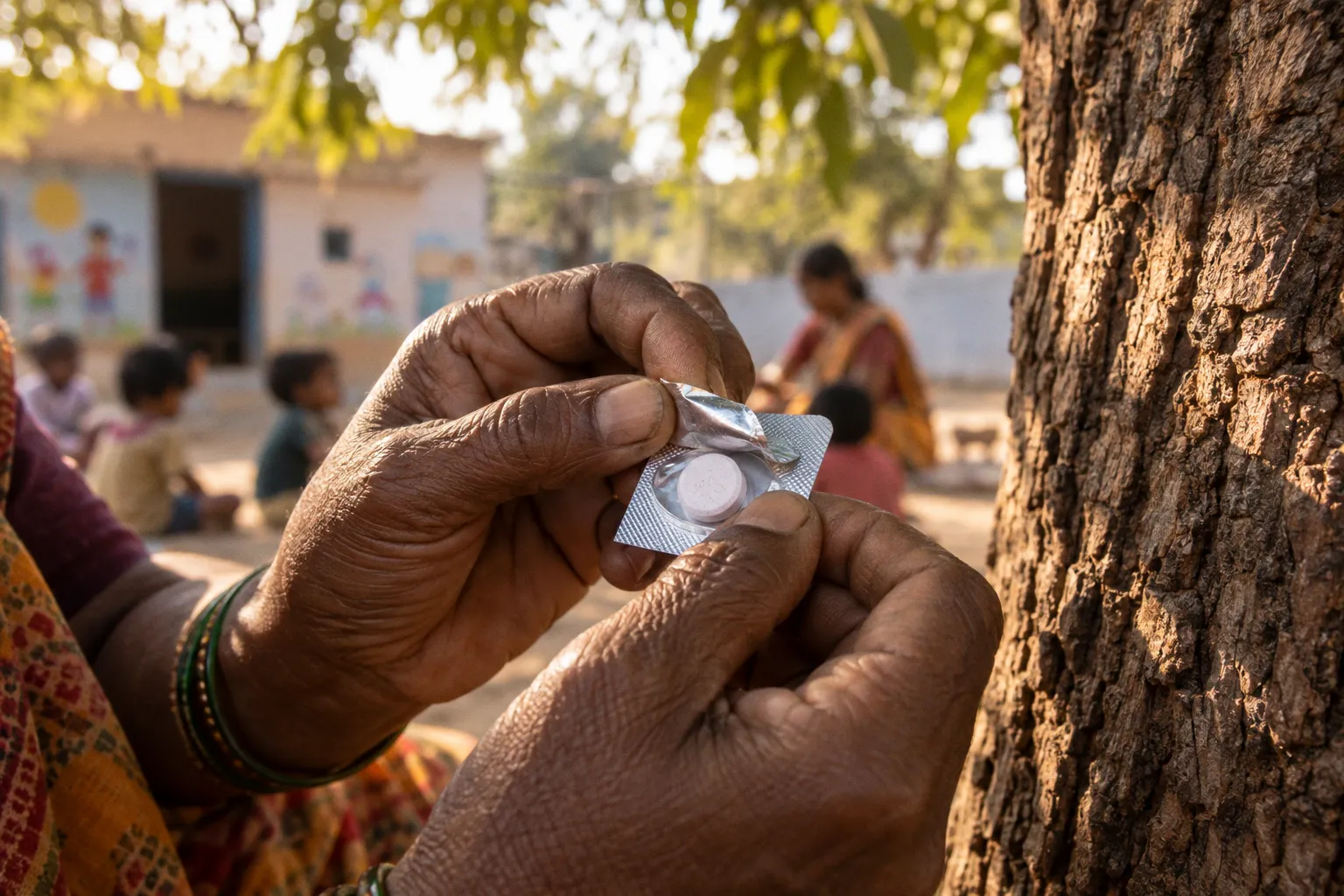
Nearly a third of Indian children under five are stunted. That is the supply-chain reality at the front line of pediatric care — and a new randomized controlled trial from Abbott, reported by Onlymyhealth, suggests an oral nutritional supplement paired with dietary counseling can move the needle on lean mass, bone health, and height within six months.
What the trial actually measured
The study enrolled 223 children between roughly 3 and 6 years old with picky eating habits who were undernourished or at nutritional risk. Half received standard dietary counseling; the other half received that counseling plus two daily servings of Abbott's PediaSure. Over six months, the supplemented group posted approximately 2.4 times greater height gain and nearly 15% higher lean mass — the latter measured via dual-energy X-ray absorptiometry, the gold-standard scan for separating muscle and bone from fat.
Most pediatric nutrition trials go soft on body composition. This one didn't. Investigators tracked lean mass, fat mass, and bone mineralization at predefined intervals, then published in two peer-reviewed outlets — Children and Journal of Clinical Medicine.
"This research highlights the importance of addressing undernutrition early with targeted nutrition support," said Dr. Anuradha Khadilkar, lead investigator and consultant pediatrician at Jehangir Clinical Development Center in Pune. The meaningful signal, she added, is that benefits extended beyond visible growth measures to lean mass and bone health. Dr. Priti Thakor, Director of Medical & Scientific Affairs for Abbott's nutrition business in India, framed the findings as "a more comprehensive view of growth outcomes" than height and weight alone.
Where the field stands right now
The national numbers frame the urgency. NFHS-6 (2023–24) data cited in the trial reporting show 29.3% of children under five stunted and 31.8% underweight across India. In Uttar Pradesh, freepressjournal.in reports stunting fell 8.2 percentage points between NFHS-5 and NFHS-6 — from 39.7% to 31.5%. State officials credit programs like Poshan Potli distribution and the Hot Cooked Meal Scheme under Saksham Anganwadi and Poshan-2.0, which reach roughly 32.88 lakh children across nearly 1.9 lakh Anganwadi centres.
Dr. Shalini Tripathi, Professor of Pediatrics at King George's Medical University, underscored that the first 1,000 days drive most of these outcomes — maternal nutrition during pregnancy, exclusive breastfeeding for six months, timely complementary feeding, and infection prevention. The decline is real, but 31.5% is still a system under load.
What to track on the ground
- Adherence at home. Two daily servings only work if families actually pour them. Field protocols need dispensing logs and refill tracking, not just prescription pads.
- Cheaper proxies for bone health. DXA is research-grade; frontline anganwadi workers need a low-cost screen that flags the same kids.
- Procurement pressure. Abbott cites more than 20 studies over 30 years supporting PediaSure. Confirm state nutrition missions and ICDS supply lines can absorb the cost without crowding out food-based interventions.
- Replication beyond picky eaters. The 223-child cohort was selective. Watch for trials in severe acute malnutrition settings and among children with recurrent infections before any district-level scale-up.