Unmet family planning needs: avoiding costly private clinics
Twenty-four million, one hundred ninety-four thousand, four hundred twenty-eight. That is the estimated number of Indian women with an unmet need for family planning in the fifth round of the National Family Health Survey, conducted between 2019 and 2021.
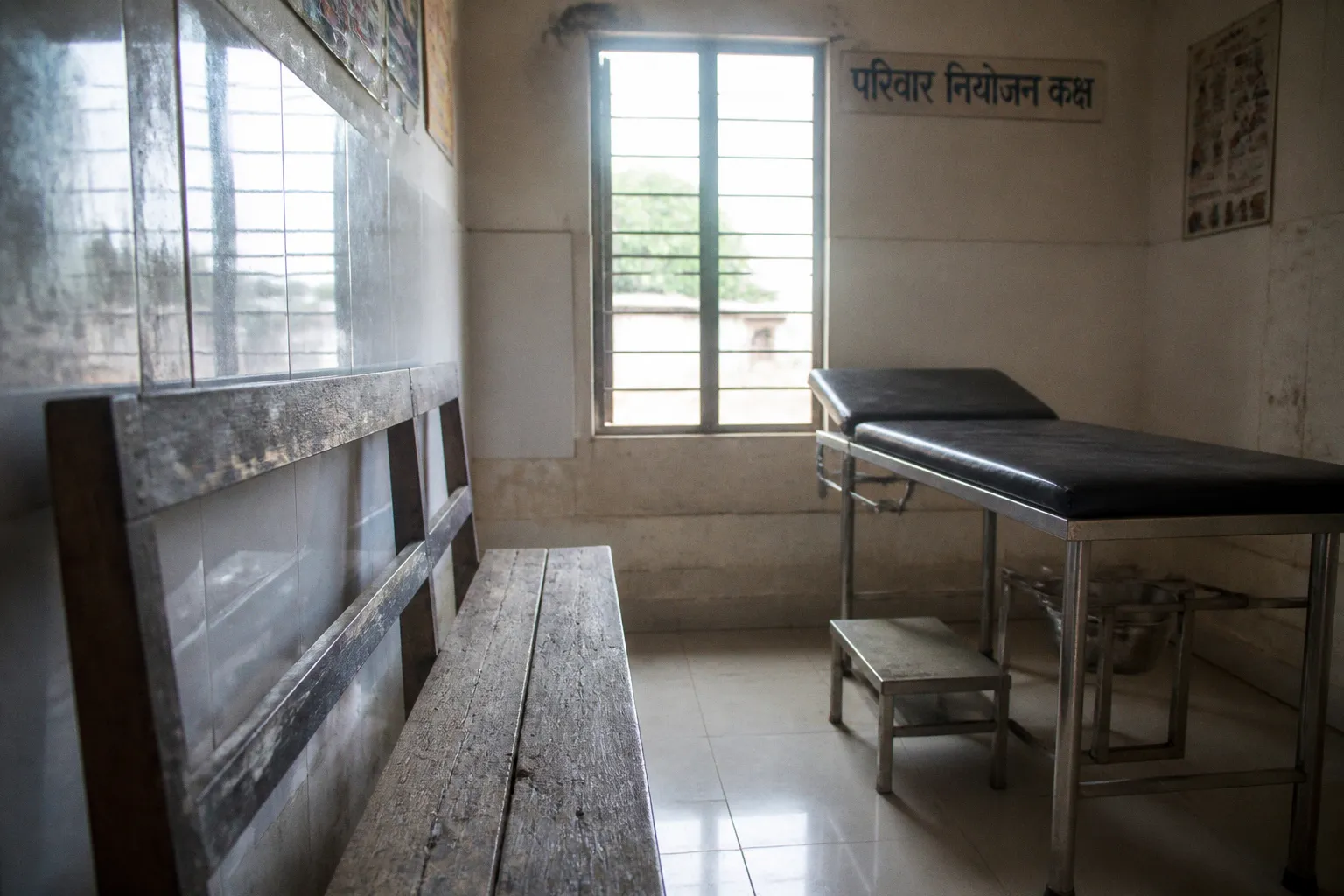
The national prevalence of unmet need has fallen to 9.4 percent, down from 20.6 percent in NFHS-1 in 1993. The decline is real and substantial. It is also easy to misread.
Roughly 2.4 crore women still want to avoid or delay pregnancy but are not using a method that meets that intention. They are not necessarily refusing contraception. Many are negotiating distance, stock-outs, provider availability, partner opposition, concerns about side effects, lost wages, and the cost of reaching a facility. Some rely on public services because private care is financially out of reach. Others postpone adoption or use methods that do not fit their needs.
That distinction matters. India has a large publicly funded family planning system, and many contraceptive methods are available without a direct charge at government facilities. But “free” at the point of provision does not always mean costless for a household. A woman may still need to pay for transport, diagnostic tests, medicines, food during a hospital visit, or the income lost while travelling and recovering. The distance between entitlement and actual access is where much of the unmet need persists.
The Economic Reality of Contraceptive Access in India
The economics of contraception in India are not defined only by the price printed on a private clinic’s bill. They are shaped by who can reach a provider, who can return for follow-up, who can take time away from paid work, and who has the authority to make a reproductive decision without negotiation inside the household.
For users of government services, the main contraceptive methods are generally intended to be supplied at no direct cost. The public system provides spacing methods such as oral contraceptive pills, condoms, intrauterine devices, injectable contraceptives, emergency contraceptive pills, and centchroman, along with permanent methods including female and male sterilization. Availability varies by facility level, provider training, commodity supply, and state implementation, but the programme’s basic design is to remove the price of the method itself.
Private care works differently. It can offer shorter waits, more predictable appointment times, greater privacy, and access to providers or methods that may not be consistently available in a nearby public facility. Those advantages are meaningful, particularly for women who have experienced dismissive counselling, crowded hospitals, or repeated trips to a centre without receiving the method they wanted. Yet the current out-of-pocket price of modern contraception in private clinics is not available as a single reliable national range. It varies by method, location, provider, facility, consultation requirements, and follow-up care.
That uncertainty should not be filled with neat-looking price bands. A private clinic may charge separately for consultation, insertion or administration, tests, medicines, removal, and follow-up. Another may quote a package. Prices also change across cities and districts. Without a comparable national dataset, the responsible conclusion is not that every private service costs a particular amount, but that the private route introduces a financial barrier that public provision is designed to reduce.
The burden falls unevenly. Poorer and rural women are more likely to depend on subsidised or free public services because private fees, travel costs, and repeat consultations are harder to absorb. This does not mean that all women who can afford private care use it, or that all women who use public facilities do so willingly. It means that the ability to choose between sectors is itself stratified by income, geography, education, and household power.
Even public care can generate expenditure. Studies of public-sector sterilization have reported out-of-pocket payments for a large share of users, including figures between 70 and 79 percent across states. These payments may arise from transport, diagnostics, medicines unavailable at the facility, food, accommodation, or other incidental expenses. The figures should not be read as a price for sterilization itself. They describe the cost of completing a supposedly free service in the conditions households actually face.
A method can therefore be free and still be inaccessible. If reaching the provider requires two days away from work, the household has paid. If a woman must buy medicines from an outside chemist, she has paid. If a follow-up visit requires another bus fare and another negotiation at home, the service has acquired a cost that does not appear in the official price.
A zero-price contraceptive method is not automatically a zero-cost service. The household bill often begins before the woman reaches the facility.
Mapping the Unmet Need: Regional Disparities and Demographic Trends
The national figure is useful for measuring progress, but it is too broad to explain where the system is failing. India’s unmet need is concentrated in particular states, communities, and districts. A district-level view is essential because national averages can conceal both high-performing areas and places where the service network is thin.
Uttar Pradesh, Bihar, Maharashtra, and West Bengal together account for approximately half of the total headcount of women with unmet need. Population size contributes to that concentration, but it is not the whole explanation. Health infrastructure, the availability of trained providers, socioeconomic conditions, method preferences, and the distribution of rural and urban populations all shape the result.
Prevalence is a different measure from headcount. A smaller state can have a higher proportion of women with unmet need without contributing the largest number nationally. Meghalaya records the highest reported prevalence at 26.9 percent, followed by Mizoram at 18.9 percent. These figures point to a need for state- and district-specific strategies rather than a single national intervention applied uniformly.
The rural-urban difference also remains visible. NFHS-5 records unmet need at 9.9 percent in rural areas and 8.4 percent in urban areas. The gap is narrower than it once was, but the practical barriers in rural locations can be more severe. A woman may live farther from a community health centre or district hospital, have fewer transport options, and encounter a smaller pool of trained providers. A missed appointment may not be easily replaced the next day.
Urban residence, meanwhile, should not be treated as a guarantee of access. Informal settlements, migrant communities, and peri-urban areas may sit close to hospitals while remaining poorly connected to them. Distance can be measured in kilometres, but it can also mean the time required to navigate registration, queues, referrals, and repeated visits. A clinic may be geographically near and functionally distant.
What the trend shows — and what it does not
The long-term trajectory is encouraging:
| Measure | Reported value | Survey period |
|---|---|---|
| National unmet need prevalence | 9.4% | NFHS-5, 2019–2021 |
| Estimated women with unmet need | 24,194,428 | NFHS-5, 2019–2021 |
| Rural unmet need | 9.9% | NFHS-5, 2019–2021 |
| Urban unmet need | 8.4% | NFHS-5, 2019–2021 |
| Highest reported state prevalence | 26.9%, Meghalaya | NFHS-5, 2019–2021 |
| Second-highest reported state prevalence | 18.9%, Mizoram | NFHS-5, 2019–2021 |
| States representing about half of the headcount | Uttar Pradesh, Bihar, Maharashtra, West Bengal | NFHS-5, 2019–2021 |
| Unmet need at the NFHS-1 baseline | 20.6% | 1993 |
| Unmet need in NFHS-4 | 12.9% | 2015–2016 |
The fall from 20.6 percent to 9.4 percent indicates that sustained public investment, broader awareness, wider method choice, and improvements in service delivery can change contraceptive access at scale. It does not prove that every method is equally available, that every woman can obtain her preferred option, or that the remaining unmet need is the easiest part to address.
The women counted in the survey are not a uniform group. Some have an unmet need for spacing. Others want to stop childbearing. Some may have tried a method and discontinued it because of side effects or poor counselling. Others may know about contraception but lack privacy, money, transport, or support from a partner. A district with a good overall prevalence can still contain communities where a particular method is unavailable or unacceptable.
This is why the headcount and the prevalence should be read together. High-population states may deliver the largest national reduction in numbers, while high-prevalence states may require more intensive and culturally specific work. Neither measure replaces the other.
Public Health Facilities: Navigating Free Services and Compensation Schemes
India’s established National Family Planning programme is the foundation of publicly funded contraceptive delivery. It is supported through a tiered network that includes sub-centres, primary health centres, community health centres, district hospitals, and other public facilities. In principle, this network connects counselling, method provision, referral, and follow-up.
The public system offers six spacing methods and two permanent options. The exact experience depends on the facility. A sub-centre may be able to provide pills and condoms but refer a woman elsewhere for an IUD or sterilization. A primary health centre may provide some services on scheduled days. A community health centre or district hospital may have trained staff for procedures but require registration, screening, and a return visit. “Available in the public system” therefore does not always mean “available today at the nearest facility.”
The main options include:
1. Oral contraceptive pills — usually supplied through public facilities and community health workers. They are effective when taken correctly, but regular resupply can be difficult for women who live far from a facility or cannot make frequent visits.
2. Condoms — distributed through health facilities and frontline workers. The method is inexpensive to supply and requires no clinical procedure, but consistent use depends on communication between partners and the ability to negotiate use.
3. Intrauterine devices — inserted by trained providers, generally at facilities equipped for the procedure. The method can provide long-term spacing, but counselling, screening, insertion, management of concerns, and follow-up all affect whether a woman considers it acceptable.
4. Injectable contraceptives — offered through public health channels where trained providers and supplies are available. Their longer dosing interval can reduce the number of visits, but users still need clear information about bleeding changes, side effects, continuation, and when to return.
5. Female sterilization — a permanent method that remains a major part of India’s contraceptive landscape. It is intended to be provided without a charge to the acceptor and is linked to compensation arrangements in many settings.
6. Male sterilization — a permanent option that has historically been used far less than female sterilization. Its low uptake reflects more than clinical considerations; gender expectations and misconceptions about masculinity and sexual function have also shaped demand.
7. Emergency contraceptive pills — useful after unprotected sex or contraceptive failure, but their role is different from that of a regular spacing method. Effective access depends on timely awareness and availability.
8. Centchroman — a non-hormonal weekly oral contraceptive associated with India’s public programme. Its distinctive dosing schedule makes counselling particularly important, especially where the method is less familiar to users or providers.
Government schemes also provide compensation for sterilization acceptors. Reported amounts range from ₹600 to ₹2,000, depending on the state and method. The purpose is to offset wage loss, transport, and related economic costs rather than to turn sterilization into a source of income. For a daily-wage worker, however, even a short period away from work can threaten food security or rent payments. Delays in receiving compensation, uncertainty about eligibility, or the need to make several trips can weaken the scheme’s practical value.
The public route is not a single experience
A woman considering family planning may need to make several decisions before she receives a method:
- Which method fits her reproductive intention, health history, and ability to return for follow-up?
- Where is the nearest facility that actually provides it?
- Is the service available on the day she can travel?
- Will counselling be private and non-judgmental?
- What will happen if she experiences side effects or wants removal?
- Are medicines and tests available inside the facility?
- Can she afford the transport and time required for another visit?
These questions are not administrative details. They determine whether the public system functions as an accessible service or as a nominal entitlement.
Method choice is particularly important. A programme may report broad availability while a woman experiences only one option in practice. If pills are in stock but an IUD provider is absent, the formal range of methods overstates the real range of choices. If condoms are available but discreet access is difficult, availability on paper does not guarantee use. If a sterilization camp is announced but the woman cannot take time away from work, the service remains out of reach.
The challenge is therefore not simply to increase the number of commodities distributed. It is to make the system dependable: trained providers, predictable service days, respectful counselling, privacy, referral pathways, and follow-up that does not punish users for living far from a hospital.
The Hidden Costs of Private Care: Why Financial Barriers Persist
Private clinics have a role in India’s family planning market. Some users prefer them because they expect greater confidentiality, shorter queues, continuity with one provider, or a broader choice of services. For a woman who can pay, the private route may also reduce the time cost of navigating a public facility.
But the ability to use private care should not be confused with a national preference for it. The available evidence does not establish a precise share of women with unmet need who bypass public facilities for private clinics. In particular, poor and rural women often rely on subsidised public services because private care is too expensive, too far away, or both. Some move between sectors; some delay care; some go without a method. The pattern is shaped by constraint as much as by preference.
Current private-clinic out-of-pocket costs for modern contraception are also not available as a reliable, nationally comparable set of ranges. Prices can differ sharply between districts and facilities, and the same method may involve separate charges for consultation, insertion, tests, medicines, removal, or follow-up. A table that assigns fixed private prices to IUD insertion or injectable contraception would create a level of certainty the evidence does not support.
The more defensible comparison is about the structure of payment:
| Aspect of access | Public facilities | Private facilities |
|---|---|---|
| Price of the contraceptive method | Many programme methods are intended to be provided without a direct charge to the user | User charges generally apply, but current national price ranges vary and are not consistently documented |
| Provider access | Services depend on facility level, staffing, scheduled days, and stock | Appointment and provider availability may be more predictable, but access depends on ability to pay |
| Counselling and follow-up | Provided through the public network, with quality varying by facility and workload | May offer continuity with one provider; costs can accumulate across visits |
| Travel and waiting time | Often significant for rural users and for procedures available only at higher-level facilities | May be shorter in some locations, but the nearest private option may still be distant |
| Sterilization support | Compensation schemes may offset wage loss and transport, subject to state rules and implementation | Charges are normally borne by the user unless another arrangement applies |
| Financial risk | Hidden OOP costs can arise despite the no-charge policy | Consultation, procedure, tests, medicines, and follow-up may all contribute to the final bill |
The public-versus-private family planning cost question is therefore not answered by comparing a single official price with a single private fee. It is answered by examining the total cost of completing care. Public care may be cheaper but require more time and travel. Private care may be faster but financially prohibitive. Neither sector is experienced uniformly across India.
For households with little disposable income, the decision can become a sequence of postponements. A woman may wait for a public outreach session rather than pay for a private consultation. She may continue using condoms when she would prefer a long-acting method because insertion requires a trip to a district hospital. She may discontinue a method when follow-up costs become difficult. A couple may decide to have another pregnancy rather than incur the uncertainty associated with seeking care.
Those decisions are not evidence of a lack of demand. They are evidence that demand is being filtered through household economics.
Where the public system still generates expenditure
The most common hidden costs include:
- Transport: one trip for counselling, another for a procedure, and additional trips for review or complication management.
- Lost earnings: especially for agricultural workers, daily-wage earners, domestic workers, and women whose paid employment has no leave provision.
- Diagnostics and medicines: tests or prescriptions may be obtained outside the facility when supplies are unavailable.
- Food and accommodation: a referral to a distant hospital may turn a short appointment into a full-day or overnight expense.
- Childcare and family support: women may need to pay someone to care for children or arrange help at home.
- Informal charges: payments may be requested or expected even where the official programme prohibits them.
These costs explain why a policy can be generous in design and still produce a poor experience for users. They also explain why simply announcing free contraceptive methods is not enough. The system has to cover the practical conditions that allow a woman to obtain and continue using a method.
Poor and rural women do not uniformly avoid public services for private clinics. For many, public provision is the only financially viable route — but reaching it can still carry a price.
Bridging the Gap: The Path to Universal Reproductive Health Coverage
The estimated cost of meeting the full need for modern contraception, maternal and infant care, and post-abortion care has been put at USD 5.41, or ₹397, per capita per year. This is a broad reproductive health coverage estimate, not the price of supplying one contraceptive method. It includes a continuum of services that extends beyond family planning.
Its significance lies in the scale of the policy choice. The calculation suggests that expanding reproductive health coverage is not necessarily beyond the country’s fiscal capacity. The difficult questions are about allocation, implementation, accountability, and whether spending reaches the people who face the greatest barriers.
The national decline in unmet need has been substantial, but the remaining gap is unlikely to close through awareness campaigns alone. Women who still have an unmet need may already know that contraception exists. Their obstacle may be a provider who is unavailable, a partner who objects, a method that is out of stock, a previous experience of poor counselling, or the cost of returning to the facility.
Several priorities follow from that reality.
Concentrate resources where the burden is largest
Uttar Pradesh, Bihar, Maharashtra, and West Bengal represent approximately half of the national headcount of women with unmet need. Strengthening services in these states can produce a large national effect, but the intervention must be district-specific. High-burden districts may need more trained providers, reliable supplies, outreach services, better referral systems, and counselling that includes men and couples without making women’s access dependent on a partner’s presence.
Meghalaya and Mizoram illustrate a different challenge: high prevalence in states that do not necessarily account for the largest national headcount. Here, interventions must be adapted to local geography, community structures, language, and patterns of service use. A national template cannot substitute for local understanding.
Turn “free” into genuinely affordable access
Removing the direct charge for a method is a necessary foundation, not the end of the policy. Public facilities need mechanisms to reduce the associated expenses that users report in practice. That means adequate supplies of medicines and tests, predictable service days, closer-to-home provision where clinically appropriate, and compensation systems that are transparent and timely.
Facility managers also need a way to identify where users are paying out of pocket and why. An audit that records only whether a service was delivered will miss the financial barrier. The relevant question is what the household had to spend before, during, and after the visit.
Expand real method choice
India’s contraceptive pattern has historically relied heavily on female sterilization. A stronger system gives women and couples meaningful access to spacing methods as well as permanent options. That requires more than adding commodities to a supply list. Providers need training in insertion, administration, side-effect management, removal or referral, and informed counselling.
Choice also means the right to decline a method. A service that pushes one option because it is easiest for the provider may increase recorded uptake while weakening reproductive autonomy. Good counselling allows users to compare duration, reversibility, side effects, effectiveness, follow-up requirements, and implications for future fertility.
Make district performance visible
National and state averages should be complemented by district-level monitoring that tracks more than contraceptive prevalence. Useful measures include method availability, stock-outs, waiting time, referral completion, follow-up, reported complications, user satisfaction, and the share of patients incurring out-of-pocket costs.
This matters because a district can improve its headline numbers while leaving particular groups behind. Young married women, unmarried women seeking confidential care, migrants, women with disabilities, remote rural communities, and people living in informal settlements may all face barriers that disappear inside an aggregate.
Treat men’s participation as a service issue
The imbalance between female and male sterilization is not simply a matter of individual preference. It reflects gendered assumptions about responsibility for contraception, myths about vasectomy, and the limited visibility of male-focused counselling. A family planning programme that places nearly all procedural and physical burdens on women cannot be described as fully equitable.
Male participation should not mean shifting pressure from women to men. It should mean ensuring that men receive accurate information and that couples can discuss contraception without treating pregnancy prevention as a woman’s private obligation.
The cost of leaving the gap in place
The economic consequences of unmet need extend beyond the cost of a consultation. An unintended pregnancy can affect a woman’s health, education, work, household income, and ability to care for existing children. The financial effect may be immediate, but the social effect can last much longer.
At the same time, the solution is not to measure reproductive health only through savings. Contraceptive access is a matter of autonomy and informed choice. A woman should not need to justify her decision to delay or avoid pregnancy through an economic argument before the health system takes her need seriously.
The NFHS-5 figure of 9.4 percent demonstrates that India has moved a long way from the 20.6 percent recorded in 1993. It also shows the scale of the remaining task: more than 24 million women whose intentions are not being met by the services available to them. Those women are not a statistical residue. They are the part of the population for whom the system’s remaining weaknesses are most consequential.
The fiscal estimate of ₹397 per capita per year makes the case for investment. The district-level disparities show where that investment must be focused. The persistence of out-of-pocket expenditure shows why programme design cannot be judged only by the official price of a method. And the uncertainty around private-sector prices is itself a reminder that access should not depend on an opaque market that poorer households cannot reliably enter.
India does not need a more polished promise of universal reproductive health coverage. It needs public services that function at the time and place women need them, with enough choice to make informed decisions and enough support to make those decisions practical. The distance between a free contraceptive method and an affordable contraceptive service is where policy becomes real.