Behavior change communication and education - A crucial solution for implementing the Population Strategy.
The North East Institute of Social Sciences and Research (NEISSR) just locked in a partnership with Vitamin Angels through a formal MoU signed on August 1, as reported by Nagaland Post.
Lead
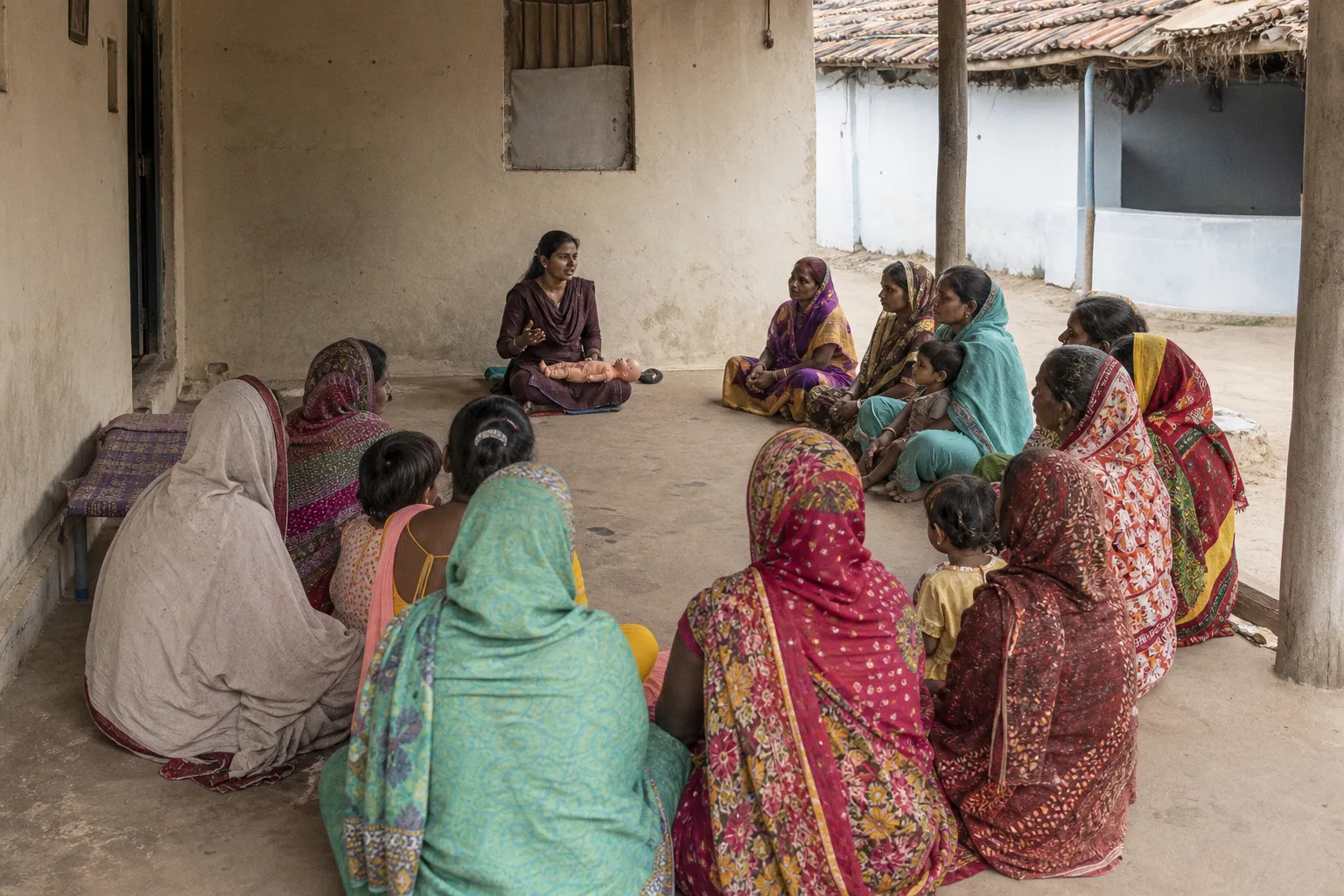
For a state where district-level household surveys keep flagging the same bottleneck — behavior change communication that never reaches the household — this isn't a ceremonial handshake. It's a workforce pipeline play: Master of Social Work students get structured fieldwork across Dimapur, Niuland, and Chümoukedima, embedded directly into the maternal and child health delivery chain.
Why this MoU matters operationally
District-level data in Nagaland doesn't lie. ASHA workers and ANMs are stretched across mountainous blocks, BCC materials sit in stacks at PHCs, and the messenger infrastructure is thin. Vitamin Angels — a US-based nonprofit operational in 65+ countries and present in Nagaland since 2011 — already runs evidence-based interventions on vitamin A supplementation and maternal nutrition with NHM backing. NEISSR brings the training apparatus and the student pipeline.
The partnership lets NHM Nagaland tap into a renewable workforce that costs the state nothing in salary line items. Dr. Khelito Zhimomi, State Program Officer for RMNCAH+N under the National Health Mission, framed it bluntly at the launch: institutional partnerships are what close the gap between policy and household behavior. That's a structural fix, not a soft skills workshop.
A parallel signal is worth noting here. As reported by Vietnam.vn, Thanh Hoa province trained 228 population collaborators from 45 communes in the first half of 2026 to handle direct BCC on prenatal screening, reproductive health, and newborn care — a scale-up that took months of organized effort. The Nagaland model takes a different route: instead of retraining existing cadres, it builds the next generation of community-facing professionals from the ground up, while leveraging a partner with proven intervention playbooks.
What changes on the ground
- Coverage footprint: Three districts — Dimapur, Niuland, Chümoukedima — receive direct MSW student engagement in maternal and child nutrition programs. Not all 16 districts, but a defensible starting footprint.
- Vitamin A and nutrition scaling: Vitamin Angels' track record includes documented work on vitamin A supplementation coverage in Nagaland. Student placements add bandwidth to that intervention line.
- Institutional wiring: The collaboration includes NHM Nagaland, ProRural NGO, and NEISSR — meaning student fieldwork isn't freelancing. It's plugged into existing program structures and reporting lines.
- Cadre pipeline: MSW students exit with community health fieldwork already on their résumé. That's the real return on this MoU — a workforce that walks into district health systems already knowing how to counsel households on prenatal screening, newborn care, and nutrition adherence.
What to watch next
- Uptake metrics. Whether student placements translate into measurable gains in prenatal screening, newborn screening, and vitamin A coverage — the indicators that move in DLHS data.
- Geographic expansion. Three districts won't close coverage gaps in Nagaland's remote blocks. If the pilot holds, expect a push to scale to additional districts by 2027.
- Script standardization. NHM Nagaland needs to lock in standardized BCC counseling scripts so student placements become force multipliers rather than parallel efforts duplicating or contradicting existing ASHA messaging.
- Retention. The bet only pays off if MSW graduates stay in community health roles in Nagaland rather than migrating to urban social work positions. That's the metric nobody tracks yet.
For district health officers and state program managers watching this unfold: the MoU is infrastructure, not goodwill. Treat it like one.