Exploratorium Ticket Booking: What to Know Before Buying
A visit to the Exploratorium is easier to plan when the ticket is treated as more than a receipt. The date matters, the available capacity matters, and the admission category matters.
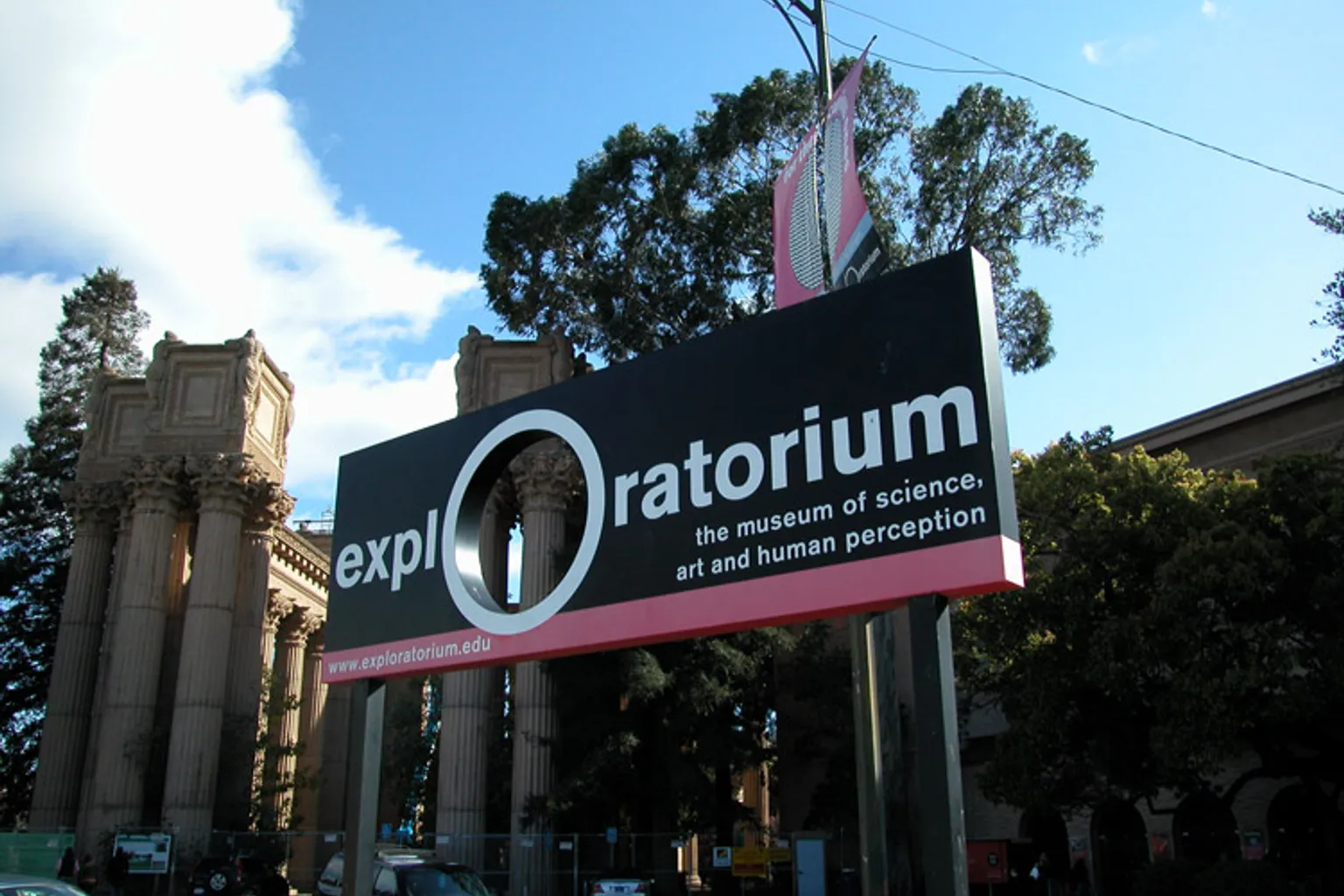
A ticket bought for the wrong day, the wrong type of visit, or the wrong number of people can turn a flexible afternoon into a fixed logistical problem.
Tickets and prices
Exploratorium
San Francisco
01 · GetYourGuide
Entry ticket — Adult-only evening admission
USD23.33
02 · GetYourGuide
Day trip ticket — Full-day admission
USD40.83
03 · Official
Official ticket — Daytime admission for adults (18–64)
USD39.95
Box office and online booking
Exploratorium — At the box office
The museum’s inventory is not unlimited. On busy dates, visitors who wait until arrival may find that their preferred admission is unavailable or that only less convenient options remain. The practical move is to decide what kind of visit you want first, then check the date and the available admission options before committing.
This is especially important for visitors considering the Tactile Dome. It is a separate experience, not an automatic part of general admission, and it needs to be planned as its own item rather than treated as a minor add-on at the end of the booking process.
Navigating General Admission and Pricing Tiers
General admission is the main way to visit the Exploratorium. It covers access to the museum’s exhibition areas, including its hands-on installations and the spaces at Pier 15. The admission product is date-specific, so the date selected during checkout should be treated as part of the ticket itself rather than as a loose reservation.
The exact amount depends on the category selected and the date or product available. Instead of looking only at the headline adult rate, compare the categories that apply to everyone in the group. Depending on the booking page and the visitor’s eligibility, these may include:
- adult admission;
- youth or child admission;
- senior admission;
- student admission with the required identification;
- teacher or educator admission where a benefit is available;
- free admission for eligible young children or other qualifying visitors.
The key distinction is between a category that changes the price and a category that removes the need to plan for capacity. A child who qualifies for free admission may not be charged, but that does not necessarily mean the child can be ignored when the booking system asks for the total party size. If the checkout flow requests a place for every visitor, include the child in that count.
That is a small detail, but it is the kind that matters on a high-demand date. A free admission category is still an admission category. It should be selected accurately, and any required proof should be available when the party arrives.
Date-specific tickets and available capacity
Do not assume that a ticket bought for one day can be used on another. Date-specific admission is designed around the museum’s expected capacity for that date. If the booking page offers a particular date, window, or release of inventory, read the conditions before paying and keep the confirmation with the date clearly visible.
The most important questions at checkout are straightforward:
- Is the ticket valid only on the selected date?
- Does the ticket include an entry window, or is it valid for admission during the museum’s operating period that day?
- Can the ticket be changed, transferred, or refunded?
- Does the selected category require identification?
- Does every member of the party have a place represented in the booking?
These are not merely administrative details. They determine how much flexibility remains after the purchase. A visitor who has not yet fixed the rest of a San Francisco itinerary may want to secure the museum date only after checking hotel plans, transport, and any other reservation that cannot be moved.
The museum may limit admission when capacity is reached. That is why buying tickets in advance is more reliable than treating the ticket desk as the first step of the visit. It also explains why the cheapest apparent option is not always the best one: a discounted category is useful only when the visitor qualifies for it and the relevant inventory is still available.
The first decision is not whether the ticket looks cheap. It is whether the date, admission category, and capacity conditions fit the visit you are actually planning.
How to think about ticket prices
Searches for “Exploratorium ticket prices” often produce a single figure, but a single figure rarely tells the whole story. Prices can differ by admission category and by the product selected. General admission, evening programming, and the Tactile Dome should not be compared as though they were interchangeable tickets.
A sound comparison separates three things:
1. The base admission. This is the ticket that provides access to the main museum experience.
2. The eligibility discount. This applies only when the visitor meets the stated requirements for a student, senior, teacher, youth, or another category.
3. The separate experience fee. The Tactile Dome is the clearest example: it is an additional admission rather than part of the general museum ticket.
The checkout page is the final authority for the amount available on a particular date. If a price appears on a third-party site, compare it with the official product carefully. A lower-looking figure may exclude fees, use a different admission category, or apply to a different date or experience.
Securing Your Spot: Direct Booking vs. Third-Party Passes
For most visitors, the official booking channel is the cleanest place to start. It shows the museum’s own admission categories and the inventory that the museum is making available directly. It also makes it easier to understand what is included in the purchase and which conditions apply to the selected date.
That does not make every other channel automatically wrong. City attraction passes and reputable resellers can be useful, but they change the terms of the decision. The question is not simply whether a pass mentions the Exploratorium. The question is whether it provides the kind of access your itinerary needs.
| Booking route | Most useful when | What to examine before purchase |
|---|---|---|
| Official museum booking | You are visiting the Exploratorium as a standalone destination | Date validity, capacity availability, admission category, and change or refund terms |
| Multi-attraction pass | The itinerary already includes several participating attractions | Which attractions are included, how activation works, the validity period, and whether a separate reservation is needed |
| Reputable reseller | The product includes a service or bundle you specifically want | The exact admission delivered, date restrictions, fees, cancellation terms, and whether the reseller is issuing a museum ticket or a voucher |
Direct booking for a single museum visit
If the Exploratorium is the main or only attraction being booked, direct admission is usually easier to evaluate. The product is visible in one place, the selected date is clear, and there is less risk of confusing a pass activation with a confirmed museum reservation.
That clarity matters for families and small groups. Everyone can be assigned the appropriate admission category during one transaction, and the confirmation can be checked against the number of people travelling together. If a separate experience is being added, such as the Tactile Dome, the official checkout is also the natural place to see whether it is available for the selected date.
Before paying, look for the following information on the official page:
- whether the date is fixed;
- whether the ticket has a specific entry window;
- whether the ticket can be changed or refunded;
- whether the selected admission category has documentation requirements;
- whether the Tactile Dome is available separately for that date.
The goal is not to eliminate every condition. It is to know which conditions you are accepting.
When a multi-attraction pass is worth considering
A CityPASS, Go City product, or similar pass can make sense when the rest of the trip already includes several attractions in the same programme. The value comes from using the bundle, not from the name of the museum appearing in the list.
Read the pass rules before assuming that inclusion equals immediate admission. Some attraction passes require activation, some use a reservation process, and some provide a voucher that must be exchanged or validated. The pass may also have a usage period that does not align with the date you had in mind for the Exploratorium.
A useful comparison is:
- the total pass price;
- the number of included attractions you genuinely plan to visit;
- any reservations required;
- the time available to use the pass;
- any exclusions or separate charges;
- the flexibility lost if the itinerary changes.
If the pass is being purchased only to reduce the price of one museum visit, direct booking may be simpler and more transparent. If it is already part of a larger itinerary, the museum visit can be one element in a broader calculation.
When a reseller creates more complexity than value
Third-party platforms may offer bundled activities, guided products, or a different purchase interface. That can be useful when the bundle itself is the reason for buying. It is less useful when the visitor is simply looking for an ordinary admission ticket and has not checked what the reseller is actually selling.
Pay attention to the wording. A listing may offer:
- a confirmed museum admission;
- a voucher that still requires an exchange;
- a package including transport or a guide;
- a date-specific product with its own conditions;
- an entry product whose cancellation policy is controlled by the reseller.
The museum’s rules and the reseller’s rules may not be identical. A reseller’s promise about cancellation, changes, or customer support applies to that transaction, not automatically to every ticket sold by the museum. Likewise, buying through a third party should not be assumed to create benefits associated with a direct museum purchase unless the terms explicitly say so.
The safest comparison is always product against product: same date, same admission, same inclusions, same flexibility.
The After Dark Experience: Planning for Adult-Only Evenings
An evening programme should be treated as a separate product rather than as a cheaper version of an ordinary daytime visit. Its audience, schedule, and terms may differ from general admission. Visitors who are considering an adult-only evening should confirm the current age requirement and the exact date-specific conditions before purchasing.
That matters because the restriction applies to the event, not merely to the person buying the ticket. A family group cannot assume that an adult can attend while younger members enter under ordinary daytime categories. If the event is limited to adults, every member of the party must meet that requirement.
The same principle applies to the contents of the ticket. An evening admission may provide access to the museum during that programme, but it should not automatically be treated as a ticket for every separately scheduled experience. The Tactile Dome remains a distinct product unless the booking page expressly combines it with the evening admission.
What to confirm before booking an evening visit
Evening programmes are attractive partly because they change the rhythm of a museum visit. They can work well for adults who want to visit after other daytime plans, but they are less forgiving when the rest of the itinerary is already crowded.
Check:
- the event date and operating hours;
- the minimum age or other entry restrictions;
- whether general admission and the evening programme use separate tickets;
- whether food, drinks, or special programming are included or purchased separately;
- whether the Tactile Dome has compatible availability;
- whether the ticket can be changed if the rest of the day shifts.
Do not use a daytime ticket as a substitute for an evening programme, or the reverse, without confirming the terms. The names may look related while the admission conditions are different.
An evening ticket is not a shortcut around the booking rules. It is its own product, with its own date, eligibility conditions, and available capacity.
The most useful way to compare an evening visit with daytime admission is to compare the experience you want, not just the displayed price. A lower price may be meaningful if the date and age rules work for you. It is not a saving if the product excludes part of the group or forces a second purchase for the experience you planned to see.
Adding the Tactile Dome to Your Museum Itinerary
The Tactile Dome requires separate admission. General admission does not automatically include it, and a ticket for another museum programme should not be assumed to cover it either. The Dome is a distinct experience with its own capacity and scheduling.
That separation is central to the booking decision. Visitors should first secure the museum admission they need for the selected date, then check whether the Tactile Dome is available as a separate purchase. If the Dome is important to the visit, do not leave it out of the plan simply because the general admission ticket has already been confirmed.
What makes the Dome a separate booking
The Tactile Dome is not another gallery that can be entered whenever the visitor happens to reach it. It is a specific experience with limited places and its own operating schedule. The booking page may present it alongside general admission, but that presentation does not make it part of the standard ticket.
A separate Dome ticket means that the group may need to manage two related but different pieces of information:
- the date of the museum admission;
- the date and time or session details for the Dome.
The exact scheduling relationship depends on the inventory available at checkout. Read the session details rather than assuming that any Dome time will work with any general admission arrangement.
How to place the Dome in the day
The most comfortable plan leaves room between arrival, general museum access, and the Dome session. A visitor who books the Dome too close to another fixed commitment has little protection against transport delays, a slow security or admissions process, or simply underestimating how much time the museum requires.
At the same time, there is no universal rule that the Dome must be booked for the exact same entry time as general admission. The correct choice depends on the booking conditions shown for that date and on how long the party intends to stay. The important point is compatibility: both admissions should be valid for the same visit, and the visitor should have enough time to reach the Dome session without rushing through the museum or missing another reservation.
Before adding the Dome, confirm:
- that it is available on the selected date;
- whether it has a separate session time;
- whether every participant meets the experience’s eligibility requirements;
- whether each participant needs an individual Dome ticket;
- whether the Dome ticket can be changed or refunded;
- where the confirmation places the Dome within the overall visit.
If the general admission booking is already complete, return to the official ticketing information and check the separate Dome inventory. Do not rely on memory or on the assumption that a general admission confirmation includes every activity listed on the museum website.
Essential Logistics for Teachers and Group Visitors
Discounted or complimentary admission categories are useful only when the visitor can meet their requirements. Teachers, students, seniors, and other eligible groups should review the documentation rules before arriving. The exact benefit and the accepted proof can change, so the current booking information should take priority over an old screenshot, a travel blog, or an offer copied from another site.
A teacher booking deserves particular care because eligibility may depend on the institution, the type of identification presented, or the conditions of the current programme. Do not assume that employment at a California school automatically qualifies, and do not assume that every form of school identification is accepted. If the benefit matters to the budget, verify the category and prepare the requested documentation before the day of the visit.
The same caution applies to student and senior categories. The discount is not a general discount for anyone who appears to fit the description; it is a ticket category with its own terms. If identification is required, bring the form named in the booking information.
Groups and school visits
Large groups should separate two questions that are often collapsed into one:
1. Can the group buy ordinary admission for the selected date?
2. Does the group qualify for a dedicated group or school-visit arrangement?
The answer to the first does not automatically answer the second. A group that buys individual tickets may be subject to the ordinary availability and category rules. A group booking may have different procedures, payment arrangements, or scheduling conditions.
The practical burden rises with group size. One person should keep the confirmation, know the selected date and admission categories, and make sure that the party understands where to go and what documentation is required. For school groups, collect the information before purchase rather than trying to resolve a category question at the entrance.
Do not count on a group discount being applied retroactively to tickets that have already been purchased individually. If the visit depends on a special rate or school programme, use the dedicated information provided by the museum before finalising the booking.
International and out-of-state visitors
Visitors travelling from outside California face the same basic ticket questions as local visitors: which date is available, which category applies, and whether the purchase is flexible. The difference is that changing the date may be more difficult when flights, accommodation, and other reservations are already fixed.
For that reason, international and out-of-state visitors should avoid booking the museum in isolation from the rest of the trip. Check the arrival and departure plans, allow for transport from the hotel or airport, and avoid placing a date-specific museum ticket on a day that is already vulnerable to delays.
Keep the confirmation in more than one accessible form. A phone copy is convenient, but a saved file or printed version can be useful if the connection is unreliable or the group’s devices run out of battery. This is ordinary travel preparation, not a special rule about the museum’s gate.
The booking decision in the right order
The cleanest way to buy tickets for the Exploratorium is to work through the choices in sequence.
Start with the product: ordinary general admission, an evening programme, or general admission plus the Tactile Dome. Then choose a date that fits the rest of the itinerary. After that, select the admission category for each member of the party and check whether capacity remains for the date and any separate experience.
Only then compare booking channels. Direct admission is easiest to interpret when the museum is the main destination. A multi-attraction pass should be judged across the whole itinerary, not by the museum line alone. A reseller is worth considering only when its specific bundle, service, or availability solves a problem that direct booking does not.
Before closing the transaction, review the confirmation screen slowly. Check the date, the number of visitors, the admission categories, the presence or absence of the Tactile Dome, and any listed entry or session time. Save the confirmation where the group can reach it without having to reconstruct the booking from memory.
The useful rule is simple: book the admission you need, for the date you can genuinely keep, and treat every separate experience as a separate line in the plan. Capacity limits make advance attention worthwhile, but they do not require a complicated strategy. Once the date, category, and product are clear, buying tickets for the Exploratorium becomes much less about guessing and much more about reading the terms carefully before pressing pay.
FAQ
Are Exploratorium tickets valid on any date?
Does general admission include the Tactile Dome?
Should children with free admission be included in the booking party size?
Is an evening programme ticket the same as daytime general admission?
Is it better to book the Exploratorium directly or use a city pass?
Photo: Ann Bartkowski / Dacreep at en.wikipedia / CC BY-SA 3.0 — Wikimedia Commons