Medina Azahara Ticket Options: Which Booking Route Suits You?
Booking tickets for Medina Azahara is not simply a matter of choosing an entry time and walking through the gate.
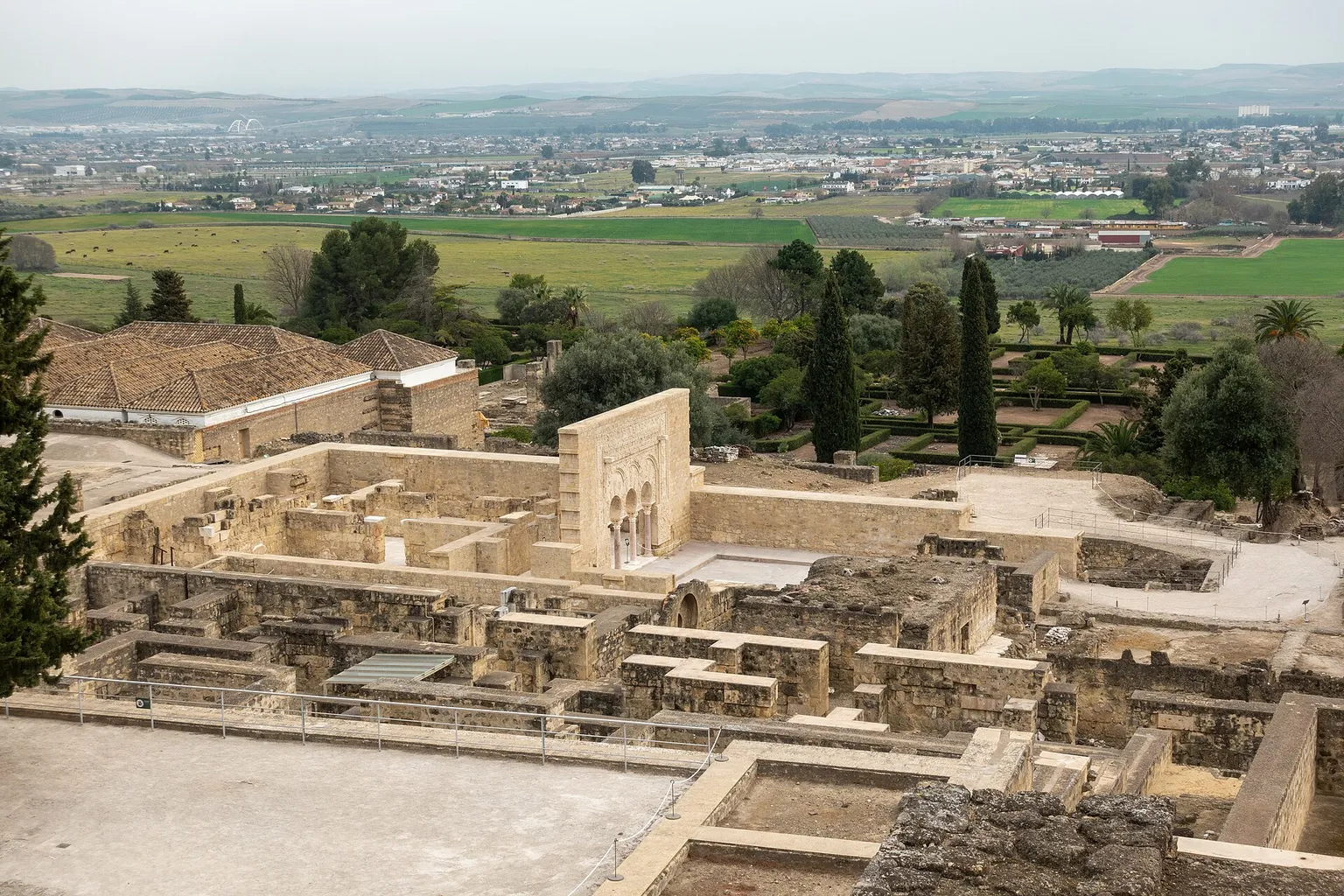
The archaeological site lies around 8 kilometres from Córdoba, and the visitor journey has two distinct stages: first, reaching the reception centre; then taking the mandatory shuttle bus to the ruins themselves.
Tickets and prices
- Guided Tour · 3 Hoursfrom€18
- Guided Tour · Nightfrom€17
Prices checked on August 15, 2026 · current price on the partner page.
Official website — medinaazahara.org
- Time to spend: 2–3 h
- Best time to visit: early morning
Prices are indicative and may change — confirm the price and availability on the partner page.
Partner link — GetYourGuide ticketsThat extra step is the detail most likely to catch visitors out. Private cars cannot continue from the reception centre to the upper archaeological area, and even travellers who arrive independently must use the site shuttle. Once that care pathway is clear, the different ways to book tickets for Medina Azahara become much easier to compare.
You can arrange a self-guided visit, take the dedicated transfer bus from central Córdoba, or reserve an organised guided tour that brings transport and interpretation together. The right choice depends less on the entrance ticket itself than on how much planning, historical context and transport coordination you want to carry on the day.
Medina Azahara entry fees: what visitors actually pay for
Medina Azahara has a relatively straightforward admission structure, but it is linked to visitor eligibility. Admission to the archaeological complex is free for citizens of the European Union and the European Economic Area. Visitors from outside those areas generally pay a modest entrance fee.
That distinction applies to the site admission. It does not remove the separate transport requirement between the reception centre and the ruins. Every visitor must board the internal shuttle, regardless of whether their archaeological admission is free.
This is the point at which many online descriptions become confusing. A visitor may see a free-entry rule and assume the entire visit costs nothing, or may see a tour price and believe it represents only the monument ticket. In practice, the total depends on the route you choose:
- Independent visitors arrange their own journey to the reception centre and then pay for the compulsory internal shuttle.
- Visitors using the city transfer bus travel from central Córdoba to the reception centre and use a package that includes the internal shuttle.
- Guided-tour customers usually book a combined service covering the transport and entry logistics, with the guide included according to the tour conditions.
Children and some reduced-fee categories may have different admission and transport arrangements. Because tariffs and booking conditions can change, it is sensible to check the current ticket display before payment rather than rely on an older blog post or a screenshot shared by another traveller.
The archaeological admission is only one part of the journey: the mandatory shuttle is the practical key to reaching Medina Azahara itself.
When you book tickets Medina Azahara visits online, look carefully at what the booking includes. The words “entry,” “transfer,” “guided tour” and “shuttle” are not interchangeable. A low-cost admission option may still leave you responsible for reaching the reception centre and arranging the onward transfer yourself.
The mandatory shuttle bus system explained
Medina Azahara is designed around a reception centre located below the main archaeological site. Visitors leave their private vehicle at this centre, obtain or validate their access arrangements, and board the internal shuttle bus for the final section.
The shuttle journey is not an optional sightseeing extra. It is the required connection between the modern visitor facilities and the ruins. This means that arriving by car does not allow you to drive directly to the palace city, and a taxi drop-off at the reception centre does not remove the need to use the shuttle.
For an independent visit, the sequence is usually:
1. Travel from Córdoba or elsewhere to the Medina Azahara reception centre.
2. Park or arrive at the reception facilities.
3. Confirm your admission and shuttle arrangements.
4. Board the internal bus to the archaeological complex.
5. Explore the ruins on foot.
6. Return by shuttle to the reception centre before continuing your journey.
This structure is manageable, but it creates a timing issue. You are not planning only for the distance between Córdoba and the monument. You also need a margin for parking, finding the correct building, waiting for the shuttle and returning to the reception centre after the visit.
That margin matters particularly during the warmer months. The archaeological area is exposed, and the walking route includes uneven surfaces, open courtyards and areas with limited shade. Visitors travelling with young children, older relatives or anyone with reduced mobility may find the shuttle-and-walking combination more demanding than the ticket description suggests.
The site is not a conventional enclosed museum where every stage is climate-controlled and close to the entrance. Comfortable footwear, water and sun protection are part of the practical preparation, not optional extras. A good ticket choice should leave enough time for the visit rather than forcing you to move quickly between transport connections.
Reaching Medina Azahara from central Córdoba
For travellers staying in Córdoba without a car, the dedicated city transfer bus is often the cleanest solution. It departs from the Paseo de la Victoria area and connects central Córdoba with the Medina Azahara reception centre. The return arrangement includes the internal site shuttle, so you do not have to construct the journey from separate transport pieces.
This option suits visitors who want independent exploration but do not want to navigate the regional road network, arrange a taxi or spend part of the morning working out how to connect the reception centre with the ruins. It also creates a clearer return plan, which can be reassuring when you have a restaurant reservation, train departure or another monument booked later in the day.
The transfer bus is not the same as a guided tour. You generally receive the transport connection and the practical access arrangement, but you remain responsible for exploring the archaeological site at your own pace. That can be a strength if you prefer to stop, photograph and read at your own rhythm.
Arriving by private vehicle gives you more flexibility around the wider day, especially if Medina Azahara is one stop on a longer Córdoba itinerary. The trade-off is that you must manage the driving, parking and shuttle sequence yourself. The road journey may be short, but the visit is not a drive-up experience.
A useful comparison looks like this:
| Booking route | Best suited to | What it simplifies | What remains your responsibility |
|---|---|---|---|
| Independent entry | Travellers with their own transport and a flexible schedule | Basic admission arrangements | Driving, parking, shuttle timing and historical interpretation |
| City transfer bus | Visitors staying in central Córdoba without a car | Transport to the reception centre and internal shuttle connection | Exploring the ruins independently and keeping to the return schedule |
| Organised group tour | First-time visitors who want context and logistics handled | Transport, entry coordination and an official guide | Following the group timetable |
| Private guided tour | Families or small groups wanting a tailored experience | Personalised interpretation and coordinated access | Paying for a higher-touch service and agreeing the itinerary |
There is no universally superior route. The question is where you want the complexity to sit. Independent visitors carry more of the logistics but gain freedom. Group-tour visitors surrender some flexibility in exchange for a smoother care pathway from Córdoba to the monument.
Guided tour Medina Azahara booking: when interpretation earns its place
Medina Azahara is visually striking, but the remains require context. Walls, foundations, columns and fragments do not always explain their own function to a modern visitor. The city was commissioned in the tenth century under Caliph Abd al-Rahman III, construction began in 936 CE, and the palace city was destroyed and abandoned during the civil war of 1013.
A guided tour can connect those dates and structures into something more coherent. Instead of seeing a sequence of stone remains, visitors can understand the relationship between administrative areas, ceremonial spaces, residential quarters and the wider political purpose of the complex.
This is particularly helpful for anyone whose knowledge of the history of al-Andalus is limited. A guide can establish the essentials without turning the visit into an academic lecture: why the city was built, how it expressed power, how it functioned and why its remains survive in their present form.
Organised group tours commonly combine the official guide with entry logistics and, depending on the package, transport from Córdoba. They are usually the most convenient option for visitors who want to book one service rather than coordinate separate tickets and transfers.
The main limitation is rhythm. A group must move together, and the explanation may spend time on subjects that interest one visitor more than another. If you prefer to linger in one courtyard or take photographs without watching the clock, independent entry or a transfer-only option may feel more comfortable.
A private guided tour offers the opposite balance. It is better suited to families, small groups and visitors with a specific interest in architecture, Islamic history or heritage conservation. The cost is higher, but the experience can be adjusted more closely to the group’s pace and questions.
When comparing guided tour options, read beyond the headline title. Check whether the service includes:
- Transport from central Córdoba or only meeting at the reception centre.
- The internal shuttle connection.
- An official guide or a general tour escort.
- The language of the tour.
- The expected duration at the archaeological site.
- The meeting point and return arrangements.
- Any limitations for children, mobility equipment or late arrivals.
The phrase “guided tour” does not always describe the same level of service. Some tours are primarily transport packages with a short explanation; others provide a sustained historical presentation throughout the visit.
Salón Rico access requires separate planning
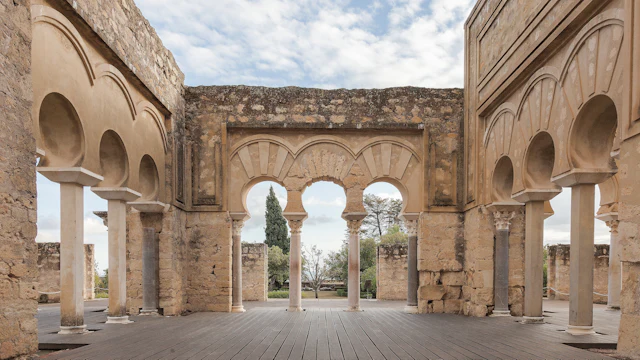
The Salón Rico, or Rich Hall, is one of the most sought-after areas associated with Medina Azahara, but access is not simply included in every standard site visit. Special guided access requires advance online reservation.
The reservation itself is free, but availability is limited and the visit is conducted strictly in Spanish. That language condition is important for international visitors. The tour may still be worthwhile for its access and architectural significance, but travellers should not assume that an English-language explanation will be provided.
This is a separate planning decision from choosing ordinary Medina Azahara tickets online. If the Salón Rico is central to your visit, search for the special reservation route before finalising your wider transport plan. Otherwise, you may arrive at the archaeological complex with a general admission booking but no place on the restricted-area tour.
The practical sequence is therefore:
1. Decide whether access to the Salón Rico is essential or simply desirable.
2. Check the official reservation availability in advance.
3. Confirm the language and meeting instructions.
4. Arrange your general admission and transport around that appointment.
5. Leave enough time for the internal shuttle and any walking between areas.
This is one of those small details that can change the whole shape of the day. A visitor who treats the special access as an informal add-on may discover that the desired experience is already fully reserved.
Medina Azahara opening hours and tickets: building a realistic day
The monument is generally open from Tuesday to Sunday, with standard daytime visiting hours typically running from 9:00 a.m. to 6:00 p.m. It is closed on Mondays. Seasonal changes and special schedules can affect the practical timetable, so the current official information should be checked before travelling.
Opening time alone does not tell you when to leave Córdoba. You need to work backwards from the time you want to be at the ruins, allowing for:
- The journey from central Córdoba to the reception centre.
- Finding the correct boarding point.
- Ticket or reservation checks.
- Waiting for the internal shuttle.
- The return journey to the reception centre.
- The final transfer back into Córdoba.
Visitors often underestimate the return leg because the outward journey receives more attention. If you have an afternoon train or a timed attraction in Córdoba, avoid booking the two experiences too closely together. Transport connections can be straightforward without being instantaneous.
An early visit is usually kinder in hot weather and gives you more breathing room if the shuttle queue or road journey takes longer than expected. A later visit may fit better into a relaxed itinerary, but you should be particularly careful with seasonal closing times and the departure schedule of the return transfer.
The site’s UNESCO World Heritage status, recognised in 2018, has increased its profile and made advance planning more worthwhile. Medina Azahara is not usually difficult to understand logistically once you know the system, but an unplanned arrival can produce unnecessary waiting or a missed connection.
Which Medina Azahara ticket option should you choose?
The decision becomes clearer when you start with the day you want rather than the ticket label.
Choose independent entry if you are travelling by car, prefer to explore without a guide and are comfortable managing the reception-centre and shuttle process. This is the most flexible route, but it places every practical step with you.
Choose the dedicated transfer bus if you are based in central Córdoba and want to avoid driving while still exploring the ruins independently. It offers a useful middle ground: transport is organised, but the archaeological visit remains your own.
Choose an organised group tour if this is your first visit, you want the history explained on the ground and you would rather not coordinate several separate arrangements. It is especially helpful when you are working within a fixed Córdoba itinerary.
Choose a private tour if the group has particular interests, different walking speeds or a strong preference for personal attention. The higher cost can be justified when the value lies in the guide’s ability to adapt the visit rather than simply deliver a standard route.
For families, I would give one additional piece of advice: do not judge the best option by the entrance fee alone. The practical question is whether the route gives you enough time, shade, water and flexibility for the people actually travelling with you. A slightly more structured booking can prevent a tiring day, while a self-guided visit can be ideal for a family that needs freedom to pause.
The best Medina Azahara booking is the one that matches your transport reality and walking pace, not the one with the shortest description or the lowest headline cost.
A calm booking route for first-time visitors
For most first-time visitors staying in Córdoba, the simplest approach is to choose between the dedicated city transfer and an organised guided tour. The transfer suits independent travellers who want control over the visit. The guided option suits those who want the historical layers explained and the logistics bundled together.
Before booking, confirm four things:
- Whether your admission is free or charged according to your citizenship or eligibility.
- Whether the internal shuttle is included.
- Where the service begins: central Córdoba or the reception centre.
- Whether the return journey fits comfortably with the rest of your day.
Then check the opening day and current schedule, remembering that Monday is normally not available. If you hope to visit the Salón Rico, arrange that reservation separately and account for the Spanish-only guided format.
Medina Azahara rewards visitors who give it enough time to become legible. The site is not just a collection of ruins outside Córdoba; it is the surviving footprint of a planned palace city whose meaning depends on scale, setting and historical context. Once the ticket, shuttle and transport decisions are settled, you can spend your attention where it belongs: on the landscape, the architecture and the human story held in the remains.
Practical info
Currency: EUR
Driving: on the right
Emergency number: 112
FAQ
Is the Medina Azahara shuttle bus mandatory?
Is admission to Medina Azahara free?
How can I get to Medina Azahara from central Córdoba?
What is the difference between a transfer bus and a guided tour at Medina Azahara?
Do I need a separate reservation to visit the Salón Rico?
When is Medina Azahara open?
Photo: Kent Wang from Barcelona, Spain / CC BY-SA 2.0 — Wikimedia Commons