How Coordinated Care Models Are Transforming Maternal Health Outcomes
In a separate development reported by News-Medical, US researchers have found that Medicaid Accountable Care Organizations — networks that share responsibility for a patient's outcomes across…
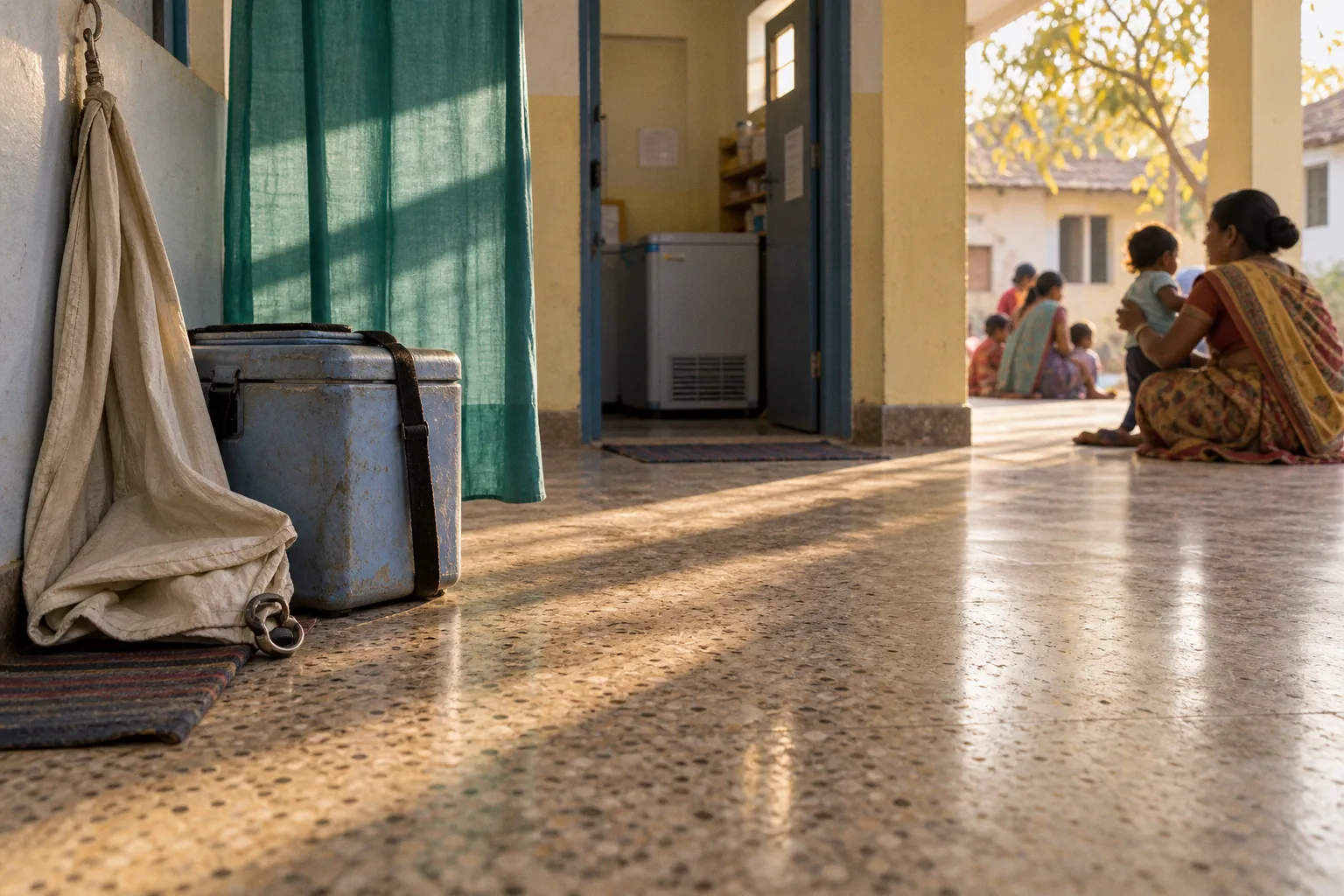
India's maternal health work earns WHO recognition — and what it might mean at the bedside
Reporting from The New Indian Express this week carries news that WHO Director-General Dr Tedros Adhanom Ghebreyesus met Union Health and Family Welfare Minister J.P. Nadda at the 79th Regional Committee Session and praised India's "impressive" maternal and child health gains. The recognition came with two WHO South-East Asia Regional awards, including acknowledgement of the country's decade-long sustained elimination of maternal and neonatal tetanus.
In a post on X, the WHO chief pointed to institutional deliveries rising from 78% to 93% nationally, and to 160,000 Ayushman Arogya Mandirs bringing screening for hypertension, diabetes and common cancers closer to communities, with referral pathways built in. ASHA workers, he noted, are "another powerful example of health care reaching people where they are, supporting mothers and children from conception through adolescence."
Where coordinated care is heading
In a separate development reported by News-Medical, US researchers have found that Medicaid Accountable Care Organizations — networks that share responsibility for a patient's outcomes across settings — can improve maternal care quality and equity. The full study details aren't in my hand, but the headline lands at an interesting moment for Indian practice.
It reads, loosely, like the direction India's own Health and Wellness Centres are already moving: a single accountable touchpoint that follows a woman from her first antenatal visit through postpartum and infant care, with a clear referral line when risk appears. The theory is familiar to anyone who has tried to hold a high-risk pregnancy across the PHC, the district hospital and a tertiary centre; the craft is in the handoff.
What I will be watching from the clinic floor
Three threads from this session are worth tracking closely. First, how the recognition of sustained maternal and neonatal tetanus elimination translates into continued funding for the cold-chain and routine immunisation backbone that keeps that status intact. Second, what the referral pathway from an Ayushman Arogya Mandir actually looks like once gestational hypertension or gestational diabetes is picked up at screening — because detection is only useful if the next-door care is reachable, affordable and respectful. Third, parallel reporting this week — a Feminism in India piece asking why governments are not doing more on maternal deaths, and a Kenyan announcement on the Chebunyo Mother and Child Hospital — keeps alive a wider global conversation about political will in maternal health, one India is inevitably part of.
What I want to see next is whether the WHO language of coordinated, accountable care filters down into the ASHA's supervision meeting, the medical officer's clinical checklist and the woman's experience at the sub-centre. That is where the recognition either stays on a podium or quietly turns into safer pregnancies.