India Launches Risk-Stratified Framework for Newborn and Child Healthcare Delivery
The Union Health Ministry convened a two-day workshop in Maharashtra to begin operationalising the Samagra Shishu Bal Swasthya karyakram, a risk-stratified framework for newborn and child healthcare delivery.
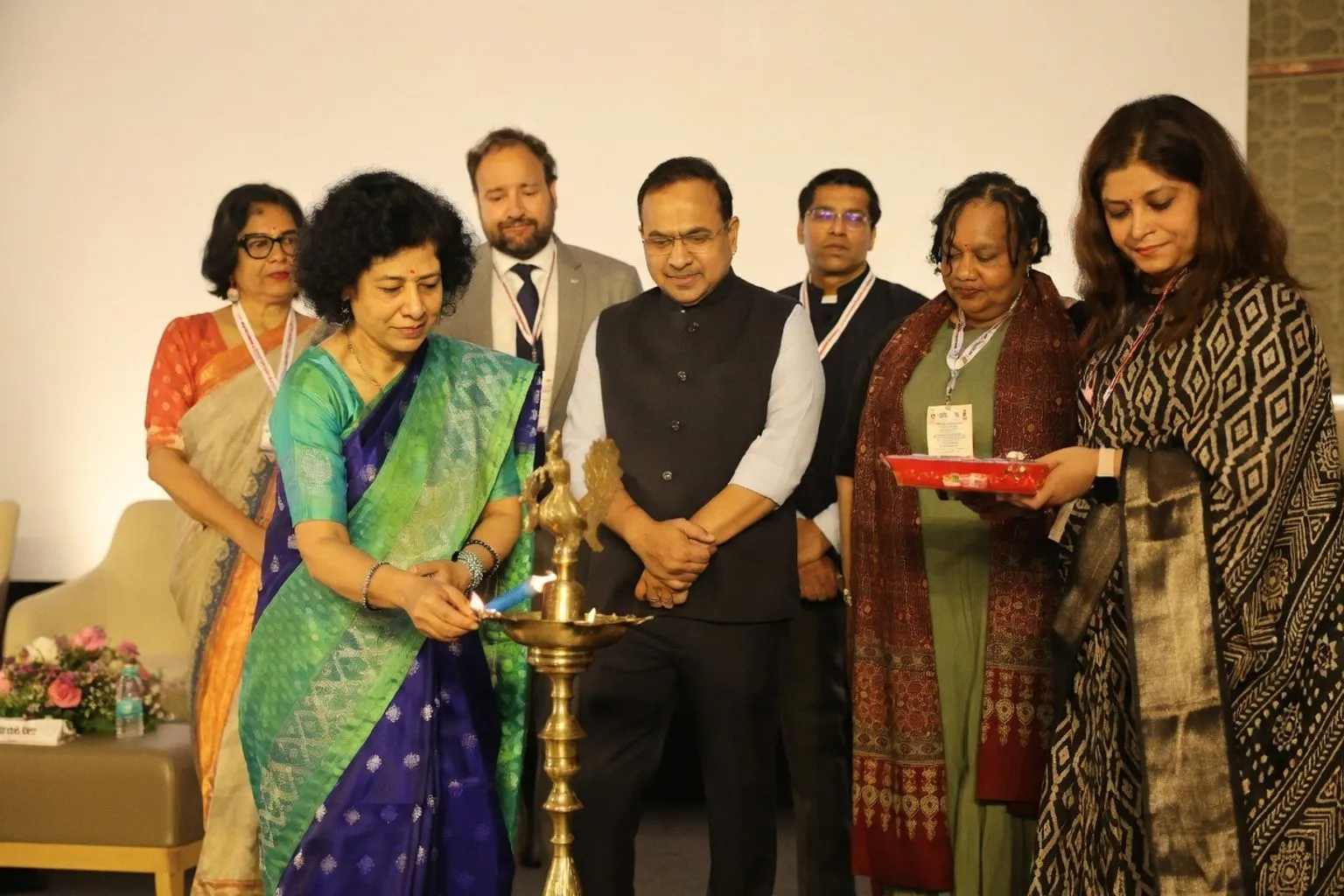
According to the Press Information Bureau, deliberations addressed differentiated follow-up protocols, digital child tracking, home visits, referral pathways, and district-level implementation architecture. The workshop lands inside a healthcare economy where private hospitalisation averages roughly eight times the cost of public hospitalisation and where out-of-pocket spending remains the dominant financing mode.
Design variables of the programme
The Samagra Shishu Bal Swasthya karyakram is structured around risk differentiation — an epidemiological design that calibrates care intensity to clinical and social risk profile rather than applying uniform blanket protocols. The Press Information Bureau identifies four operational variables under discussion: digital tracking infrastructure to follow each child across service contact points; home-based visits to extend coverage beyond facility walls; referral systems for escalation when risk thresholds are crossed; and district-level rollout as the administrative unit for implementation. Each variable operates as a lever inside a stratified cohort model: higher-risk children receive proportionally greater clinical attention, while lower-risk cohorts enter lighter surveillance pathways. The design depends on accurate risk classification at the point of entry, a methodological requirement that will determine whether the programme reduces morbidity or merely redistributes existing contact.
Cost architecture as implementation pressure
Any risk-stratified paediatric framework competes for budgetary space inside an expenditure system that already strains household finances. Data compiled by ClearIAS from parliamentary and sectoral sources places average hospitalisation cost at approximately ₹50,508 in private facilities versus ₹6,631 in public hospitals — a roughly eightfold differential. Medical inflation has held in the 10–13% annual range. National out-of-pocket expenditure persists at around 43.4% of total health expenditure, a figure that conditions family behaviour well before clinical contact occurs. The implication is direct: a programme built on home visits, referrals and digital follow-up must function across public and private settings, and its marginal cost per identified high-risk child is set against a denominator of household budgets already absorbing acute-care shocks.
Indicators to track
The variables that will register in outcome data: digitised child tracking coverage at district scale, time-to-entry into the differentiated follow-up pathway for identified newborns, referral completion rates from peripheral to higher facilities, and the proportion of children reclassified between risk strata during follow-up. The base indicator remains service utilisation and continuity of care for the newborn cohort, against which any risk-stratified model must be benchmarked. Whether the Samagra Shishu Bal Swasthya karyakram alters population-level outcomes depends on district-level implementation fidelity, not on the policy announcement itself.