Janani Suraksha Yojana: A Step-by-Step Claim Guide
In 2005, maternal mortality remained a major public-health concern in India, especially for women who faced long distances to health facilities, limited transport, and uneven access to skilled care.
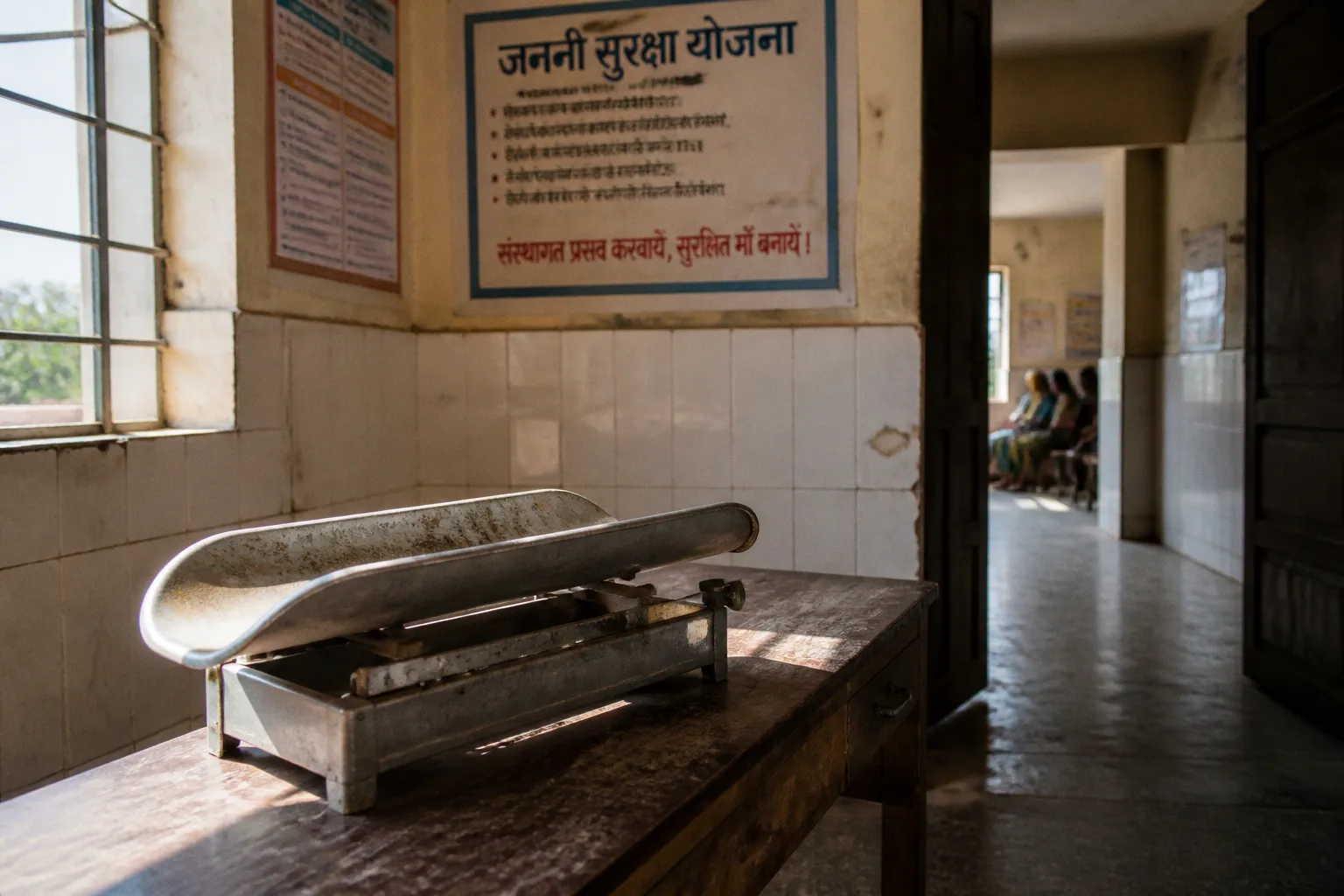
That year, the government launched Janani Suraksha Yojana (JSY), a conditional cash transfer scheme designed to shift one variable that policy could directly influence: the location of delivery.
The policy encouraged women to deliver in government or accredited private health facilities by attaching a cash incentive to institutional delivery. Nearly two decades on, the scheme has expanded access to maternity services and helped push institutional delivery rates from roughly 40% to well above 85% nationally. But the mechanics of actually claiming that cash incentive remain opaque to many of the women the scheme targets.
The claim process is not complicated, but it is sequential. Registration, antenatal care, eligibility documents, facility accreditation, bank details, and local processing all have to line up. If one link is missing, the disbursement can stall.
This guide follows the process from registration to payment, state category by state category and document by document. No hand-waving. Just the steps that determine whether the claim moves.
Determining Eligibility: LPS vs. HPS State Categorization
The first variable in any JSY claim is geography. The National Health Mission divides states and union territories into two broad categories based on existing institutional delivery rates: Low Performing States (LPS) and High Performing States (HPS).
This is not merely an administrative label. The classification affects who qualifies and what documentation the beneficiary must provide.
Low Performing States
The LPS group includes Uttar Pradesh, Uttarakhand, Bihar, Jharkhand, Madhya Pradesh, Chhattisgarh, Assam, Rajasthan, Odisha, and Jammu and Kashmir. In these states, the eligibility rule is comparatively broad: every pregnant woman who delivers in a government or accredited private health facility qualifies for the institutional-delivery cash incentive.
Income is not the determining filter in an LPS state. Nor are caste and age. The central requirements are that the delivery takes place at an eligible facility and that the pregnancy and delivery can be documented through the health system.
That broad eligibility does not mean that every claim is automatic. The beneficiary still needs to be registered, the facility must be covered by the scheme, and the local health administration must have the information needed to initiate payment. But an LPS beneficiary generally does not have to prove BPL status or produce an SC/ST certificate simply to establish basic eligibility.
High Performing States
HPS states impose a narrower eligibility test. A woman must generally fall into one of the recognised categories:
- Belong to a Below Poverty Line (BPL) household
- Belong to a Scheduled Caste (SC) family
- Belong to a Scheduled Tribe (ST) family
This means that a woman in an HPS state who is not from a BPL household and does not qualify under SC or ST status may not be eligible for JSY assistance, even if she delivers in a government hospital.
That distinction is easy to miss because the delivery facility can be the same while the claim rules are different. The location of the hospital does not override the state category. A beneficiary must first fit the eligibility rule applicable to that state and then satisfy the institutional-delivery and documentation requirements.
Cash assistance by category
The cash amounts also differ:
| Category | Rural | Urban |
|---|---|---|
| LPS states | ₹1,400 | ₹1,000 |
| HPS states, NE states, tribal districts | ₹700 | ₹600 |
| Home delivery for BPL women | ₹500 | ₹500 |
The home-delivery provision is separate from the institutional-delivery incentive. It applies to eligible BPL women and carries a lower, flat payment. It should not be treated as an alternative route for every beneficiary who cannot produce institutional-delivery records.
The state-level classification is not advisory. It is the primary eligibility filter. A woman in Bihar and a woman in Maharashtra can face fundamentally different claim requirements under the same national scheme.
Early Registration and MCH Card Documentation
The claim process begins before the delivery, at the point of first contact with the public health system. Early pregnancy registration creates the administrative record that later connects the beneficiary, the antenatal visits, the delivery facility, and the payment request.
Registration can take place through a range of public health and community-based points:
1. Sub-Centre
2. Primary Health Centre (PHC)
3. Community Health Centre (CHC)
4. Anganwadi Centre
5. Government hospital
At registration, the woman receives either a Maternal and Child Health (MCH) card or a JSY card, depending on the local system. The name may vary in practice, but its function is consistent. It records the pregnancy, identifies the beneficiary, tracks antenatal care, and provides the delivery facility with a starting point for the claim.
The card should be kept with other important health documents rather than left at the facility. It may be requested during antenatal visits, at admission for delivery, and when payment details are verified. If the card is lost or the information on it is incomplete, the beneficiary should ask the ANM, ASHA worker, or health facility to confirm how the record can be reconstructed before delivery.
Registration is early, but not a hard cut-off
Early registration is ideally completed between 20 and 24 weeks before the expected date of delivery. This timing gives the health system room to schedule antenatal visits, identify risk factors, arrange referrals, and complete the paperwork needed for delivery and payment.
There is no hard legal deadline that automatically disqualifies every woman who registers late. Late registration does, however, create practical complications. It compresses the time available for antenatal care and leaves less room to correct missing entries, inconsistent names, or incomplete bank information.
The distinction matters. A late registration is not the same thing as an ineligible claim, but it increases the risk that the claim file will be incomplete when the delivery takes place.
The antenatal record
The referral slip or related maternal-health record issued by the ANM or ASHA worker is another important part of the claim chain. The supplied scheme requirements refer to a minimum of three antenatal check-ups being recorded before the claim can be processed.
These visits are not ceremonial paperwork. They normally include clinical assessment such as:
- Blood pressure monitoring
- Haemoglobin screening
- Tetanus toxoid administration
- Iron and folic acid supplementation
- Referral for additional care when a risk is identified
Each visit should be reflected in the relevant card or slip. A woman may have attended the clinic and still encounter a delay if the visit was not entered into the record. That is why it is worth checking the documentation during pregnancy instead of waiting until admission for delivery.
A useful distinction is between receiving care and having that care recorded. JSY processing depends on both. The first is a clinical matter; the second is an administrative one. A gap in either can slow the claim.
Navigating the Claim Process for Public and Private Facilities
The payment route changes depending on where the delivery takes place. The beneficiary should confirm that the facility is covered under JSY before admission, particularly when considering a private hospital. A private facility may provide maternity care but still not be accredited for JSY purposes.
Public health institutions
In government hospitals and health centres, the scheme is designed around facility-level processing. The cash entitlement is paid to the mother in a single instalment through the local disbursement system.
The typical target is payment within seven days of delivery, but this should not be understood as an inflexible deadline that applies identically in every district. Processing can take longer when records are incomplete, bank details do not match, or the payment request is delayed at facility, block, or district level.
The mother does not normally need to make a separate trip to a bank or block office simply to submit a JSY claim. The health facility and frontline workers are expected to assemble and forward the relevant information. In practice, the beneficiary may still need to respond to requests for a passbook copy, Aadhaar details, or clarification of eligibility.
The important point is to distinguish the policy process from the physical moment of payment. The claim is initiated at or through the facility, but the money may be transferred through DBT rather than handed over in cash at discharge.
Accredited private institutions
For deliveries in accredited private hospitals, the payment structure is different. At least three-fourths, or 75%, of the cash assistance must be paid to the beneficiary at the time of delivery itself.
The facility cannot treat the JSY amount as a discount on its maternity bill. The incentive is an additional payment to the beneficiary, not money that the hospital can deduct from charges or retain as part of its own fee.
The private facility also receives a separate pool of up to ₹1,500 per delivery for hiring private specialists to manage Caesarean sections or obstetric complications when government specialists are unavailable. This is a facility payment, not a patient payment. It should not be confused with the cash assistance due to the mother.
Accreditation is the decisive condition. A delivery at an unaccredited private nursing home does not trigger JSY eligibility simply because the facility is clean, licensed, or medically capable. The beneficiary should ask the ASHA worker, ANM, or local health authority whether the intended private facility is accredited under the scheme before choosing it.
Home delivery
BPL women who deliver at home remain eligible for a flat ₹500, disbursed at the time of delivery or approximately seven days before. This provision recognises that some women, particularly in remote, tribal, or hilly areas, may face genuine barriers to reaching an institution.
The amount is lower because the scheme is structured primarily to encourage institutional delivery. It is not a general compensation payment for any home birth. Eligibility still depends on the beneficiary’s BPL status and the ability of the local system to verify the delivery and process the claim.
Distance, transport cost, and the absence of a functioning facility can all shape the practical decision to deliver at home. The existence of the provision does not remove those barriers, but it gives the scheme a limited route for recognising eligible home deliveries.
The claim architecture is built around one behavioural nudge: get the woman to a facility where skilled care is available. Every rupee of incentive is calibrated to make the institutional pathway more accessible than the home pathway.
The Janani Suraksha Yojana Document Checklist
The exact paperwork varies by state and by facility, but the core documentation is relatively consistent:
- MCH or JSY card — issued at pregnancy registration and used to record pregnancy details and antenatal visits.
- BPL certificate — required where HPS eligibility is based on BPL status.
- SC or ST certificate — required where eligibility is being established through Scheduled Caste or Scheduled Tribe status.
- Referral slip from the ASHA worker or ANM — should record the required antenatal visits.
- Bank account details — needed for Direct Benefit Transfer.
- Aadhaar details or linkage information — increasingly used to verify the beneficiary and route the payment.
Not every document applies to every woman. For example, a beneficiary in an LPS state generally does not need a BPL, SC, or ST certificate to establish basic JSY eligibility. The safest approach is to ask the local health worker which category applies before collecting documents that are not relevant to the claim.
Names and account details must match
DBT failures often begin with small discrepancies. The name on the MCH card, Aadhaar record, and bank account may be spelled differently. A changed surname, missing middle name, incorrect date of birth, or typographical error can create a mismatch even when the account belongs to the right person.
The beneficiary should check:
- Whether the bank account is active
- Whether the account is in the beneficiary’s name
- Whether the account number and branch details are recorded correctly
- Whether Aadhaar seeding or linking has been completed where required
- Whether the spelling of the name is consistent across documents
A bank passbook or account statement can help identify errors early. Correcting an account mismatch after delivery is possible, but it may require repeated visits to the bank and the health facility, precisely when the beneficiary has the least time and mobility.
The referral slip is not a minor form
In practice, the referral slip is one of the documents most likely to cause a delay. Fewer than three recorded antenatal check-ups, an unsigned entry, or an incomplete beneficiary identifier can stop the claim from moving until the record is clarified.
The solution is not to wait for the facility to discover the problem. During pregnancy, the beneficiary or a family member can ask the ASHA worker or ANM to confirm that each visit has been entered and that the card and referral documentation carry the same personal details.
Direct Benefit Transfer and Payment Timelines
JSY disbursements have increasingly moved from cash-in-hand payments at the facility to Direct Benefit Transfer (DBT) through Aadhaar-linked bank accounts. The purpose of the shift is straightforward: reduce leakage, improve traceability, and route the full entitlement to the beneficiary.
The payment target for a public-institution delivery is typically within seven days after delivery. That is a processing target, not a universal guarantee. Actual timing varies locally.
A claim may pass through several administrative stages:
1. The facility records the delivery and confirms the beneficiary’s eligibility.
2. The ANM or ASHA worker checks the MCH/JSY record and supporting documents.
3. Bank and identity details are entered or verified in the payment system.
4. The claim is reviewed at the relevant administrative level.
5. The payment instruction is sent through DBT.
6. The beneficiary’s bank account receives the transfer, subject to successful verification.
A delay at any point can extend the payment window. Common causes include incomplete Aadhaar seeding, a mismatch between the bank and identity records, data-entry errors, or a backlog at the block or district level.
The payment should therefore be tracked as a claim, not merely expected as a benefit. If the money has not arrived after the local processing period, the beneficiary should ask the ASHA worker or facility whether the payment was initiated, rejected, returned, or held for correction. “Not received” is not enough information to identify the problem. The crucial question is where the claim stopped.
The ASHA worker’s role
The ASHA worker is often the person who connects the beneficiary to each stage. She may help with pregnancy registration, accompany or refer the woman for antenatal care, coordinate transport, guide her to the delivery facility, and assist with the documentation needed for payment.
The ASHA package is separate from the mother’s entitlement:
| ASHA component | Rural | Urban |
|---|---|---|
| ANC facilitation | ₹300 | ₹200 |
| Delivery facilitation | ₹300 | ₹200 |
| Total ASHA package | ₹600 | ₹400 |
| Minimum referral transport assistance | ₹250 | ₹250 |
The ASHA payment must not be deducted from the mother’s JSY amount. It is a parallel incentive for the frontline worker, intended to support the work of guiding the beneficiary through care and referral.
Transport is part of the same practical chain. A woman may be eligible on paper but unable to reach the facility without help arranging a vehicle or referral. That is why referral transport assistance matters: it addresses the gap between eligibility and physical access.
What Happens When the Claim Stalls
Most stalled claims are not dramatic eligibility disputes. They are administrative failures that appear small in isolation but become decisive when combined.
The recurring problems include:
1. Incomplete antenatal documentation
Fewer than three check-ups may be recorded, or the entries may not be properly signed or linked to the beneficiary.
2. Missing BPL, SC, or ST proof
This is particularly relevant in HPS states, where eligibility is narrower and status documentation can determine whether the claim qualifies.
3. Bank account or Aadhaar mismatch
The account may be inactive, the number may have been entered incorrectly, or the name on the bank record may not match the identity record.
4. Late registration
Late registration does not automatically end eligibility, but it leaves less time to complete care and correct errors before delivery.
5. Delivery at an unaccredited private facility
A private delivery facility must be accredited under JSY. Medical quality alone does not establish scheme eligibility.
6. Incomplete facility reporting
The delivery may have taken place, but the institution may not have uploaded or forwarded the information needed to start payment.
7. Payment returned by the bank
A failed transfer can be sent back for correction rather than paid directly to the beneficiary.
The first response should be to identify the missing link. Ask the ASHA worker, ANM, or facility records desk whether the issue concerns eligibility, documentation, data entry, bank verification, or the transfer itself. Each problem belongs to a different part of the system, and a general complaint may simply circulate without being resolved.
If the facility cannot resolve the matter, the issue can be escalated through the district health administration, typically via the District Programme Manager or the District Medical and Health Officer. In areas with active ASHA networks, the frontline worker is often the most practical first point of contact because she can see which document or verification step is incomplete.
Keep copies or photographs of the MCH/JSY card, referral slip, certificates, and bank details where possible. These records do not replace the official documents, but they make it easier to show what was submitted and to correct a transcription error.
The Administrative Reality Behind the Process
JSY has helped move maternity care toward institutional delivery, but access to the scheme is not uniform. Rural and urban beneficiaries can face different DBT processing times. Accreditation of private facilities remains uneven outside metropolitan districts. In some places, an institution is technically available but practically difficult to reach because of distance, transport cost, or terrain.
The home-delivery provision reflects that gap. A BPL woman may claim ₹500, but the payment does not solve the underlying problem if the nearest suitable facility is too far away or transport cannot be arranged in time. The incentive can influence behaviour only when the health system offers a realistic route to institutional care.
On paper, the claim process is linear:
Registration. Antenatal visits. Eligibility verification. Delivery. Documentation. Payment.
In practice, it is a chain of handoffs. The ANM must record care correctly. The facility must document the delivery. The bank details must pass verification. The block or district administration must process the request. The bank must accept the transfer. A failure in any one of these steps can make a straightforward benefit feel inaccessible.
That is why the most useful preparation happens before delivery. Confirm the state category. Keep the MCH or JSY card safe. Ask whether three antenatal visits have been recorded. Verify the bank information. Check whether a private facility is accredited. Make sure the ASHA worker knows the expected delivery date and referral plan.
The cash incentive was never the end. It was the instrument. The claim process is the mechanism that converts a policy decision into a practical outcome—one documented delivery, one verified transfer at a time.
The Janani Suraksha Yojana claim process is manageable when each stage is treated as part of the next one rather than as a separate formality. Eligibility determines the documents. Registration creates the record. Antenatal care strengthens the file. The delivery facility initiates the claim. DBT completes it.
The payment target may be seven days in a well-functioning local system, but beneficiaries should allow for variation and follow up when the transfer does not arrive. The key is not to assume that silence means rejection—or that eligibility alone guarantees payment. In JSY, the claim succeeds when the health record, facility record, identity details, and bank account all tell the same story.