New Emergency Obstetric and Neonatal Care Centre strengthens maternal health services in Atsabe
In my years on the ward, I've seen what happens when a pregnant woman has to travel hours to reach the nearest operating theatre — and how often that delay costs her child its first breath.
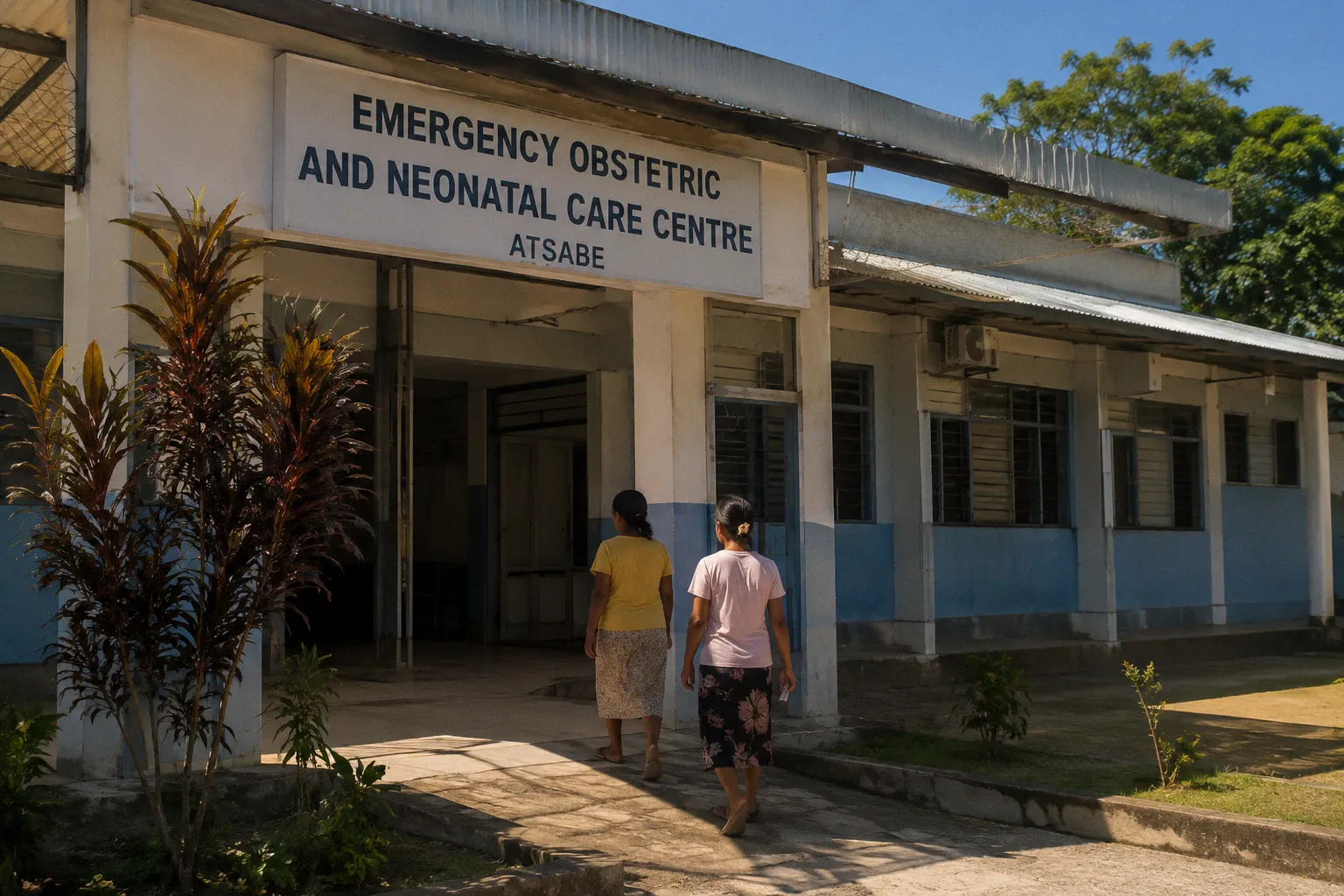
This week, a new Emergency Obstetric and Neonatal Care Centre opened its doors in Atsabe, a remote municipality in Timor-Leste, with the explicit promise of bringing life-saving delivery and neonatal support closer to the mothers who need it most. For anyone working in maternal health across South Asia, the move reads less like a distant headline and more like a reminder of the gap we still ask our own patients to cross.
Why an EmONC centre changes the math
The facility, inaugurated by the Government of Timor-Leste, is designed to deliver comprehensive maternal health services and emergency delivery care in a region where geography has long dictated outcomes. According to the government's announcement, the centre aims to reduce preventable complications during childbirth and strengthen localised neonatal clinical support — two phrases that, in clinical terms, mean someone with obstructed labour, postpartum haemorrhage, or a baby in respiratory distress can now be managed within the critical first hour instead of being transferred down a mountain road.
In practice, an EmONC facility bundles the basics we rely on: skilled birth attendants, blood transfusion capacity, manual removal of placenta, neonatal resuscitation, and the operating room capability for caesarean section when labour goes sideways. None of those interventions are glamorous. All of them are the difference between a mother holding her baby and a family lighting a lamp.
The parallel that keeps surfacing in India
The week also brought an Indian echo to the same conversation. At the Prabudh Matri Shakti Sammelan, Union Minister Dr. Jitendra Singh stressed that maternal health education, routine antenatal screening, and infection control during pregnancy are central to preventing avoidable developmental disabilities in newborns — and called for stronger community links between clinics and households. I have sat in enough sub-centre meetings to know that the gap between clinical service and the woman at home is where most of our preventable losses actually live.
Reading the two announcements side by side, the lesson is the same in Dili and in District Dhubri: infrastructure without community engagement is just a building, and community awareness without a functioning referral point is just a pamphlet. The Timor-Leste investment gives the catchment a referral backbone; the Indian conversation is asking the grassroots to bring women to that backbone earlier.
What practitioners and programme leads should track
For those of us designing care pathways, three details are worth following as more information emerges. First, staffing — whether the centre is staffed round the clock by a skilled anaesthetic and surgical team, or whether night-time referrals still funnel patients to the capital hospital in Dili. Second, integration — whether antenatal clinics at the sub-centre level actively book and accompany high-risk mothers to Atsabe rather than relying on self-referral. Third, outcomes — whether the government publishes facility-level data on maternal and neonatal mortality after the first year, so the model can be evaluated honestly rather than celebrated by ribbon-cutting alone.
On the ground, the simplest thing a frontline worker anywhere can take from this news is the one thing both announcements circle back to: bring the service closer, bring the woman earlier, and stop asking either of them to do the impossible journey alone.