Kenya’s Maternal Health Strategy: Scaling Specialist Care and Workforce to Reduce Mortality
When a woman in obstructed labour waits two hours for an ambulance that does not come, no new hospital building will save her. That is the clinical truth at the centre of Kenya's latest maternal health announcement.
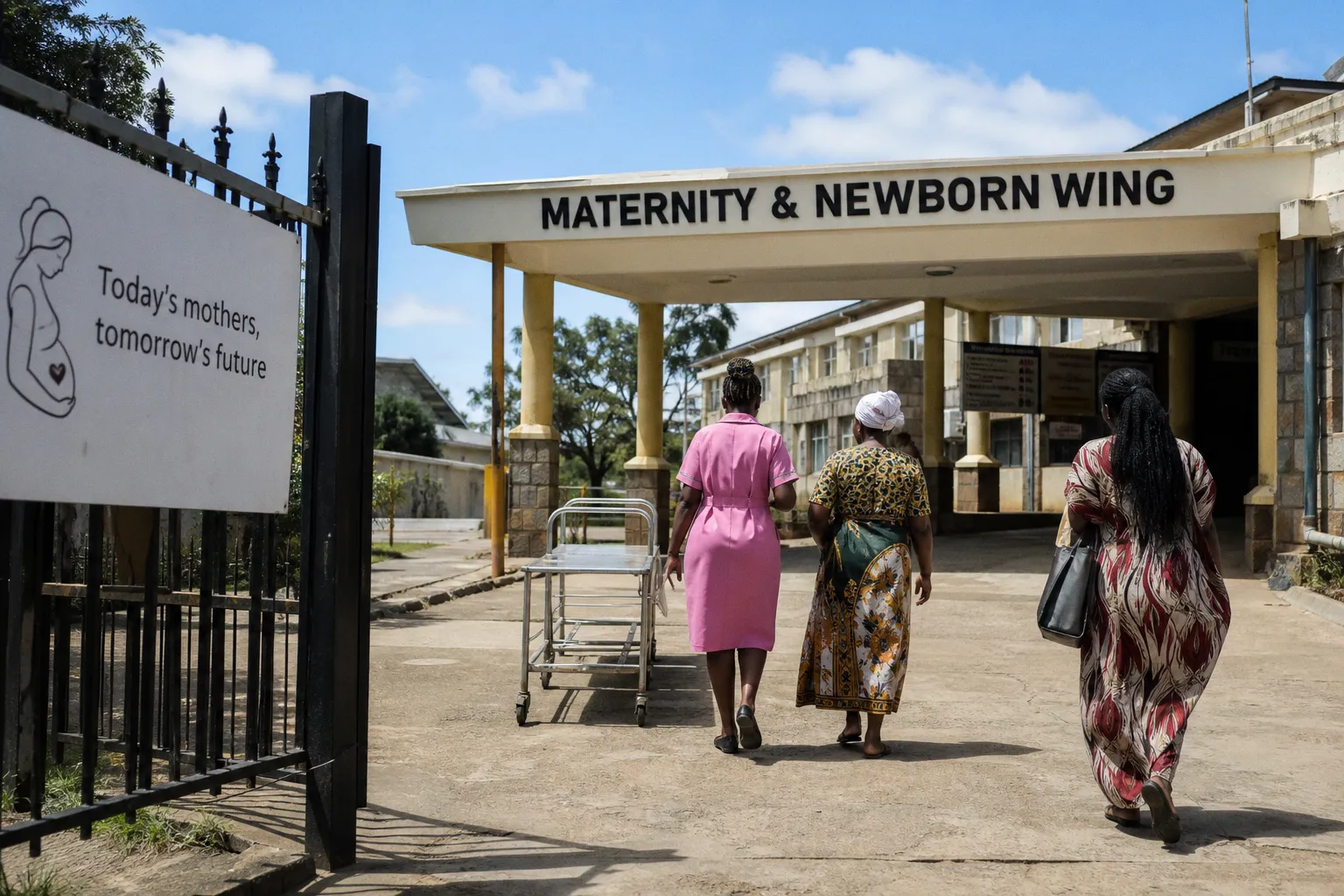
As Devdiscourse reports, the country is moving ahead with ten new specialised maternal and newborn facilities, backed by a KES 4.4 billion grant from the Amsons Group under the "Mama na Mtoto Kwanza" initiative, paired with the recruitment of 5,000 nurses and midwives.
What the plan actually puts on the ground
The ten 250-bed centres are slated for Nairobi, Bomet, Kwale, Mombasa, Garissa, Kisumu, Embu, Nakuru, West Pokot and Uasin Gishu — a deliberate geographic spread rather than a politically tidy one. The government notes that 26 counties together account for roughly 60% of Kenya's maternal deaths, and placing specialist capacity in those high-burden regions is meant to bring advanced care closer to the women most at risk. Each facility is expected to provide antenatal and postnatal care, obstetric services, Caesarean sections, operating theatres, and intensive care for mothers and newborns.
Alongside the hospitals, a further KES 4 billion is being routed through the Social Health Authority to strengthen deliveries at Level 2 and Level 3 facilities — the dispensaries, health centres and sub-county hospitals where most women first present. The framing, at least on paper, is a continuum: routine care close to home, specialist care reached quickly when risk escalates.
Where the plan lives or dies
In my own practice, I have seen how often the gap is not the building but the bridge between buildings. A centre with theatres and neonatal ICU capability means very little if the health centre down the road cannot recognise obstructed labour early, stabilise the patient, communicate the referral clearly and secure transport in time. That is the part of the system that rarely makes headlines — staffing in peripheral facilities, functional ambulances, blood products, oxygen, and frankly, the trust of a family that knows where to go when something feels wrong.
The recruitment of 5,000 nurses and midwives matters here too, but only if those clinicians are spread across the referral chain rather than concentrated in the new flagship centres. A specialist ICU is useless to a haemorrhaging woman who never reaches it. Kenya's Cabinet Secretary for Health, Aden Duale, has reportedly been working with governors on implementation of President William Ruto's directive to prioritise maternal and newborn health, and groundbreaking is expected by September. The first visible test will be construction progress, but the truer measure will be whether the lower-level facilities — the ones getting the KES 4 billion through the Social Health Authority — actually become functional feeders into the new hospitals rather than running in parallel.
What to watch next
For practitioners anywhere following this rollout, three signals are worth tracking. First, recurring cost commitments: a 250-bed maternal and neonatal centre needs round-the-clock staff, blood banks, lab services, equipment maintenance and reliable utilities — line items that quietly outpace the headline grant once the ribbon is cut. Second, whether maternal mortality reporting in those 26 high-burden counties starts to shift within the first two operational years; that is the only metric that will tell us whether the referral network is actually functioning. Third, how retention plays out for the newly recruited nurses, since midwifery workforce shortages are rarely solved at intake alone.
Kenya's plan is ambitious and the political will appears genuine. Whether it changes the experience of the woman in labour at three in the morning will depend on every step between her home and that new operating theatre — and on whether each of those steps has someone paid, trained and ready to receive her.