PHC facility survey: pre-fieldwork checklist
A primary health center may have walls, a medical officer, and rows of registers — and still fail a facility survey the moment water stops running, the cold chain breaks, or the labour room sits locked because the anaesthetist never showed up.
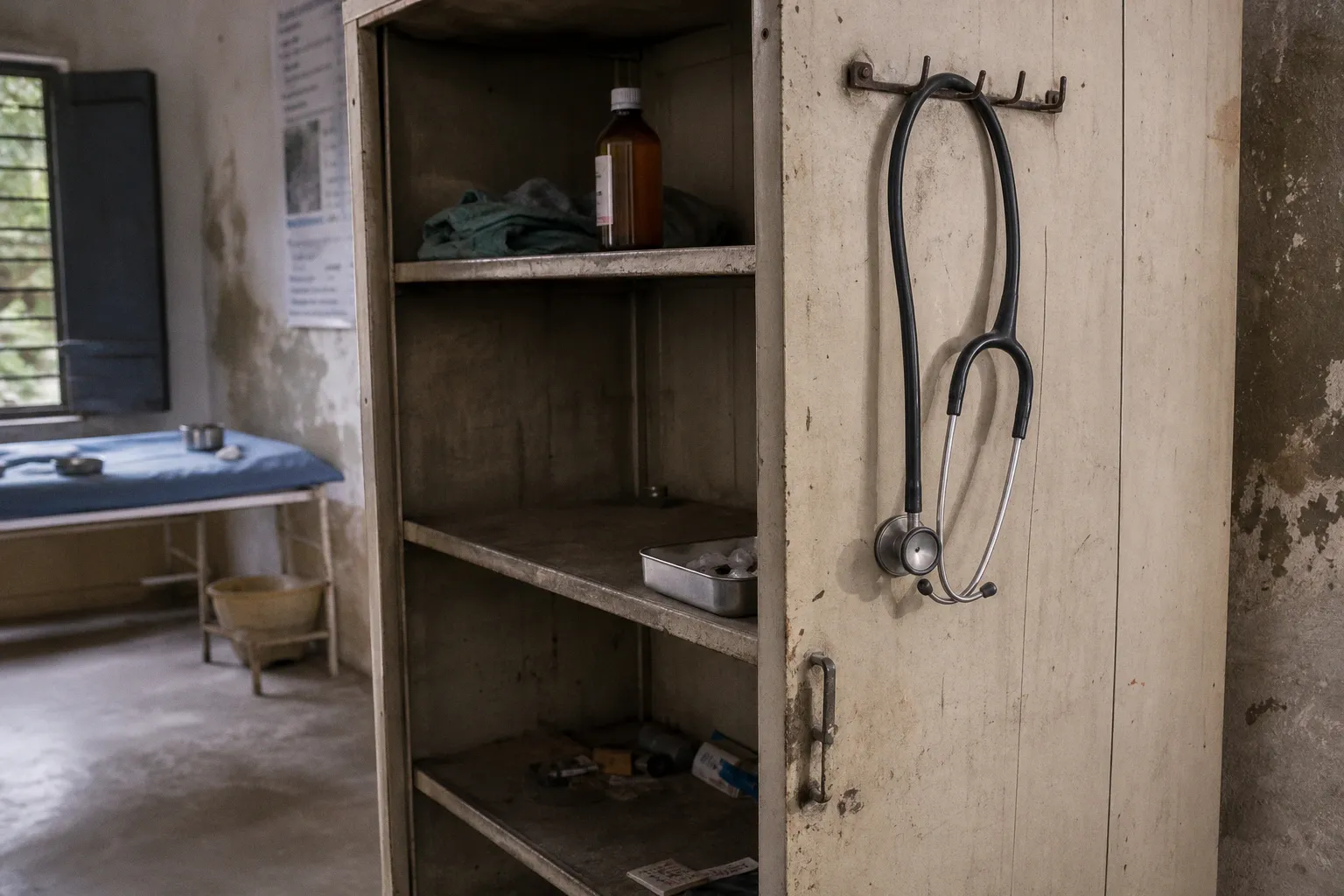
Pre-fieldwork preparation isn't about producing glossy checklists for an audit binder. It's about diagnosing the infrastructure gaps that quietly strangle service delivery before your team even walks through the gate.
The IPHS 2022 framework — released April 16, 2022 — remains the operational backbone for any serious PHC assessment in India. It splits standards into essential and desirable tiers, and it covers service provision, infrastructure, human resources, medicines, diagnostics, equipment, quality improvement, monitoring, governance, and leadership. Use it as the yardstick. Don't blend essential and desirable items into a single compliance score — that distortion is how field audits end up greenlighting facilities that aren't actually functional.
Aligning with IPHS 2022: Defining the Assessment Scope
Before anyone packs a clipboard, the survey team needs to fix the scope against IPHS 2022. The framework itself isn't a survey manual — it's a benchmark. The team has to translate it into a working instrument that holds up in a district hospital corridor, not a conference room.
Start with the catchment norm. IPHS 2022 sets the rural PHC population at roughly 30,000 in plains areas and 20,000 in hilly and tribal areas. That norm drives how many linked Sub Health Centres and Health and Wellness Centres the PHC is supposed to support, and how referral pathways should be verified during the survey. If the survey team doesn't know the intended catchment, it can't judge whether staffing or infrastructure is short.
Then separate essential from desirable. This is the single most common mistake in district-level assessments — bundling both tiers into a single pass/fail line and reporting fictional "100% compliance." IPHS 2022 deliberately tiers the standards so that essential items are non-negotiable and desirable items are aspirational. A pre-fieldwork checklist should mirror that distinction, not collapse it.
A PHC is essential-compliant when water runs, power holds, the cold chain is intact, and a labour room opens on demand. The rest is improvement territory.
Scope the audit geographically. A PHC that serves a sampled rural population should be assessed alongside the SHC-HWC that feeds into it, and the referral chain upward — CHC, sub-divisional hospital, district hospital. Mirroring the DLHS-4 facility-survey logic (fieldwork 2012–13, the most recent precedent for combining staff, service, and physical verification) is a reasonable starting point, but treat it as historical precedent, not a current operational manual. Best practice today is to anchor the instrument in IPHS 2022 and document the methodology explicitly on the first page of the survey.
Infrastructure and Utility Resilience Audits
This is where surveys most often fail on the ground. The building stands; the utilities don't.
Water security
IPHS 2022 demands round-the-clock piped potable water supply to the PHC, with an overhead storage tank capable of holding at least three days of requirements. The pre-fieldwork checklist should force the team to verify:
- Is the piped supply actually running 24/7, or is it on a municipal schedule that cuts off during OPD hours?
- Is the overhead tank functional, clean, and sized to a verifiable three-day capacity?
- Is there a backup source — borewell, tanker arrangement — when municipal supply fails?
A PHC that runs dry during the afternoon OPD is not "essential-compliant." It cannot run a labour room or a neonatal corner safely without water, and the survey should record that as a hard failure, not a "noted concern."
Power and cold chain
IPHS 2022 requires appropriate power backup or inverters to prevent service disruption and to maintain the cold chain for vaccines and diagnostics. Immunization rooms are specifically required to have adequate power backup. The survey team should test this in advance by asking when the last outage occurred, how long it lasted, and which circuits were affected — and by physically inspecting the inverter, voltage stabilizer, and the cold chain sockets.
If the cold chain has failed even once in the last quarter, the survey shouldn't record vaccine storage as compliant. One documented failure is a logistic failure.
Building and service spaces
Physical verification of the building matters more than the register attestation. The pre-fieldwork checklist should drive the team to physically inspect:
- The functional labour room — locked, used, equipped, or cosmetic?
- The operation theatre — present, functional, or mothballed?
- The OPD waiting area — exists, has seating, has shade, or is a corridor?
- The bed count — does the actual bed inventory match the IPHS norm for the catchment?
- The drug dispensing counter — does it meet the IPHS-mandated minimum of 15 square metres?
A functional claim in a register is not the same as a functional claim verified by walking the room, opening the cabinet, and counting the equipment.
| Infrastructure domain | What to verify on-site | Common failure mode |
|---|---|---|
| Water supply | 24/7 piped potable water; overhead tank sized to 3 days | Afternoon supply cuts; undersized tank; contaminated source |
| Power backup | Inverter or generator for full PHC load; cold chain protected | Inverter only on lighting circuit; cold chain on unprotected socket |
| Labour room | Locked, equipped, staffed, delivery load recorded | Room present but unused; no partograph station |
| Operation theatre | Functional, sterile, anaesthesia-ready | Theatre built but never commissioned |
| Drug dispensing counter | Minimum 15 m² of working space | Counter under 15 m²; dispensing in corridor |
| Waiting area | Seating, shade, drinking water | Uncovered veranda; no seating; no water |
Supply Chain Integrity: Medicines and Diagnostic Logistics
Medicines are the most falsified line on a PHC survey. The box is on the shelf; the box is empty; the box expired three months ago. The fix is process discipline, not more bins.
Inventory and indenting
IPHS 2022 calls for SOPs covering indenting, stocking, storage logistics, and transportation. Specifically, the framework identifies:
- Consumption-based indenting — order what was actually used, not what someone guessed at the start of the year.
- Stock rotation — first-expiry-first-out, written down, audited.
- Buffer stock of critical drugs — sized for the catchment, not for the district store.
- Local emergency purchasing arrangements — defined, documented, and within financial limits.
- Computerized receiving, inspection, and retrieval — even a basic offline register counts, as long as it works.
Pre-fieldwork, the survey team should require the PHC to produce its current indenting SOP, the last three months of issue vouchers, and a Bin Card system that supports collection, sorting, filing, indexing, storage, and quick retrieval of medicines, other stock, and documents. If any of those documents are missing, the survey has already found a structural failure — and the team should not paper over it.
Storage and dispensing
The drug dispensing counter is a separate operational unit from the drug store. IPHS 2022 sets a minimum of 15 square metres for the dispensing counter to allow proper patient counselling, prescription review, and record-keeping. Below that floor, the workarounds compound — drugs get tossed in bags, batch numbers aren't recorded, and post-dispensing counselling disappears.
Storage planning should target sufficient inventory to cover a maximum of five to seven days of consumption. Anything longer than a week in a PHC drug store without a strong cold chain or pest control is a quality risk. The survey team should sample-check expiry dates across at least 10% of the current stock and reconcile the count against the Bin Card and the issue register. Mismatches of more than 5% should trigger a deeper audit, not a polite note.
Diagnostics
The diagnostic side of the supply chain is often the weakest link. The checklist should verify:
- Functional essential laboratory testing facilities (the DLHS-4 historical item, still relevant as a baseline).
- Reagent stock with expiry dates that match the expected consumption rate.
- Cold chain for any temperature-sensitive reagent.
- Calibration logs for any rapid diagnostic equipment.
If the PHC cannot demonstrate an indenting SOP, a working Bin Card, and a dispensing counter meeting the 15 m² norm, no amount of registered equipment will save the service delivery score.
Digital Readiness and Data Management Protocols
IPHS 2022 identifies ICT as essential for efficient PHC service delivery. That is not a tech-utopian flourish — it is a logistics fact. Without digital records, supply chains and patient histories live in ledgers that no one can audit in a reasonable timeframe, and continuity of care breaks the moment a staff member transfers.
Functions that should be running
Pre-fieldwork, the survey team should confirm whether the PHC has working digital infrastructure for:
- Teleconsultation, with documented session logs.
- Household and individual registration.
- Service-delivery records, including RCH.
- Births and deaths registration.
- Disease-prevalence data capture.
- Medicine, vaccine, and consumable inventory.
- Biomedical-equipment databases.
The test is not whether the software is installed. The test is whether the data is current, retrievable, and reconcilable with the paper registers still on-site. If the registers and the digital system disagree, the survey has found a data integrity problem — not a paperwork problem.
Data security and the ABDM context
IPHS 2022 says records should be digitized where possible while following Government of India data-security guidelines. The survey team should verify:
- Password and access controls on every device holding patient data.
- Backup procedures — local and, where possible, cloud — with a verifiable recovery test.
- User-level audit logs for any system holding identifiable information.
The Ayushman Bharat Digital Mission Health Facility Registry exists for a reason. However, registration in the HFR should not be treated as automatic proof that interoperable digital records are in place. A PHC can be registry-enrolled and still run paper-only internally. The survey should verify the actual data flow, not the registry status.
Service Delivery and Clinical Capacity Verification
The pre-fieldwork checklist has to convert IPHS 2022 standards into a verification protocol. The instrument must distinguish a registered claim from a verified reality — and it must build that distinction into the field steps, not as a footnote.
24/7 operational status
A PHC that claims 24/7 status must demonstrate:
- Round-the-clock staffing rosters — not just a posted signboard.
- A functional labour room usable at any hour, including weekends and holidays.
- Power and water continuity through the night shift.
- Referral transport actually available, not just listed in a document.
The easiest way to test this is to ask for the last three night-shift attendance records and the last three after-hours delivery records. If those don't exist, the 24/7 claim is a signboard.
Lady Medical Officer and clinical staffing
Availability of a Lady Medical Officer is a specific IPHS item. The pre-fieldwork step is to confirm current posting, period of continuous service, and whether the LMO is on the live roster. Long-vacant posts should be flagged as a separate compliance gap, not folded into a generic "HR shortages" line. The same logic applies to all sanctioned clinical posts — duration of vacancy matters, because it tells the survey team whether the gap is a recruitment problem or a retention problem.
Maternal and newborn care capacity
The labour room, newborn corner, and RCH equipment require direct physical verification:
- Partograph station ready and stocked.
- Newborn resuscitation equipment functional and within service dates.
- RCH equipment list reconciled against the IPHS 2022 list and the equipment physically present.
- Delivery register up to date and cross-checked against the labour room entry log.
A labour room with a broken suction apparatus or an out-of-date bag-and-mask is not a labour room. It is a storage closet with a sign on the door.
Essential drugs and laboratory testing
The survey should require the PHC to produce, on demand, the current essential drugs list and the current essential laboratory testing menu — and then verify, by sampling, that the listed items are actually present, in date, and in usable quantities. Cross-check the list against the actual prescriptions issued in the last month. If a lab test is on the menu but the reagent expired six months ago, the menu is fiction.
Pre-Fieldwork Checklist: Action Items
Before the survey team moves, lock down the following:
- Confirm catchment population category against the IPHS 2022 norm (30,000 plains / 20,000 hilly–tribal) and document the linked SHC-HWC coverage.
- Separate the instrument into essential and desirable IPHS items; do not combine them into a single score.
- Verify water supply (24/7 piped, three-day storage) and power backup (full PHC, cold chain protected) on a site walk, not on paper.
- Physically inspect the functional labour room, operation theatre, OPD waiting area, and the drug dispensing counter against the 15 m² norm.
- Pull the indenting SOP, last three months of issue vouchers, and the Bin Card; reconcile against a 10% physical stock sample.
- Test digital systems for current, retrievable data; confirm GoI data-security controls on every device holding patient information.
- Confirm 24/7 staffing rosters, LMO posting, and referral transport availability; do not accept posted signboards as proof.
- Cross-check RCH equipment, essential drugs, and essential laboratory testing against the IPHS item list and the physical inventory.
The work is unglamorous. Water tanks, inverter boxes, Bin Cards, and labour room keys — that is what a PHC facility survey actually measures. Anything that ignores those items in favour of policy abstractions is producing a brochure, not a diagnosis. Keep the instrument honest, keep the tiers separate, and treat every physical check as non-negotiable. That is how a survey becomes a tool for fixing the system, not a record of its failures.