Health Equity & Access Weekly Roundup: July 31, 2026
The American Journal of Managed Care dropped its Health Equity & Access Weekly Roundup on July 31, 2026, and buried in the cluster is a case study that matters far beyond its US zip code.
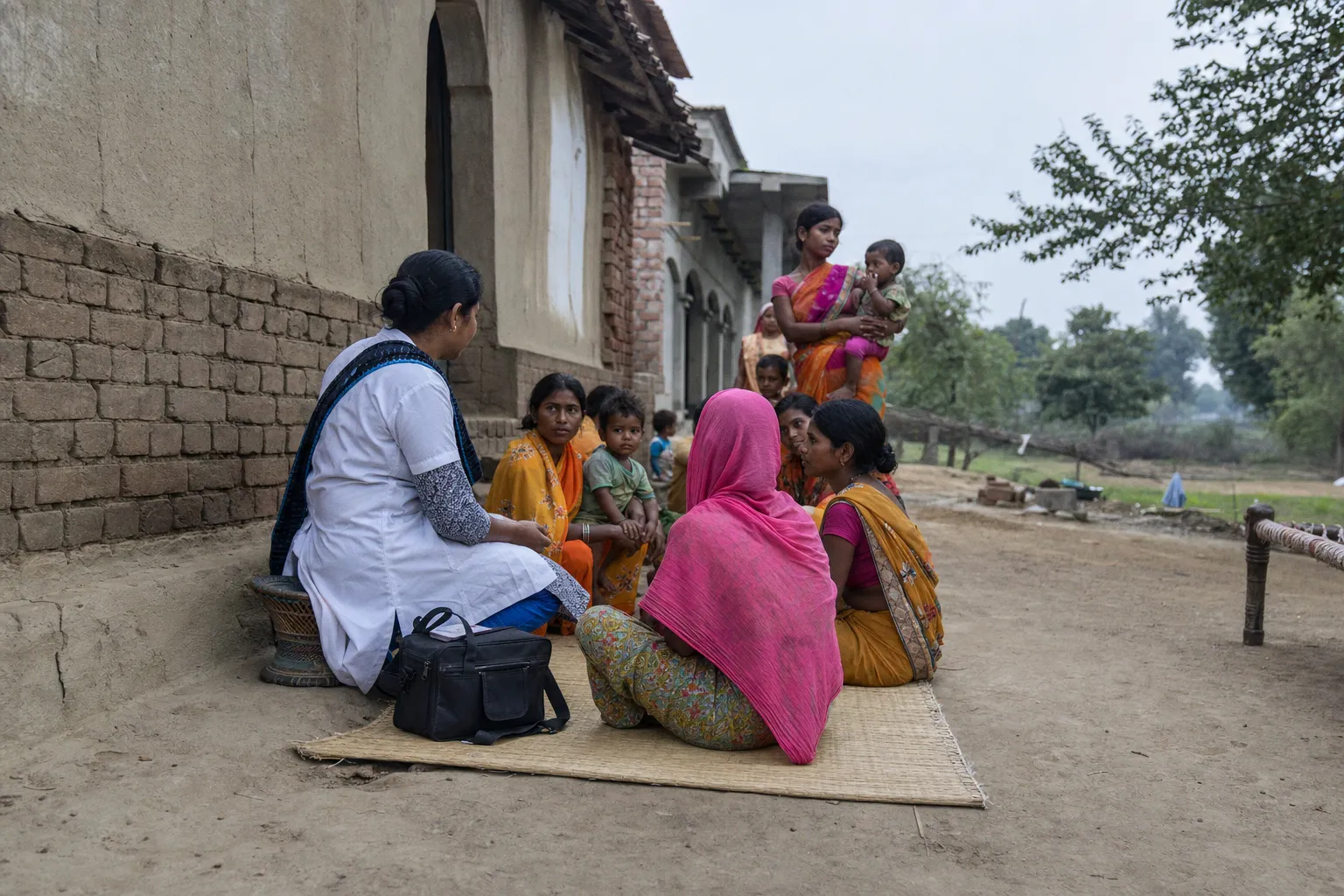
A Pulse 2.0 interview with Jennifer Pruitt, Vice President of Technology & Innovation at Children's Health Fund, lays out two decades of mobile-clinic EHR work in plain language — exactly the kind of unglamorous systems engineering that decides whether a child gets continuity of care or gets lost between visits.
The Continuity Gap Is the Real Failure
Most "digital health equity" chatter stays at the policy altitude. Pruitt's framing pulls it back to the field: every project at Children's Health Fund starts with "What do providers and families need that they don't have today?" That question matters because underserved pediatric populations don't fail because of a single missing gadget. They fail at the handoff — between mobile clinic, school-based program, telehealth visit, and the next physical site a family can actually reach. When the record doesn't travel, the child gets re-triaged from scratch every time.
- Mobile clinics deliver comprehensive pediatric care but only function as a system if patient records persist between deployments.
- School-based programs multiply touchpoints — and multiply the risk of fragmented documentation.
- Telehealth extends reach but inherits whatever data infrastructure the local site already has, good or broken.
Pruitt oversees Information Systems & Technology, the Innovation Lab, and Research & Evaluation together. That org-chart detail is the real headline: data, product, and evaluation under one roof, so a gap flagged by a clinician on a Tuesday in Anacostia feeds back into a tool spec by Friday.
What Twenty Years in a Mobile Van Actually Teaches
Around 2007, Pruitt was in a Children's Health Fund mobile clinic in Anacostia, Washington, D.C., supporting the clinical team through an electronic health record cutover. The technical milestone is unremarkable. The human signal is not: a mother saw her daughter's growth chart pulled up from years of prior visits, tracked from infancy, rendered on a screen inside a van delivering free care. What she registered wasn't the software. It was that her daughter's doctor had the same longitudinal view a parent would expect from any well-resourced practice.
Three engineering lessons fall out of that anecdote for anyone building pediatric infrastructure at scale:
- EHR portability is the product. If a growth chart can't follow a child from a mobile unit to a school clinic to a telehealth follow-up, the record is just local memory with a login screen.
- Provider workflow beats feature lists. Pruitt's team was on-site to support clinicians using the system "in the field," not to demo features. Adoption failure rates track almost perfectly with how much hands-on support accompanied rollout.
- Listen to the people doing the work. Pruitt credits community partners and clinicians as the source of "the best ideas." Tooling designed in a conference room dies in a van.
Implications for India's Last-Mile Pediatric Networks
The Children's Health Fund model is American, but the failure mode is universal. District-level RCH programs across India run into the same handoff problem: a child seen at a sub-center, an anganwadi, a district hospital PHC, and a tertiary referral — with documentation that may or may not survive the chain. Digital tools layered on top of that fragmentation tend to amplify it rather than fix it.
The pragmatic takeaways for state and district health teams evaluating new pediatric digital investments:
- Consolidate tech ownership. The org-chart lesson — data, innovation, and evaluation under a single VP — maps to a state-level recommendation: one accountable owner for the pediatric record across delivery channels, not three.
- Budget for field support, not just licenses. A large share of digital health equity failures in low-resource settings is a support-model failure, not a software failure.
- Track continuity, not just visits. The metric that actually matters is whether a child's growth, immunization, and treatment history follow them across every contact point. Visit counts won't tell you that.
Other Signals in the Round-up
Two items in the same week point to the same structural shift. Mirage News flagged a "Digital Tech Shift Reshaping Health Outcomes," and Anishinabek News posted a Director, Health Equity listing through PCMCH — a Canadian provincial body. Neither source carried enough detail in this feed to draw firm conclusions, but the clustering matters: health equity leadership roles and digital outcome reporting are converging as a category, not a side project. For Indian RCH stakeholders tracking where donor and technical assistance money is likely to flow through 2026–27, that convergence is worth watching.