How AI Chatbots Are Empowering India’s Frontline Workers to Reduce Maternal Mortality
The maternal health machinery is leaking at the last mile — and someone finally bolted an AI chatbot onto the pipe.
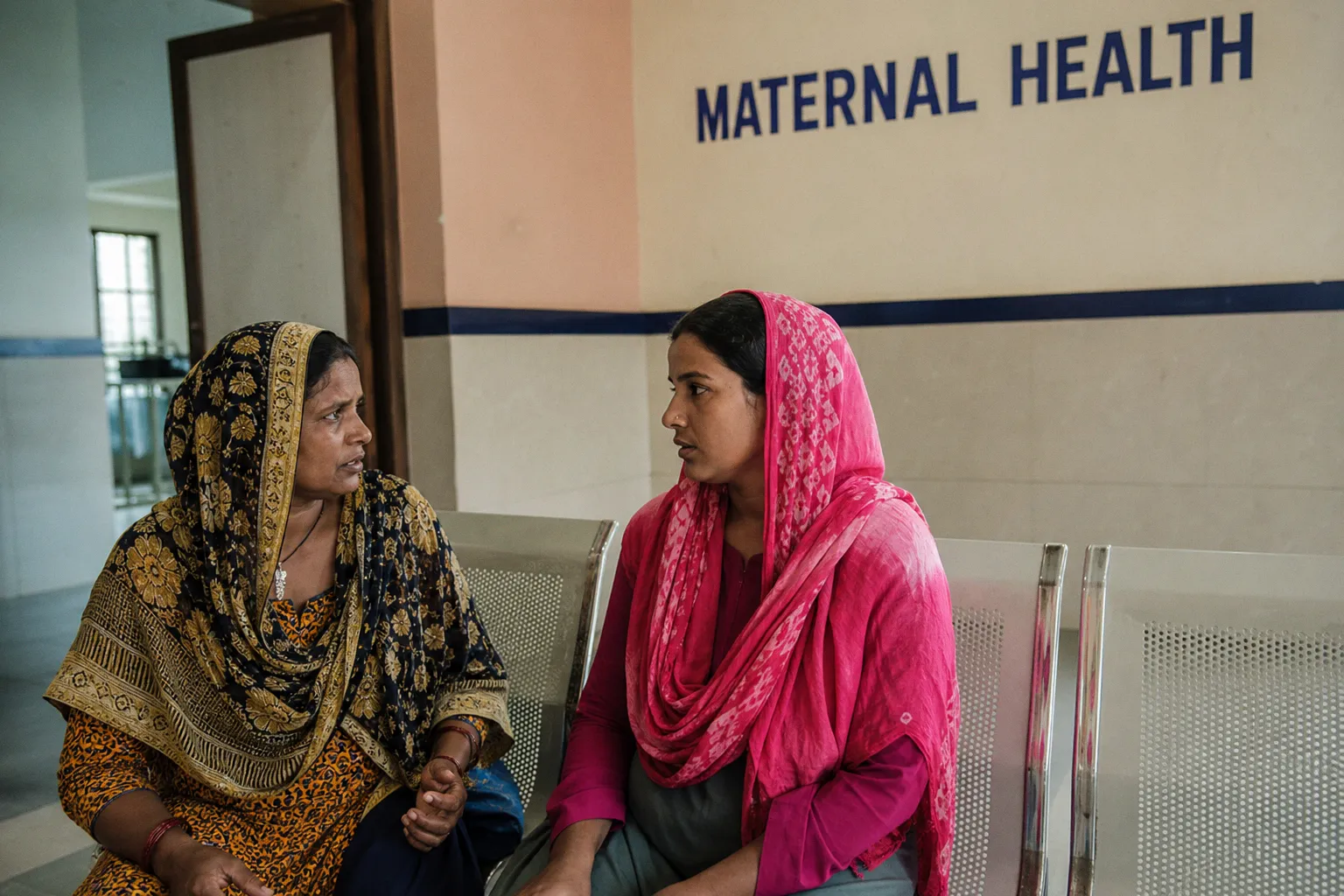
As reported by India Development Review, ARMANN's ANM Support System is now running across 31 districts in Uttar Pradesh, Telangana, and Maharashtra, wired straight into WhatsApp to give frontline workers an on-demand clinical reference for the pregnancies they can't afford to get wrong.
The bottleneck it's patching
India's maternal mortality ratio dropped from 113 per 1,00,000 live births in 2014–16 to 88 by 2021–23 — real, measurable progress. Yet global estimates continue to rank the country among those carrying the highest share of maternal deaths worldwide. The leak point sits where the system thins out: more than two lakh Auxiliary Nurse Midwives working out of primary health centres and sub-centres, per the 2021–22 Rural Health Statistics report, often managing oversized caseloads with limited specialist backup and infrequent refresher training. When a query lands outside their confident answer range — high blood pressure thresholds, severe anemia response, swelling, bleeding or reduced fetal movement that signals urgent referral, or even routine medicine timing like spacing iron and calcium tablets — there hasn't been a fast, vetted channel to escalate.
What the tool actually does
ARMANN, a nonprofit focused on maternal healthcare, built two chatbots — one for ANMs, one for pregnant women — layered on government-approved maternal health guidelines and ARMANN's own medical training material on managing high-risk pregnancies. Both were reviewed by the State National Health Missions before rollout. The ANM-facing version is the load-bearing one: a frontline worker types the query into WhatsApp and gets a clinical reference back, designed for real-time triage. As the report notes, the questions ANMs actually raise reflect the pressure of managing large populations with thin specialist support — meaning the bot is being inserted exactly where every minute of delay has clinical cost.
What's still unresolved
The same reporting flags the hard questions no chatbot patches: effective usage at field level, digital literacy gaps among workers and the women they serve, accuracy drift over time, and over-reliance on a tool when physical referral is the only safe answer for severe cases. A separate piece from Feminism in India frames the wider terrain — how healthcare workers are attempting to break the child marriage–malnutrition cycle — as a reminder that maternal outcomes sit downstream of social determinants no clinical reference tool can reach on its own. The operational test for ARMANN's deployment isn't whether the bot answers correctly in a demo. It's whether an ANM in a low-connectivity PHC can pull a referral decision out of it under time pressure — and whether the state NHMs audit the answers the way they audited the rollout.