India's Exclusive Breastfeeding Rates Fall as Infrastructure Gaps Threaten Newborn Health
Early initiation rates across the WHO South-East Asia Region range from 30% in Thailand to 90% in Sri Lanka.
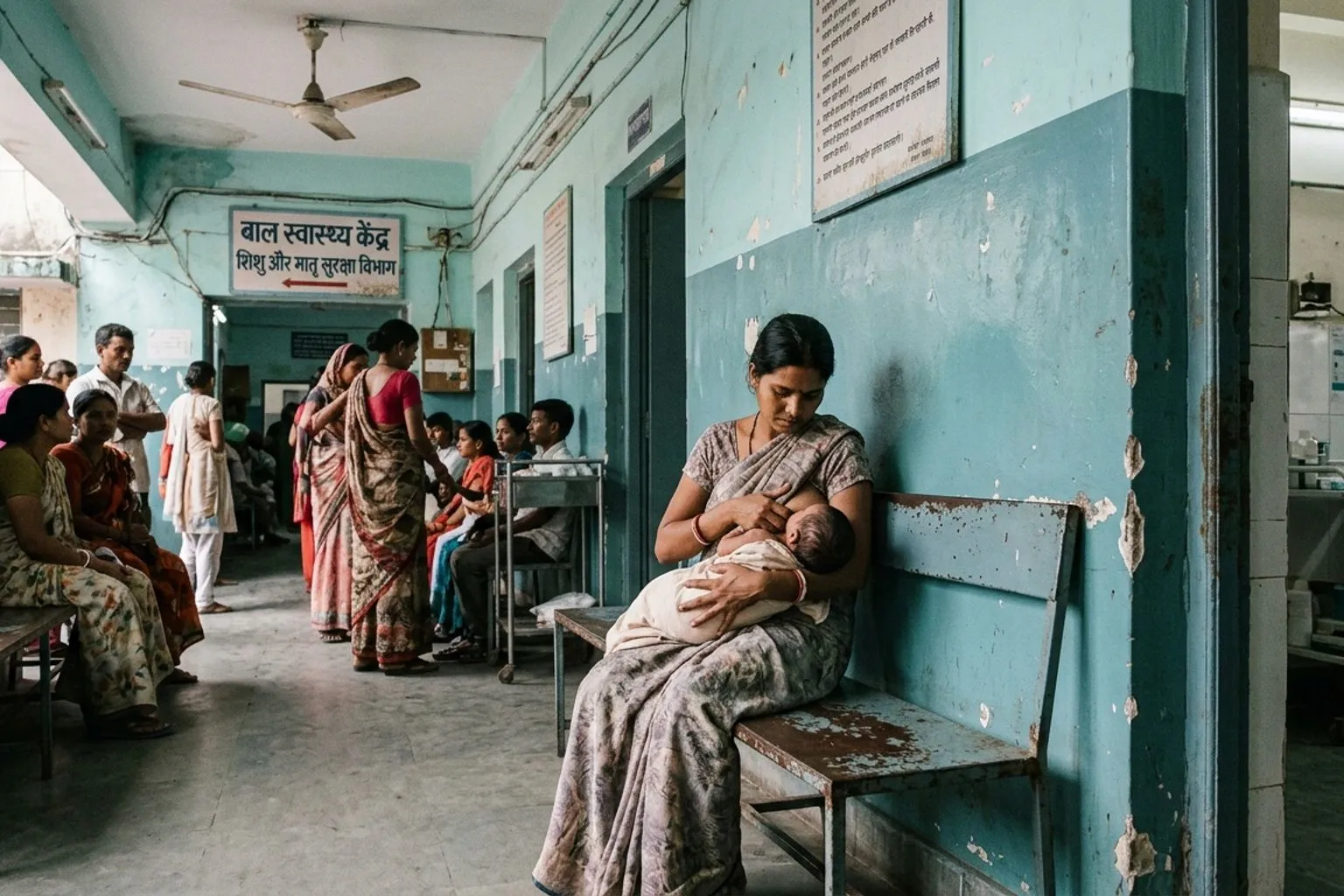
The WHO Southeast Asia regional office has flagged a supply chain failure that costs newborn lives: India's exclusive breastfeeding rate dropped from 63.7% in 2019/2021 to 55.8% in 2023/2024, according to the organization's World Breastfeeding Week 2026 statement.
This is not a behavior problem. It is an infrastructure problem. And infrastructure problems have engineering solutions.
The Pipeline Breakdown
Six months of exclusive breastfeeding is the single highest-impact preventive intervention for child mortality. India just lost nearly eight percentage points of coverage in the latest NFHS-6 data — a reversal that compounds neonatal vulnerability across districts that already lack skilled birth support.
The mechanics are clear. Early initiation rates across the WHO South-East Asia Region range from 30% in Thailand to 90% in Sri Lanka. Where the front end of the feeding pipeline (the first hour after birth) fails, the back end (six months of exclusive feeding) collapses with it. India's drop is not an outlier; it is a symptom of weakened handoffs between antenatal counselling, delivery room practice, and post-discharge follow-up.
Where the System Leaks
Three structural failures show up in the data:
- Hospital practice gap. Baby-Friendly Hospital Initiative accreditation is a proven lever, but coverage is uneven. Facilities without the Ten Steps to Successful Breastfeeding in place — skin-to-skin contact, avoidance of unnecessary mother-newborn separation, lactation support after caesarean delivery — leak mothers out of the pipeline within hours of birth.
- Antenatal counselling shortfall. Structured breastfeeding counselling during pregnancy is not reaching every expectant mother. Where it is absent, maternal confidence and technique drop before the first feed.
- Post-discharge drop-off. Once a mother leaves the facility, the support infrastructure thins out. Without continued contact in the first weeks, formula supplementation creeps in and EBF fails.
What the Push Is Doing
The Ministry of Women and Child Development is observing World Breastfeeding Week 2026 from August 1–7 under the theme "Breastfeeding for a Sustainable Start in Life: Strengthen What Works." The WHO South-East Asia Regional Office has developed facility-based breastfeeding monitoring tools to help countries operationalize and track these interventions inside institutions, while recognizing the resource and capacity constraints national health systems face.
The theme is correct. The question is whether the tools scale beyond the hospital wall.
What to Fix Next
The proven package is not theoretical. It is a checklist that already exists:
- Antenatal breastfeeding counselling as a standard antenatal care component
- Skilled lactation support at birth — including after caesarean section
- Immediate skin-to-skin contact and avoidance of mother-newborn separation
- Baby-Friendly Hospital practices enforced at the facility level
- Continued post-delivery breastfeeding support in the community
India's next NFHS round will not reverse this trend through awareness campaigns. It will reverse when district health systems treat breastfeeding support as a measurable, monitored supply chain — from the last antenatal visit through the first six months postpartum — rather than a soft recommendation.