Kangaroo Mother Care or incubator for stable preterm infants
The difficult question at the bedside is rarely, “Do we have an incubator?” More often, it is: “Is this baby stable enough to leave the incubator for prolonged skin-to-skin care—and can we support…
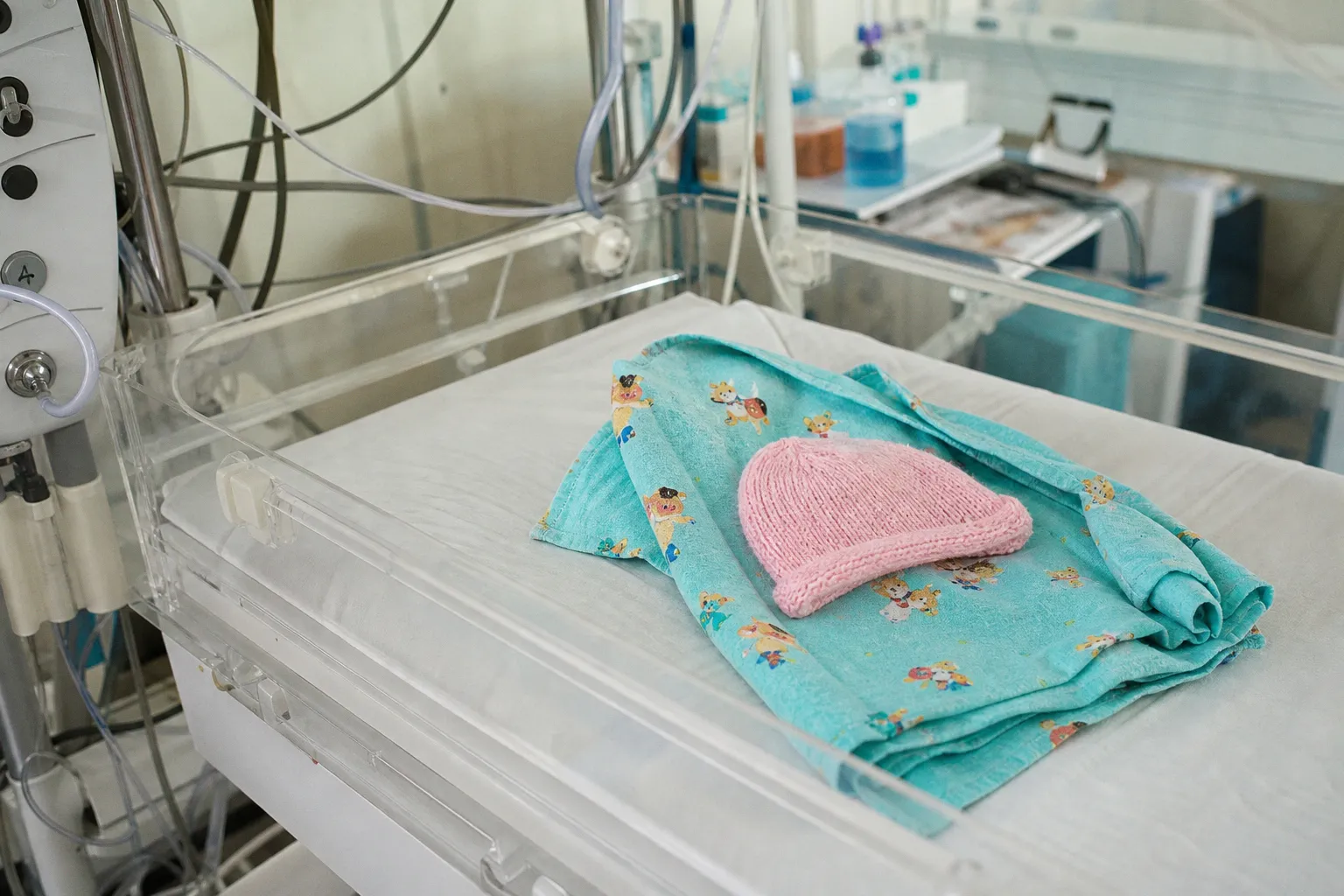
The difficult question at the bedside is rarely, “Do we have an incubator?” More often, it is: “Is this baby stable enough to leave the incubator for prolonged skin-to-skin care—and can we support the family well enough to make that care continuous?”
Compare car rental deals in United Kingdom
See available offersPartner link — DiscoverCars comparisonFor a preterm infant who is breathing spontaneously and maintaining circulation, the answer is increasingly clear: kangaroo mother care should not be treated as a pleasant extra after medical care is finished. It is medical care. WHO recommends it routinely for babies born before 37 completed weeks and for all low-birth-weight newborns, meaning those who weigh less than 2.5 kg at birth.
That does not make the incubator obsolete. It does mean we need to stop framing kangaroo mother care vs incubator for stable preterm infants as a contest between maternal care and technology. In a well-run neonatal pathway, each has a distinct place. The incubator provides controlled warmth and essential support when a baby cannot safely be held; kangaroo mother care provides prolonged skin-to-skin contact, breast-milk support, and a form of physiological regulation that no machine can fully reproduce.
On the ground, the real work is matching the baby’s condition, the caregiver’s capacity, and the unit’s monitoring resources to the right form of care at the right hour.
Kangaroo mother care is not a short cuddle after delivery
Families are sometimes told that their baby has received “kangaroo care” after ten or twenty minutes on a parent’s chest. That early contact can be lovely and valuable, but it is not the full clinical intervention described in WHO guidance.
Kangaroo mother care, or KMC, has two linked elements:
- prolonged, direct skin-to-skin contact, with the baby positioned upright against the caregiver’s bare chest and securely supported;
- feeding with breast milk, ideally exclusively where clinically feasible, with expressed milk and alternative feeding methods used when direct breastfeeding is not yet safe or effective.
The duration matters. WHO recommends providing KMC for as many hours as possible, generally in the range of 8 to 24 hours a day. For a very small baby, this is not simply a bonding exercise scheduled around visiting hours. It becomes the organising principle of care once the infant is clinically ready.
This can feel daunting to a parent recovering from birth, perhaps after a caesarean section, hypertension, anaemia, or an exhausting labour. I have seen mothers hear “continuous KMC” and immediately assume they are being asked to do something impossible. They should not be left alone with that fear. KMC is a care pathway, not a test of maternal devotion. Fathers, partners, grandparents, and other trained family caregivers may share the holding when the unit permits it. Nurses and midwives need to help with positioning, feeding expression, toileting, rest, pain relief, and the practical details that turn a recommendation into something a family can sustain.
KMC works best when we stop asking parents to “help” with care and start recognising them as part of the clinical care team.
For low-birth-weight infant management, this distinction is especially important. A baby may look quiet and settled in an incubator, but still lose heat easily, feed inefficiently, or become separated from the person producing their milk. KMC addresses those vulnerabilities together rather than treating them as separate problems.
What the evidence says about survival, infection, and temperature
The strongest argument for KMC is not sentimental. It is clinical.
A 2023 systematic review and meta-analysis brought together 31 randomised trials involving 15,559 infants. Compared with conventional newborn care, KMC reduced mortality during the birth hospitalisation or by day 28, with a relative risk of 0.68 across 11 trials involving 10,505 infants. Put more plainly, the pooled evidence showed a relative reduction in mortality of about 32 percent.
No practitioner should turn that figure into a promise to an individual family. A baby’s outcome still depends on gestational age, birth weight, infection risk, breathing, congenital conditions, timely referral, feeding support, and the quality of the neonatal team. But this is high-certainty evidence that prolonged KMC changes the odds in a meaningful direction.
The same analysis found that KMC probably reduced severe infection or sepsis by 15 percent at latest follow-up. It also reduced hypothermia substantially: the relative risk was 0.32, equivalent to a 68 percent reduction in the pooled trials reporting that outcome.
Those figures make sense when we consider what happens in everyday neonatal care. A preterm baby has a large surface area relative to body mass, limited fat stores, thin skin, and immature temperature regulation. Heat loss is not a cosmetic concern. When a tiny infant becomes cold, they use precious energy to warm themselves. That energy is then unavailable for growth, breathing, recovery, and feeding.
Skin-to-skin contact gives a stable infant access to a remarkably responsive source of warmth: the caregiver’s chest. At the same time, the baby hears a heartbeat, smells familiar milk, experiences fewer disruptive separations, and often receives more frequent opportunities for breast-milk feeding. These skin-to-skin contact benefits are interconnected; they are not separate lifestyle advantages added onto clinical treatment.
The duration is also not a small detail. In the meta-analysis, the mortality benefit was greater when daily KMC reached at least eight hours. Short sessions may still support attachment and breastfeeding, but they should not be presented as equivalent to sustained KMC.
KMC and incubators solve different problems
An incubator is a highly useful piece of neonatal equipment. It provides a controlled thermal environment, allows access for monitoring and procedures, and offers a protected space when a baby cannot safely remain in skin-to-skin contact. A radiant warmer may be used in other circumstances, particularly during immediate care, assessment, or procedures.
But a stable preterm infant does not necessarily benefit from spending every hour behind incubator walls merely because they were born early or small.
Here is the practical comparison I use when talking through neonatal thermal care methods with families and junior staff:
| Care question | Kangaroo mother care | Incubator or radiant warmer |
|---|---|---|
| Primary source of warmth | Direct, sustained heat transfer from the caregiver’s chest | Controlled environmental heat |
| Best suited to | Clinically stable preterm and low-birth-weight infants able to receive prolonged supported contact | Babies unable to sustain KMC, unable to maintain temperature during it, or requiring urgent intensive support |
| Feeding relationship | Supports breast-milk expression, feeding cues, and gradual transition to direct breastfeeding when ready | Can support feeding plans, but physical separation may make expression and responsive feeding harder |
| Monitoring and procedures | Can continue with appropriate monitoring; some babies on non-invasive respiratory support may receive KMC in capable units | Offers easier access during frequent procedures, resuscitation, invasive treatment, or mechanical ventilation |
| Caregiver role | Central: parent or trained alternate caregiver provides prolonged contact | Essential but more separate from thermal support |
| Use during caregiver rest | Another trained caregiver can take over where available | Appropriate between KMC sessions when no alternate caregiver is available |
The key is that these approaches are not mutually exclusive. A baby can move between them over a day or over the course of a hospital admission. The right question is not, “Which one do we believe in?” It is, “What does this baby need now, and what will help us return safely to prolonged contact as soon as possible?”
Clinical stability is a judgment, not a single number
Families often want a simple threshold: a particular weight, oxygen reading, or number of days in the unit that tells them KMC is safe. In practice, no universal bedside number can capture stability for every premature baby.
A preterm baby’s readiness for KMC depends on a pattern of clinical information:
1. Breathing and respiratory support. A baby who is breathing spontaneously may be able to receive KMC, including some infants using non-invasive respiratory support and monitoring, provided the unit has the experience and staff to manage this safely. A baby who cannot breathe spontaneously or requires mechanical ventilation needs a different level of care.
2. Circulatory condition. KMC should generally be deferred when a newborn is haemodynamically compromised or in shock. The baby first needs stabilisation, careful monitoring, and treatment of the underlying emergency.
3. Temperature during care. Some babies remain comfortably warm in good skin-to-skin positioning; others cannot yet maintain normal temperature reliably. If that happens, alternative warming is not a failure of KMC. It is the appropriate next step.
4. Need for urgent treatment. Resuscitation, oxygen adjustment, intravenous therapy, treatment for suspected infection, and intensive monitoring cannot be replaced by KMC. Skin-to-skin care belongs alongside clinical treatment when safe, not in place of it.
5. Unit capacity and trained supervision. A baby may be physiologically suitable for KMC, but safe practice also depends on staff who can position the infant correctly, secure lines and respiratory equipment, monitor for deterioration, and support the caregiver without leaving them overwhelmed.
This is why a family should never be told to begin prolonged KMC at home as an alternative to urgent evaluation for a small, cold, poorly feeding, lethargic, or breathing-difficult newborn. KMC is powerful, but it is not an unsupervised substitute for neonatal assessment.
The safest choice is not “mother versus machine.” It is the right layer of support around a baby whose needs can change quickly.
When the incubator remains essential
There is a tendency, especially when a unit is trying to strengthen family-centred care, to speak about incubators as though they represent old-fashioned medicine. That is neither fair nor safe.
I have watched an incubator become the necessary bridge for a baby whose temperature dropped despite careful positioning, and for another whose mother needed urgent postoperative care and could not hold her infant for several hours. In both situations, the incubator protected the baby while the team worked toward the next safe KMC session.
An incubator, radiant warmer, or transport incubator remains appropriate when:
- the baby needs immediate stabilisation or intensive intervention;
- prolonged skin-to-skin contact is not possible at that moment;
- the infant cannot maintain normal temperature during KMC;
- the caregiver needs rest, medical treatment, or recovery and no alternate trained caregiver is available;
- the baby requires mechanical ventilation or has a condition that makes transfer to the caregiver’s chest unsafe;
- transport between facilities or within a hospital requires secure temperature control.
There is also a practical point that is sometimes missed: parents need permission to rest. A mother who has just delivered prematurely may be in pain, bleeding, emotionally shaken, or trying to establish milk supply while sleeping in fragments. Telling her that her baby’s survival depends entirely on her ability to remain awake and seated for twenty-four hours is not compassionate care. The unit must plan breaks, recruit and teach alternate caregivers where possible, and use an incubator safely when there is no one available to continue contact.
For babies born very preterm, before 32 weeks, or with very low birth weight, below 1.5 kg, care often requires even more careful coordination. These infants may need expressed breast milk through an alternative feeding method before direct breastfeeding is realistic. That is not a setback. Direct breastfeeding is a developmental process, not a pass-or-fail milestone in the first days of life.
India’s KMC pathway has to work beyond the neonatal unit
India’s earlier Ministry of Health and Family Welfare operational guidance, published in 2014, described KMC as sustained, long-duration skin-to-skin care for stable low-birth-weight infants and gave priority to babies weighing under 2,000 g. It also recognised that infants receiving CPAP or prolonged ventilation required close, continuous supervision in experienced centres.
The underlying clinical direction remains sound: do not wait for a baby to become “big enough” before offering KMC if the baby is stable and the setting can support it safely. At the same time, facilities should use the current protocol adopted by their state, hospital, and neonatal service rather than relying only on older documents.
This matters because child survival is shaped by what happens after discharge as much as by what happens in a special newborn care unit. Household-level child health data can show us broad patterns in neonatal care access, immunisation, nutrition, and infant outcomes, but it cannot tell us whether a particular mother received eight hours of KMC yesterday or whether a neonatal unit has enough trained staff for safe transfers.
That gap is felt sharply in district hospitals and community settings. A family may leave with instructions to continue KMC, but face overcrowded rooms, pressure to return to paid work, limited privacy, household expectations, transport barriers for follow-up, and uncertainty about whether a baby’s feeding or breathing is normal.
The discharge conversation therefore needs to be concrete. I would want every caregiver to understand:
- how to position the baby upright and securely in skin-to-skin contact;
- why the baby should wear a cap and be protected from draughts while the chest provides warmth;
- how and when to express breast milk if direct feeding is not yet established;
- which warning signs require urgent assessment: poor feeding, reduced activity, a cold body, fever, fast or difficult breathing, blue colour, repeated vomiting, or seizures;
- who to contact and where to return if the baby is not gaining, feeding, or staying warm.
The aim is not to hand a parent an idealised instruction sheet. It is to build a workable care plan around the household they actually live in.
A better question for clinicians and families
For stable preterm and low-birth-weight babies, KMC should be the routine foundation of care, begun as soon as possible and continued for long stretches of the day. The evidence on mortality, infection, and hypothermia gives us strong reason to organise services around that principle.
But families deserve a more honest message than “KMC is better than an incubator.” The safer message is this: your baby may need both, sometimes on the same day. The incubator is there when technology is needed to protect a fragile baby. Kangaroo mother care is there because a stable baby’s body and brain benefit profoundly from prolonged contact, warmth, breast milk, and a caregiver who is supported rather than sidelined.
For practitioners, the next step is practical. Review whether your unit treats KMC as a brief visiting-hour activity or as a genuine clinical pathway. Teach staff to assess stability thoughtfully, train alternate caregivers, make room for maternal recovery, and use incubators as a bridge rather than a default destination.
That is how preterm baby survival strategies become humane as well as evidence-based: not by choosing between care from a parent and care from a machine, but by giving every small baby the right combination of both.