Addressing Early Infancy Growth Failure: New Clinical Guidelines for Practitioners
The joint committee's recommendations, as published on ResearchGate, point directly to two risk factors that any clinician in a low-resource Indian setting will recognise immediately: poor maternal…
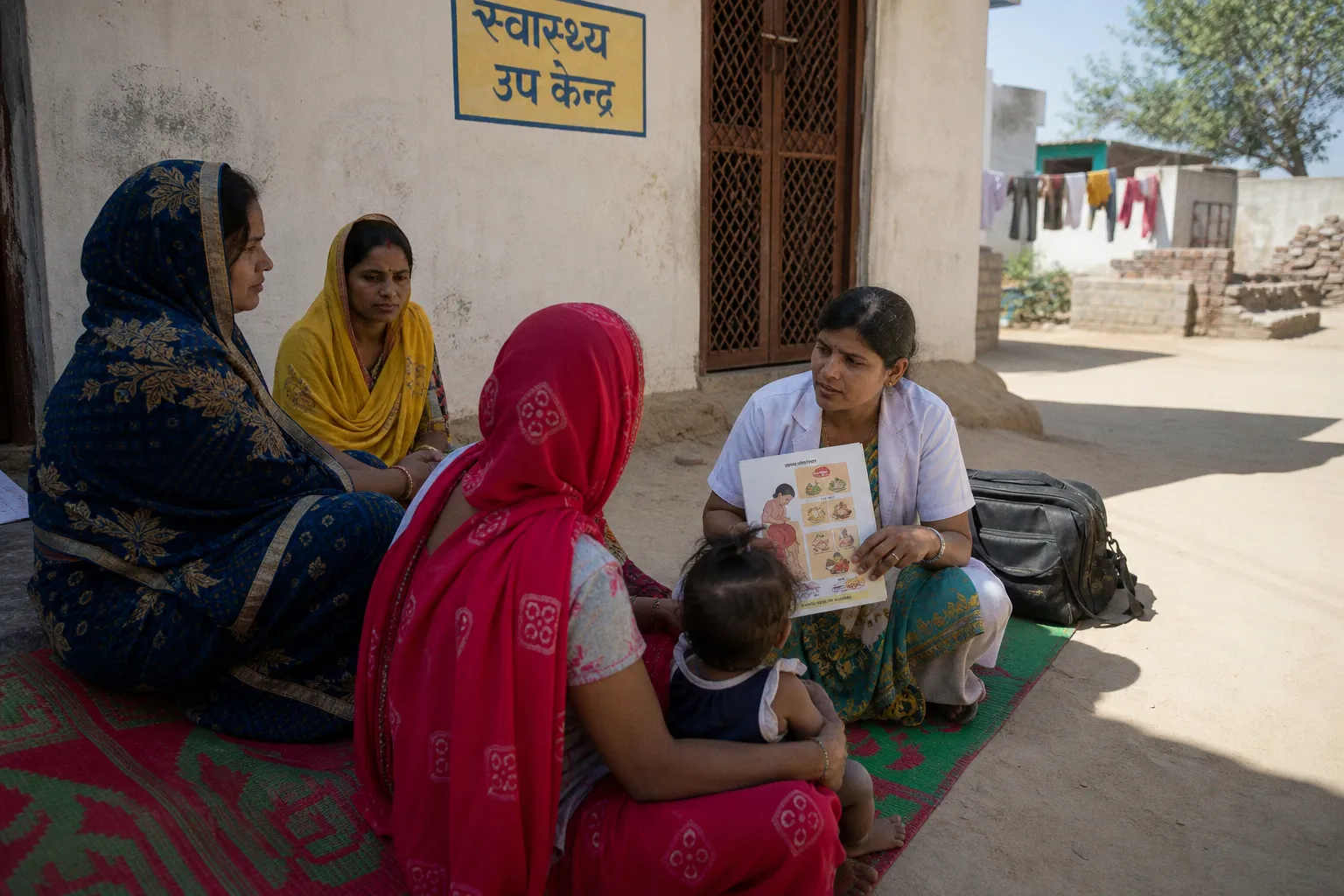
On the ground in our community clinics, I have watched far too many mothers bring in a six-week-old who hasn't quite caught on to feeding, or a four-month-old whose growth curve has quietly fallen off the trajectory we drew at birth. Growth failure in the first six months rarely arrives with a dramatic symptom; it creeps in through cracked nipples, exhausted mothers, and the well-meaning but misplaced advice of an older relative. So when a new set of clinical recommendations lands, I sit up and read carefully — which is exactly what the Joint Committee of the Pediatric and Adolescent Nutrition Society (PANS) and the Indian Academy of Pediatrics (IAP) has just released, focusing squarely on the prevention and management of growth failure during the first six months of life.
Why the first six months need their own playbook
This window is, frankly, where my colleagues and I both earn our keep and lose our sleep. A newborn's growth is shaped almost entirely by what happens at the breast or the bottle, and by the health of the mother doing the feeding. The joint committee's recommendations, as published on ResearchGate, point directly to two risk factors that any clinician in a low-resource Indian setting will recognise immediately: poor maternal health and inadequate breastfeeding support. These are not abstract epidemiological constructs — they are the mothers I see on Tuesday morning in the OPD, still anaemic from their own pregnancy, still recovering, still expected to exclusively breastfeed without a single lactation consult.
The value of having a dedicated framework for this age group is that it forces us to stop blurring the 0–6 month infant into the larger "under-five" conversation. Faltering growth here is a different beast from toddler wasting. The feeding physiology is different, the vulnerability is different, and the intervention window is shorter.
What this means for the bedside clinician
Practically, a recommendation document like this reshapes how I triage the baby who presents at four weeks with weight loss rather than at four months. The committee's framing pushes us upstream — toward the maternal side of the equation. If a mother is undernourished, anaemic, or recovering from a difficult delivery, her milk supply and breastfeeding confidence are already compromised before the infant ever latches. Paediatric protocols that ignore the dyad, in my experience, simply don't move the needle.
It also gives frontline staff something we have long needed: a shared language with paediatric colleagues. When the IAP and a nutrition society speak together, the lactation counsellor, the ANM, the paediatrician, and the obstetrician are finally pointing at the same guideline. That alignment matters in district hospitals where the newborn is often seen by one provider and the mother by another, and the handover is a hurried sentence in the corridor.
What to watch for next
The full clinical detail — exact anthropometric cut-offs, supplementation protocols, and the committee's recommended feeding interventions — will need to be read carefully by every practitioner who manages infants in this age group. For now, the headline is clear enough to act on: prioritise maternal health before and after delivery, and protect exclusive breastfeeding with skilled, hands-on support rather than pamphlets. I will be printing the summary for our clinic wall and bringing it to our next multidisciplinary meeting — because in the first six months of life, the difference between a thriving infant and a growth-failing one is often decided in the room where the mother is asked, gently and specifically, how feeding is really going.