Rural PHC power solutions: solar, hybrid, or grid
A rural Primary Health Centre can have a trained nurse, an equipped labour room, essential medicines, and a woman in active labour at 2 a.m.—then lose the one utility that allows all of that care to function safely.
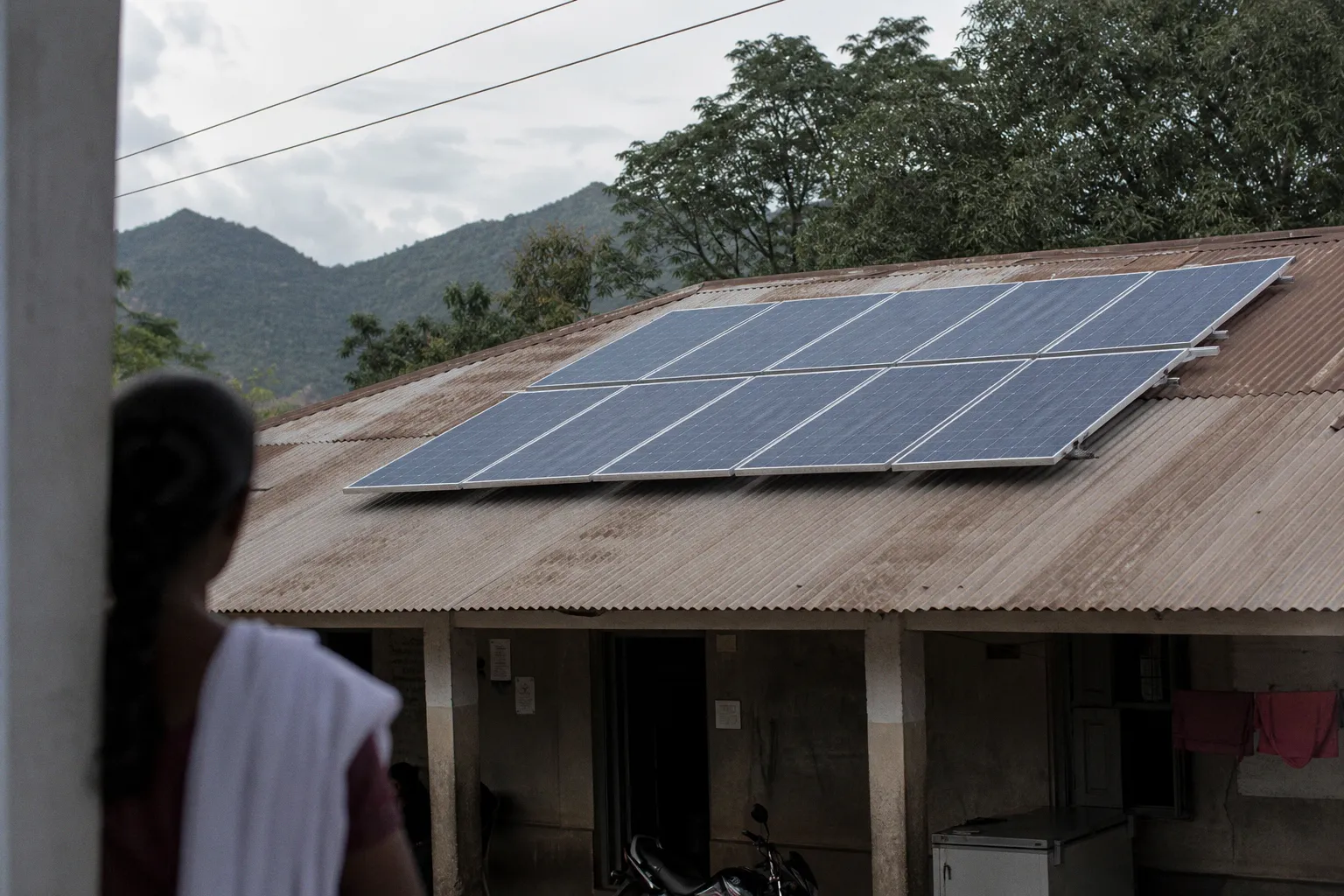
The suction machine goes quiet, lights fail just when a clinician needs to assess bleeding, the vaccine refrigerator becomes a source of anxiety rather than protection, and the team starts counting the minutes until the power returns.
Compare car rental deals in United Kingdom
See available offersPartner link — DiscoverCars comparisonI have seen how quickly an electricity problem becomes a care problem. At the bedside, nobody experiences it as an infrastructure statistic. A mother experiences it as a delayed referral decision. A newborn experiences it as a warmer that cannot be trusted. A nurse experiences it as another impossible calculation made in the dark.
For rural PHC power backup options, the useful question is not simply whether a facility is “electrified.” It is whether it can deliver uninterrupted, safe care through a grid outage, a voltage surge, a monsoon evening, and a busy night of deliveries. Grid supply, diesel backup, stand-alone solar, and solar-hybrid systems each have a place—but they do not offer the same level of clinical security.
The hidden clinical cost of an unreliable grid
India has made considerable progress in extending electricity access, yet access and reliability are not the same thing. Around 4.6% of functional PHCs remain completely unelectrified, while roughly one in two PHCs has either unreliable electricity or no electricity access at all. Those figures can sound abstract until we translate them into the ordinary workflow of a health centre.
A PHC needs power across multiple care pathways:
- Labour and newborn care: lighting, fetal assessment equipment where available, suction, radiant warmers, emergency communication, and clean water systems.
- Cold-chain protection: refrigerators and freezers must hold stable temperatures for vaccines, certain medicines, and laboratory supplies.
- Diagnostics: microscopes, centrifuges, haemoglobin testing, basic laboratory equipment, and increasingly digital diagnostic tools all depend on dependable current.
- Outpatient services: fans in intense heat, lighting, registration systems, medicine dispensing, and basic infection-prevention work become harder when staff are operating around outages.
- Emergency referral: a working phone, charged devices, functioning communications equipment, and a lit facility matter when a patient’s condition changes quickly.
- Water and sanitation: pumps, water storage, handwashing stations, and toilet facilities are not separate from clinical quality. They are part of it.
The Indian Public Health Standards require PHCs to have uninterrupted electricity and a backup arrangement to support 24-hour emergency and nursing services. That wording deserves to be taken literally. A generator that is technically present but has no fuel, an inverter that supports only a few lights, or a solar array without enough battery storage does not create uninterrupted service.
A power system is clinically adequate only when the labour room remains safe after the grid has failed—not when the facility looks electrified during a daytime visit.
In practice, I would encourage district teams to stop using a single yes-or-no question—“Does the PHC have electricity?”—and start asking a more honest set of questions:
1. How many hours of stable supply does the facility actually receive in a day and at night?
2. Which clinical loads must never fail: labour room lighting, vaccine refrigeration, newborn equipment, water pumping, communications?
3. What happens during peak demand, when several high-load devices run together?
4. How long can the facility operate without grid power?
5. Who is responsible for maintenance, fault reporting, fuel procurement, battery monitoring, and replacement?
That is the difference between a connection on paper and a functioning health facility on the ground.
What power deficits mean for mothers, newborns, and routine care
The impact of weak electricity is visible in service use as well as in equipment performance. Evidence linking power access and PHC activity has found that unreliable or absent electricity is associated with a 64% reduction in deliveries, a 39% reduction in inpatient activity, and a 38% reduction in outpatient activity.
These are not numbers that should be used to blame patients for “not coming” to a facility. Women and families are often making rational decisions based on what they know locally. If a labour room may be dark, if the staff cannot reliably use equipment, if water pumps fail, or if a night-time emergency will end in an urgent referral anyway, confidence in the PHC erodes.
That confidence is particularly fragile in maternal care. A woman may attend antenatal visits at her nearby facility and still choose to travel farther for birth because she wants certainty: working lights, skilled staff, warmth for the baby, a vehicle connection if complications arise. She is not rejecting primary care. She is trying to reduce risk.
Solar-powered PHCs have been reported to admit more than 50% more patients and conduct twice as many child deliveries per month than power-deficit centres without solar systems. Electricity alone does not create respectful maternity care, clinical staffing, referral transport, blood availability, or supplies. But it is a foundational condition that lets the rest of the system do its work.
A reliable power supply can improve the experience of care in quiet but meaningful ways:
- Nurses can assess a mother properly rather than work around shadows or torchlight.
- Staff can keep the newborn corner ready instead of treating every outage as a fresh emergency.
- Vaccine and medicine storage becomes more dependable.
- Outpatient departments can remain open through heat, rain, and late-afternoon grid failures.
- Community health workers can refer families to a PHC with greater confidence.
- Digital health records and teleconsultation systems have a much stronger chance of being usable rather than ornamental.
For district health managers, this is why rural clinic electricity solutions should be planned alongside service-delivery goals. If the district wants more institutional births, stronger newborn care, better immunisation continuity, or reliable diagnostics, power cannot sit in a separate “engineering” file.
Grid, diesel, solar, and hybrid: what each model actually delivers
There is no universal answer for every PHC. A small outpatient centre with no overnight services has a different load profile from a 24x7 PHC with deliveries, an active cold chain, water pumps, staff quarters, and diagnostic equipment. But the options can be compared clearly.
| Parameter | Grid only | Grid + diesel generator | Solar + battery | Solar-hybrid system |
|---|---|---|---|---|
| Dependence on local grid quality | Complete | High, though generator covers outages | Low once correctly sized | Shared across grid, solar, battery, and sometimes diesel |
| Reliability during long outages | Poor | Variable; depends on fuel and maintenance | Strong within battery autonomy limits | Strongest option for sustained 24x7 operations |
| Running cost | Low tariff cost, but hidden service disruption | Approximately ₹24–26 per kWh for backup generation | Around ₹12–14 per kWh for solar plus battery | Usually lower than diesel-heavy backup, depending on design |
| Fuel logistics | None | Continuous procurement and storage needed | None for solar generation | Diesel may remain for exceptional extended outages |
| Noise and fumes near patients | None | Significant | None during operation | Minimal in routine operation |
| Protection from grid instability | Usually limited | Limited unless separate protection is installed | Can be designed with power-conditioning equipment | Can combine protection, battery buffering, and managed switching |
| Best fit | Areas with genuinely dependable grid supply | Short-term backup where solar is not yet installed | Facilities with predictable essential loads | Busy PHCs needing resilient power for clinical and non-clinical loads |
The grid should not be treated as the enemy. Where supply is stable, affordable, and technically sound, it remains a useful source of power. The problem is building a 24x7 care model that assumes the grid will behave consistently when local experience says otherwise.
Diesel generators have long filled this gap because they are familiar and can produce power quickly. Yet a generator is not simply a machine that starts when the lights go out. It needs fuel, a maintained battery, trained operation, periodic servicing, safe storage, and enough budget to run at the exact moment an emergency occurs. In many PHCs, the generator is present but rarely tested under real clinical load.
The cost difference is also substantial. Diesel backup is estimated at roughly ₹24–26 per kWh, compared with about ₹12–14 per kWh for a solar-plus-battery arrangement. That does not mean a solar installation is “free” after commissioning. Batteries, inverters, protection systems, cleaning, remote monitoring, and service contracts all need to be budgeted. But it does mean that diesel dependence can become an expensive form of fragility.
Stand-alone solar with batteries can serve facilities with modest, well-mapped loads. It is especially useful when the essential circuit is clearly defined: labour room lights, vaccine refrigerator, newborn warmer, communications, selected fans, essential sockets, and water pumping. The risk comes when systems are undersized, or when every device in the building is connected without a realistic load calculation.
For many 24x7 facilities, solar hybrid systems for PHC operations are the more forgiving route. They can draw from solar generation when available, charge batteries intelligently, use grid electricity when it is present, and retain a generator as a last-resort layer rather than the daily workhorse. That redundancy matters in healthcare. In a home, a delayed appliance cycle is inconvenient. In a delivery room, a failed power source can narrow clinical choices within seconds.
Start with the load, not with the panel size
I have watched infrastructure discussions become unhelpfully fixated on visible hardware: how many panels, what brand of battery, where the inverter will sit. Those details matter, but they come after a simpler clinical exercise: map what the PHC must keep alive.
A proper facility assessment separates loads into three groups.
The non-negotiable clinical circuit
This circuit should remain powered through an outage without staff having to make decisions in the moment. It commonly includes labour room lighting, emergency lights, selected fans, newborn-care equipment, essential suction, vaccine refrigeration where technically appropriate, critical communications, and a limited number of charging points.
The exact list should be written with the nurse in charge, medical officer, pharmacist, cold-chain handler, and electrician in the same room. They understand different risks. The nurse knows what cannot go dark during a delivery. The pharmacist understands refrigeration routines. The electrician can identify surge risks and unsafe wiring. None of those perspectives is enough alone.
The operational circuit
This includes registration, outpatient rooms, basic diagnostics, administrative systems, staff-room lighting, internet connectivity, and selected water pumping. These services matter deeply, but they may be managed or sequenced during a prolonged outage.
The deferrable high-load circuit
Air-conditioning, some heating loads, large pumps, nonessential appliances, and other heavy equipment can rapidly drain batteries or force a generator to run. This does not mean they are always unimportant. It means their use needs to be designed into the system rather than assumed.
Once those circuits are clear, the engineering choices become more sensible. A PHC may need a modest battery-backed essential circuit and grid support for routine daytime loads. Another may require more storage because deliveries, cold-chain requirements, and outages regularly overlap. A district hospital is a different category again; it should not be planned by simply enlarging a PHC template.
The Kerala tenders issued through ANERT in 2026 illustrate the practical variation in facility sizing. They included a 10 kWp hybrid solar system for Ettikkulam Family Health Centre, estimated at ₹13 lakh, and an 8 kWp system for Manakkadav Primary Health Centre, estimated at ₹9 lakh. These figures are not a universal price list. Site conditions, battery capacity, wiring upgrades, structural work, protection devices, and maintenance arrangements all change the final cost. But they are a useful reminder that primary care facilities can be planned as real energy systems, not as symbolic rooftop installations.
The right solar system is not the largest array a roof can hold. It is the system that keeps the right clinical services running for the right number of hours.
Hybrid systems are strongest when they are designed for care continuity
A hybrid system earns its value in the transitions: when solar production fades, when the grid drops suddenly, when batteries reach a planned discharge limit, or when a long outage makes generator support necessary. The patient should not feel those transitions at all.
For a 24x7 PHC, a credible hybrid design needs more than panels and batteries. It should include:
- Automatic transfer or switching arrangements that avoid a dangerous interruption when grid supply fails.
- Battery capacity matched to clinical autonomy, meaning the number of outage hours the essential circuit must run without sunlight or grid power.
- A protected essential-load distribution board, so nonessential devices do not silently consume emergency reserves.
- Voltage stabilisation and surge protection, particularly where grid quality is poor.
- Remote monitoring where connectivity allows, with clear alerts for low battery, inverter faults, abnormal consumption, and generation problems.
- A maintained diesel option for exceptional events, especially in facilities exposed to prolonged monsoon disruption or where critical loads exceed battery capacity.
- An accountable maintenance pathway, including named service contacts, response timelines, spare-part access, and a local protocol for basic checks.
The phrase “backup power” can be misleading because it makes energy sound secondary. In a well-designed PHC, the system is not backing up care; it is enabling care. The grid, solar array, batteries, and generator are simply different sources within one clinical continuity plan.
This is also where procurement can go wrong. A low upfront price can hide an inadequate battery bank, no surge protection, insufficient wiring upgrades, no monitoring platform, or an unclear maintenance contract. Facilities then inherit a system that works beautifully during commissioning photographs and poorly during the first serious outage.
I would rather see a district install fewer systems that are properly sized, protected, monitored, and maintained than many nominal installations that leave nurses still wondering whether the warmer will work at midnight.
Voltage fluctuations can quietly destroy expensive equipment
Power loss is obvious. Voltage instability is more insidious.
More than 21% of PHCs have reported damage to critical medical equipment because of fluctuations on the main grid. The cost is not only financial. When a refrigerator, laboratory instrument, suction device, or digital system fails, replacement and repair may take far longer than a facility can afford. Staff then improvise, defer care, or send patients onward for services that should have been available locally.
A solar or hybrid installation should therefore be treated as an opportunity to improve power quality, not merely to add another source of electricity. Equipment protection deserves a line item in both technical specifications and facility training.
On the ground, that means making sure teams understand a few practical principles:
1. Not every socket should be treated equally. Critical medical equipment should sit on protected circuits designed for its load and sensitivity.
2. Surge protection must be installed and maintained. It is not a one-time checkbox; devices can fail and require inspection after electrical events.
3. Earthing and wiring quality are clinical issues. Poor earthing may be invisible until equipment is damaged or a safety incident occurs.
4. Battery and inverter rooms need appropriate ventilation, security, and access control. A system cannot be safe if it is exposed to heat, dust, water ingress, or casual tampering.
5. Staff should know what to report. Flickering lights, recurring inverter alarms, unusual generator start delays, refrigerator temperature deviations, and repeated tripping are early warnings, not minor annoyances.
A reliable system also needs a routine that fits clinical life. A monthly test during working hours is useful, but it does not tell us enough about night operations. PHCs providing delivery care should periodically test their essential load as if a real outage has occurred: labour room lights, newborn equipment, cold chain, water access, phone charging, and the transition to backup supply. The purpose is not to create anxiety for staff. It is to remove uncertainty before a mother arrives in distress.
A power plan should begin with the people who use it
Rural health infrastructure is often discussed as though equipment arrives in an empty building. It does not. It arrives in a living system of nurses, attendants, ASHAs, medical officers, pharmacists, cleaners, technicians, families, and district administrators. The most durable primary health center solar power projects are the ones that respect this reality.
Before choosing between grid-only improvements, diesel support, solar batteries, or a full hybrid system, facility leaders should walk the site with the people who work there across a full day and night. Look at the roof, but also look at the labour room. Look at the inverter specification, but also ask who knows the vaccine refrigerator’s temperature history. Look at energy bills, but also ask staff how often they delay or alter care because power is absent.
For a small facility in an area with genuinely reliable electricity, protected grid supply with a tightly defined emergency backup may be enough. For a remote 24x7 PHC with frequent outages, solar-hybrid power is often the more clinically defensible choice: it can reduce operating costs, lessen diesel dependence, and give staff the continuity they need to care well. For centres with no dependable grid at all, solar with properly sized storage is not an environmental accessory. It is core health infrastructure.
The best rural PHC power backup options do not promise that no fault will ever happen. They do something more valuable: they make sure a fault in the electricity system does not automatically become a fault in patient care.