Community Health Center Audit: Pre-Assessment Checklist
Walk into a Community Health Centre (CHC) two weeks before a state quality assessment and the pattern is familiar across districts: frantic document-shuffling, borrowed oxygen flowmeters from a…
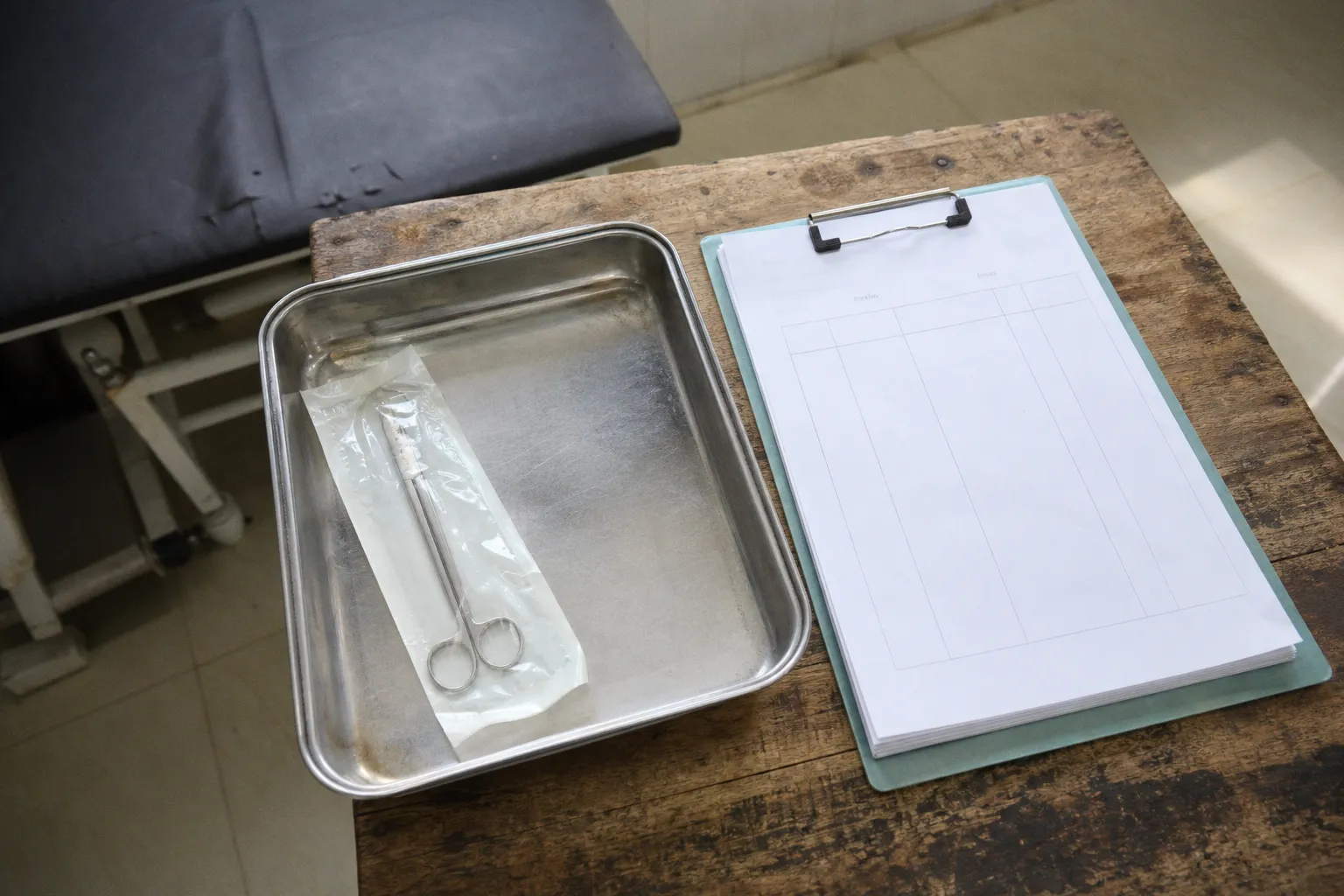
Walk into a Community Health Centre (CHC) two weeks before a state quality assessment and the pattern is familiar across districts: frantic document-shuffling, borrowed oxygen flowmeters from a neighbouring block, freshly painted walls hiding a plumbing problem, and a pharmacist unable to locate a Schedule H drug on the shelf without asking three people. The audit date was on the calendar for months. The gaps were too.
What the team needs at that stage is not a generic NABH crib sheet pulled from the internet. It needs a community health center audit checklist that follows what assessors actually see: the NQAS scoring matrix first, the IPHS 2022 infrastructure benchmarks next, and the daily evidence that proves a standard is alive rather than staged for inspection.
The National Quality Assurance Standards (NQAS) and the Indian Public Health Standards (IPHS) 2022 together define what a CHC must demonstrate. Pre-assessment work is not paperwork. It is operational triage. Fix the high-weight, high-risk failures first; then work through the gaps that look small on paper but unravel the score when an assessor begins tracing evidence from register to bedside.
Navigating the NQAS Framework: The Eight Areas of Concern
The NQAS assessment evaluates a public health facility through eight Areas of Concern. They are connected in practice, but they are not interchangeable in scoring. A good aggregate does not rescue a weak critical area; nor does a neat file compensate for a service that is unavailable when the assessor asks to see it.
The eight Areas of Concern are:
1. Service Provision — availability of RMNCHA services, OPD and IPD coverage, emergency readiness, referral arrangements.
2. Patient Rights — informed consent, privacy, grievance redressal, citizen charter display, dignified access to care.
3. Inputs — infrastructure, equipment, drugs, consumables, human resources and their availability at the point of use.
4. Support Services — laundry, diet, housekeeping, security, water supply, power backup and waste movement.
5. Clinical Care — adherence to protocols, rational drug use, case-sheet quality, mortality and morbidity review.
6. Infection Control — biomedical waste management, hand hygiene, sterilisation, needle-stick injury response, cleaning systems.
7. Quality Management — internal assessment, indicator review, corrective action, PDCA cycles and documentation discipline.
8. Outcome — patient satisfaction, clinical indicators, referral patterns and evidence that care is improving.
A CHC can post a respectable aggregate and still be in trouble if Infection Control, Support Services or another Area of Concern falls below the required level. Treat the eight areas as eight separate exams, not one combined paper.
Some requirements have a sharper edge because they concern service availability, statutory compliance or patient protection. RMNCHA readiness is not demonstrated by saying that labour-room services exist; the assessor will look for the functional labour room, newborn stabilisation arrangements, supplies, staff presence and records of use. Financial protection is not proved by a wall poster if patients are purchasing items that should be provided free. Statutory compliance is not a ceremonial folder either: biomedical-waste authorisation, fire safety documentation, building-safety records and PCPNDT registration where applicable must correspond to the facility being assessed.
This is why a rural health facility audit tool has to be used as a tracing instrument. Start with the displayed policy, move to the responsible officer, then to the register, then to the actual room. If any link breaks, the standard is weaker than its paperwork suggests.
What assessors usually test without announcing it
A CHC often prepares for direct questions and forgets the sideways ones. An assessor may ask the staff nurse about the needle-stick injury protocol, then ask to see the exposure register, then verify whether post-exposure medicines are available. They may inspect the handwashing station, ask for consumable records, and then return to the ward to see whether soap and hand rub are actually there.
The same logic applies to patient rights. A grievance committee may exist on paper, but the facility should be able to show how a complaint is received, who reviews it, what action was taken and whether the patient received an answer. The strongest evidence is not a perfect register. It is a register that reveals real complaints, real discussion and real closure.
Departmental Audit Scope: From Emergency to Administration
The NQAS assessment tool for CHCs is not one giant questionnaire. It works through department-specific checkpoints, and each department has its own failure modes. A high-performing labour room does not cancel out a pharmacy with expired stock, an emergency room without a usable crash cart, or a laboratory unable to demonstrate quality-control practice.
The usual departmental scope includes:
- Accident and Emergency — triage, emergency protocols, crash-cart readiness, ambulance coordination and trauma registers.
- OPD — patient flow, privacy, prescription practices, signage, consultation arrangements and queue management.
- Labour Room — partograph use, AMTSL, newborn resuscitation readiness, infection prevention and referral documentation.
- IPD — nursing care, ward-round documentation, discharge summaries, drug indenting and patient feedback.
- Operation Theatre — pre-anaesthesia assessment, surgical-safety checks, sterile workflow and post-operative monitoring.
- Pharmacy and Store — bin cards, expiry tracking, cold-chain maintenance, storage conditions and controlled-drug records.
- Laboratory — internal quality control, external quality assurance where applicable, sample flow and waste segregation at source.
- Radiology — radiation-safety procedures, records, protective equipment and readiness for adverse contrast reactions where relevant.
- Blood Storage Unit — licensing, temperature logs, cross-matching records and storage protocols where the service is available.
- Newborn Stabilization Unit — functionality of warmers and phototherapy units, feeding records, referral practice and kangaroo mother care support.
- Auxiliary Services — diet, laundry, housekeeping, security, water, electricity and mortuary arrangements.
- General Administration — HR files, training calendars, committee minutes, financial records, statutory documentation and quality review.
| Department | Common failure point | Why it damages the assessment |
|---|---|---|
| Accident and Emergency | Expired crash-cart drugs or no workable triage process | The gap is visible immediately and affects emergency readiness |
| Labour Room | Incomplete partographs or inconsistent AMTSL documentation | It weakens RMNCHA service evidence and clinical-care scoring |
| Pharmacy and Store | Bin-card mismatch or expired drugs on a dispensary shelf | It exposes a failure in Inputs, patient safety and supervision |
| Laboratory | Quality-control records that cannot be connected to routine testing | It weakens confidence in diagnostic services and clinical decisions |
| NBSU | Non-functional equipment or missing feeding and monitoring records | It links directly to newborn care and referral reliability |
| General Administration | Lapsed statutory documentation or inactive committees | It can undermine compliance well beyond the administration section |
The Labour Room and NBSU deserve disproportionate attention. They carry the practical burden of maternal and newborn service readiness, and they reveal whether the facility’s systems are real. A radiant warmer that exists but is not functional, an unsigned partograph, or a resuscitation corner with a missing mask is not a minor deduction. It is a clinical gap that will surface in several Areas of Concern at once.
The departmental walk-through should be unsentimental
The best internal audit is conducted by people willing to record what is wrong. Do not ask, “Is the labour room ready?” Ask whether the last few case sheets show the required monitoring. Do not ask whether the pharmacy follows FEFO. Pull a shelf item, compare it with the bin card and look at its expiry date. Do not ask whether the crash cart is checked. Open it.
That is the difference between rehearsal and verification. The assessor will not be impressed by a room that was arranged for the morning if its staff cannot explain the routine behind it.
IPHS 2022 Infrastructure Benchmarks for Rural and Urban Facilities
IPHS 2022 moved the conversation beyond nominal bed strength. Infrastructure now has to support the service package the CHC claims to provide: oxygen access, water, sanitation, functional utility areas, safe patient movement, staffing spaces and clinical workflows that do not force infection-control compromises.
For community health center capacity planning, the first discipline is to distinguish between what is sanctioned, what is installed and what is usable. These are often treated as the same number. They are not.
A sanctioned bed is not necessarily a bed in service. An oxygen point is not an oxygen-supported bed if the pipeline is non-functional, the manifold is unsafe, the cylinder reserve is absent or the flowmeter does not work. A toilet shown in the building plan does not count if it has no water, no door lock or no connection.
Population coverage and bed-strength categories should be checked against the facility’s designated type:
- Rural CHC in hilly or tribal areas: an 80,000 population catchment.
- Rural CHC in plain areas: a 120,000 population catchment.
- Urban CHC in a non-metro city with a population of 2.5 lakh and above: 50 beds.
- Urban CHC in a metro city with a population of 5 lakh and above: 100 beds.
Water and sanitation are easy to underestimate because they are not glamorous. They are also among the fastest ways for an audit to expose a mismatch between the records and the building.
- Daily water supply is expected in the range of 340 to 450 litres per bed.
- IPD areas require at least one toilet for every six beds.
- Outpatient areas require one toilet per 100 men and two toilets per 100 women.
An assessor does not need an elaborate engineering audit to see the difference between a compliant facility and a paper-compliant one. They can ask about overhead-tank capacity, inspect taps in multiple areas, check whether toilets are usable, and see whether cleaning records match the condition on the ground.
Oxygen capacity is a system, not a bed label
| Facility type | Total beds | Oxygen-supported beds required |
|---|---|---|
| Rural CHC, FRU | 30 | 20 |
| Rural CHC, non-FRU | 30 | 18 |
| Rural CHC, FRU | 50 | 26 |
| Urban CHC, FRU | 100 | 43 |
A 30-bed FRU that can reliably oxygenate only 12 beds is not functioning as an FRU in any meaningful sense, whatever the roster says.
The audit should follow the oxygen route end to end: central supply where installed, manifold-room safety, cylinder availability, flowmeters, humidifiers, concentrator backup, pipeline integrity and the ability of staff to respond when pressure drops. Counting outlets is not enough. A facility claiming 20 oxygen-supported beds must be able to demonstrate that those beds can receive oxygen safely at the same time.
The same principle applies to equipment throughout the CHC. A device’s presence is only the first question. The next questions are whether it is functional, calibrated where required, maintained, supplied with consumables and used by trained personnel.
Staffing Ratios and Clinical Capacity Requirements
Staffing sits under Inputs, but its consequences run across the assessment. An understaffed ward struggles to maintain observation charts. An understaffed labour room finds it harder to sustain protocol adherence. An overextended pharmacist cannot keep stock records clean. Quality Management then suffers because nobody has time to review indicators or close corrective actions.
The IPHS 2022 ratios that need close scrutiny include:
- IPD: one nurse per six beds.
- NBSU: one nurse per three beds.
- Operation Theatre: two nurses per shift, per OT.
- Labour Delivery and Recovery rooms: one nurse or midwife per two rooms.
These ratios cannot be assessed by looking only at sanctioned posts. The meaningful question is who is available on each shift, in each clinical area, doing the work that the facility says it provides. Duty rosters, attendance records and payroll information should tell the same story. If they do not, the audit team should resolve the discrepancy internally before an external assessor finds it.
A 30-bed CHC with a four-bed NBSU cannot make its staffing problem disappear by naming the same nurse in several places on a roster. Shared staffing may be unavoidable in a difficult posting environment, but it has to be acknowledged honestly, managed safely and reflected in service planning. A paper roster that promises simultaneous coverage everywhere is more damaging than a documented vacancy accompanied by a credible mitigation plan.
The specialist gap remains structural in many rural facilities. Anaesthesia, obstetrics and gynaecology, paediatrics and public-health functions may be difficult to sustain at the required level. Pre-assessment cannot create a specialist overnight. It can, however, make the facility’s response visible: referral linkages, on-call arrangements, task allocation within scope, escalation protocols, vacancy documentation and evidence that patients are not left stranded by a service claim the CHC cannot fulfil.
The Certification Pathway: From Internal Assessment to National Scoring
NQAS certification is a sequence of evidence, not a single assessment-day performance. The facility must show that it understands its gaps, measures them, acts on them and sustains the improvement. The process may involve internal review, district or peer assessment, state-level assessment and, for facilities progressing further, national-level assessment.
Internal assessment must show a working quality system
A CHC should conduct regular self-assessments using the applicable NQAS tools, identify gaps, assign responsibility and record corrective action. Internal assessment records matter because they demonstrate whether Quality Management exists as a routine discipline rather than a last-minute exercise.
The point is not to manufacture a fixed period of perfect files before the visit. It is to show an intelligible trail: a gap was found, action was planned, responsibility was assigned, the change was checked, and unresolved issues remain visible rather than being quietly erased. A quality team that can explain why a gap persists and what it is doing about it is in a stronger position than one presenting spotless registers with no operational story behind them.
Peer and state assessment are not formalities
District-level or peer review gives the CHC a chance to test itself under outside scrutiny before it moves forward. The scorecard should be used as a repair document, not merely as a qualifying document. If the labour room score is weak, the response cannot be “conduct more training” in the abstract. It has to identify the break: missing supplies, inadequate shift coverage, poor case-sheet completion, non-functional equipment, or absence of supervisory review.
State assessment repeats this logic with more scrutiny. Assessors will validate claims rather than accept them at face value. A closure note is useful only if the underlying condition has changed. A fire-safety record is useful only if the required safety measures are present. A training attendance sheet is useful only if staff can demonstrate the practice.
Patient satisfaction is a separate piece of evidence
The Patient Satisfaction Score (PSS) cuts across the assessment process. A CHC needs to meet the applicable patient-satisfaction requirement, including the required minimum of 65% satisfaction, or 3.2 on the Likert scale, for the preceding quarter through Mera-Aspataal feedback or an approved survey mechanism.
Facilities relying on local paper or digital surveys should be careful here. A high score from a hand-distributed card can be misleading if patients were surveyed selectively, if privacy was absent, or if the tool cannot be compared with the approved method. Patient satisfaction should reveal what patients actually encounter: waiting time, cleanliness, medicine availability, staff behaviour, privacy and the clarity of information given at discharge or referral.
Pre-Assessment Checklist: What to Verify Before the Assessor Arrives
The final month should not become a theatre production. It should be a disciplined closing period in which the facility verifies evidence, tests operations and fixes what can genuinely be fixed.
Thirty days before assessment
- Review the latest internal and peer-assessment findings. For every open gap, identify the owner, action taken, current status and evidence of follow-up.
- Check the patient-feedback dashboard or approved survey records against the applicable PSS requirement. Investigate low scores rather than trying to explain them away.
- Verify that statutory documents are current and available: fire-safety records, biomedical-waste authorisation, PCPNDT documentation where relevant, and building-safety records.
- Conduct a pharmacy and store audit. Match bin cards to physical stock, remove expired items, check cold-chain logs and inspect storage conditions.
- Test NBSU equipment, including radiant warmers, phototherapy units, pulse oximeters and weighing scales. Record faults and repair status.
- Trace a sample of patient journeys from registration to discharge or referral. This exposes gaps that department-by-department checking can miss.
Fourteen days before assessment
- Run a mock assessment using the relevant NQAS departmental tools. Score departments honestly and focus the remaining time on high-risk failures.
- Compare duty rosters with attendance and actual clinical deployment. Document sanctioned vacancies and the practical arrangement used to maintain safety.
- Test oxygen systems: manifold pressure, cylinder reserve, concentrator function, pipeline condition and bedside accessories.
- Verify water availability, overhead-tank capacity, sanitation functionality and cleaning schedules across shifts, not only during daytime inspection.
- Walk through IPD, labour room, emergency and public areas. Check handwashing stations, colour-coded waste bins, signage, privacy arrangements and accessibility.
- Ask department in-charges to show evidence rather than recite standards. If they cannot retrieve the register, explain the workflow or demonstrate the equipment, the gap is still open.
Seventy-two hours before assessment
- Recheck crash carts, emergency drugs and equipment against the department list; verify expiry dates and replenishment procedures.
- Confirm that patient-rights information, citizen charter, grievance contacts and relevant committee details are displayed and legible.
- Verify labour-room readiness: partograph access, AMTSL supplies, newborn resuscitation equipment, suction and referral communication.
- Inspect the biomedical-waste holding area and the route by which waste moves from clinical areas. Overflowing bins or mixed waste can undo a great deal of preparation.
- Hold a short, practical briefing with department leads. The purpose is not to script answers. It is to ensure that staff know their routines, know where evidence sits and know whom to call when a real problem occurs.
What Separates a Strong Audit From a Weak One
The community health center audit checklist is useful only when it describes the CHC as it operates on an ordinary day. Facilities fail for predictable reasons: quality records detached from work on the floor, infection-control systems that stop at the doorway, staffing rosters that collapse under verification, and IPHS infrastructure figures that do not match the physical facility.
Facilities that perform well do not treat the pre-assessment as a ceremonial sprint. Internal assessment becomes part of management. Biomedical waste is segregated because it has to be segregated every day. The crash cart is checked because emergencies happen without notice. Water supply, oxygen capacity and staffing are reviewed as care-delivery constraints, not as boxes on an application form.
Scores above the required level across the Areas of Concern and departmental assessments, IPHS-aligned infrastructure, and a credible record of quality improvement put a CHC in a far stronger position. But certification is not guaranteed by any one scorecard or infrastructure table alone. The facility must also meet the required overall score, satisfy the relevant standard-level requirements, achieve the patient-satisfaction benchmark, and withstand on-ground verification by the assessing team.
That is the hard part of readiness: not making the CHC look prepared, but making it capable of proving that patients receive safe, respectful and dependable care after the assessors have left.