Safeguarding Reproductive Health for Women and Girls in Conflict Zones
When the NATO Association frames sexual and reproductive health in conflict zones as a global health security imperative, the language might sound diplomatic — but on the ground, for any midwife or…
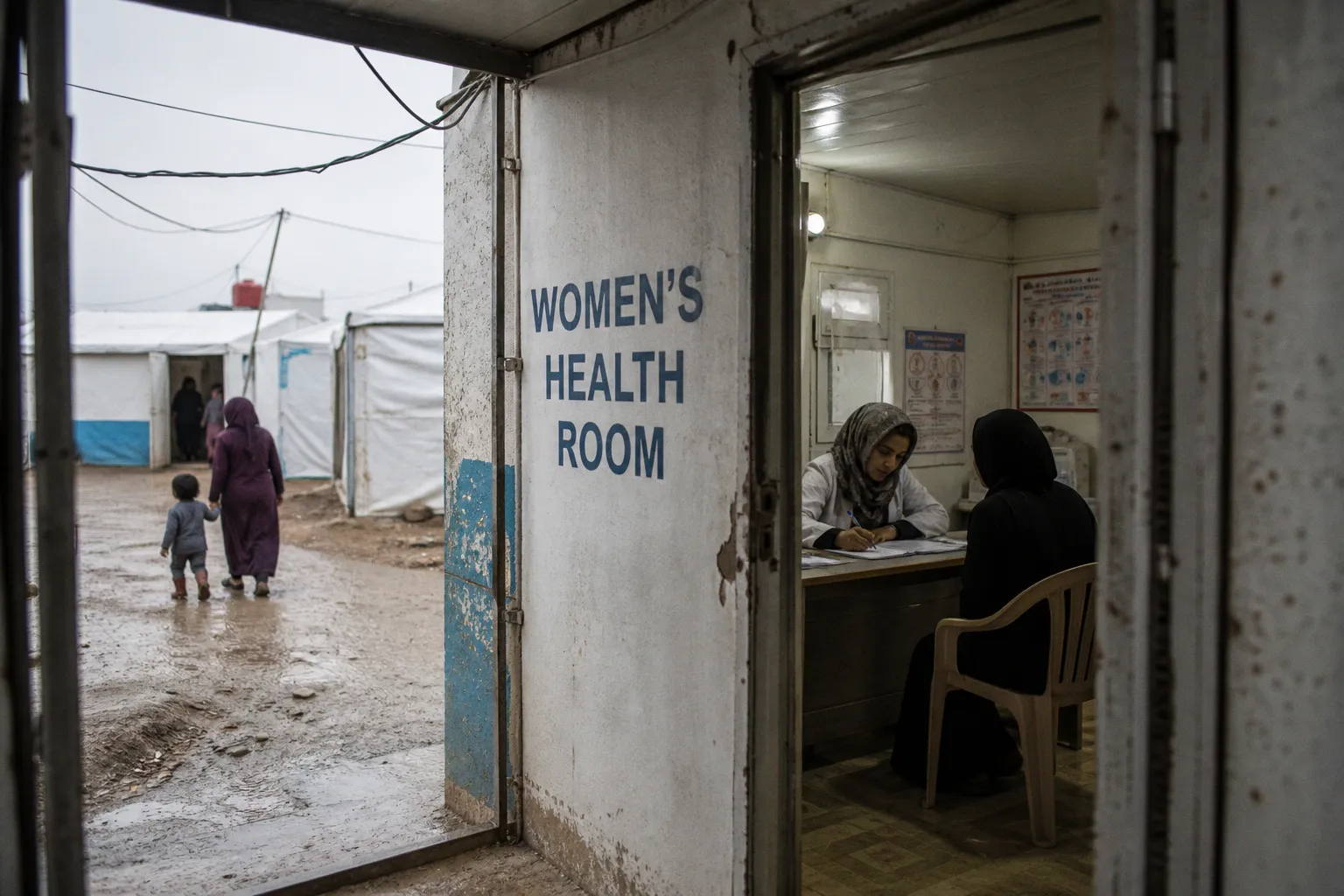
When the NATO Association frames sexual and reproductive health in conflict zones as a global health security imperative, the language might sound diplomatic — but on the ground, for any midwife or community health worker, it is unmistakably clinical. According to the association, armed conflict dismantles the very systems that keep women and girls alive: prenatal care, safe delivery, contraception, cervical screening, and survivor support all collapse when hospitals are damaged, supply chains break, and health workers are displaced. For India's practitioners working in border districts, displacement camps, and insurgency-affected states, this is not an abstract policy debate — it is a daily care-planning question.
Why the clinical floor falls out first
In conflict, the NATO Association analysis notes, health systems are often the first institutions to deteriorate — damaged, destroyed, or stripped of staff and supplies. The services that vanish most quietly are the routine ones: antenatal visits, contraception counselling, cervical cancer screening, and the reproductive health consultations where so much preventive work happens. Without them, what should be manageable becomes catastrophic. A woman who cannot reach a delivery room, a survivor of violence who cannot access emergency contraception or post-exposure prophylaxis, a mother whose infant cannot be immunised on schedule — these are the patients whose outcomes turn on whether the system is standing or in rubble.
The piece also draws on Christina Lamb's reporting to underline a harder truth: sexual violence in conflict is rarely incidental. It is used deliberately to terrorise communities, displace populations, and exert control, and its aftermath — lifelong injury, unintended pregnancy, sexually transmitted infections, infertility, and deep psychological trauma — outlives any ceasefire by decades. Survivor-centred care, in this context, is not a specialty add-on. It is the basic standard every district service should be ready to deliver.
What this means for our clinics and districts
India's conflict-affected districts — in Jammu & Kashmir, the northeast, Jharkhand, Chhattisgarh, and along other disputed borders — carry a disproportionate share of these vulnerabilities, even when our situation does not make international headlines. The clinical lesson from the global analysis is straightforward: SRH services must be designed to survive disruption, not depend on stable infrastructure to function.
Practitioners and programme planners should be asking three concrete questions right now. First, what is our contingency care pathway when a primary facility becomes inaccessible — do we have documented referral protocols, transport arrangements, and a pre-positioned buffer stock of contraceptives and emergency obstetric drugs? Second, are our frontline workers trained to recognise and respond to conflict-related sexual violence with trauma-informed, survivor-led care, including timely access to emergency contraception, STI management, and psychosocial support? Third, are we actually using our district-level data — the kind the DLHS was built to capture — to map where women are already slipping through the gaps, before any crisis deepens those gaps further?
The global frame matters, but the unit of action is the district. Every protocol we hardwire now, every supply we pre-position, every clinician we train in survivor-centred care — that is how SRH stops being the first thing to fall and becomes the last thing to give way.