Ayushman Bharat HWC Upgrades: A Step-by-Step Roadmap
India’s Ayushman Arogya Mandir portal reported 186,604 functional facilities on 26 July 2026. That figure exceeds the original 150,000 Health and Wellness Centre target announced in 2018.
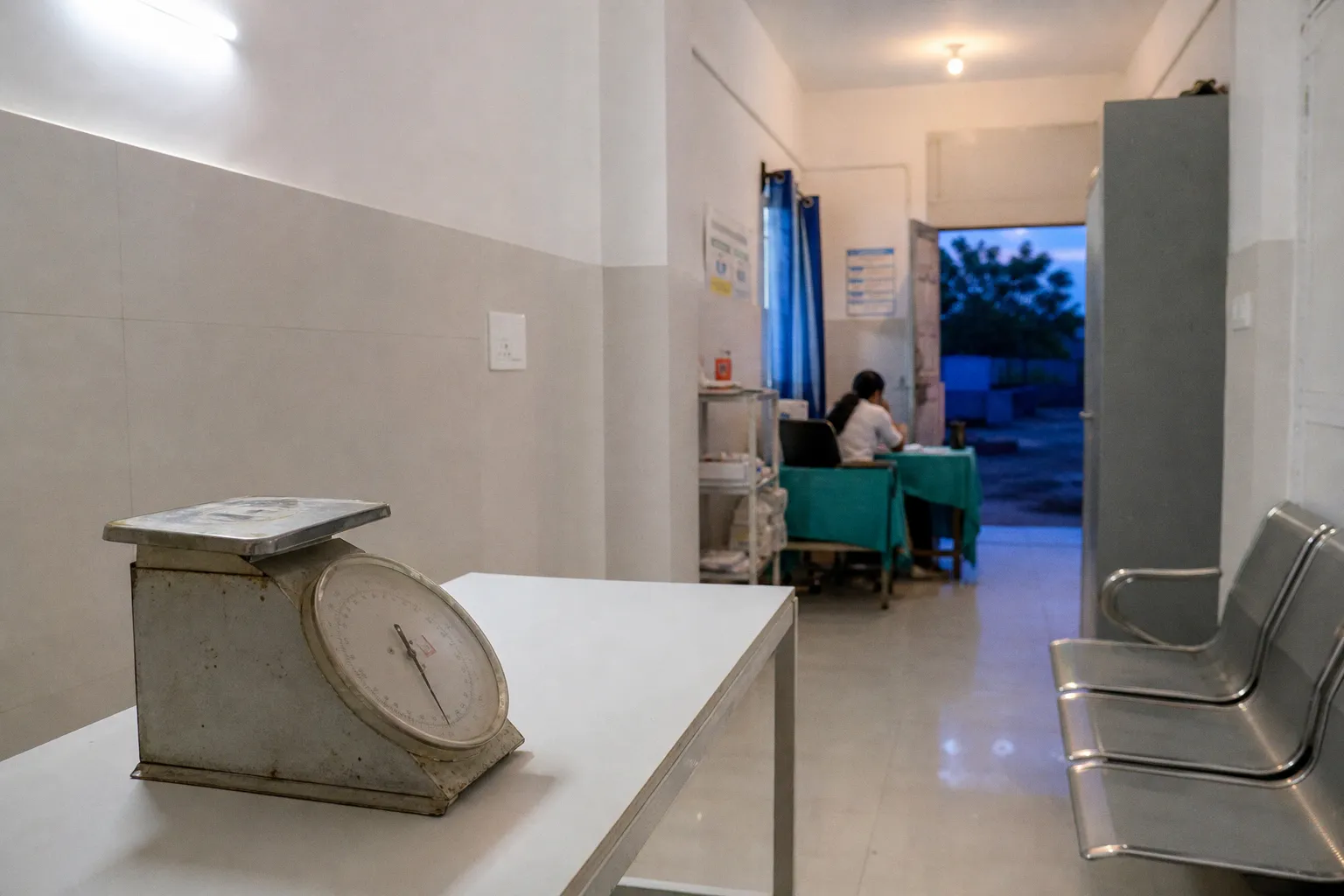
It does not establish that 186,604 facilities have identical staffing, uninterrupted medicines, functional diagnostics, compliant infrastructure, or referral capacity. Operational status and full readiness are separate variables.
This distinction defines the Ayushman Bharat Health and Wellness Center upgrade guidelines. The programme, now formally referred to as Ayushman Arogya Mandirs (AAMs), is not a repainting exercise for a Sub Health Centre or Primary Health Centre. It is a phased conversion of a facility’s operating model: catchment access, workforce deployment, clinical services, diagnostics, supply systems, referral pathways and reporting mechanisms must move together.
The practical unit of analysis is therefore not the building. It is the service platform available to a defined population.
From Sub Health Centres to Ayushman Arogya Mandirs: the transformation logic
An AAM is intended to bring comprehensive primary care closer to the population before illness reaches the district hospital or produces avoidable household expenditure. The model upgrades existing rural and urban Sub Health Centres, PHCs and other eligible facilities. Its service scope is materially broader than the historical concentration on maternal and child health, immunisation and communicable disease control.
The programme defines 12 comprehensive primary-care service packages:
1. Care in pregnancy, childbirth, the newborn period, childhood and adolescence.
2. Family planning, contraceptive services and reproductive health care.
3. Communicable disease prevention, detection and management.
4. Common outpatient care for acute conditions.
5. Screening and management of non-communicable diseases.
6. Management of chronic communicable conditions where applicable.
7. Basic oral health services.
8. Eye and ENT services at the primary-care level.
9. Elderly care.
10. Palliative and rehabilitative care.
11. Emergency medical care within the facility’s defined capacity.
12. Basic mental-health services.
This is a substantial change in the workload profile of a rural facility. A Sub Health Centre designed around outreach, antenatal care and routine public-health programmes cannot simply add hypertension screening, mental-health support and geriatric care by displaying a new signboard. The conversion process requires an assessment of whether the facility can identify a case, initiate care, retain the patient where appropriate, refer the patient when necessary, and document the outcome.
For reproductive and child health, the implications are direct. A facility that identifies anaemia in pregnancy but cannot maintain essential medicines, arrange follow-up, or link a high-risk woman to an appropriate referral centre has expanded reporting without necessarily expanding effective care. The same problem applies to childhood pneumonia, diabetes detected during pregnancy, postpartum depression, or a newborn requiring rapid escalation.
A functional designation is an administrative milestone. Clinical readiness is a chain of conditions.
The upgrade should consequently begin with a baseline facility ledger. This is not a generic inspection. It should classify constraints by their effect on service delivery:
- Geographic access: travel time, seasonal isolation, road condition, public transport availability and the location of vulnerable settlements.
- Facility infrastructure: water, electricity, sanitation, consultation space, privacy, biomedical waste handling and basic accessibility.
- Human resources: sanctioned posts, actual deployment, attendance patterns, skills mix and the ability to provide care during all stated operating hours.
- Clinical capability: which of the 12 packages are genuinely deliverable at present, rather than nominally assigned.
- Commodity availability: medicines, rapid tests, laboratory consumables, emergency supplies and cold-chain support where required.
- Referral integrity: transport, receiving-facility capacity, referral documentation and feedback from the higher-level facility.
- Data quality: whether service data are timely, internally consistent and usable for local management.
A facility may be strong in one domain and weak in another. A renovated PHC without a laboratory technician has a different deficit from a staffed centre without reliable power or stock management. Treating both as “infrastructure gaps” obscures the remedy.
Strategic sequencing: begin with access, not construction
The sub-center-to-HWC conversion process is designed as a phased state and district exercise. Central operational guidance calls for a five-year state roadmap supported by annual state- and district-level targets. This is an acknowledgement of operational reality: states do not begin with equal facility density, workforce availability, procurement capacity or referral networks.
The recommended sequence is district and block based. Initial implementation can begin in better-performing blocks, where human resources and referral support are already stronger. This is not an argument for abandoning difficult geographies. It is a method for avoiding a dispersed rollout in which every block receives partial inputs and no block reaches dependable functionality.
Where saturation of an entire block is not feasible in the first year, the guidance permits an alternative. A state may operationalise AAMs in 60–70% of Sub Health Centres in a selected block while strengthening the remaining facilities for functionality in the following year. That range is not a mandatory national quota. It is a sequencing option where resources are constrained.
The central access principle is “time to care”: approximately 30 minutes. SHC-level AAMs are intended to cover catchments of 3,000–5,000 people. The lower norm applies in tribal, hilly and desert areas, where population density is lower and travel barriers are higher. Facility selection should therefore not be driven only by administrative convenience or the age of a building.
A district planning team should map at least four overlapping layers:
| Planning variable | What should be measured | Why it changes upgrade priority |
|---|---|---|
| Population catchment | Resident population, hamlets served, tribal or remote settlements, seasonal migration | Determines whether the facility is sized for the actual service population |
| Travel-time coverage | Door-to-facility travel time, monsoon disruption, road and transport constraints | Identifies communities beyond practical reach of a PHC, CHC or sub-divisional hospital |
| Referral network | Distance and travel time to PHC, CHC, district hospital and emergency transport nodes | Determines whether higher-risk patients can be escalated safely |
| Workforce capacity | Available CHOs, ANMs, MPWs, medical officers, pharmacists and laboratory personnel | Indicates which service packages can operate immediately |
| Facility readiness | Water, power, rooms, equipment, diagnostics and stock systems | Separates minor repairs from structural constraints |
| Disease and service burden | ANC load, institutional delivery linkage, immunisation volume, NCD screening, outpatient load | Aligns service expansion with local morbidity patterns |
A population norm without travel-time analysis can produce a misleading map. A centre may nominally sit within a PHC catchment but remain inaccessible during the rainy season. Conversely, a low-volume centre near a well-functioning PHC may require a different investment profile from an isolated centre serving scattered settlements.
This is particularly relevant to maternal and newborn care. The correct question is not simply whether an AAM exists within a block. The relevant question is whether a pregnant woman with a complication can reach the appropriate level of care within a clinically useful interval, and whether the referring facility has detected the risk early enough to act.
IPHS 2022 is the benchmark, not the finish line
Indian Public Health Standards revised in 2022 provide the governing framework for primary-care infrastructure, equipment, human resources, service delivery, quality systems and monitoring. Under the current IPHS portal framework, a facility requires a score of at least 80% to qualify as IPHS compliant.
That score should be interpreted carefully. It is a standardised indicator of compliance against a defined framework. It is not a substitute for observing how a facility functions on an ordinary day: whether the consultation room is in use, whether privacy is available, whether essential medicines are dispensed, whether referral communication occurs, or whether diagnostics can be completed when a patient arrives.
For an Ayushman Bharat HWC infrastructure upgrade, the most common planning error is to treat civil works as the dominant expenditure category. Construction is visible. Operational deficits are less visible but more consequential. A facility with adequate rooms but no water, no electricity continuity, no staff accommodation in remote areas, or no recurrent maintenance budget remains clinically constrained.
The physical requirements must be read against the service model. Maternal and reproductive health consultations require privacy. NCD screening requires a usable patient flow, recording space and follow-up mechanism. Diagnostics require a clean working area, consumables, waste management and trained personnel. Elderly and disability-sensitive care require accessible entry and movement through the facility. Emergency stabilisation requires equipment that is present, maintained and understood by available staff.
The planning order should be sequential:
1. Define the expected service mix. Estimate the population, current outpatient volume, reproductive and child-health workload, NCD burden and likely referral requirements.
2. Assess the facility against IPHS 2022 domains. Record infrastructure, equipment, staffing, quality systems and service capacity separately.
3. Classify each deficit. Distinguish one-time capital requirements from recurrent needs such as staff, electricity, consumables and maintenance.
4. Link the facility to a referral pathway. Identify the receiving facility for obstetric emergencies, newborn complications, trauma, severe infections and other conditions beyond primary-care scope.
5. Stage service expansion. Establish essential services first. Add further packages only when personnel, commodities and reporting systems can sustain them.
6. Measure readiness after operationalisation. Do not infer performance from the conversion date or branding status.
There is no universal national construction budget or standard completion timeline for an individual PHC or SHC upgrade. Costs vary by state, starting condition, terrain, procurement route, local labour market and the extent of repair required. Any district plan that applies one uniform cost estimate across facilities is likely to conceal variation rather than manage it.
The upgrade unit is not a renovated structure. It is a geographically accountable, staffed and supplied care network.
Medicines and diagnostics are the recurrent test
The government’s December 2025 status update set out an expanded benchmark of 106 drugs and 14 diagnostics for SHC-level AAMs. The corresponding benchmark for PHC-level AAMs was 172 drugs and 63 diagnostics. These categories must not be merged. A PHC has a wider expected clinical role and therefore a different commodity requirement.
| Facility level | Essential drug benchmark | Diagnostic benchmark | Operational implication |
|---|---|---|---|
| SHC-level AAM | 106 drugs | 14 diagnostics | Must support a defined package of basic primary care close to the community |
| PHC-level AAM | 172 drugs | 63 diagnostics | Requires broader outpatient, diagnostic and referral-support capability |
These are supply benchmarks, not evidence that every listed item is continuously available at every facility. The practical measure is stock reliability over time. A medicine present on the day of supervision but absent during the previous month does not provide continuity of care. A diagnostic device installed without reagents, calibration or an operator does not create diagnostic capacity.
The operational guidance establishes a sensible order of work: first ensure the medicines in the SHC Essential Medicines List and the diagnostic consumables and equipment specified through IPHS; then expand items as service packages become operational. This reduces a frequent procurement distortion, where facilities receive equipment for a service that cannot yet be staffed or maintained.
At district level, medicine and diagnostic management should track a small set of operational indicators:
- Stock-out days for tracer medicines used in maternal, child-health, infectious-disease and NCD services.
- Availability of diagnostic consumables alongside devices.
- Lead time between indent, dispatch and receipt.
- Expiry losses and redistribution capacity.
- Facility-level use of stock records rather than retrospective manual reconciliation.
- Frequency of equipment downtime and the time required for repair or replacement.
The guidance also calls for extending the Drugs and Vaccines Distribution Management System to PHC level where it is operationally feasible, and for prioritising it where it is not yet in place. The point is not the software label. The point is a traceable supply chain: demand estimation, stock visibility, distribution, consumption data and corrective action.
In reproductive and child health, this is where nominal coverage often fails. Screening expands faster than treatment. A woman may be tested for anaemia or hypertension, a child may be assessed for an acute condition, and a chronic disease patient may be registered. The service becomes meaningful only when the facility can provide the next clinical action: medicine, counselling, follow-up, referral or emergency transfer.
Workforce planning must follow the service package
No national current vacancy rate covering community health officers, medical officers, ANMs, MPWs, pharmacists and laboratory personnel can be assumed from the available programme data. District planners should therefore avoid national averages as a substitute for local workforce measurement.
The relevant denominator is the facility roster, not the sanctioned establishment alone. A sanctioned position may be vacant, filled through a contractual arrangement, shared across facilities, or unavailable during critical operating periods. Workforce readiness also includes scope of practice and supervision. A person assigned to a facility is not automatically prepared to deliver every service package.
The minimum staffing question is operational: who will perform each task, on which day, with what equipment, and with which referral authority?
For an SHC-level AAM, the integration of the Community Health Officer with ANM and multipurpose worker functions must be reflected in patient flow and outreach planning. For a PHC-level AAM, medical officer availability, pharmacy operations, laboratory support and management oversight become more central. The facility cannot compensate indefinitely for a missing cadre by expanding the workload of another cadre without affecting quality and continuity.
A district should examine workforce capacity through three lenses:
- Presence: whether staff are deployed and available during stated service hours.
- Competence: whether they have received practical training for the expanded package, including screening, counselling, referral and documentation.
- Connection: whether they can contact supervisors, referral facilities, ambulance systems and supply managers when a problem occurs.
Training should be linked to observed service gaps. Repeating generic orientation sessions while a facility lacks referral protocols or basic diagnostic workflow will not improve output. Similarly, clinical mentoring should be prioritised where new services introduce new decision points: high-risk pregnancy identification, NCD treatment initiation, mental-health assessment, emergency stabilisation and paediatric referral.
Digital integration: exchange, consent and usable data
Digital readiness is frequently described inaccurately. The Ayushman Bharat Digital Mission does not create a central repository containing all patient medical records. Health-care providers create and retain medical records. ABDM supports secure exchange between intended parties after patient consent, while registry data are maintained centrally for interoperability and identification functions.
This distinction matters for facility planning. Digital integration is not achieved by issuing a tablet, creating an identifier or uploading aggregate monthly reports. The relevant questions are more basic:
- Can the facility register and retrieve a patient record during a consultation?
- Can the clinician or health worker document screening, treatment and referral in a usable format?
- Is connectivity adequate for the intended workflow, with a practical fallback during outages?
- Can referral facilities receive clinically relevant information with consent?
- Does the system reduce duplicate entry, or does it create another reporting burden?
- Are staff trained in consent, confidentiality and data quality?
For maternal and child health, interoperable records can improve continuity across ANC visits, immunisation contacts, NCD screening during pregnancy, referral episodes and postnatal follow-up. But the benefit depends on workflow discipline. Incomplete records, delayed data entry and disconnected systems can create the appearance of digitisation without improving clinical decisions.
Digital systems should be introduced after mapping the paper and verbal pathways they replace. If referral notes do not reach the receiving facility today, an application will not resolve the problem unless the receiving facility can access, interpret and respond to the information. If drug stock data are entered but no one uses them to correct shortages, the digital layer has added reporting without supply management.
The district dashboard should measure continuity, not ceremony
A credible upgrade dashboard needs more than a count of operational AAMs. It should track the conditions that make a facility useful to its catchment population.
At minimum, district review should separate:
- facilities designated or operationalised as AAMs;
- facilities meeting the applicable IPHS threshold;
- actual staffing by cadre and shift or operating period;
- availability of tracer medicines and diagnostics over time;
- service delivery volumes by package;
- referral completion and feedback rates;
- outpatient follow-up for chronic conditions;
- infrastructure downtime, including power, water and equipment failures;
- data completeness and internal consistency.
These indicators should be disaggregated by facility level, district, geography and social access barriers where data permit. State-wide averages can conceal the facilities where time to care remains longest and where workforce or commodity failure is concentrated.
The original target was numerical: 150,000 transformed centres. The current programme scale is larger. The policy task has changed accordingly. It is no longer sufficient to expand the network. The task is to distinguish a facility that has entered the network from one that can deliver the promised care package repeatedly, safely and within reach of its population.
A disciplined Ayushman Bharat Health and Wellness Center upgrade roadmap therefore follows a simple sequence: map the catchment, establish the referral logic, measure IPHS gaps, assign staff against actual services, secure medicines and diagnostics, build usable data exchange, and audit continuity after launch. The facility count will continue to rise. The more consequential metric is the proportion of centres where a resident can obtain the required primary-care service on the day it is needed.