Why the Global Health Workforce Needs 34 Million More Professionals to Close Coverage Gaps
According to Medical Xpress, women accounted for 68.9% of the global health workforce in 2023 and drove 71.4% of its growth since 1990.
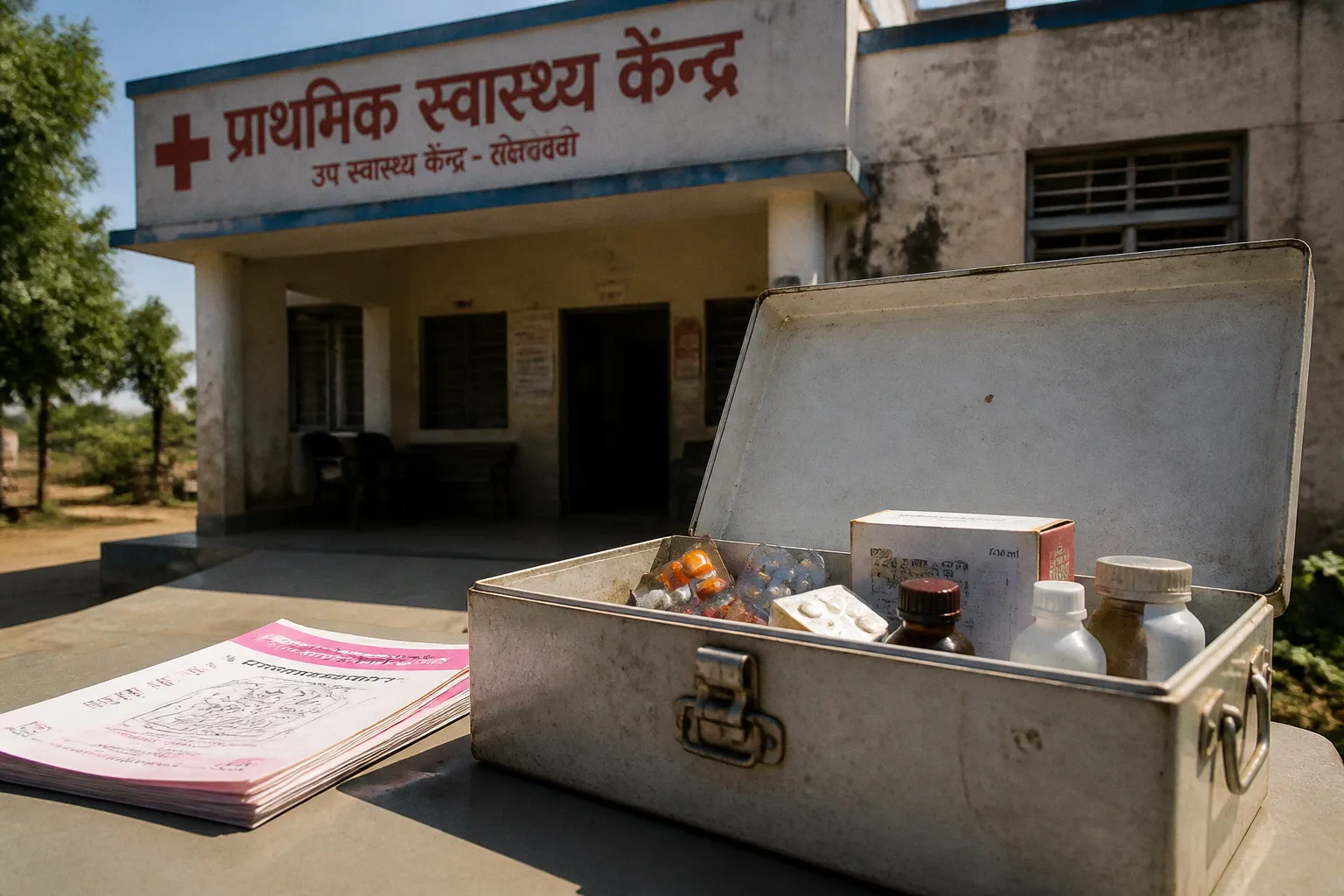
Even so, researchers estimate that another 34.4 million health workers are needed to reach moderate levels of universal health coverage. For India’s reproductive and child health system, this is not merely a workforce-diversity story: it is a warning about staffing density, role distribution and fragile service lines.
The workforce grew. Coverage did not.
The global health workforce nearly tripled between 1990 and 2023, rising from 40.9 million to 122.1 million workers. That expansion added more than 81 million people, including 18.9 million nurses and 8.7 million doctors.
But more bodies on a professional register do not automatically create functioning clinics. The study, based on Global Burden of Disease 2023 estimates, assesses 20 health-worker cadres across 204 countries and territories. It also identifies substantial shortages in South Asia and sub-Saharan Africa, where workforce density remains among the world’s lowest.
The shortage is not evenly distributed across professions. Researchers estimate that reaching an 80 out of 100 score on the universal health coverage effective coverage index would require:
- 23.9 million additional nurses and midwives;
- 7.1 million additional doctors;
- 1.8 million additional dentists; and
- 1.6 million additional pharmacists.
For maternal and child health programmes, that mix is critical. A narrow focus on doctor recruitment cannot repair gaps in nursing, midwifery, pharmacy or community-level delivery. The service chain fails wherever the next required role is missing.
Women carry the system, but not equally
The study’s sex-disaggregated data expose the structural fault line. Women made up 80.7% of nurses, 96% of midwives and 89.5% of community health workers worldwide, while fewer than half of doctors were women. In 2023, the global workforce also included 7.6 million community health workers, 6.8 million pharmacists and pharmaceutical assistants, and 6.1 million dentists and dental assistants.
Women did not merely join a growing system; they supplied most of its expansion. Yet the study’s lead researcher, Megan Knight, said women remain concentrated in professions that generally offer lower pay and fewer leadership opportunities.
That is a systems failure, not a recruitment problem. Expanding the pipeline while leaving frontline roles undervalued, poorly supported or excluded from decision-making produces the wrong kind of growth. It can increase aggregate headcounts without creating resilient facilities.
The global figures should be used carefully in India. The report summarized by Medical Xpress provides no India-specific or district-level estimate, so it cannot substitute for local workforce mapping. What it does provide is a useful design principle: every staffing plan must measure the actual role mix, not just the total number of workers.
A district-ready response
District health planners need a practical checklist that converts global evidence into local accountability:
- Map every required cadre. Count nurses, midwives, doctors, pharmacists, dentists and community health workers separately. A single combined headcount hides shortages.
- Measure deployment, not appointments. Track where each cadre works, which facilities lack minimum staffing and whether services remain available when staff are absent or leave.
- Strengthen the frontline pipeline. Midwives, nurses and community health workers represent the largest portions of the global shortage. They cannot be treated as secondary roles in reproductive and child health planning.
- Track leadership access. Workforce data should show not only how many women are employed, but whether they can enter senior clinical, managerial and policy roles.
- Treat working conditions as infrastructure. The study links stronger health systems not only to workforce expansion, but also to safe, supportive working environments and equitable career advancement.
- Connect staffing to service coverage. Global growth matters locally only when the right worker is present at the right facility, with functioning referral routes when a case moves beyond that facility’s capacity.
The actionable conclusion is blunt: stop managing health workforce numbers as a single total. Build a visible, sex-disaggregated staffing map by cadre and service point, then pair recruitment with retention, leadership access and working-condition fixes. That is how a larger workforce becomes actual coverage rather than another impressive global statistic.