Improving Maternal and Child Health Outcomes Through the SARMAAN Model in Nigeria
According to The Sun Nigeria, Nigeria’s SARMAAN project offers a practical lesson for maternal, newborn and child health: progress depends not only on the medicine or service being delivered, but on…
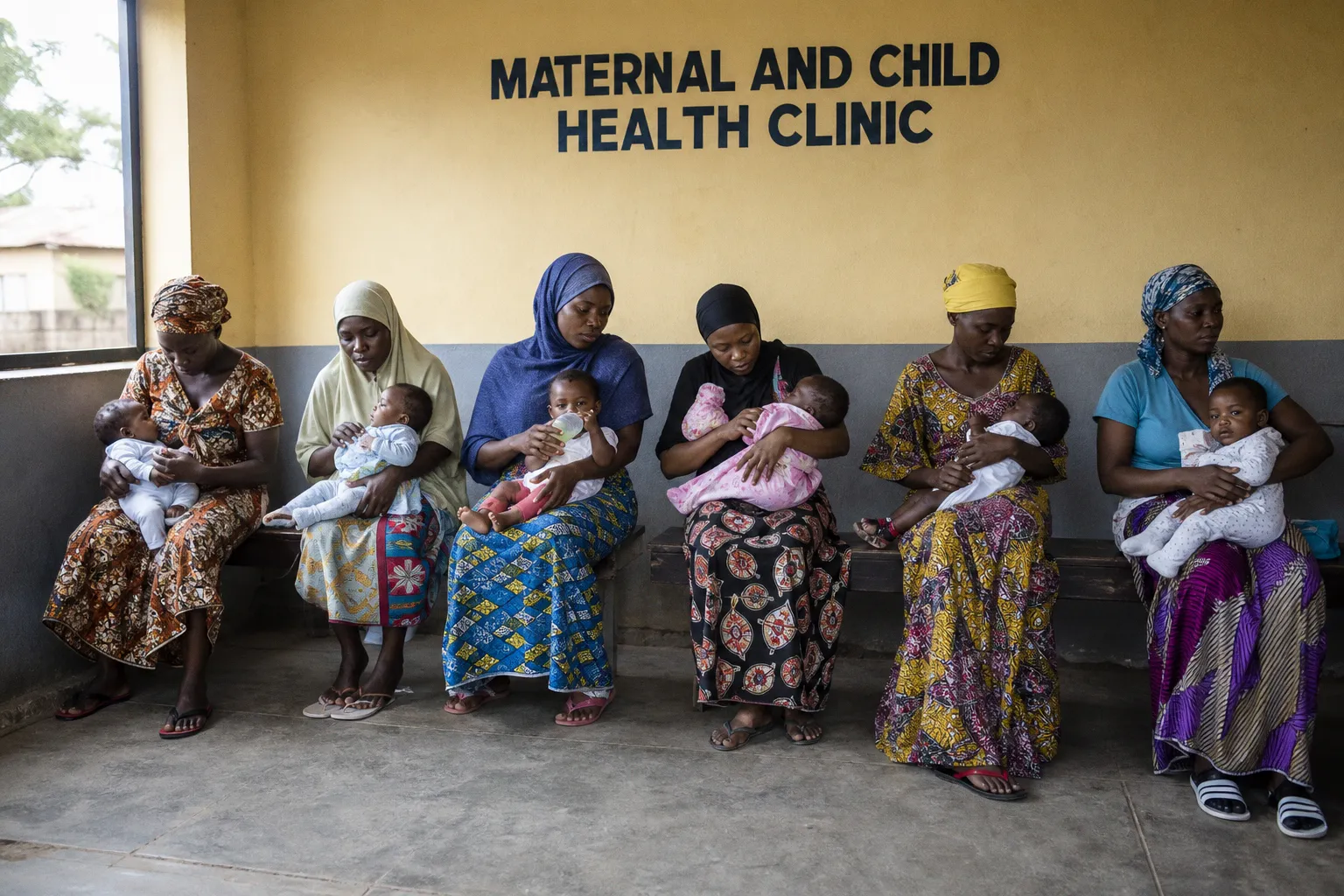
According to The Sun Nigeria, Nigeria’s SARMAAN project offers a practical lesson for maternal, newborn and child health: progress depends not only on the medicine or service being delivered, but on whether the health system can carry it safely to families. The programme has reached more than 16 million children in northern Nigeria, while national data cited by the report show under-five mortality falling from 132 to 102 deaths per 1,000 live births between earlier research and the 2023–24 NDHS. That is meaningful progress, but 102 remains well above the Sustainable Development Goal target of 25, so the central question is how to make effective delivery routine rather than occasional.
The intervention is only one part of the care pathway
SARMAAN — the Safety and Antimicrobial Resistance of Mass Administration of Azithromycin in Children Project — provides supervised azithromycin to children aged 1–59 months in high-mortality communities. It is delivered through trained health workers and state primary healthcare systems, alongside a wider child-survival package that includes immunisation, nutrition, clean water and basic care.
That design matters. From a patient-centred perspective, a family does not experience a programme as a policy document or a supply chain. It experiences whether a trained worker arrives, whether the information is understandable, whether concerns are heard, and whether the service feels safe and trustworthy. The report describes the visible achievement — children reached — but places equal weight on the less visible work behind each round: procurement, logistics, financing, data systems, regulatory oversight, training and state coordination.
In the second quarter of 2026, nine states successfully implemented house-to-house administration. The significance is not simply that teams travelled from home to home. It is that several parts of the system had to function together before a dose could reach a child: route planning, community dialogue, information materials, safety monitoring and rapid feedback on rumours or concerns.
These are not separate concerns from maternal care. The same operational weaknesses that interrupt a child-survival campaign can make antenatal care irregular, delay referral for complications or leave families without dependable newborn support. Conversely, the coordination capacity developed through one intervention can strengthen other care pathways when it is retained and used deliberately.
What the mortality figures do — and do not — tell us
The fall in under-five mortality and the reported improvement in immunisation coverage, exclusive breastfeeding, antenatal-care attendance, skilled birth attendance and treatment-seeking for childhood illness indicate movement in the right direction. But the figures should not be read as proof that one programme alone caused the change. The report presents SARMAAN as one part of a broader maternal and child health environment, not as a single explanation for national progress.
That distinction is important for practitioners. A campaign can achieve impressive coverage while the underlying health system remains fragmented. In Nigeria, federal, state and local authorities share overlapping responsibilities, and the report notes that this can produce duplicated efforts and disconnected delivery. SARMAAN’s experience is presented as an example of managing that fragmentation rather than pretending it does not exist.
The wider operating environment is also unsettled. KFF reports that changes to US foreign assistance, including a review of aid, a stop-work order, the dissolution of USAID and the cancellation of most foreign assistance awards, disrupted or ended some global health programmes. The available evidence does not establish a direct effect on SARMAAN, but it does underline a broader vulnerability: programmes that depend on complex partnerships need clear ownership, resilient financing and a route into permanent health-system planning.
The next test is sustainability
The most useful question raised by SARMAAN is what happens after a programme demonstrates that it can work at scale. Does it remain a time-limited project, or does its operational learning become part of the health system’s permanent toolbox?
For maternal and child health teams, the practical marker to watch is not only the number of children reached. It is whether governments and partners preserve the underlying capabilities: trained workers, reliable procurement, last-mile planning, safety and pharmacovigilance systems, community communication and data feedback that can guide the next round of care.
Recent Nigerian headlines also point to activity in adjacent areas, including a family-planning procurement guideline announced in Katsina and an expansion of the STAYALIVE campaign addressing preventable maternal and newborn deaths. With only headline-level detail available for those developments, their implementation cannot yet be assessed here. Still, they reinforce the importance of connecting individual initiatives rather than allowing each programme to operate in isolation.
For patients, the lesson is reassuring but also realistic: better outcomes are possible, yet they depend on dependable systems around the clinical encounter. For practitioners, SARMAAN’s strongest contribution may be its reminder that the “unseen work” — coordination, trust, safety monitoring and follow-up — is not administrative background. It is the care.