Maharashtra Expands Public Health Access with New Menopause and PCOD Clinics
According to The Hans India, the Maharashtra government has rolled out dedicated clinics for menopause care and polycystic ovary disorder (PCOD) across its network of government health facilities.
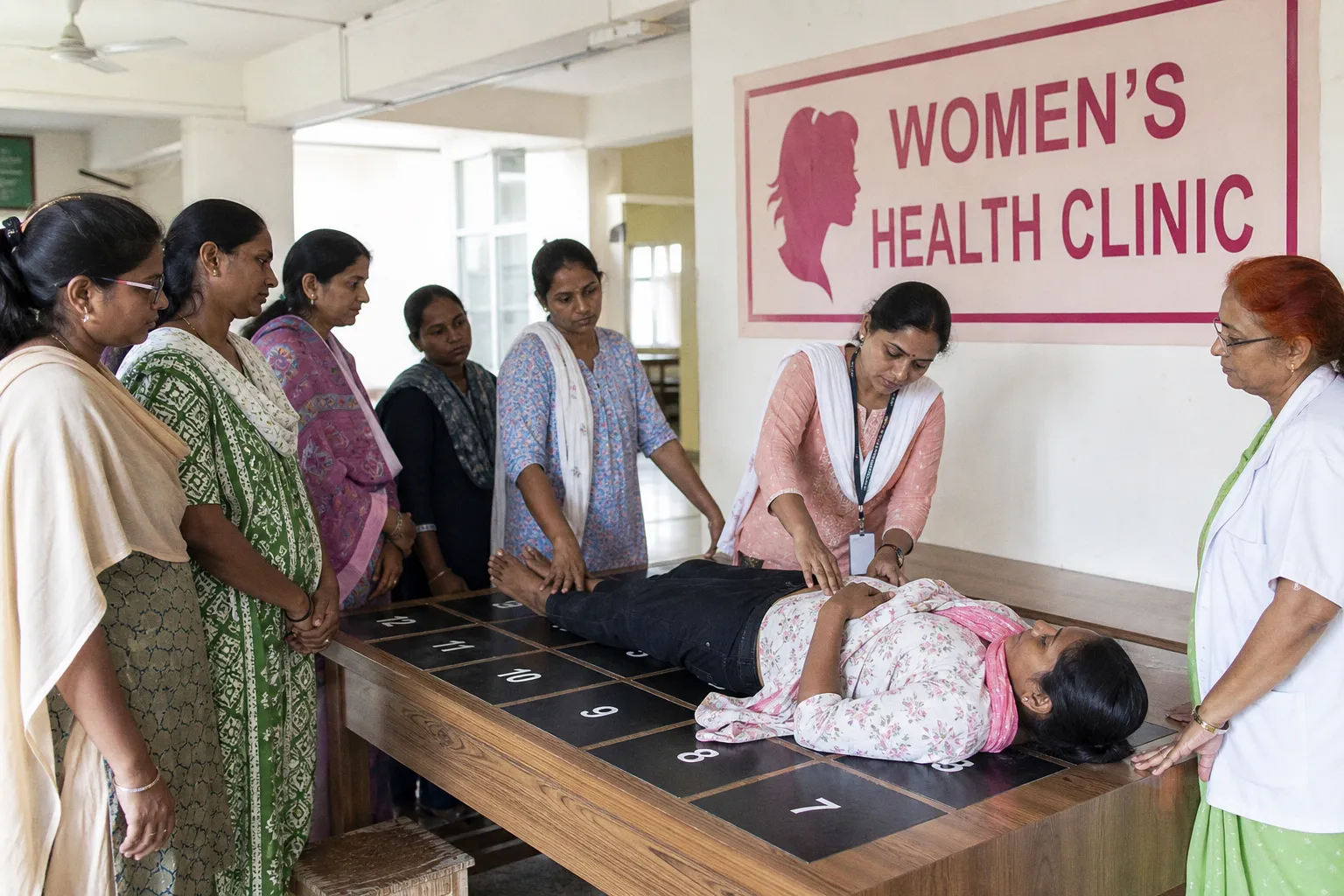
The move, reported this week, plugs two of the most ignored service lines in the public maternal-health stack — conditions that routinely get triaged out of the standard primary-care package.
The service gap this is patching
Public health infrastructure has historically run on a maternity-and-child axis. Antenatal care, immunization, postnatal visits — those are the rails. Anything that doesn't fit cleanly into that workflow gets pushed back on the patient: midlife hormonal symptoms dismissed, PCOD workups bounced to private providers, follow-up defaulted to whoever a woman can afford.
A dedicated menopause-and-PCOD clinic chain inside government hospitals changes that front door. The patient no longer needs to navigate private specialists, pay out of pocket, or drop out of care entirely once she's past her reproductive years. For adolescent girls flagged for PCOD, it also brings the workup inside a facility where an ASHA already has a referral pathway.
What's actually unclear
The Hans India report doesn't spell out staffing levels, drug procurement, or which facility tiers are getting these clinics — district hospitals first, or sub-district facilities too? That distinction matters. A clinic with a signboard and no clinician behind it is a queue, not a service.
For the systems layer, the deployment checklist is short: trained providers stationed at the block level, diagnostic access where the patient actually lives rather than where the specialist is, screening protocols that pick up cases at the community level via ASHA and ANM workers, and referral loops that don't lose patients between the sub-center, the PHC, and the district hospital.
What to track next
Drug procurement is the first stress test. Whatever the standard formulary needs has to clear the state supply chain and reach every node in the network, not just the marquee tertiary hospitals. Training is the second bottleneck: a clinic without staff who can read a basic workup and manage a first-line protocol is just a waiting room with a nameplate. And the data — footfall, diagnoses, referrals, drug consumption — should land on a public dashboard within a year, or the scheme ages on the shelf next to several others.
The mandate now sits in logistics. Staffing, supplies, and screening decide whether this stays a launch or becomes a service.