How a Targeted Tracking System Slashed Maternal Mortality in Rural Madhya Pradesh
According to The Better India, a follow-up system in Shahdol, one of Madhya Pradesh’s remote, forested districts, helped manage 3,696 high-risk pregnancies and halve maternal deaths.
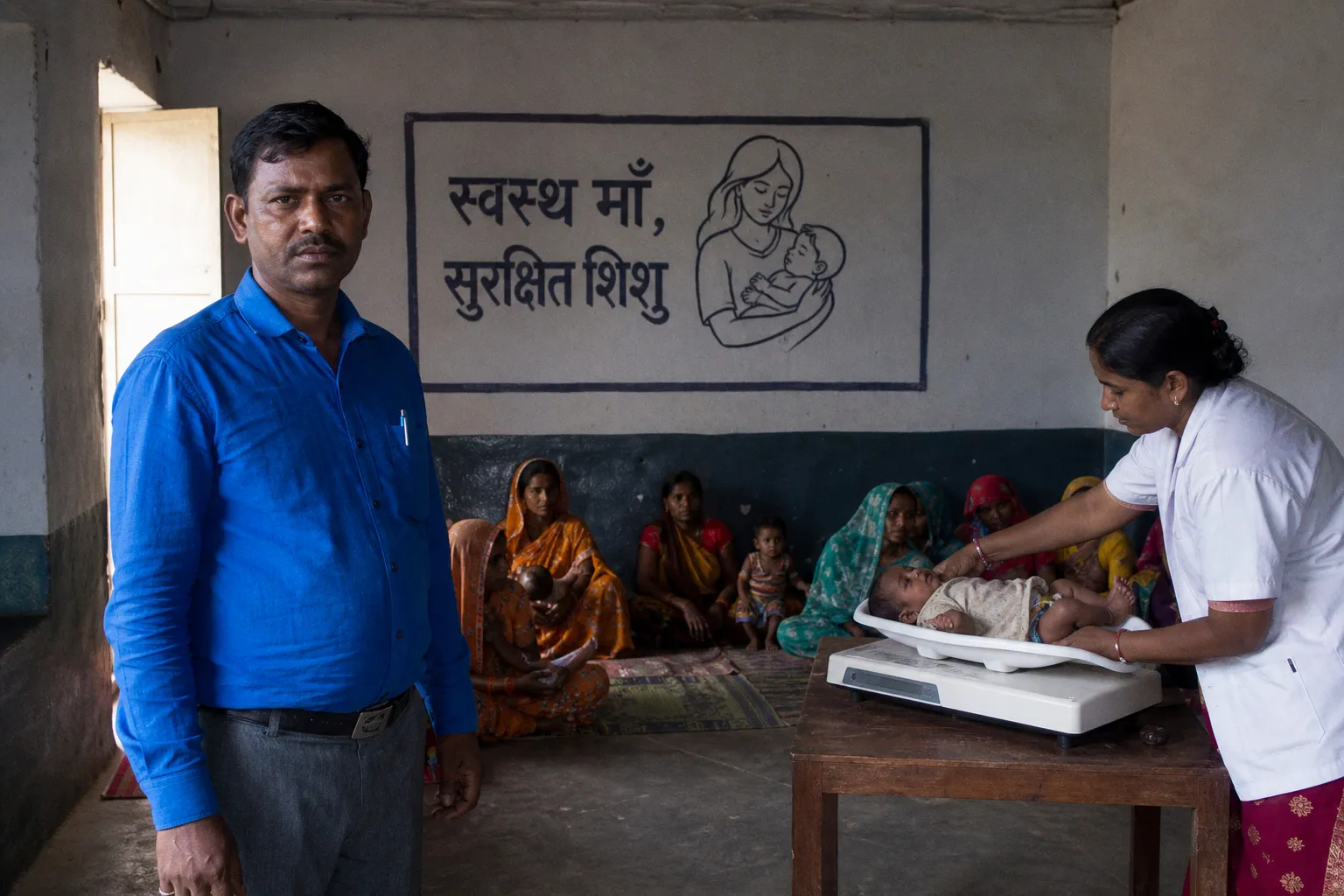
The approach did not depend on a new technology or a new welfare scheme; it focused on ensuring that health workers reached women consistently, particularly those affected by moderate to severe anaemia or pregnancy-induced hypertension. For patients, the significance is practical: a referral pathway is only useful when someone notices that a woman has missed care, understands the warning signs, and follows up before a complication becomes an emergency.
The gap was not always treatment—it was contact
Shahdol’s health workers had been able to reach about eight in every ten pregnant women on their call lists. The remaining women were often living in remote areas where roads could be difficult, especially during the monsoon. They were also the women most likely to miss check-ups, skip iron and calcium tablets, or remain unaware that symptoms such as headache or swollen feet could signal pregnancy-induced hypertension.
A survey and village discussions led by Shivam Prajapati, CEO of the Shahdol Zila Panchayat, found that the district’s existing schemes were not necessarily the main problem. The more basic gap was that health workers were not reaching some women on time, and counselling had not always made clear why medicines, monitoring and timely care mattered.
That distinction is important in maternal health. A service can exist on paper while remaining out of reach for the patient who cannot travel easily, does not recognise a danger sign, or is not contacted after missing an appointment. In that situation, adding another programme may achieve less than making the existing care pathway visible and dependable.
A low-tech system built around repeated follow-up
The district launched Maa Ka Haal – Swasthya Ka Khayal in January 2026. It began with a village-by-village survey to identify high-risk pregnant women, followed by updated lists sent every 15 days to Auxiliary Nurse Midwives, Community Health Officers and Medical Officers.
Each woman was to receive at least one home visit and two phone calls a month. The purpose was not simply to collect information, but to maintain contact: checking whether care had been received, whether medicines were being taken, and whether a woman needed further assessment.
Women with haemoglobin levels between 7 and 8.5 g/dL were sent for additional blood tests. Monitoring continued for 42 days after delivery, extending attention into the postnatal period rather than ending at birth. The reported results—management of 3,696 high-risk pregnancies and a halving of maternal deaths—were achieved through this combination of identification, regular contact and escalation.
The system was also deliberately kept simple. Prajapati said the district had not used artificial intelligence because the lowest-level staff needed to understand and implement the process easily. That choice matters in areas where the strength of a programme depends on whether it can function at village level, not on how sophisticated it appears in a presentation.
What patients and clinics should watch for
The Shahdol model does not show that every district can reproduce the same outcome automatically, and the available reporting does not establish that follow-up alone explains the reduction. It does, however, offer a clear operational lesson: high-risk pregnancy lists must lead to action, not remain as records.
For patients, the essential questions are straightforward. Has the health team identified the pregnancy as high risk? Is there a named person responsible for follow-up? What happens if a check-up is missed, a medicine is not tolerated, or a symptom changes? And does contact continue after delivery?
For clinics and district teams, the Shahdol experience places the emphasis on the last mile: updated lists, home visits, phone calls, clear counselling and timely testing. It also keeps the patient’s reality in view. A woman in a remote village may not need a more complex system; she may need the existing one to reach her reliably, explain what is happening in language she understands, and stay connected long enough for a warning sign to be acted upon.