Why Exclusive Breastfeeding Remains the Most Critical Intervention for Infant Survival
Every week in clinic, I meet a mother who's been told — by a well-meaning relative, a neighbour, even a health worker — that her breastmilk "isn't enough." What follows is often a quiet slide into…
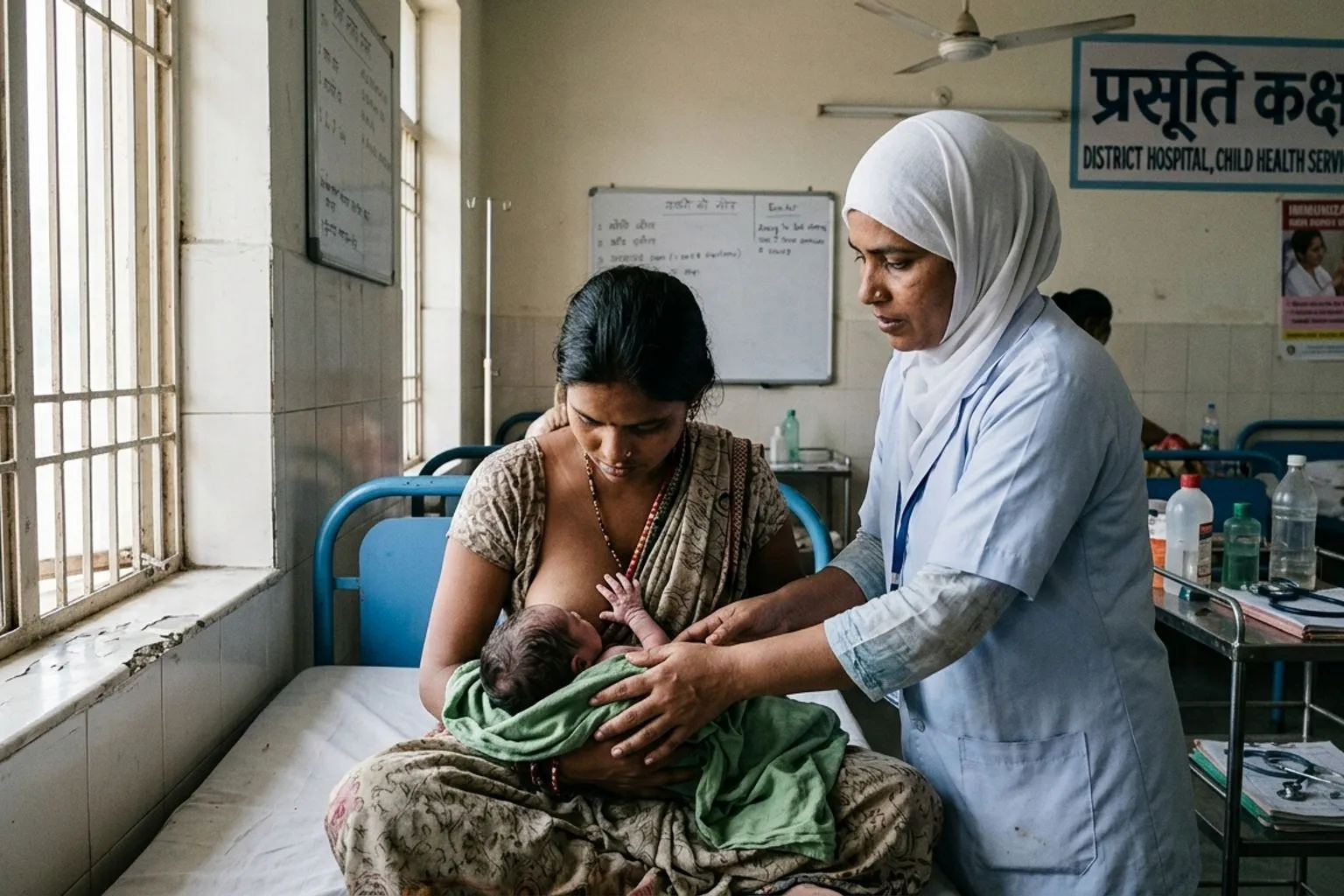
Every week in clinic, I meet a mother who's been told — by a well-meaning relative, a neighbour, even a health worker — that her breastmilk "isn't enough." What follows is often a quiet slide into mixed feeding, then formula top-ups, then the early end of breastfeeding altogether. It's one of the most common care gaps I see on the ground, and the World Health Organization's latest data on infant and young child feeding puts hard numbers behind what many of us witness daily: only about 47% of infants aged 0–6 months worldwide were exclusively breastfed over the period 2018–2025. That's fewer than one in two babies getting the one intervention most consistently linked to survival, growth, and long-term health.
What the numbers tell us about the stakes
The WHO estimates that in 2021, maternal and child malnutrition was associated with 2.4 million child deaths annually — more than half of all child deaths that year. Early, exclusive, and continued breastfeeding can prevent pneumonia and diarrhoea, two of the leading killers of young children. Mixed-fed or non-breastfed infants face significantly higher mortality from these and other infectious diseases, and while the effect is greatest in low- and middle-income countries, the pattern holds globally.
What often gets missed in these figures is the energy story. Between six and twelve months, breastmilk can supply half or more of a child's energy needs; from twelve to twenty-four months, it still provides a third. During illness, it becomes a critical lifeline — reducing mortality even among malnourished children. The downstream benefits extend into adolescence and adulthood: children who were breastfed are less likely to be overweight or obese, perform better on intelligence tests, and show higher school attendance.
Support systems — and what Sierra Leone's progress suggests
There's a striking piece of news from Sierra Leone that speaks directly to how system-level changes can move the needle. The country's Ministry of Health announced a 30% decline in maternal mortality, attributing progress to measures including mandatory 24-hour reviews of child deaths and improved access to localized data. The details are still emerging from the available reporting, but the pattern is one we see repeatedly: when health systems invest in structured review processes and make data actionable at the facility level, outcomes improve. For those of us working in district-level health services across India, it's a reminder that decentralised, data-driven accountability isn't abstract policy — it's bedside impact.
The economics — and why underfunding costs us all
The WHO puts a stark figure on the cost of inaction: global economic losses from underfunded breastfeeding programmes are estimated at US$ 339 billion each year, equivalent to 0.32% of global gross national income. Conversely, scaling up evidence-based health system support — including facility- and community-based infant and young child feeding counselling and implementation of the Ten Steps to Successful Breastfeeding — would generate returns of $59 for every $1 invested, driven largely by improvements in cognitive development, education outcomes, and lifetime productivity.
For practitioners, the takeaway is straightforward: every conversation we have about exclusive breastfeeding, every time we help a mother navigate a latch difficulty or push back against early complementary feeding, we're not just doing clinical care — we're contributing to an intervention with one of the highest returns in public health. Longer durations of breastfeeding also contribute directly to maternal well-being, making this a care pathway that serves both mother and child.
What I'd encourage colleagues to watch is how district-level data systems evolve — particularly the proposed frameworks for measuring health system decentralisation that could shape how we track and respond to feeding gaps in our own communities. The evidence is clear. The question is whether our systems catch up fast enough.