Beyond the Numbers: Evaluating India’s Maternal Welfare Schemes
The Press Information Bureau dropped updated figures on India's flagship maternal welfare schemes: over 7.50 crore pregnant women examined under the Pradhan Mantri Surakshit Matritva Abhiyan (PMSMA)
Coverage Volume vs. Triage Capacity
PMSMA was built to guarantee at least one physician-led antenatal checkup per pregnancy. Hitting 7.50 crore examinations is a throughput achievement. But throughput is the wrong KPI. The real metric is what happens between the screening and the next clinical decision:
- Was the pregnancy risk-stratified and the classification documented in the MCP card?
- Was a referral pathway opened for high-risk cases — or just noted and filed?
- Did the woman leave with a date for the next visit, or a vague instruction to "come back"?
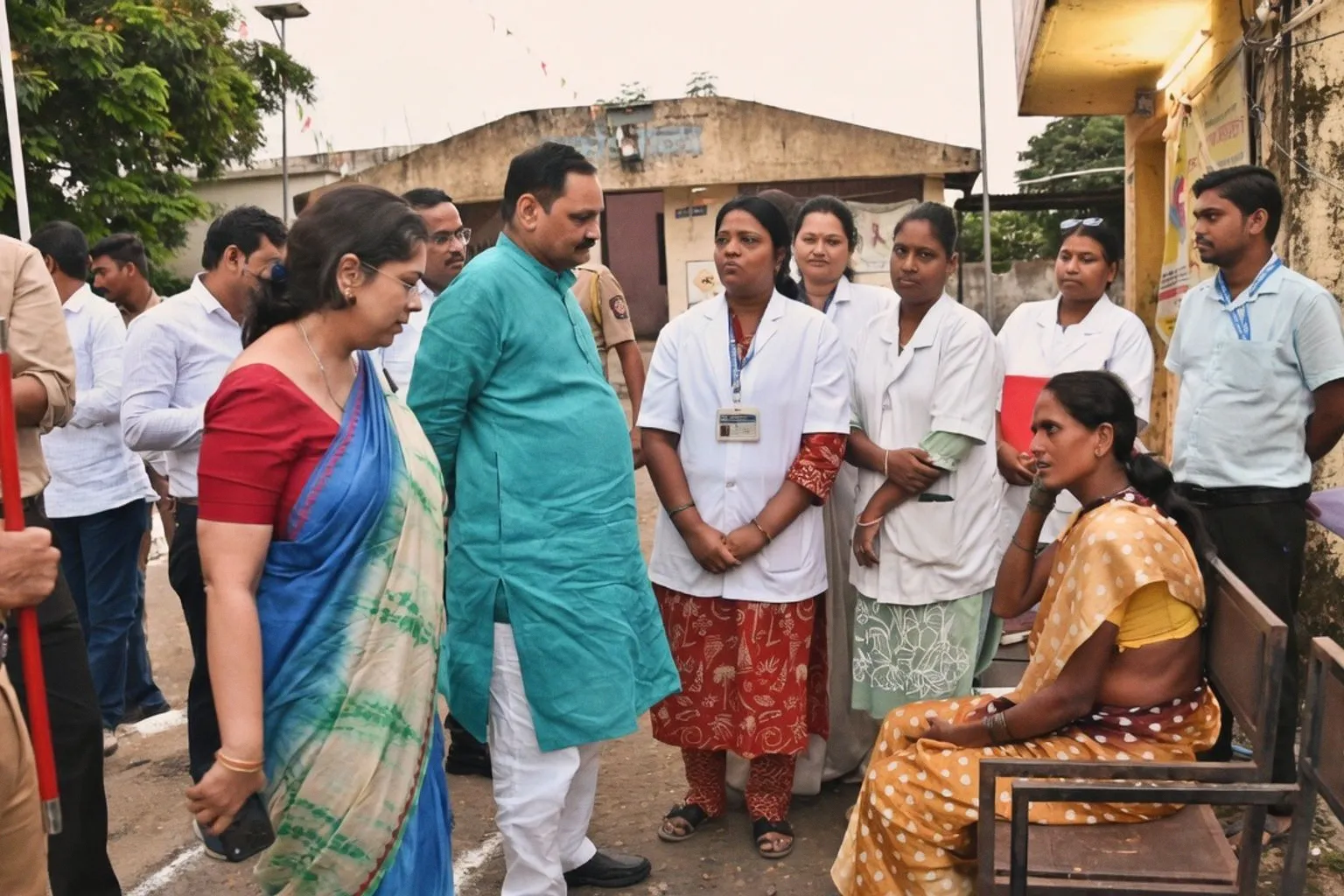
A recent Times of India report on a healthcare team evacuating a high-risk pregnant woman is the smoke detector. Evacuation protocols only activate when upstream screening fails to catch risk early. If 7.50 crore exams have been logged, the audit question isn't volume — it's how many of those visits produced a closed-loop referral.
Where PMMVY Actually Pays Out
PMMVY's 5.13 crore enrollee count is encouraging, but cash transfers are behavior-shaping tools, not benefits. They shape behavior only if three conditions hold:
- Registration at first antenatal contact, not at term (too late to change outcomes)
- Disbursement landing in the woman's account before the next scheduled visit
- ASHA and ANM workload capacity to handle verification without dropping clinical hours
Where any of those three fail, PMMVY flattens into a delivery-day handout instead of a continuity-of-care incentive. District managers should be pulling the disaggregated data — registration timing, disbursement lag, and dropout between installments — not just headline enrolment.
What to Verify Before the Next DLHS Round
For clinic operators and program staff, the practical checklist against these numbers is short and structural:
- Pull your facility's PMSMA register. Count the visits with documented risk classification vs. those with a checkmark and nothing else.
- Audit PMMVY enrollment timing. What percentage of your beneficiaries registered in the first trimester?
- Trace two high-risk referrals end-to-end. Did the woman reach the higher facility, and was the feedback loop closed?
National averages smooth the picture. District-level reality doesn't.
Adjacent Signal: Terminology Is Shifting
In a parallel development, the international PCOS framework is being rebranded as PMOS — a renaming reported as part of a broader effort to better reflect the condition's profile in women's health. Indian clinical protocols haven't shifted yet, but district hospitals running diagnostic workflows should expect downstream alignment pressure within the next reporting cycle. Worth flagging now while SOPs are still being reviewed annually rather than under deadline.
The Real Scorecard
The PIB numbers belong in a press release. The scorecard belongs in your district — MMR trajectory, institutional delivery share, and the gap between rural and urban antenatal coverage in your block. High coverage is the entry ticket. Triage, referral closure, and cash-transfer timing are the game.