Beyond the Policy: Why India’s Maternal Health Infrastructure Stalls Breastfeeding Success
The Ethiopian Ministry of Health and WHO are pushing for scaled-up breastfeeding interventions during World Breastfeeding Week 2026, with the Baby-friendly Hospital Initiative at the center of the call.
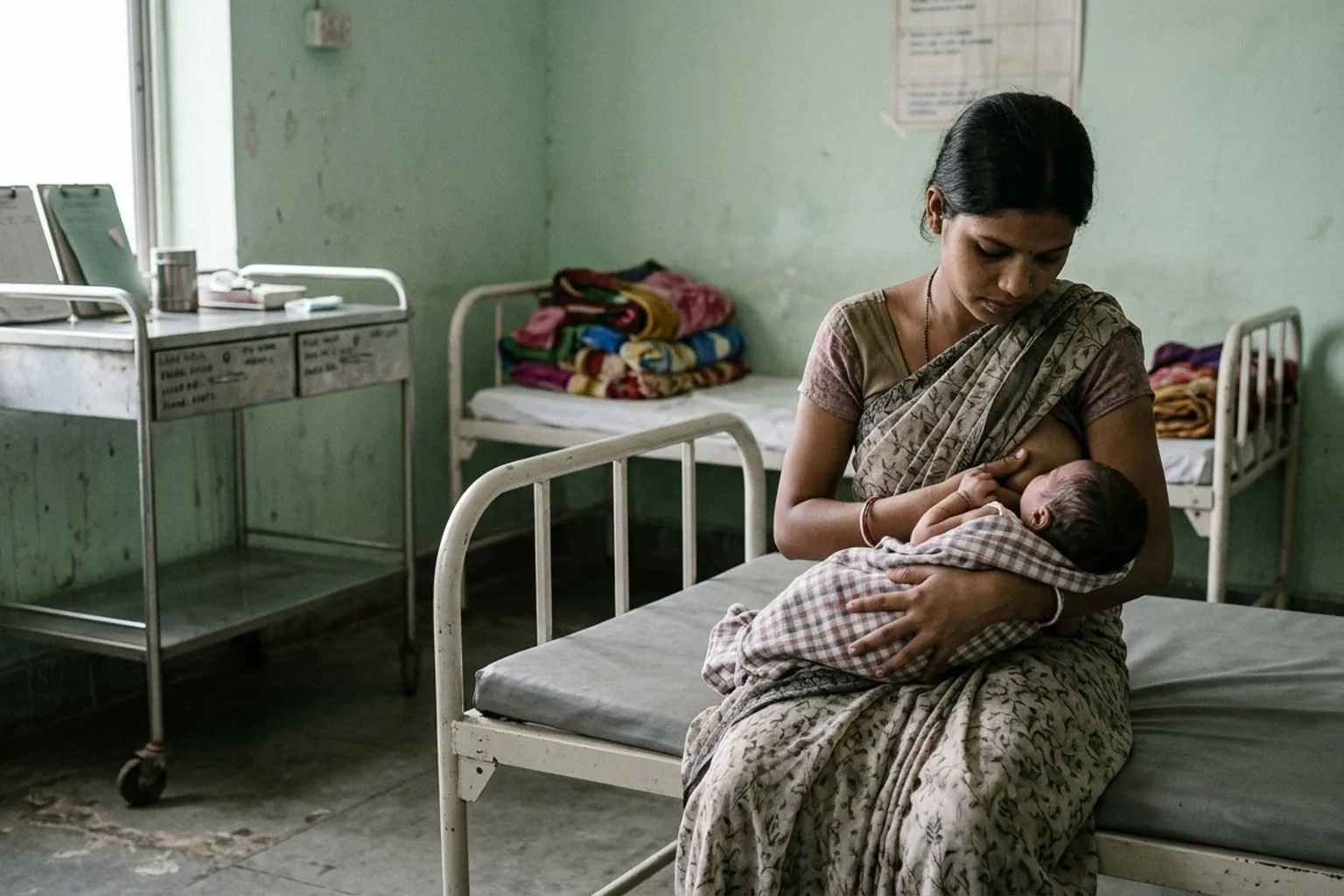
For India, that message lands on broken supply lines and stalled construction—not on celebratory posters.
The bottleneck isn't knowledge—it's the building
A newly built ₹136-crore Government Super Speciality Hospital for Maternity and Child Health in Madurai sits idle, according to The Hindu. Mothers are rerouted to private clinics they can't afford or pushed into travel corridors that increase newborn exposure risk. This is the operational reality behind any breastfeeding protocol: the first 1,000 days of mother-and-child care collapse when the physical facility isn't running.
- Capital committed, commissioning stalled: An asset on paper, zero throughput in practice.
- Forced displacement: Lactation support, neonatal care, and counseling get outsourced to private vendors or skipped entirely.
- Staffing gap: Equipment and walls don't deliver early initiation guidance or skin-to-skin counseling—trained nurses and ASHA workers do.
What India's tracking system is supposed to fix
The Ministry of Women and Child Development, per the Press Information Bureau, is rolling out the Poshan Tracker under Mission Poshan 2.0 to monitor services for pregnant women, lactating mothers, and children. In theory, this is the dashboard for spotting where breastfeeding support is failing and routing resources accordingly.
The machinery exists. The question is whether state-level facilities like the Madurai hospital get commissioned before the digital tracker flags them as zero-output nodes in the maternal-child network.
What to watch and where to push
- Commissioning dates, not ribbon-cuttings: When does the Madurai hospital actually admit patients? Track district-level operational go-lives.
- BFHI accreditation footprint: Which district hospitals are Baby-friendly Hospital Initiative certified? That is the benchmark WHO is scaling globally—India's facilities should be measured against it.
- Poshan Tracker data flow: Are Anganwadi and ASHA workers uploading lactation counseling data, or is the app another monitoring shell with empty input boxes?
- Early initiation rates: The clinical lever that drives breastfeeding success. Demand district-level numbers, not flattering national averages.
WHO's call is a reminder that proven interventions only work when the supply chain delivers them. In India, that means commissioning idle hospitals, staffing lactation counselors, and making the Poshan Tracker report ground truth instead of administrative theater.