Drought Exposure During Pregnancy Linked to Increased Preterm Birth Risks in India
News-Medical has flagged what every district health officer in drought-prone India already suspected on paper: when the supply chain fails, pregnant women pay first.
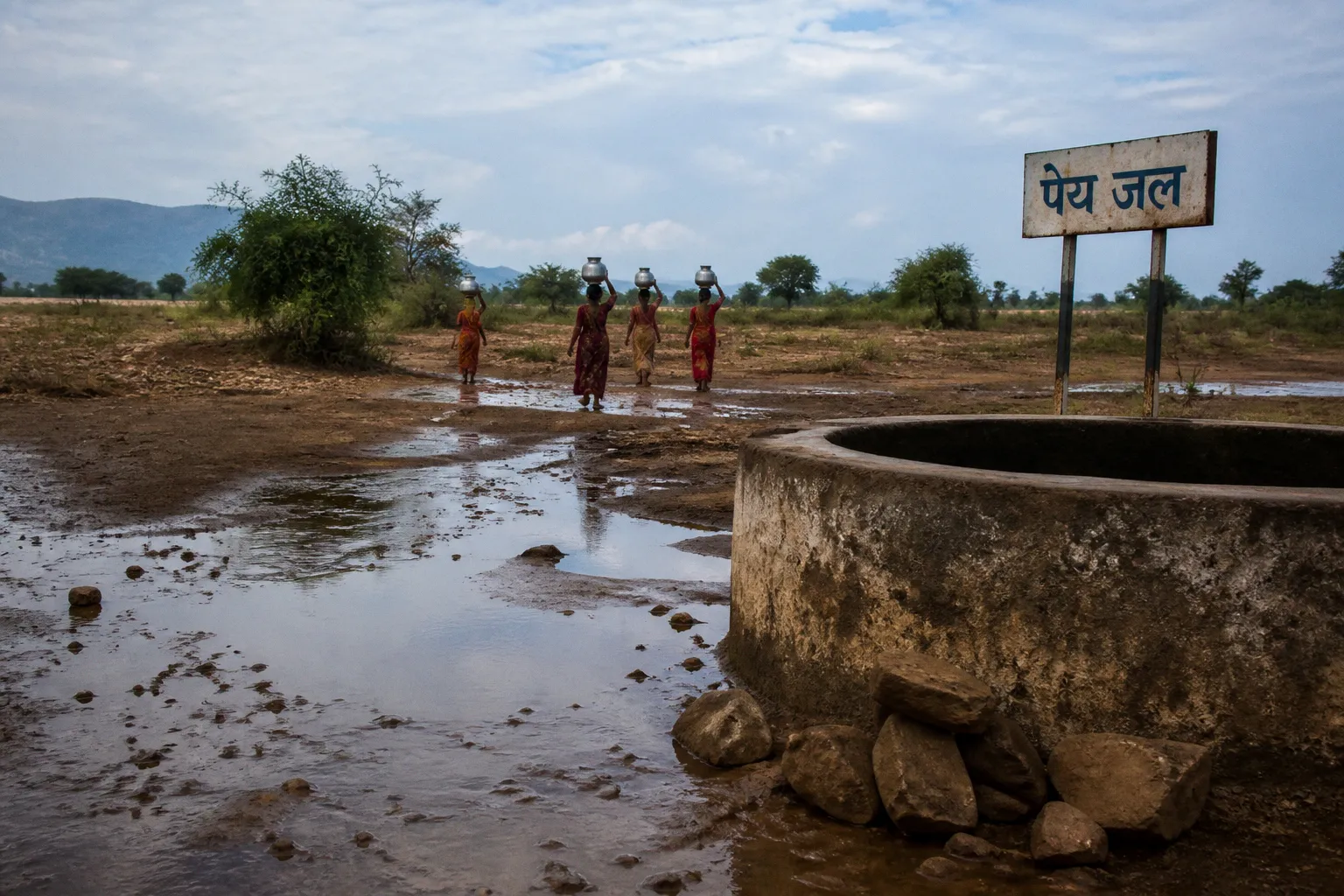
New reporting links drought exposure during pregnancy to higher preterm birth risk—a triage signal that frontline maternal systems cannot afford to treat as background noise. This is not a meteorological problem dressed up as medicine. It is a logistics problem, and it is solvable.
Why drought reshapes the preterm risk curve
The reporting draws attention to environmental stress as a direct upstream variable in gestational outcomes. When drinking water becomes scarce, maternal hydration, nutrition continuity, and infection control all degrade at once. Heat exposure and dust-driven respiratory load compound the picture. Each of these is something a frontline system can measure—or fail to measure.
Districts already running on thin supply margins during a normal monsoon failure see the triage math shift when an extended dry spell lands: the same PHC handling 20 deliveries a month suddenly faces more low-birthweight and preterm cases, without the equipment or referral bandwidth to absorb them.
Adjacent evidence on maternal risk
The same reporting window surfaces complementary signals worth flagging for system planners. A Nature-indexed study on maternal milk intake during pregnancy and infant birth size from the Japan Environment and Children's Study is relevant for nutrition counselling in drought-affected blocks where protein intake drops. A Medical Dialogues note on women with multiple long-term conditions facing higher pregnancy risk is a reminder that antenatal screening must catch comorbidities early when referral windows are narrow. A scchr.jp piece on weight management during pregnancy is useful as a counterweight to undernutrition messaging in food-insecure districts.
What frontline clinics should harden now
A drought season is not a drill. It is an operational rehearsal that exposes every weak joint in the maternal supply line. A pragmatic checklist for district health offices:
- Stockpile antenatal corticosteroids and surfactant at CEmOC centres before the dry quarter, not during it.
- Pre-position neonatal warming kits and CPAP units at block PHCs in declared drought blocks.
- Map water-tanker routes to sub-centres and integrate them into ambulance dispatch logic.
- Push home-based blood pressure and weight tracking to ASHA workers via simple tools, so heat-stress pregnancies surface before term.
- Flag women with multiple long-term conditions for prioritised referral at the first antenatal contact, not the third.
The preterm signal is only useful if it triggers infrastructure action. Reporting the link is the easy half. Building supply lines that hold when the rains fail is the half that actually saves babies.