Managing Pregnancy Risks for Women with Multiple Pre-existing Health Conditions
A University of Birmingham analysis covering 2.2 million pregnancies found that women carrying more than one pre-existing physical or mental health condition run a significantly higher risk of pregnancy complications.
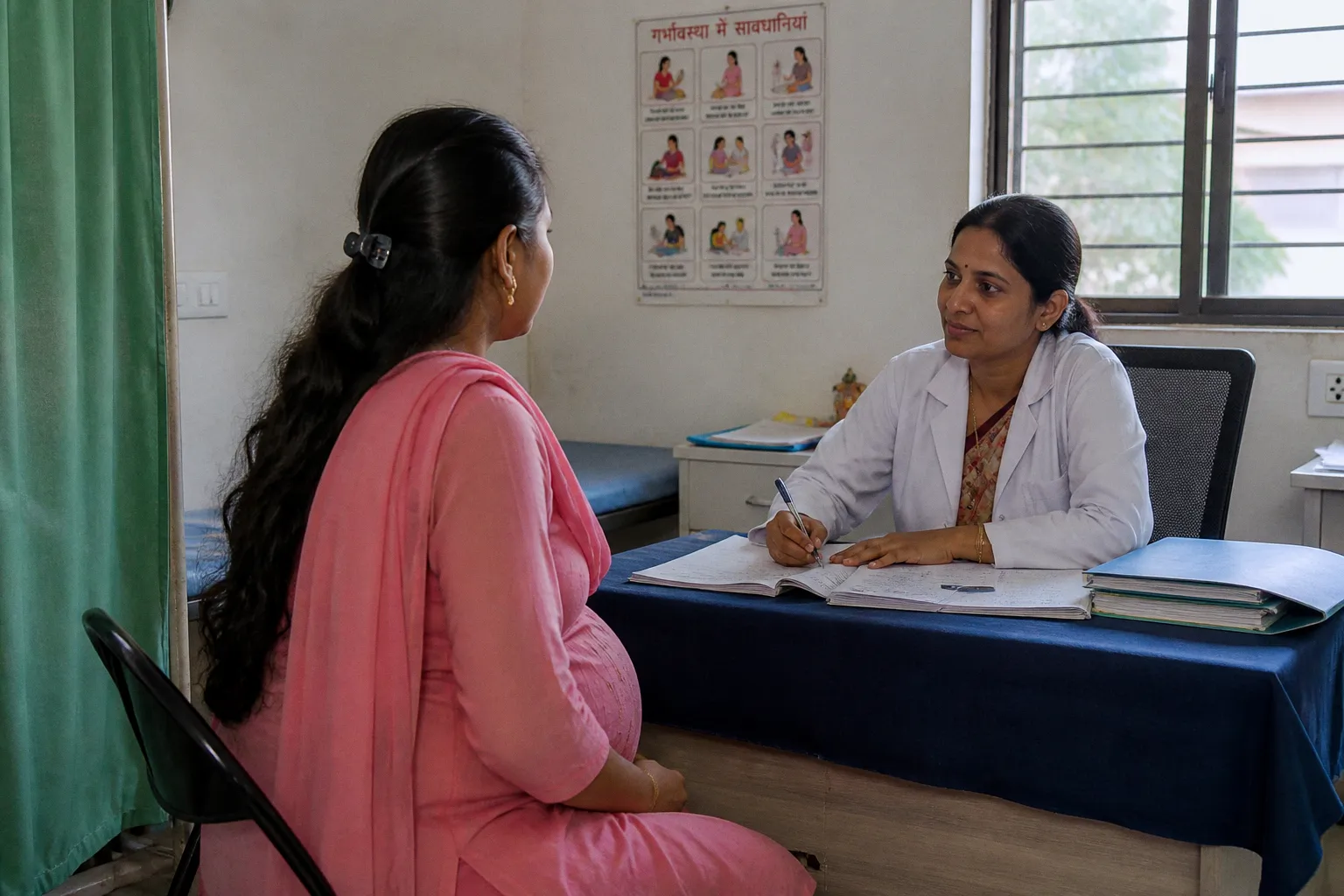
Risk of pregnancy complications increases for women with multiple long-term health conditions
For India's district clinics, this is not an abstract finding — it is a triage problem stacking up against a workforce the system cannot afford to lose.
What 2.2 Million Pregnancies Showed
The Birmingham-led study concluded that multiple pre-existing conditions compound risk rather than adding linearly. The pattern is the same one frontline obstetric teams already know: anaemia plus hypertension plus diabetes is not three separate problems — it is one patient running three failure modes at once, and the antenatal protocol was originally designed for one.
For India specifically, this matters because comorbidity clusters — anaemia, hypothyroidism, gestational diabetes, hypertension, depression — are common, frequently unrecorded at registration, and rarely tracked across the same facility. The result: the women who need the most coordinated antenatal care routinely receive the most fragmented version of it.
The Workforce Math Doesn't Add Up
The same week, a global analysis published in The Lancet Public Health and reported through Tribune Online confirmed what district medical officers have been filing reports about for years. The world is short 34.4 million health workers to reach moderate universal health coverage. South Asia alone is estimated to need 2.6 million more doctors and 10 million more nurses and midwives.
Women drove 71.4 per cent of the global health workforce growth between 1990 and 2023 and now make up 68.9 per cent of all health workers. They account for 96 per cent of midwives and 89.5 per cent of community health workers — exactly the cadres that catch comorbidity risk earliest in the antenatal pathway. Burn them out, lose them to migration, or fail to retain them, and the screening pipeline collapses with them.
What Districts Can Actually Do
Three operational moves that don't require new budget cycles:
- Flag comorbidity at registration, not at referral. A simple tick-box on the MCP card for "two or more existing conditions" changes how ASHAs and ANMs triage the case — earlier visits, shared follow-up, one named provider.
- Use PMMVY as an anchor visit. The ₹5,000 maternity benefit under the Pradhan Mantri Matru Vandana Yojana is paid at registration and after the first antenatal check. Tie the second instalment explicitly to a documented comorbidity review. The incentive is already there; the clinical hook is not.
- Stop running ANMs in parallel silos. Sub-centres, PHCs, and the block-level monitoring team should share one comorbidity register, not three competing paper versions.
The Birmingham finding is not a warning about a risk nobody knew. It is confirmation of a workflow that already fails the women most exposed to it. Fixing it at the district level does not require more staff — it requires the existing staff operating off a single, visible patient list.