Museum of the History of Catalonia Tickets: Two Routes for RCH
Museum of the History of Catalonia tickets are inexpensive by Barcelona standards, but the museum’s admission structure is not quite as simple as the headline price suggests.
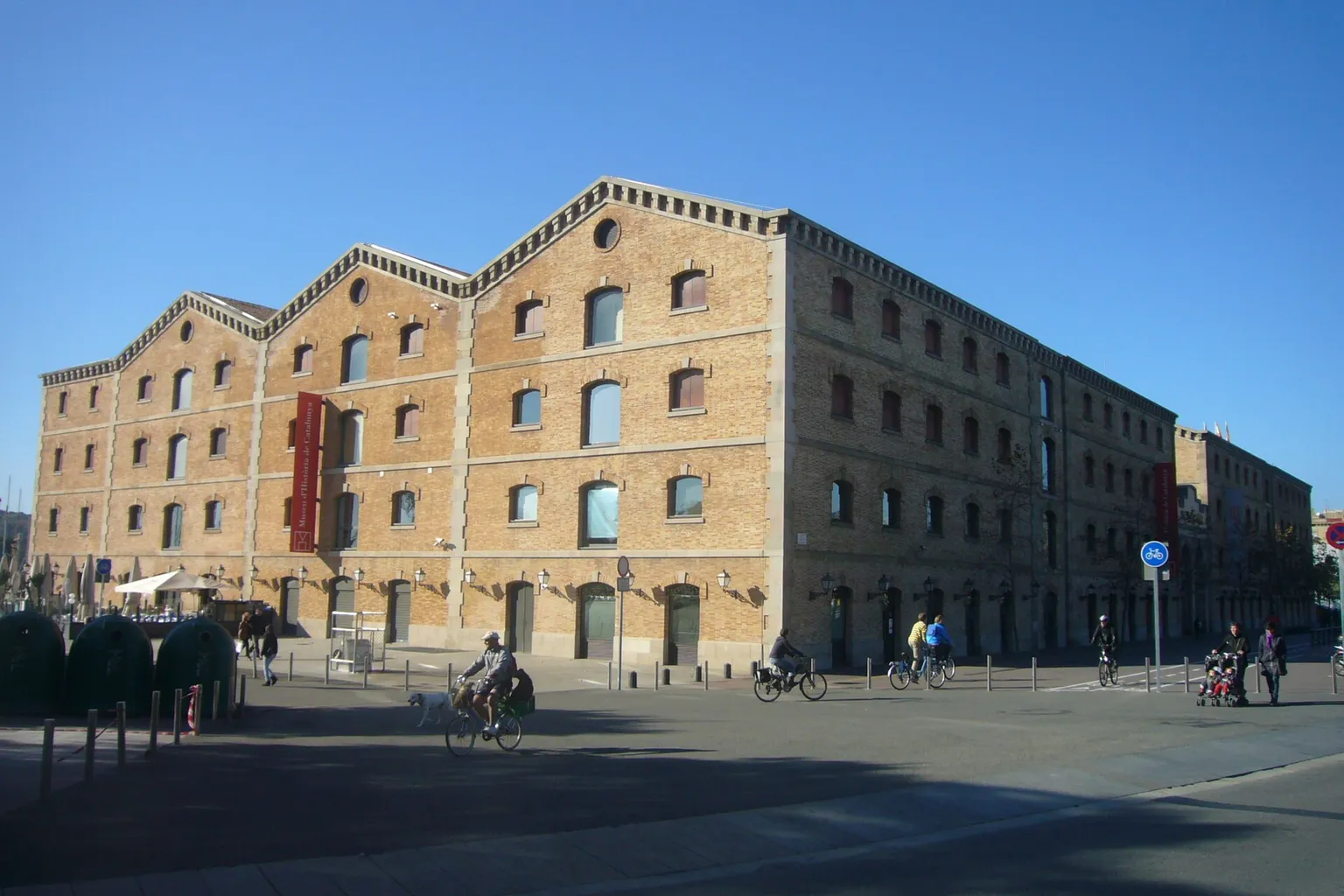
Museum of the History of Catalonia Tickets: Two Practical Routes for Visitors
Visitors may be choosing between the permanent exhibition, a temporary exhibition, a combined ticket, a reduced rate, or one of the recurring free-entry opportunities. The right option depends less on the museum’s location than on who is travelling, what you want to see, and how much flexibility you have in your itinerary.
Tickets and prices
Book tickets — from €12| Option | Type | From |
|---|---|---|
| Entrada general | official ticket | from €12 |
Prices checked on July 16, 2026 · current price on the partner page.
Prices are indicative and may change — confirm the price and availability on the partner page.
Partner link — GetYourGuide ticketsThe museum is housed in the Palau de Mar, the last surviving group of port warehouses in Barcelona. That setting gives the visit some of its character before the exhibition begins: this is not a modern gallery placed beside the harbour, but a historic building tied directly to the city’s commercial and maritime past. Once inside, the permanent exhibition, The Memory of a Country, follows Catalan history across a long chronological span. For a first-time visitor, the practical question is therefore straightforward: which admission route gives you the visit you actually want?
The answer may be a standard ticket, a reduced ticket, a free-entry day, or a combined option. It may also depend on whether you arrive early enough to buy admission, whether the museum is open on the day you have chosen, and whether a temporary exhibition is part of your plan.
Navigating Ticket Tiers and Admission Costs
The museum’s ticket structure is relatively easy to understand once the different parts of the visit are separated. The permanent exhibition and temporary exhibitions may be priced independently, while a combined ticket can cover both. The listed structure is:
| Ticket type | Permanent exhibition | Temporary exhibition | Combined ticket with one temporary exhibition | Combined ticket with two temporary exhibitions |
|---|---|---|---|---|
| General admission | €6 | €4 | €8 | €12 |
| Reduced admission | €4 | €3 | €6 | — |
| Free admission | €0 | — | — | — |
The permanent exhibition is the main reason most visitors come. It is a chronological presentation of Catalan history, moving from early settlement and the development of the territory through political, social, economic and cultural change. The exhibition is broad rather than narrowly focused, so it rewards visitors who allow enough time to read and make connections between sections instead of treating it as a quick collection of isolated objects.
For many travellers, the €6 general admission price is the natural starting point. It covers the permanent exhibition and keeps the decision uncomplicated. If you have only a few hours in Barceloneta, or if the temporary exhibition does not particularly interest you, there is no need to buy more than that.
The temporary exhibitions are a separate consideration. A €4 ticket may be worthwhile when the current show directly matches your interests, but it should not be treated as an automatic supplement. Temporary exhibitions change, and the subject can have a very different tone from the permanent galleries. Check what is on display before deciding whether the combined option is useful.
The combined ticket becomes financially attractive when you already intend to visit both parts of the museum. Buying a €6 permanent-exhibition ticket and a €4 temporary-exhibition ticket separately would total €10, while the listed combined price for one temporary exhibition is €8. That makes the combined ticket the more economical choice in that situation. Where two temporary exhibitions are available, the €12 option may cover the broader visit, although visitors should still confirm exactly what is included at the time of purchase.
The cheapest ticket is not always the best ticket. Decide first whether the temporary exhibition is genuinely part of your plan; only then compare the combined price.
There is also a practical timing issue that matters more than the difference between a €6 and an €8 ticket. The ticket office and visitor entrance close 30 minutes before the museum’s stated closing time. A late arrival can therefore reduce the visit substantially, particularly on a short Sunday or public-holiday schedule. If you want to read the exhibition panels, see the permanent galleries at a comfortable pace, and add a temporary show, arriving shortly before the final admission window is not a realistic strategy.
How to Buy Museum of the History of Catalonia Tickets
For most visitors, the process is simple: decide which exhibition or combination you want, check whether you qualify for a reduced or free category, and purchase at the museum. If you are travelling during a busy period or planning around a special free-entry day, it is sensible to verify the current arrangements before setting out. A museum may adjust access procedures, opening hours or the availability of a particular exhibition even when the general ticket categories remain unchanged.
When buying at the desk, have the relevant identification ready if you are requesting a reduced or complimentary ticket. This avoids a second conversation after the ticket has been issued and makes it easier for staff to confirm the category. Visitors travelling as a group should make the decision together before reaching the counter: one person may want only the permanent exhibition, while another may prefer the combined visit.
The same principle applies to families. Children may enter free under the museum’s stated age policy, but adults accompanying them still need to choose their own ticket type. If one adult qualifies for a reduction, bring the supporting document rather than assuming that the category will be accepted without proof.
Eligibility for Reduced and Complimentary Entry
Reduced admission is available to several visitor groups. The categories listed for the museum include:
- Visitors over 65;
- Pensioners;
- Students with valid identification;
- Carnet Jove holders;
- Holders of an RCat or Recercat card.
For the permanent exhibition, the reduced price is listed as €4. A temporary exhibition is listed at €3 for eligible visitors, while the combined reduced ticket is listed at €6 where the combination is available. The saving is modest for one person but becomes more noticeable for a couple, a family group or anyone planning to see several parts of the museum.
The important detail is not the price itself but the evidence of eligibility. A student should carry a current student card. A visitor claiming a pensioner or age-related reduction may need identification. Cardholders should bring the relevant card rather than relying on a digital image or an explanation at the desk. Policies can be applied at the point of entry, and a category that looks obvious to the visitor may still require documentation.
Free admission covers a wider range of circumstances. Children under 16 are listed as entering without charge. The museum also provides free access for unemployed visitors, people with accredited disabilities, and members of certain professional or cultural associations. The exact conditions may differ by category, so the safest approach is to confirm which document is accepted before travelling.
This is especially important for visitors with disabilities. Complimentary admission and access arrangements are separate questions. A visitor may be entitled to free entry but still need to ask about the most suitable route through the building, the format of interpretation, or the availability of assistance. The museum’s staff are the appropriate source for those practical details.
A free-entry category still needs to be demonstrated. Bring the document that establishes eligibility, and treat the ticket desk as the place to confirm the practical arrangements for the visit.
Families should also distinguish between age-based admission and exhibition suitability. Free entry for children does not mean that every section will hold the attention of a younger visitor for the same length of time. The permanent exhibition covers a long historical period, and some of its value comes from context and sequence. A shorter visit with a clear focus may work better than trying to cover every gallery.
Strategic Planning for Free Museum Access
The museum offers more than one way to visit without paying the standard admission price. In addition to the standing categories described above, free admission is associated with several dates in the annual calendar:
- The first Sunday of every month;
- February 12, associated with Santa Eulàlia;
- April 23, Sant Jordi;
- May 18, International Museum Day;
- September 11, the National Day of Catalonia;
- September 24, La Mercè.
The first Sunday is the most predictable option because it recurs throughout the year. It is also the date most likely to attract a broad mix of local visitors and tourists. Free admission changes the economics of the visit, but it does not necessarily make the experience quieter. If you are hoping to move slowly through the permanent exhibition, a regular weekday may be more comfortable even when the ticket costs a small amount.
The special dates can be useful when they already fit your Barcelona itinerary. They are less useful as a reason to reorganise an entire trip. Public celebrations can bring extra movement around the city, changes to transport patterns and heavier demand at well-known cultural institutions. The museum may be free, but the surrounding day may not be especially relaxed.
A sensible approach is to treat free access as a planning advantage rather than an obligation. If the first Sunday of the month falls during your stay and you are happy to accept a busier museum, it is an easy opportunity. If your schedule allows a choice between that Sunday and a quieter weekday, the weekday may provide better value in terms of attention and time.
Wednesday is a particularly useful day to consider because the museum’s listed schedule extends later, to 8:00 PM. That does not make every evening visit quiet, but it gives visitors more room to arrive after other sightseeing or to avoid the busiest part of the day. A late opening can also help travellers who are staying outside the centre and do not want to spend the morning crossing Barcelona.
The museum is listed as closed on Mondays, with the possibility of exceptions for certain public holidays. That exception is exactly why a calendar check matters. A Monday that appears convenient may still be a closed day, while a public holiday may have a different schedule from an ordinary weekday.
Choosing Between a Free Day and a Regular Day
The decision is mostly about priorities:
- Choose a free day when the dates fit naturally into your trip and keeping costs down matters more than having the galleries to yourself.
- Choose a regular weekday when you want a more flexible pace or are combining the museum with another appointment.
- Choose Wednesday when the later closing time helps you build the museum into an evening plan.
- Avoid relying on the final admission window, especially on Sundays and public holidays, when the overall opening period is shorter.
- Check the calendar before leaving, since holiday arrangements can change the normal weekly pattern.
The museum’s Sunday and public-holiday hours are listed as 10:00 AM to 2:30 PM. That is enough time for a focused visit to the permanent exhibition, but it leaves less room for a leisurely combination of permanent and temporary displays. On those days, arrive early rather than treating the museum as a final stop before lunch.
Reaching the Palau de Mar via Tourist Transit Routes
The museum is located at Plaça de Pau Vila, 3, in the Palau de Mar complex near Port Vell and Barceloneta. Its position makes it easy to combine with a waterfront walk, but it is also a practical stop for visitors using Barcelona’s sightseeing bus networks.
Two tourist-bus options commonly associated with the area are:
| Tourist route | Operator | Practical use |
|---|---|---|
| Red Route | Barcelona Bus Turístic | Useful for visitors already following the operator’s main sightseeing circuit |
| East Route | Barcelona City Tour | A comparable option for travellers using that company’s network |
These routes are most convenient when you already have a sightseeing-bus pass or intend to use the bus for several other stops. The museum should not be treated as the sole reason to purchase a tourist-bus ticket: the value depends on the rest of the day’s route, the number of stops you plan to make and how much time you want to spend moving between sights.
From the relevant stop, allow a short walk to the Palau de Mar. The exact walking time can depend on the stop used and the route operating that day, so following the operator’s current stop information is more reliable than assuming that every bus stops directly at the entrance.
Visitors using the metro can travel to Barceloneta station on line L4, the yellow line, and continue on foot. From the station, the route toward the waterfront and Palau de Mar is generally direct. It is also possible to walk from the Gothic Quarter or El Born, making the museum a natural extension of a day spent in the old city rather than a separate cross-town journey.
The surrounding location changes the rhythm of the visit. You can arrive through the historic centre, spend time in the museum, and continue toward Port Vell or the Barceloneta waterfront. That makes it easier to avoid the common mistake of treating admission as the only planning question. A ticket purchased for a museum that you cannot comfortably reach, or that leaves you rushing to another reservation, is not a particularly good bargain.
Planning the Route Around Entry Time
If you are using a tourist bus, leave room for waiting and traffic. Sightseeing routes do not move like a private taxi, and a stop that looks close on a map can take longer in the middle of a busy day. This matters most when you are visiting on a Sunday or public holiday, when the museum closes earlier.
A metro-and-walking plan gives you more control over arrival time. It may be preferable when you have a timed reservation elsewhere, when the weather is poor, or when you want to reach the museum before the first wave of visitors. The waterfront walk is straightforward in good conditions, but it offers less shelter in strong sun or rain.
The best route is therefore the one that matches the rest of your itinerary:
- Use the tourist bus when the museum is one stop in a wider sightseeing circuit.
- Use the metro when predictable travel time matters.
- Walk from the Gothic Quarter or El Born when you want the journey to remain part of the day rather than a transfer between attractions.
- Leave a margin before the final ticketing time, not merely before the building’s closing time.
Maximizing Your Visit: Rooftop Views and Accessible Itineraries
The Palau de Mar is more than a container for the permanent exhibition. The upper part of the building includes a rooftop terrace and the “1881 per Sagardi” restaurant, with views across the harbour toward Montjuïc. These spaces are part of the museum experience for many visitors, but their access should be treated as a practical detail to confirm rather than an assumption attached to every ticket.
The safest way to plan is to ask at the entrance whether the rooftop terrace is open during your visit and whether access is covered by the ticket you have chosen. Opening conditions, restaurant operations, weather and event arrangements can affect how different areas are used. A museum ticket may give you access to the exhibitions without guaranteeing that every associated space is available at every moment.
That distinction matters because the rooftop is often described as a reason to extend the visit. It can be a memorable end to the galleries, especially after spending time with the permanent exhibition’s account of Catalonia’s relationship with the sea, trade and urban development. But it should be an optional addition to the itinerary, not the foundation of a ticket decision.
Building a Focused Route Through the Museum
The permanent exhibition is extensive enough that visitors benefit from choosing a pace before they enter. There are three workable approaches.
The first is the full chronological visit. This is the best choice for visitors who are seeing the museum for the first time and want the broadest understanding of the exhibition. Move through the sequence in order, but do not feel obliged to read every label with equal attention. Some sections will naturally matter more to you than others.
The second is a selective historical visit. Choose a period or theme that connects with the rest of your trip—medieval Barcelona, the development of political institutions, industrialisation, the Civil War and dictatorship, or the transition to contemporary autonomy—and spend more time there. This approach is particularly useful when you have less than a full afternoon.
The third is a family-paced visit. Focus on the parts that make change visible: maps, reconstructions, domestic objects, tools, transport and the transformation of the city. Children do not need a complete lecture on every historical period to leave with a sense of how Catalonia developed. A shorter route followed by time outside at the waterfront may be more successful than a forced tour of every gallery.
Temporary exhibitions can change the balance. If one is central to your interests, start there while your attention is fresh, then move into the permanent exhibition. If the temporary show is a secondary addition, visit the permanent galleries first and decide afterward whether you still have the energy and time for another section.
Accessibility and Specialist Itineraries
The museum has offered specialised itineraries including “You will touch the past,” associated with tactile engagement for visitors with visual impairments, and “Sugar: what a history,” designed around a more guided and sensory-aware experience for visitors with cognitive or sensory disabilities. These programmes are valuable examples of how a history museum can make interpretation more varied than a sequence of written panels.
However, availability, scheduling and the level of advance arrangement may vary. Visitors interested in one of these itineraries should contact the museum before travelling to ask:
- Whether the itinerary is running on the intended date;
- Whether advance booking is required;
- What language or format is available;
- Whether a staff member or guide accompanies the experience;
- Which parts of the building and exhibition are included;
- Whether any temporary restrictions affect the route.
It is also sensible to ask directly about lifts, restrooms, seating, gallery circulation and the most practical entrance route for your needs. A historic building may have made significant efforts to accommodate visitors while still presenting limitations in particular spaces. General statements about accessibility are less useful than current, specific information for the visit you are planning.
For visitors who need a quieter environment, timing can matter as much as physical access. A weekday morning or a less crowded period may make it easier to pause, use seating, navigate galleries without pressure and engage with staff. The museum can advise on the best time if sensory load or crowding is a concern.
Accessibility is not one yes-or-no feature. Ask about the exact itinerary, facilities and timing you need, rather than relying on a general description of the building.
Hours, Pace and the Shape of the Day
The museum’s listed weekly schedule is:
| Day | Opening hours |
|---|---|
| Tuesday | 10:00 AM–7:00 PM |
| Wednesday | 10:00 AM–8:00 PM |
| Thursday | 10:00 AM–7:00 PM |
| Friday | 10:00 AM–7:00 PM |
| Saturday | 10:00 AM–7:00 PM |
| Sunday and public holidays | 10:00 AM–2:30 PM |
| Monday | Closed |
The hours suggest different kinds of visits. Tuesday through Saturday allow enough time for the permanent exhibition and, with an early start, a temporary show. Wednesday gives more flexibility for visitors who are combining the museum with a morning activity or who prefer to arrive later. Sunday is better suited to a concentrated visit, particularly if you are also trying to use the first-Sunday free-entry opportunity.
Do not confuse the posted closing time with the last practical arrival time. Ticket sales and entry end 30 minutes earlier, and the galleries themselves need time to be experienced. Arriving at 1:30 PM on a Sunday may technically leave time before closing, but it is not the same as having an unhurried afternoon.
A useful plan is to reserve at least two hours for a focused permanent-exhibition visit, with additional time if you read extensively, use a specialist itinerary or add a temporary exhibition. The right duration depends on your interests, but the museum is not a ten-minute photo stop. The building and exhibition both ask for attention.
A More Precise Way to Think About Value
The museum offers good value not because every visitor should choose the cheapest possible ticket, but because the admission options allow different kinds of visits. A visitor interested only in Catalan history can choose the permanent exhibition. Someone already planning to see a temporary show can compare the combined price. A student, pensioner, child or visitor in another eligible category can reduce the cost with the correct proof. A traveller with flexible dates can consider a free-entry day.
The most useful decision sequence is simple:
1. Check whether the museum is open on your chosen day, especially if the date is a Monday or public holiday.
2. Decide whether the permanent exhibition is enough for this visit.
3. Look at the current temporary exhibition before paying for a combination.
4. Check reduced and free-entry categories for everyone in your group.
5. Bring the documentation needed to support the category.
6. Allow time to arrive before the ticket office closes.
7. Confirm rooftop and specialist-itinerary arrangements rather than assuming they are automatically included.
8. Choose transport according to the rest of your Barcelona plans.
The Museum of the History of Catalonia is easy to underestimate because its standard admission is modest and its address seems convenient. In reality, the better visit comes from matching the ticket to the day. A free Sunday may be perfect for one traveller and unnecessarily crowded for another. A combined ticket may be excellent value if a temporary exhibition matters, but needless if the permanent galleries are already the main purpose. A tourist-bus route may be efficient when it fits a wider circuit and slow when used only for this one stop.
That is the practical advantage of planning Museum of the History of Catalonia tickets in advance: not avoiding a complicated purchase, but avoiding a mismatched visit. Arrive on an open day, choose the admission category you can support, leave enough time for the permanent exhibition, and treat the rooftop or specialist routes as features to confirm on the day. The Palau de Mar is worth seeing in its own right; the museum is worth entering with enough time to let the history unfold.
Practical info
Currency: EUR
Driving: on the right
Emergency number: 112
FAQ
How much does it cost to visit the Museum of the History of Catalonia?
Who is eligible for reduced or free admission?
When is the museum open?
Are there days when admission is free?
How do I get to the museum?
Photo: Jordiferrer / CC BY-SA 3.0 — Wikimedia Commons