Rural referral pathways: PHC, CHC, or district hospital?
A woman in her seventh month of pregnancy walks into a sub-centre in a block I'm familiar with — bleeding, anxious, alone on the back of a relative's motorbike.
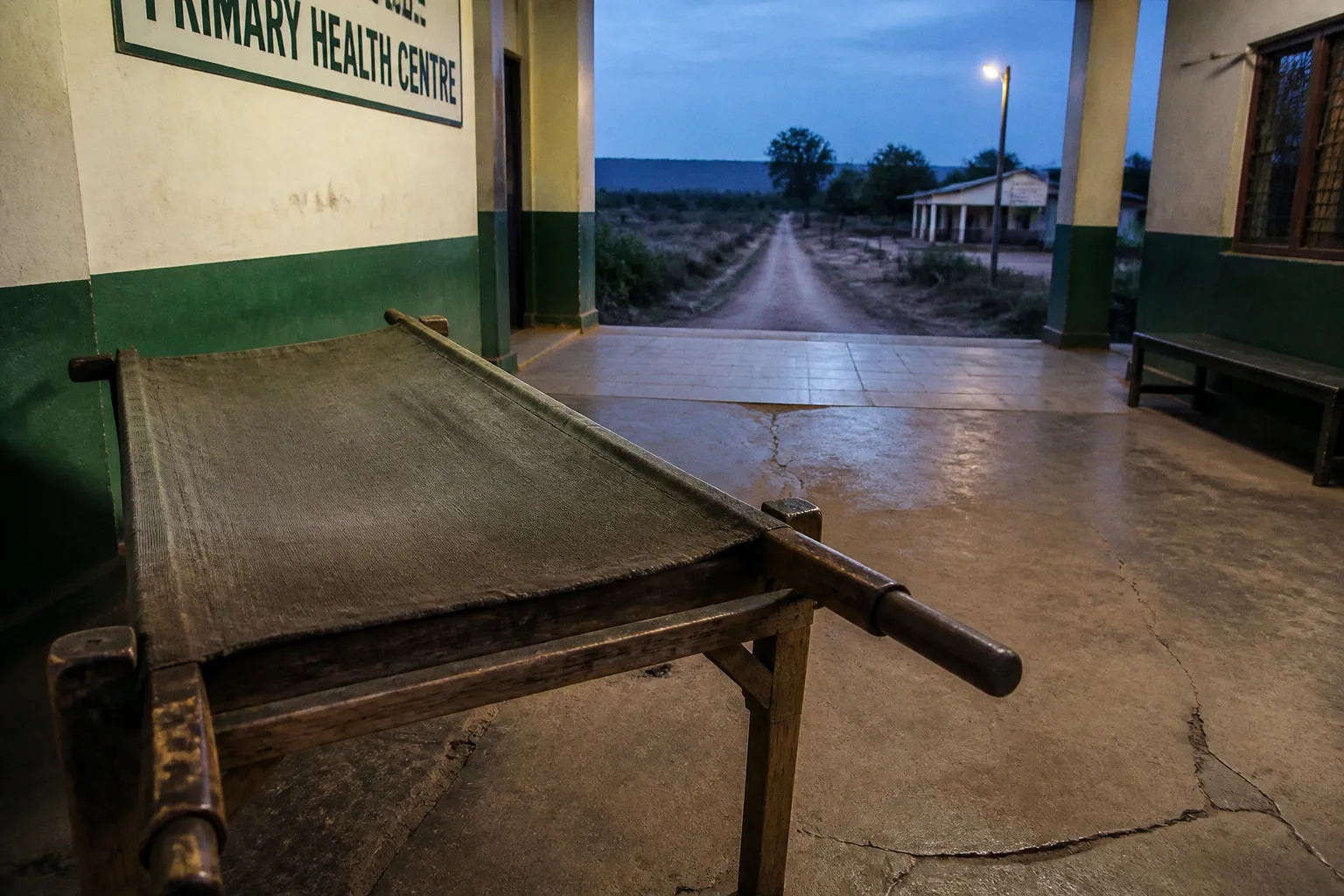
The auxiliary nurse midwife on duty knows what she needs: an IV line, a shot of antenatal corticosteroids if the pregnancy is preterm, and — most importantly — rapid transfer upward. The question is always the same. Where exactly does she go from here? On paper, the answer is tidy: a Sub-Health Centre refers to a Primary Health Centre, a PHC refers to a Community Health Centre, and a CHC refers to a First Referral Unit or District Hospital. In real clinical practice, the answer is messier, and it is shaped as much by what is physically present, staffed, and open at that hour as it is by any guideline.
Compare car rental deals in United Kingdom
See available offersPartner link — DiscoverCars comparisonWhat I want to do in this piece is walk through the rural referral pathway as it actually exists on the ground in India — the three tiers that anchor it, the First Referral Unit benchmark that distinguishes a facility that can genuinely save a life from one that can only stabilise, the very human "bypass" behaviour patients exhibit when they don't trust the lower tier, and the way Ayushman Bharat is reshaping (but not yet resolving) the gap. If you work in maternal health, public health administration, or community programme design, this is the map I wish every new officer had on day one.
The Three-Tier Architecture: Defining the Roles of SHCs, PHCs, and CHCs
The rural public healthcare system in India is built as a hierarchical pyramid, with each tier theoretically responsible for a defined catchment population and a defined package of services. The Sub-Health Centre sits at the base, typically covering 3,000 to 5,000 people — most often through an Auxiliary Nurse Midwife (ANM) and a male multipurpose worker. Above it sits the Primary Health Centre, designed to serve 20,000 to 30,000 people and to act as the referral point for roughly six sub-centres. PHCs usually carry four to six beds and are led by a medical officer supported by nurses, a pharmacist, and a lab technician. They handle outpatient care, basic antenatal and postnatal visits, immunisation, family planning, and the routine management of common illnesses.
The Community Health Centre is the next rung up. A CHC is meant to cover 80,000 to 1,20,000 people — roughly four PHCs feeding into it — and is designed to be a 30-bed facility with specialist doctors: a surgeon, an obstetrician-gynaecologist, a physician, and a paediatrician. In theory, the CHC is where you go when a case genuinely outstrips what a PHC can handle but doesn't quite need a tertiary hospital. The District Hospital sits at the apex of the pyramid, serving an entire district with 100 to 500 or more beds, full surgical specialties, ICUs, and a complete blood bank — the place every tier below refers its hardest cases to.
A Sub-Health Centre is the listening post; a PHC is the first clinical door; a CHC is where specialists are supposed to begin.
Here is how the three tiers line up against one another, alongside the District Hospital that crowns most referral chains:
| Facility level | Population norm | Bed strength | Core clinical role | Typical referral relationship |
|---|---|---|---|---|
| Sub-Health Centre (SHC) | 3,000–5,000 | 0–2 (mostly no inpatient beds) | Health promotion, antenatal care, immunisation, basic surveillance | Refers up to PHC |
| Primary Health Centre (PHC) | 20,000–30,000 | 4–6 | Outpatient care, routine pregnancy management, NCD screening, minor procedures | Refers up to CHC; receives from ~6 SHCs |
| Community Health Centre (CHC) | 80,000–1,20,000 | 30 | Specialist consultations, basic surgery, emergency obstetric care | Refers up to District Hospital / FRU; receives from ~4 PHCs |
| District Hospital | District-wide | 100–500+ | Tertiary-level care, complex surgery, ICU, full blood bank | Apex of the pyramid; receives referrals from CHCs and direct self-referrals |
These numbers come from the Indian Public Health Standards (IPHS), most recently refreshed in 2022. They are population norms, not entitlements — which is the first caveat every practitioner learns. I have worked in blocks where a PHC nominally covers 25,000 people and in practice serves twice that, because the neighbouring PHC is short-staffed and people come anyway.
The First Referral Unit (FRU) Benchmark: What Makes a Facility Truly Operational
Here is where the textbook answer and the on-the-ground answer diverge most sharply. A First Referral Unit is not just a CHC with a sign outside it. To be declared a fully functional FRU, a facility — which can be a CHC, a sub-divisional hospital, or a district hospital — must provide round-the-clock emergency obstetric and newborn care, including caesarean sections, and it must have a blood storage facility on site. The minimum bed strength sits between 20 and 30 beds, and the facility is expected to have at least four medical officers in post: a surgeon, an obstetrician, a physician, and a paediatrician.
In other words, the FRU label is the certification that a facility can, in theory, save the life of a woman with obstructed labour, post-partum haemorrhage, or eclampsia without having to ship her another fifty kilometres down a broken road. It is the difference between stabilisation and definitive care.
For me, as someone who has escorted patients along those fifty kilometres, the FRU checklist reads like a triage tool of its own. Is there an anaesthetist available, or only an anaesthesia-trained nurse? Is the operation theatre functional, or has the autoclave been broken for six months? Is there blood in the storage unit, or has the supply chain run dry? Each "yes" on paper has to be re-asked at the bedside.
The honest caveat here is that a CHC labelled an FRU is not always a working FRU. Many designated FRUs still lack the anaesthetists, the round-the-clock lab support, or the surgical specialists the standard requires. If you are referring a patient upward, you cannot assume the destination is fully equipped — you must call ahead.
The Bypass Phenomenon: Why Patients Skip Primary Tiers for District Hospitals
Anyone who has worked even a single season in a rural Indian district knows this pattern: a woman in early labour, or a child with fever and fast breathing, arrives at the District Hospital having skipped the PHC in her own block. Sometimes she has skipped the CHC as well. She has travelled three hours by bus or auto-rickshaw, often with small children in tow, past facilities that were nominally open. This is what we call "bypass behaviour," and it is one of the most consistent findings in rural health services research.
The reasons are not mysterious. Patients and their families bypass primary tiers because they perceive higher quality at the district hospital, because the PHC in their block is closed in the afternoon, because the doctor at the PHC is on leave or only visits twice a week, or because they simply do not believe a PHC can manage their case. There is no formal gatekeeping mechanism in the Indian system that forces them to start at the bottom of the pyramid, and there is good reason, ethically and legally, not to build one. A pregnant woman in haemorrhagic shock should not be turned away from a higher facility because she did not stop at the PHC first.
The cost of bypass, however, is enormous. District hospitals become congested with cases that could be managed lower down. PHCs and CHCs lose the patient volume they need to remain clinically sharp. Referral records become unreliable because so much of the "upward" traffic is self-initiated rather than provider-coordinated. And for the family itself, the journey is longer, more expensive, and more disruptive than it needed to be. There is no published nationwide figure for the exact proportion of patients who comply with referral advice versus those who drop out of the referral chain entirely — but any district officer will tell you, off the record, that compliance is the exception rather than the rule.
Ayushman Bharat and the Digital Shift: Bridging the Gap in Referral Linkages
The Ayushman Bharat programme, launched in 2018, set out to do two things at once: expand financial protection through the Pradhan Mantri Jan Arogya Yojana (PMJAY) on the hospital side, and strengthen primary care delivery through the Health and Wellness Centre (AB-HWC) component on the other. For rural referral pathways, the HWC component is the more directly relevant half. Under the scheme, existing Sub-Centres and PHCs are being upgraded into AB-HWCs to deliver a broader package called Comprehensive Primary Health Care (CPHC), which adds non-communicable disease screening, mental health, oral health, and basic emergency care to the traditional maternal and child health portfolio.
The numerical picture is striking: as of mid-2023, 1,60,480 Ayushman Bharat – Health and Wellness Centres had been operationalised across India. The intent is that each HWC becomes a credible first clinical contact — one strong enough that families no longer feel compelled to bypass it.
An HWC is meant to be the clinical front door a patient can actually trust; without it, no referral pathway will hold.
The Ayushman Bharat Digital Mission (ABDM), launched in 2021, layers a second reform on top: digital health records, the ABHA health ID, and standardised referral templates that should, in principle, allow a PHC clinician to issue a referral that the receiving CHC or district hospital can read in real time. The promise is "bi-directional" referral — the HWC refers up, the higher facility refers back for follow-up. In places where ABDM is genuinely adopted, this is starting to function. In many places, it is still paper-based and aspirational.
Systemic Constraints: The Specialist Shortage and Infrastructure Realities
None of the architecture above works without the people to staff it, and this is where the system is most strained. The IPHS expects every CHC to have a surgeon, an obstetrician, a physician, and a paediatrician — four specialists. Many CHCs across India have one, or none. Rural postings are difficult to fill, retention is poor, and the gap is most acutely felt in the very disciplines that matter most for emergency obstetric care: anaesthesia, obstetrics, and paediatrics.
What this means in practice is that a CHC may carry the FRU sign but operate as a glorified PHC on any given night. The labour room may be open, but if there is no anaesthetist, there can be no caesarean section. If there is no blood in the storage unit, a haemorrhage becomes a transfer rather than a treatment. Infrastructure also lags: operation theatres sit unused because the autoclave has been out of order for a year; ultrasound machines gather dust because the sonographer transferred to a district hospital; residential quarters for specialists remain empty because no one wants to live there.
For someone planning a referral, the practical implication is that you treat the named facility level with respect but verify its current capability by phone before you send the patient. The IPHS norms describe a system. The system you are actually navigating is the system that exists at this hour, in this block, in this season.
A Practitioner's Map for the Referral Decision
If you are a midwife, an ANM, a medical officer, or a programme manager trying to decide which facility a patient belongs in, here is the decision logic I use — and teach to new staff:
1. Start at the lowest tier that can manage the case. A routine antenatal review, a stable uncomplicated pregnancy, immunisation, family planning counselling, NCD follow-up — these belong at the HWC or PHC. Sending them to a district hospital wastes the family's time and the hospital's capacity.
2. Escalate to the CHC for anything needing a specialist opinion. A pregnancy with risk factors the PHC medical officer cannot manage, a patient requiring ultrasound or lab work beyond the PHC's scope, a case that may need surgical evaluation — these go to the CHC.
3. Escalate to the FRU or District Hospital for emergency obstetric or newborn care. Post-partum haemorrhage, eclampsia, obstructed labour, severe pre-eclampsia, neonatal resuscitation that is not responding — these need a functional FRU. Call ahead. Confirm the anaesthetist, the operation theatre, and the blood bank before the ambulance leaves.
4. Always provide a written referral note. Even in the bypass culture, a structured referral note — diagnosis, reason for referral, what has been done so far, what is needed — improves continuity of care and is the only way the receiving facility can act on the case quickly.
5. Arrange the return referral. Once the patient is stable, ensure she goes back to the HWC or PHC for follow-up. Without this loop, the next pregnancy or the next complication starts from scratch.
The referral pathway is not a one-way ladder; it is a circle, and the circle only works if the lower tiers are strong enough to be trusted.
The honest summary is this: India's rural referral architecture is one of the most thoughtfully designed in the world on paper, and one of the most unevenly realised on the ground. The three tiers are real, the population norms are real, the FRU benchmark is real. The bypass behaviour patients show is not an aberration; it is feedback. It tells us, loudly, that the lower tiers are not yet trusted enough to be the front door of the system. Ayushman Bharat and the digital mission are building the scaffolding to fix that, but trust is built one well-staffed PHC, one functional labour room, and one correctly referred patient at a time. As practitioners, our job is to use the pathway as it is — wisely, with eyes open — while we push, every day, for it to become what it was meant to be.