PHC referral pathways: digital versus paper slips
A referral from a primary health centre to a district hospital is never just a form.
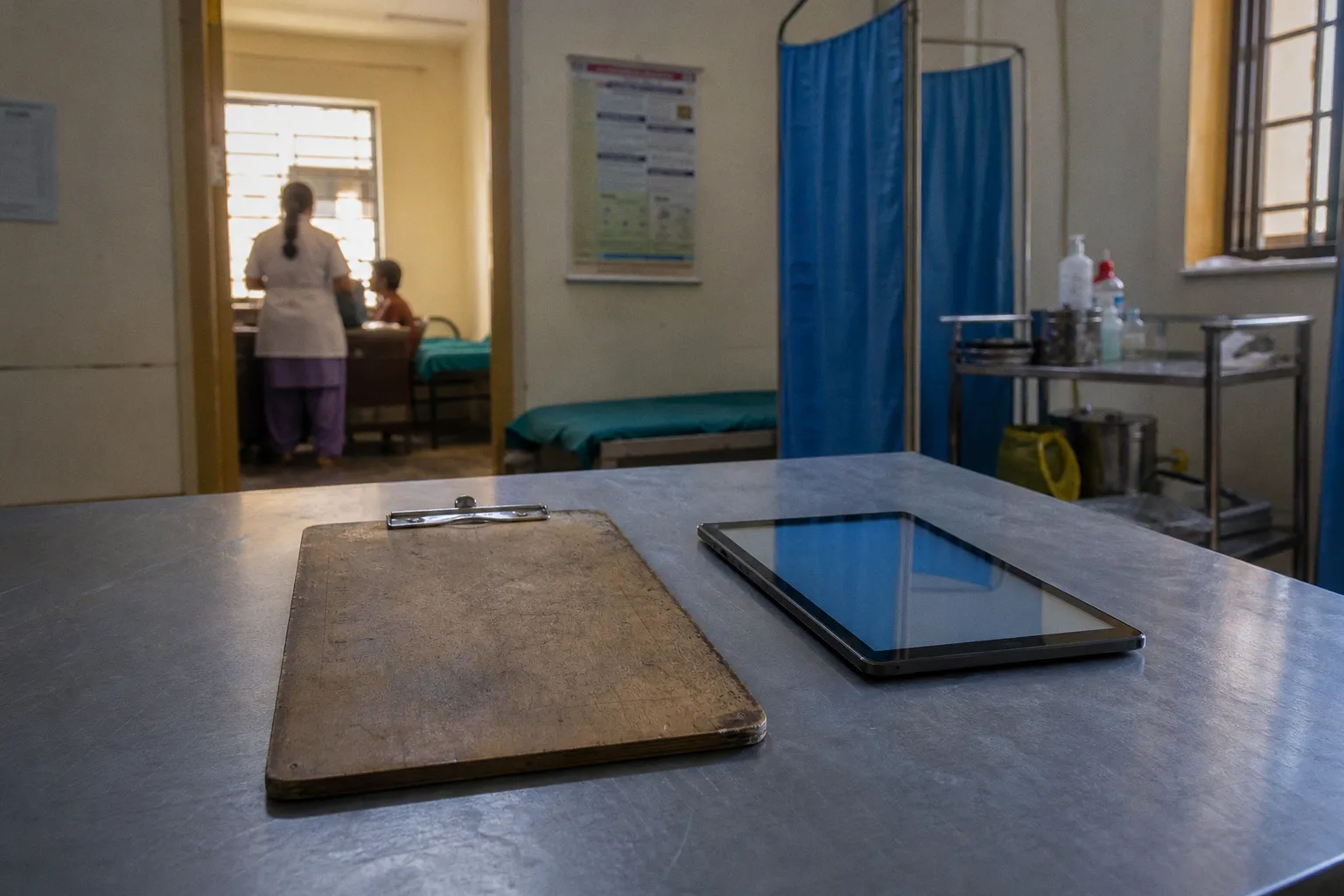
In the maternity room, in an outpatient queue, or during a child’s sudden respiratory deterioration, that small document carries the clinical story forward: what has been observed, what has been tried, why a higher level of care is needed, and how urgently the receiving team should act.
Compare car rental deals in United Kingdom
See available offersPartner link — DiscoverCars comparisonI have seen the paper version work because a nurse knew exactly whom to call, the ambulance driver knew the road, and the district hospital clinician recognised the handwriting on the slip. I have also seen it fail in ways that are painfully familiar: a report left behind, a reason for referral written too briefly, a family arriving after hours with no clear destination, or a woman in labour repeating her entire history at every doorway.
India’s shift toward digital referral pathways is meant to address those breaks in continuity. Karnataka’s Online Referral System, eSanjeevani consultations, and the wider Ayushman Bharat Digital Mission are changing what a PHC referral to a district hospital in India can look like. But digital is not automatically kinder, faster, or more equitable. It becomes those things only when the technology is built around the real care pathway — including the nurse with limited time, the community health worker with a weak mobile signal, and the patient who may not read the language on a screen.
What the paper referral slip still does well — and where it breaks
The traditional rural patient referral system is straightforward on paper, literally. At the referring facility, staff document the case in a “referral out” register and prepare a hand-signed referral slip. The receiving facility records the patient in a corresponding “referral in” register. Clinical notes, test results, treatment details, and sometimes a patient-held maternity card travel physically with the patient or family.
For a primary health center that has intermittent electricity, unreliable internet, or one overextended data-entry worker, this system has an obvious strength: it is available immediately. A clinician does not need a password, a functioning server, or a network signal to write, “Severe anaemia at 34 weeks, symptomatic, referred for blood availability and obstetric assessment.” That sentence, when it is legible and specific, can still save precious time.
Paper also allows a degree of improvisation that rural teams depend upon. A staff nurse can annotate changing observations. A medical officer can attach a laboratory report. An ASHA worker can keep the slip with the family while helping them navigate transport. When systems are strained, flexibility matters.
The trouble is that paper makes continuity depend on memory, handwriting, and physical custody. The clinical record can be incomplete, damaged, misplaced, or unavailable at the very point where decisions need to be made. Referral registers tell facilities that a patient left or arrived; they do not reliably tell us whether she was assessed promptly, admitted, transferred again, or lost along the route.
A paper primary health center referral slip also places a heavy coordination burden on the patient and her family. They become the transport mechanism for information between institutions. For a confident family travelling a familiar route, that may be manageable. For an adolescent mother, an older adult with no accompanying relative, or a family arriving from a remote hamlet after dark, it is an unreasonable clinical expectation.
A referral is safe only when the receiving facility knows enough, soon enough, and the patient is not left to carry the entire system in her hands.
There is another concern that is easy to miss when we speak only about forms: paper pathways make bottlenecks difficult to see. If referral records are scattered across registers, district managers cannot easily identify whether one PHC is sending unusually high numbers of complications, whether a particular hospital repeatedly declines cases, or whether ambulances are consistently delayed on a given route. The information exists, but it is trapped in pages rather than available for care planning.
Karnataka’s ORS model: from a slip to a visible request
Karnataka took a more decisive step than many states by implementing an Online Referral System under Ayushman Bharat Arogya Karnataka. From 1 June 2022, public institutions in the state were required to move away from manual paper referrals and send patients to empanelled facilities through the digital platform.
This matters because it changes the referral from an announcement made by a sending facility into a request that a receiving facility must acknowledge. Rather than handing a patient a note and hoping the next hospital can absorb the case, the referring team enters the patient’s details and clinical reason into the system. The higher facility can then accept, redirect, or coordinate the next step through a shared pathway.
By September 2024, Karnataka’s digital framework had processed more than 200,000 online referrals for secondary and tertiary care. That is a meaningful operational milestone, not because a large number alone proves quality, but because it shows that a state-level system can be used at scale across a public referral network.
In an integrated hospital management system, the receiving hospital is expected to respond to a digital referral request within 30 minutes. If there is no response in that window, the system can auto-accept the patient. This is one of the clearest differences between a digital referral pathway and a paper slip: accountability has a timestamp.
For frontline clinicians, the advantage is not simply that the referral is “online.” It is that the referral can carry a more structured clinical handover. A good digital entry prompts the sender to state the reason for referral, relevant examination findings, preliminary treatment, and destination. That makes it harder — though not impossible — for crucial details to disappear into a hurried handwritten line.
Here is the practical contrast.
| Care pathway question | Paper referral slip | Digital referral pathway |
|---|---|---|
| How is the referral sent? | Patient or accompanying person carries a signed slip and attached reports. | PHC or referring facility submits a referral request through the platform. |
| Does the receiving facility know before the patient arrives? | Often depends on a separate telephone call, if one is made and answered. | The receiving facility receives a digital request and can respond within the system. |
| How is the case documented? | Handwritten notes in referral-out and referral-in registers, plus physical papers. | Structured digital record, potentially visible across linked facilities. |
| What happens if the receiving hospital does not reply? | The patient may arrive without confirmation or be redirected at the gate. | In iHMS-linked systems, a 30-minute non-response can lead to auto-acceptance. |
| What is most vulnerable? | Lost paperwork, illegible notes, incomplete clinical history, weak tracking. | Connectivity failure, login problems, poor data entry, staff confidence with software. |
| What does the patient carry? | The physical evidence of her referral. | Ideally, only essential documents and personal identification — not the entire clinical handover. |
The last row deserves care. Digital referral should reduce the burden on the patient, but it does not eliminate the need for human communication. A woman with postpartum haemorrhage cannot wait for a portal to refresh. A newborn requiring urgent respiratory support cannot be made safer by a completed form alone. In these circumstances, the digital referral must sit alongside direct clinician-to-clinician contact, transport activation, and clear escalation.
eSanjeevani changes the referral conversation before transfer
Not every case needs to become a physical transfer. This is where eSanjeevani has an important place in the e-sanjeevani rural referral pathway.
The eSanjeevani-HWC service, launched in November 2019, enables doctor-to-doctor teleconsultations between primary-level facilities and specialist hubs. In its best use, it allows a PHC clinician to discuss a case before deciding whether a district hospital visit is clinically necessary. A digital prescription or consultation record can then replace the loose paper trail that has traditionally followed a patient.
This is particularly useful in the grey zone of care: the child with recurrent wheeze but no immediate danger signs; the pregnant woman whose blood pressure is concerning but needs a specialist opinion on same-day transfer; the patient with diabetes whose foot lesion requires a treatment plan and rapid follow-up rather than an automatic admission. Teleconsultation can reduce unnecessary travel, avoid overcrowding at higher facilities, and support clinicians who are making difficult decisions with limited local resources.
The patient-to-doctor eSanjeevaniOPD service, introduced in April 2020, offers another route for some follow-up needs. Yet it should not be confused with a universal solution. A survey covering October 2023 to October 2025 found that only 29.87% of surveyed family members were aware of the platform. Among reported user barriers, login problems affected 50%, complex terminology was cited by 42.86%, and poor connectivity by 21.43%.
Those figures fit what many of us recognise on the ground. A service can be technically available and still remain functionally distant from the family who needs it. A login screen is not care access when the phone belongs to someone else, the network falls away during the monsoon, or the patient has been given no explanation of why a virtual consultation may help.
The most sensible use of telemedicine is therefore not to tell patients, “Do this instead of coming in.” It is to widen the clinician’s options:
1. Use doctor-to-doctor consultation to strengthen triage. A PHC team can discuss a borderline case with a specialist and decide whether to manage locally, arrange an appointment, or trigger emergency transfer.
2. Create a usable record of the clinical conversation. The value is not merely a digital prescription; it is a documented rationale that the next clinician can understand.
3. Keep emergency recognition outside the screen. Danger signs — severe bleeding, altered consciousness, acute breathing difficulty, seizures, suspected sepsis, or severe trauma — demand immediate emergency action and transport protocols, not a prolonged virtual queue.
4. Offer patient-facing teleconsultation with support. Community health workers and facility staff can help patients navigate the service, particularly where language, literacy, disability, or shared-phone access would otherwise exclude them.
5. Close the loop after the consultation. Someone must tell the patient what happens next: which facility to visit, by when, what documents to bring, and which symptoms should prompt immediate escalation.
ABDM can reduce queues, but it cannot replace trust
The Ayushman Bharat Digital Mission, launched in September 2021, provides the broader architecture for linked digital health records and identity-enabled services. An ABHA number is a 14-digit identifier intended to help patients connect their health records across participating systems. By June 2023, the programme had recorded 400 million ABHA accounts and 273 million linked health records.
These are substantial numbers, but the meaningful question in a PHC is more modest: does the system make today’s patient journey easier?
The ABDM “Scan & Share” feature is a good example. A patient can use a QR code to share demographic details from the ABHA app with a hospital management information system, bypassing manual outpatient registration. At a crowded district hospital, that may remove one frustrating queue before a patient reaches the clinical queue. For a mother bringing a febrile child, fewer forms and fewer repeated questions can make a real difference.
But we should be careful about the phrase “paperless.” A digital system can still create paperwork in another form: staff writing details on scraps of paper until the network returns, families carrying screenshots because systems do not communicate cleanly, or clinicians duplicating information in both a register and a portal to protect themselves against failure.
ABDM digital referral versus paper is not a simple contest between old and new. It is a question of whether systems share information responsibly and whether patients retain meaningful control. Consent, privacy, and explanation matter. Patients should know when their demographic information or records are being accessed, and they should not be made to feel that a digital identity is a condition for receiving respectful care.
For many rural patients, the safest transition remains hybrid in the practical sense: digital submission where available, paired with a concise patient-held note, direct communication for urgent cases, and an explanation in language the family understands. Redundancy is not a sign that digital health has failed. In a health system that must work through power cuts, travel delays, and changing staff, redundancy is often what protects continuity.
The measure of digital health is not how little paper remains; it is how much less often a patient has to repeat, wait, or wonder where to go next.
The overlooked work behind a successful digital referral
When administrators introduce a digital referral platform, the visible work is often the software rollout. The invisible work is what determines whether the platform becomes part of care or another task added to an already crowded desk.
A functioning system needs people who can use it without fear of making an irreversible mistake. It needs enough devices in the clinic, charging arrangements, reliable connectivity, and an escalation route when a login fails. It needs district hospitals that have staff assigned to monitor incoming referrals, not simply a dashboard that records their arrival.
From a clinical perspective, I would look for a few very ordinary but revealing details:
- Can the PHC send an urgent referral during a network interruption? There must be a documented fallback route, including whom to call and how the digital entry will be completed later.
- Does the digital form capture the information a receiving clinician needs? Diagnosis labels alone are not enough. Vitals, danger signs, gestational age where relevant, treatment already given, and the reason for urgency must travel with the request.
- Who watches the 30-minute response clock? Auto-acceptance may prevent a request from disappearing, but it does not place a bed, blood product, specialist, or operating theatre at the patient’s side.
- Are community health workers included in the pathway? ASHAs and other frontline workers often know when a family has not started travel, lacks funds for food en route, or is frightened by the referral. Their role cannot be designed out of the system.
- Can teams review completed referrals? Referral quality improves when PHC and district teams can look together at delays, avoidable transfers, missed feedback, and recurring clinical gaps without turning the review into blame.
This last point is particularly important in maternal and child health. Referral systems are often discussed as if the endpoint were arrival at a hospital. It is not. The endpoint is appropriate care, followed by information returning to the local team so that follow-up is safe.
If a woman is referred for a complication in pregnancy, discharged from the district hospital, and returns to her village with no clear post-discharge plan, the pathway is incomplete. If a child is referred for severe pneumonia, receives care, and the PHC never learns what follow-up treatment is needed, the pathway is incomplete. Digital records can make this loop easier to close, but only if facilities use them as shared care tools rather than one-way administrative channels.
A realistic route forward for PHCs and district hospitals
Karnataka’s experience shows that state-scale digital referral is possible. The more than 200,000 online referrals recorded by September 2024 demonstrate that digital systems can become routine rather than experimental. Yet no national figure currently establishes that paper referral slips have been fully replaced across India, and it would be misleading to pretend otherwise. Many rural facilities still depend on manual registers because the surrounding infrastructure leaves them little choice.
The strongest model is not one that shames paper-based teams for being “behind.” It is one that gives them a credible path forward.
For PHC leaders, that means treating referral quality as a clinical skill, not a data-entry obligation. Run short case-based practice sessions. Ask staff to complete a referral using a real scenario: severe hypertension in pregnancy, suspected neonatal sepsis, a child needing oxygen, an older patient with possible stroke. Then ask what the district team would still need to know. The answers are usually more useful than a generic software demonstration.
For district hospitals, it means respecting the referring facility as a clinical partner. A digital acceptance button is not enough. Where possible, send feedback: final diagnosis, treatment given, follow-up needs, and signs that should trigger re-referral. This is how a PHC clinician becomes more confident the next time a similar case appears.
And for policymakers, the priority is not simply higher registration numbers. It is dependable connectivity, functional hardware, protected time for training, local-language usability, and staffing that reflects the actual flow of patients. The system should be judged by whether a woman with an emergency reaches the right care with fewer avoidable delays, whether a family understands the route, and whether the next provider receives a usable clinical story.
Digital referral can make the journey between a PHC and district hospital more visible, more accountable, and less dependent on a fragile piece of paper. But the technology is only the bridge. The care pathway is built by the people on both sides of it — and it succeeds when the patient feels that someone is expecting her, not merely that she has been sent somewhere.