Sub-Center to HWC Upgrades: A Step-by-Step Facility Guide
A rural health sub-center is not converted into an Ayushman Arogya Mandir by repainting its exterior or installing a teleconsultation tablet. The upgrade is a service-capacity transition.
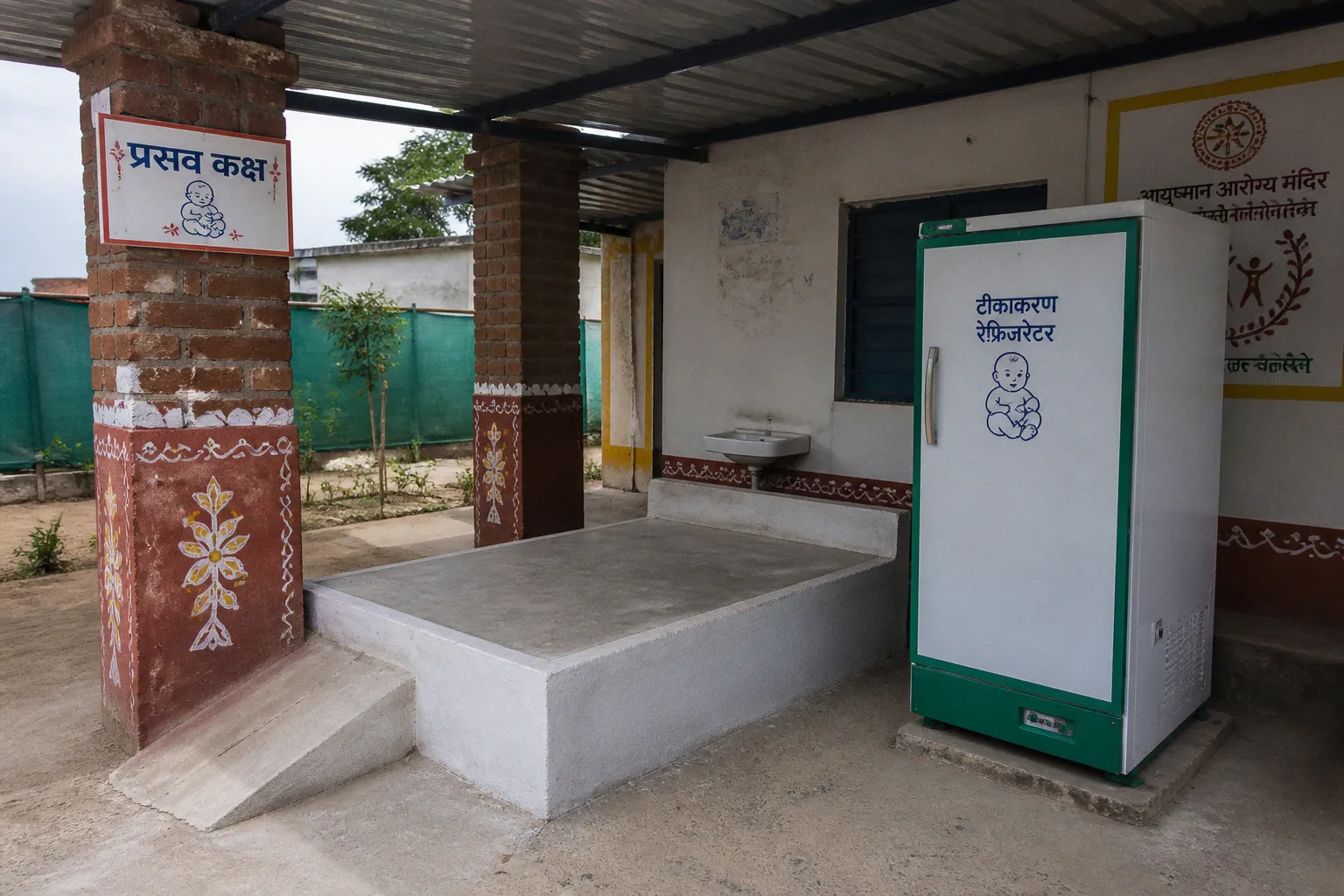
It changes the facility’s staffing model, catchment-area assumptions, medicine inventory, diagnostic scope, referral function, digital systems, and quality-assurance obligations.
The formal framework began with the Health and Wellness Centre programme launched under Ayushman Bharat in 2018. Health and Wellness Centres were subsequently rebranded as Ayushman Arogya Mandirs, or AAMs, in an official directive issued in November 2023. The operational question remains unchanged: can a facility deliver a broader package of primary care at the required population scale and within the required travel time?
This is the central test for the sub center to HWC upgrade requirements. Infrastructure is necessary. It is not sufficient.
Defining the Ayushman Arogya Mandir Transition: Scope and Branding
The first error in many implementation plans is category confusion. A rural sub-center upgraded to an AAM is not automatically a Primary Health Centre. The two facility types occupy different positions in the public health delivery system and operate with different staffing, service, medicine, diagnostic, and population norms.
A sub-center-level AAM is intended to extend comprehensive primary healthcare closer to households. A PHC remains a higher-level facility with greater clinical and diagnostic capacity. Therefore, a plan described as a “PHC upgrade to a Health and Wellness Center” may be technically imprecise. In most rural implementation contexts, the relevant transition is from a Sub-Center or Health Sub-Center to an HWC-SHC, now branded as an Ayushman Arogya Mandir.
The assessment should begin with a facility baseline, not a construction estimate. The baseline should record:
- Current building condition, usable floor area, rooms, privacy arrangements, water supply, sanitation, electricity, and accessibility.
- Existing staff positions, actual attendance, vacancies, training status, and workload.
- Current outpatient, antenatal, postnatal, immunization, family-planning, and disease-screening activity.
- Medicine availability and the frequency of stock-outs.
- Diagnostic tests currently performed on site and the reliability of referral testing.
- Mobile connectivity, broadband access, hardware availability, and staff capacity to use digital systems.
- Distance and travel time from the farthest village in the assigned catchment.
- Referral links to the PHC, community health centre, district hospital, and other designated facilities.
A facility can meet a construction specification and still fail as a functioning primary-care unit. A locked diagnostic room, an absent provider, or a broken referral chain is a service deficit, regardless of the condition of the walls.
Branding is not the same as readiness
The rebranding from HWC to Ayushman Arogya Mandir includes prescribed visual standards. The external walls are to be painted in “Yellow Metal.” Doors, windows, and frames are to use “Ethnic Brown.” Six specified emblems are also required for facility identification.
Branding serves an administrative purpose: it makes the upgraded facility visible within the public delivery network and signals the expanded service mandate. It does not establish that the mandate is being delivered.
For monitoring purposes, branding should therefore be recorded as a separate variable from functional readiness. A facility may be fully branded but partially operational. Conversely, a facility may provide several expanded services before the physical transition is complete. These conditions should not be collapsed into a single upgrade indicator.
Staffing Models and Population Norms for Rural Health Facilities
The rural HWC-SHC model is calibrated to a defined population catchment. In plain areas, one rural HWC-SHC is designed to serve approximately 5,000 people. In hilly, tribal, or desert areas, the norm is approximately 3,000 people.
These are not merely administrative ratios. They determine expected workload, medicine consumption, outreach requirements, staffing pressure, and the practical feasibility of the 12-package comprehensive primary healthcare model.
The access standard is expressed through the “time to care” principle. The farthest village should be within approximately 30 minutes of travel from the facility. A map showing a short straight-line distance is not enough. Roads, seasonal flooding, terrain, transport availability, and the location of dispersed habitations affect actual access.
A population calculation should therefore use stratified geographic data:
1. Identify every village and settlement assigned to the sub-center.
2. Record the estimated population of each settlement, rather than relying only on a block-level average.
3. Classify the geography as plain, hilly, tribal, or desert where relevant.
4. Estimate travel time by the route residents actually use.
5. Identify settlements that exceed the 30-minute access threshold.
6. Test whether the catchment should be reorganized, supported through outreach, or linked to another facility.
Population norms also require a workload interpretation. Two sub-centers may each serve 5,000 people but face different demand profiles. One may have a high proportion of older adults and non-communicable disease risk. Another may have a larger reproductive-age population, difficult terrain, or a higher proportion of seasonal migrants. The nominal denominator is identical. The operational burden is not.
The upgrade is valid only when the facility’s service capacity matches its assigned population and geography. A painted building cannot correct a defective catchment design.
The core rural staffing configuration
The core primary healthcare team at an upgraded HWC-SHC includes:
- One Mid-Level Health Provider or Community Health Officer.
- Two Multi-Purpose Workers, typically one male and one female.
- Accredited Social Health Activists, with an approximate ratio of one ASHA per 1,000 population.
This staffing configuration is intended to combine facility-based care with community-level identification, follow-up, counselling, prevention, and referral. It is not a simple headcount exercise.
The Community Health Officer or Mid-Level Health Provider
The MLHP or CHO is central to the expanded service model. The role links clinical screening, treatment protocols, referral decisions, digital consultations, reporting, and supervision of community-level activities. The position also becomes a single point of operational fragility when the post is vacant or the provider is frequently absent.
A staffing assessment should distinguish between:
- Sanctioned posts.
- Filled posts.
- Staff physically present during scheduled service hours.
- Staff trained for the expanded package.
- Staff able to perform digital reporting and teleconsultation workflows.
- Staff with access to functioning equipment and medicines.
“Posted” and “available” are different measures. Facility surveys that record only sanctioned positions will overstate operational capacity.
Multi-Purpose Workers
The two MPWs support prevention, screening, maternal and child health services, communicable disease activities, outreach, reporting, and community follow-up. Their value depends on workload distribution. A facility with a full nominal team can still have inadequate coverage if outreach geography is extensive or if the population has a high burden of chronic disease.
The staffing review should examine whether MPWs are assigned across the catchment according to settlement size, distance, disease burden, and service demand. A uniform visit schedule may be administratively simple and epidemiologically inefficient.
ASHA coverage
The approximate ratio of one ASHA per 1,000 population provides a community interface for household-level contact. ASHAs support health promotion, early identification, referral, maternal and child health follow-up, and linkage with government services.
The relevant metric is not only the number of ASHAs attached to the facility. It is the proportion of households and settlements covered by active workers, the frequency of contact, and the completion of referrals. An ASHA list with no activity data is an incomplete indicator.
The staffing plan should also specify substitution and escalation arrangements. Absence, attrition, delayed incentives, and training gaps can reduce service continuity without producing an immediate change in the official staffing table.
Reconfigure the Physical Facility
The infrastructure component of an HWC upgrade should be treated as a functional layout exercise. The building must support the services being added. It must also preserve privacy, infection-control routines, patient flow, staff work, medicine storage, and digital consultation.
The exact civil-work requirement may vary by state and facility condition. The national direction is consistent: the site must be capable of delivering comprehensive primary care rather than a narrow maternal and child health package.
Patient flow and privacy
A basic layout should separate registration and waiting from consultation, examination, diagnostics, and medicine dispensing. Privacy is particularly relevant for antenatal care, reproductive health, family planning, sexually transmitted infection management, mental health consultations, and examination of adolescents.
A facility that forces patients to disclose sensitive information at a public counter has a design failure, even if the service is technically listed in the register.
The upgraded facility should have practical arrangements for:
- Registration and patient identification.
- A consultation and examination area with visual and auditory privacy.
- A designated area for diagnostic testing or sample collection.
- Medicine storage and dispensing.
- Immunization and maternal-child health activities.
- Health education and counselling.
- Safe storage of records and digital devices.
- Clean water, usable sanitation, waste segregation, and hand hygiene.
- Access for older adults, people with disabilities, and patients with reduced mobility.
The layout should also account for waiting time and repeat visits. Patients managing hypertension or diabetes may return frequently, while antenatal and child-health visits often involve counselling and documentation. A cramped consultation room can turn a clinically appropriate service into a rushed encounter.
Utilities and maintenance
Electricity and connectivity are not background conditions for an upgraded facility. They affect refrigeration, lighting, diagnostic equipment, digital records, teleconsultation, and communication with referral institutions. Water and sanitation affect infection prevention and patient dignity.
A readiness review should therefore look beyond whether a connection exists. It should examine whether:
- Electricity is reliable during the facility’s service hours.
- Backup arrangements are available where interruptions are common.
- Devices can be charged and stored securely.
- Connectivity supports the intended digital workflow.
- Water is available at points where hand hygiene is required.
- Toilets are usable, maintained, and accessible.
- Biomedical and general waste are segregated and handled through the designated system.
- Repairs can be requested and completed without prolonged delay.
Infrastructure that works only on the day of inspection is not dependable infrastructure.
Implementing the 12-Package Comprehensive Primary Healthcare Model
The HWC-SHC upgrade expands the facility from a narrower set of reproductive, maternal, newborn, and child health functions to a comprehensive primary healthcare model with 12 service packages.
The expanded scope includes maternal and child health, screening and management of non-communicable diseases, basic ophthalmic care, ear-nose-throat services, oral health, mental health, geriatric care, palliative care, and emergency care. The purpose is to move routine screening and early management closer to the population, while preserving referral for conditions beyond the facility’s competence.
The 12-package model should be implemented as a service system. Listing a package on a wall is not equivalent to offering it.
A practical readiness assessment should ask five questions for each package:
1. Is a trained person available to provide the service?
2. Is the required equipment present and functional?
3. Are medicines, consumables, and test materials available?
4. Is there a documented referral route for positive screens and complicated cases?
5. Is activity recorded in a way that permits follow-up and audit?
This approach separates nominal coverage from effective coverage.
Maternal and child health
Maternal and child health remains a major component of the facility’s role. The expanded model does not remove the need for antenatal care, postnatal care, newborn and child services, immunization coordination, family planning, and identification of danger signs.
The upgrade instead places these functions within a broader platform. The same facility should be capable of linking reproductive health needs with anaemia assessment, blood-pressure screening, diabetes risk, mental health, and referral management.
The operational test is continuity. A woman identified with a risk during antenatal care requires documented follow-up and referral, not only an entry in an antenatal register.
Non-communicable diseases
NCD screening creates a substantially different workload from episodic treatment. Hypertension and diabetes require repeat measurements, treatment adherence, counselling, records, and referral when control is inadequate. Screening without a follow-up mechanism inflates detection figures while leaving the morbidity burden unchanged.
The facility should maintain a process for:
- Identifying eligible adults.
- Performing repeat or confirmatory measurements where required.
- Recording abnormal findings.
- Initiating or continuing care within the permitted scope.
- Scheduling follow-up.
- Referring complicated or uncontrolled cases.
- Tracking whether referred patients reached the next level.
The denominator also matters. “Number screened” is not interpretable unless the eligible population and screening coverage are known.
Mental health, geriatric, palliative, oral, eye, and ENT services
These packages are often vulnerable to nominal implementation. A facility may report that a package is available because staff have received orientation, while the service remains inaccessible in practice.
For these areas, minimum operational evidence includes trained personnel, referral protocols, basic examination capacity, patient records, and defined follow-up. Palliative care additionally requires coordination with households and higher-level providers. Geriatric care requires more than a single blood-pressure reading; it involves functional status, medication review, and assessment of recurrent problems.
The service package model is therefore best evaluated through a combination of inputs, activity, continuity, and outcomes. Input-only audits will overestimate performance. Outcome-only assessments may penalize facilities for factors outside their control. A balanced dashboard should retain all four dimensions.
A service package is operational only when a patient can enter the facility, receive the intended service, and be connected to follow-up or referral. A name on a display board is not a care pathway.
Essential Logistics: Medicine Stocks and Diagnostic Capabilities
An upgraded HWC-SHC is required to maintain 105 free essential medicines and offer 14 free diagnostic tests. At the PHC level, the corresponding figures are higher: 172 medicines and 63 diagnostic tests.
These figures define the expected facility tier. They should not be interpreted as evidence that every item is continuously available at every site. Stock availability is a time-dependent operational variable.
A medicine register should distinguish among:
| Supply measure | What it shows | Why it matters |
|---|---|---|
| Listed items | Whether the facility has a formal formulary | Measures planned scope, not actual access |
| Stock on inspection date | Whether an item is physically present | A single observation can miss recurring shortages |
| Stock-out days | Duration of unavailability | Quantifies service disruption |
| Consumption rate | How quickly stock is used | Supports forecasting and redistribution |
| Expiry and wastage | Whether procurement matches demand | Identifies weak inventory control |
| Dispensing records | Whether medicines reach patients | Separates stock from utilization |
The same distinction applies to diagnostics. A test may be listed but unavailable because of reagent failure, equipment malfunction, expired materials, insufficient training, or unreliable electricity.
Medicine supply chain
The facility assessment should follow the supply chain upstream:
- How often are orders placed?
- Is consumption data used for forecasting?
- What is the replenishment interval?
- Are emergency orders possible?
- Are stock-outs reported promptly?
- Is there a buffer stock policy?
- Are cold-chain or temperature-sensitive requirements being met where relevant?
- Are medicines dispensed with instructions and recorded against the patient encounter?
A stock register that is updated after supplies arrive but not when they are dispensed cannot support forecasting. The practical question is whether the team knows what will run out before it becomes unavailable.
Medicine availability also has a clinical dimension. An item can be physically present but unusable if the expiry date is too close, storage conditions are unsuitable, packaging is damaged, or staff are uncertain about the applicable protocol. Inventory review should therefore combine quantity, condition, storage, and use.
Diagnostic readiness
The 14-test expectation at HWC-SHC level should be assessed as a working capability, not as a list of equipment. For each test, the reviewer should establish:
- Whether the test is intended to be performed on site.
- Whether the necessary kit, reagent, or consumable is available.
- Whether the equipment is functional and maintained.
- Whether staff are trained to perform and interpret the test.
- Whether internal quality-control procedures are followed.
- Whether results are recorded and communicated to the patient.
- Whether abnormal results trigger treatment, repeat testing, or referral.
A diagnostic result has little value if it is not linked to a clinical decision. The facility needs a clear workflow from sample or measurement to documentation, counselling, and next action.
Referral testing should be mapped separately. If a test cannot be performed on site, staff should know where the patient or sample goes, how long the result generally takes, and who is responsible for reviewing it. “Referred for investigation” is not a completed diagnostic process.
Digital Integration and Referral Continuity
Digital systems are part of the operating model of an Ayushman Arogya Mandir, not an optional display feature. They can support patient registration, service reporting, NCD follow-up, teleconsultation, stock monitoring, and referral tracking. They can also create a second layer of work for staff if devices, connectivity, training, and reporting expectations are not aligned.
A digital readiness review should cover four connected elements:
1. Hardware: devices are available, functional, charged, and protected from loss or damage.
2. Connectivity: the network is adequate for the functions the facility is expected to perform.
3. People: staff know how to enter, retrieve, verify, and use information.
4. Workflow: digital records are integrated into care rather than duplicated without purpose.
Teleconsultation is useful when it resolves a defined clinical or referral need. It is not a substitute for local examination, medicine availability, or emergency arrangements. The patient still needs a person at the facility who can identify the problem, collect relevant information, explain the next step, and ensure that advice is acted upon.
Referral as a closed loop
A referral system should be evaluated as a closed loop:
- The patient is identified as needing a higher level of care.
- The reason and urgency are documented.
- The receiving facility is known.
- The patient receives instructions and, where needed, assistance with transport or scheduling.
- The receiving facility provides an assessment or disposition.
- The originating HWC receives enough information for continued follow-up.
A referral register that records only the number of patients sent elsewhere measures administrative activity, not continuity of care.
The same principle applies to screening. A positive NCD screen, suspected mental-health condition, abnormal antenatal finding, or child-health danger sign should produce a traceable next action. Without that link, the facility is detecting risk without managing it.
NQAS Quality Certification and Evidence of Readiness
Infrastructure and service expansion should ultimately be connected to quality assurance. The National Quality Assurance Standards process examines whether a facility has systems that support safe, effective, patient-centred, and accountable care.
The preparation should not begin immediately before an assessment. It should be built into routine work through documented responsibilities, internal reviews, corrective action, and evidence that processes are followed.
Areas commonly requiring attention include:
- Availability and maintenance of essential equipment.
- Infection prevention and waste management.
- Medicine and diagnostic management.
- Patient rights, privacy, and grievance handling.
- Record completeness and data use.
- Referral and emergency processes.
- Staff training and competency.
- Cleanliness, accessibility, and facility safety.
- Monitoring of service performance and corrective actions.
NQAS readiness is not achieved by creating a file of policies that staff do not use. The stronger evidence is concordance between what the facility says, what the registers show, what staff do, and what patients experience.
The service-package application threshold
Certification planning must use the correct eligibility language. The facility should ensure that it has applied for at least seven service packages when certification is being pursued. This is an application requirement; it should not be rewritten as a requirement that at least seven packages must already be operational.
That distinction matters. An assessment plan can separately examine the operational status, staffing, equipment, medicines, records, and referral arrangements for each package included in the application. But the formal threshold should be described accurately.
The internal preparation process can be staged:
1. Select the service packages that the facility is prepared to include in its application.
2. Document the staffing, equipment, medicines, diagnostics, and referral arrangements supporting those packages.
3. Review patient records and service data for consistency.
4. Identify gaps through an internal assessment.
5. Assign corrective actions with responsible staff and timelines.
6. Recheck whether the changes are functioning in routine service delivery.
7. Submit the application when the facility can produce credible evidence for the selected scope.
A facility should avoid expanding the application scope simply to appear more comprehensive. A smaller, defensible scope with functioning systems is more meaningful than a broad list supported only by signage and incomplete records.
From inspection preparation to routine quality
Quality certification should reinforce everyday discipline rather than create a temporary performance layer. The most useful indicators are those that staff can act on: repeated medicine stock-outs, incomplete referral feedback, missed follow-up visits, non-functional equipment, privacy failures, or gaps in screening coverage.
The district and block teams also have a role. A sub-center cannot correct every supply, staffing, connectivity, or referral problem internally. Escalation channels should be clear, and unresolved issues should remain visible in review meetings until responsibility is assigned.
A Practical Sequence for the Upgrade
The transition is easier to manage when work is sequenced around dependencies rather than announced as a single conversion event.
First, establish the baseline
Confirm the facility type, assigned population, geographic conditions, current staffing, existing services, infrastructure condition, medicine stock, diagnostic capacity, digital access, and referral network. This prevents a state of readiness from being inferred from a single indicator.
Second, correct the catchment and staffing assumptions
Check whether the population norm and travel-time principle are being met. Review vacant posts, actual attendance, ASHA coverage, outreach routes, and workload. A building cannot compensate for an implausible service area or an absent team.
Third, make the building functional
Resolve privacy, water, sanitation, electricity, accessibility, patient flow, storage, waste management, and space for consultation and diagnostics. Apply the required AAM branding, but record it separately from service readiness.
Fourth, equip the service model
Secure the required medicines, diagnostic materials, equipment, registers, and digital devices. Put in place stock monitoring, maintenance, replenishment, and escalation routines before the expanded package is publicly promised.
Fifth, activate packages through workflows
For each service package, define who provides it, what equipment and supplies are needed, how the patient is recorded, what follow-up is expected, and when referral is required. Use actual patient journeys to test the workflow.
Sixth, build quality evidence continuously
Use routine records, staff review, patient feedback, stock data, referral outcomes, and corrective-action logs. If certification is being pursued, ensure that the facility has applied for at least seven service packages and that the application scope matches the evidence available.
The Real Measure of an HWC Upgrade
The visible transition from sub-center to Ayushman Arogya Mandir is easy to count. The harder transition is operational: a patient can reach the facility, find the expected staff, receive an appropriate examination or screening, obtain the available medicine or diagnostic service, and move through referral and follow-up without disappearing from the system.
That is why the ayushman bharat HWC infrastructure guidelines cannot be treated as a civil-works brief. The building is one part of a larger arrangement involving population norms, staffing, supplies, digital tools, records, and quality management. It is also why a rural health sub center checklist that records only rooms, paint, and equipment will produce an inflated picture of readiness.
A successful upgrade is not a change in name. It is a facility that can sustain the broader primary healthcare mandate day after day, within the geography it serves and at the level of care it is designed to provide.